
When you're trying to decide between asphalt or concrete for your property in Atlanta, the decision really boils down to initial cost versus long-term value. It's a classic trade-off. Asphalt will almost always give you a lower upfront price and a quicker installation, which is why you see it everywhere on public roads. But concrete, while a bigger investment at the start, delivers far superior durability, endless design options, and a much longer lifespan, especially in Georgia's demanding climate. For example, a basic asphalt driveway for a standard two-car garage might save you a couple of thousand dollars initially, but the concrete alternative could last twice as long, saving you the cost of a full replacement down the line.
Choosing the Right Pavement in Atlanta
Picking a paving material is a major decision for any home or business owner. This isn't just about the initial check you write; it affects your property's curb appeal, how much time and money you'll spend on upkeep, and its overall value for years to come. Here in the Atlanta area, where our hot, humid summers put materials to the test, making the right choice is even more crucial. For instance, an asphalt driveway can become soft and tacky on a 95-degree July day, while concrete remains solid and stable.
While both asphalt and concrete have their merits, you have to understand their core differences to make a smart investment. Asphalt is a flexible, petroleum-based material, which is a big reason it's less expensive to install. On the other hand, concrete is a rigid, cement-based material. It costs more to pour, but you're paying for a much longer service life.
For local property owners, this isn't just about the initial quote. You should be thinking about:
- Climate Resilience: How will this material handle decades of intense Georgia heat and humidity? Concrete, for example, is inert and doesn't soften under UV exposure, unlike asphalt's oil-based binder.
- Long-Term Costs: What is the true cost of ownership once you factor in regular maintenance, repairs, and eventual replacement? An asphalt driveway might need resealing every 3-5 years at a cost of several hundred dollars each time.
- Aesthetic Goals: Will the material complement your property’s style and actually increase its value? You can get a great idea of how different materials can transform a space by looking at a portfolio of local concrete projects.
Quick Look Asphalt vs Concrete for Atlanta Properties
To make things a bit clearer, here's a side-by-side look at how these two materials stack up for Atlanta properties. This table cuts through the noise and gives you a high-level view of the key differences that matter most, with real-world examples.
| Feature | Asphalt (Blacktop) | Concrete |
|---|---|---|
| Initial Cost | Lower ($3-$8 per sq. ft.) – A 600 sq. ft. driveway might cost $1,800-$4,800. | Higher ($6-$15 per sq. ft.) – The same driveway could cost $3,600-$9,000. |
| Lifespan | Shorter (15-20 years) | Longer (30-50+ years) |
| Heat Performance | Can soften in extreme heat, making it susceptible to tire marks. | Excellent heat resistance; lighter colors stay cooler to the touch. |
| Maintenance Needs | Frequent (Sealing every 3-5 years) to prevent cracks. | Infrequent (Sealing every 5-10 years) for stain protection. |
| Design Options | Limited to black. | Highly versatile (colors, stamps, finishes). Example: A stamped pattern that mimics slate. |
As you can see, the right choice really depends on your budget, timeline, and long-term goals.
The global asphalt market is massive—projected to hit $397.2 billion by 2033, mainly because it's used for over 90% of U.S. highways. But for homes and businesses here in the Southeast, concrete's ability to last 2-4 times longer is a game-changer. That longevity can ultimately cut your lifecycle costs by up to 50%, making it a compelling alternative for a permanent, high-value installation.
Analyzing the True Cost of Your Paving Project
When you're deciding between asphalt or concrete, it's easy to get hung up on the initial price tag. And yes, asphalt usually looks cheaper on the quote. But if you've been around the block a few times, you know the installation price is just the first chapter of a much longer financial story. To really understand the cost, you have to look at maintenance, repairs, and how long the surface will actually last.
Here in the Atlanta area, the upfront difference is pretty straightforward. An asphalt installation will typically set you back $3 to $8 per square foot, which can be very appealing if you're working with a tight budget. On the other hand, a professionally installed concrete surface runs between $6 and $15 per square foot. That higher initial cost is there for a reason—it reflects a more complex installation process and a fundamentally more durable material. But stopping your comparison there is a classic mistake, and often a costly one.
The Long-Term Financial Picture
The real cost difference doesn't show up in the first year; it reveals itself over the life of the pavement. Asphalt is considered a "flexible" pavement, and it needs regular attention to hit its 15-20 year lifespan. You'll be looking at sealcoating it every three to five years to fend off water damage and UV rays. Those maintenance costs, for example, could be $400-$700 for a typical driveway each time, and they definitely add up.
Concrete is a different beast entirely. It's a rigid pavement that's built for the long haul, often lasting 30-50 years or even more. Its maintenance schedule is far less demanding—usually just a good cleaning and maybe a reseal every five to ten years. Over the decades, that means less money spent and fewer headaches for you.
A 30-year ownership model for a typical Atlanta driveway reveals a clear trend: the money saved on asphalt's frequent maintenance often closes the initial price gap, making concrete the more financially sound choice in the long run. For example, over 30 years, you might spend $3,000-$5,000 on asphalt sealing, while a concrete driveway may only require half that in upkeep.
This chart really gets to the heart of the value proposition for each material. It shows concrete's long-term savings for property owners versus asphalt's widespread use in public roads.
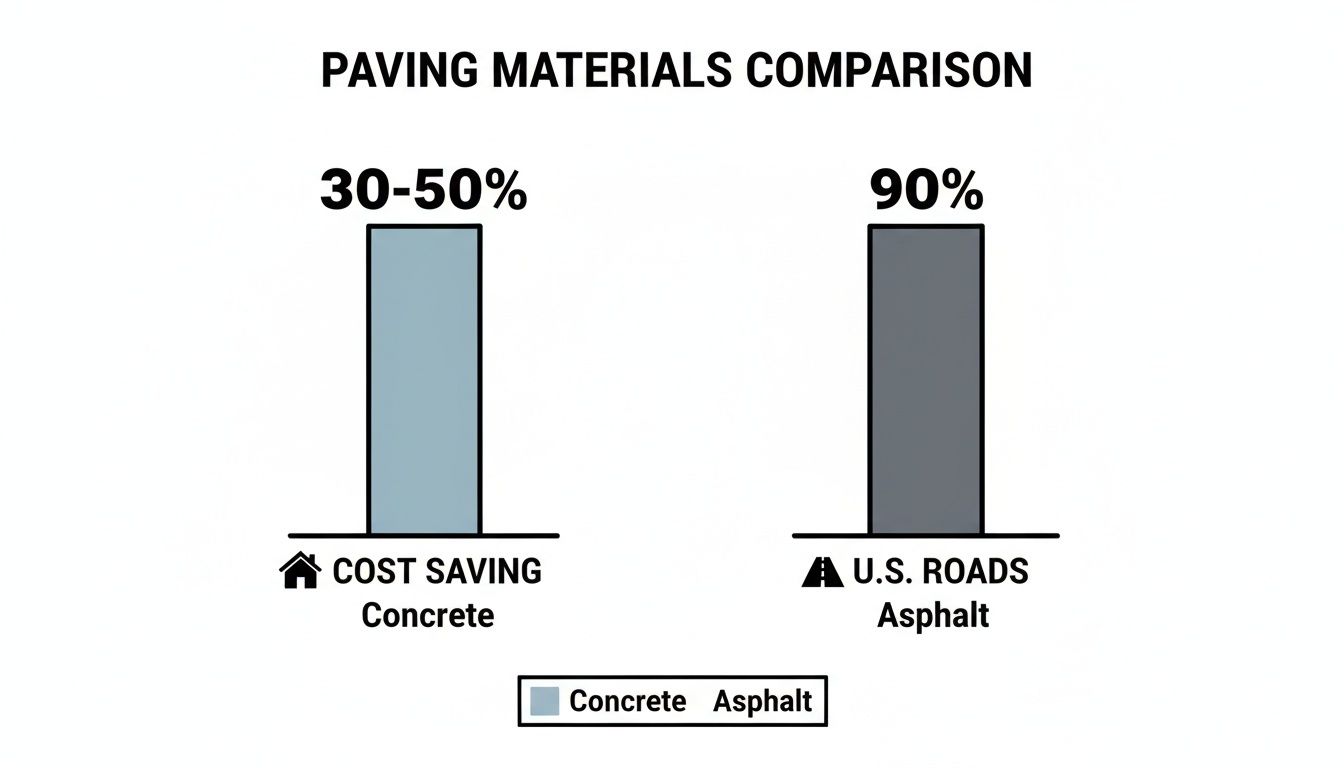
While asphalt makes up 90% of U.S. roads, the data is clear for property owners: concrete can deliver 30-50% in lifetime cost savings for applications like driveways and patios. It’s simply a smarter long-term asset.
How Paving Choices Impact Property Value
Let's talk about something beyond maintenance bills: your property's value. A faded, cracked asphalt driveway can seriously hurt your home's curb appeal and might even get flagged by an inspector as a problem that needs fixing before a sale. A clean, solid concrete driveway, however, sends a message of quality and permanence, giving your property a premium look that potential buyers notice. For example, a home with a decorative stamped concrete driveway often has a higher perceived value than a neighboring home with a plain asphalt surface.
This isn't just about looks. While the global asphalt concrete market was valued at $62.4 billion in 2024, that growth is driven mostly by road construction. For homes and businesses, the story is all about durability. A stamped or polished concrete driveway from Atlanta Concrete Solutions can last 30-50 years. Compare that to asphalt's 15-20 years, and you're looking at slashing your long-term repair costs by up to 40%. You can dig deeper into these market dynamics in this detailed industry analysis.
When you look at your project through the lens of total cost of ownership—installation, upkeep, repairs, and property value—the picture becomes crystal clear. Asphalt might save you a little money today, but concrete consistently proves to be the superior long-term financial investment for property owners here in Atlanta.
Comparing Durability in the Georgia Climate
When you’re weighing asphalt or concrete for a project here in Atlanta, you have to think past the initial price tag. The real test is how each material stands up to our local climate. Georgia’s weather can be brutal on paving—from the scorching summer sun and thick humidity to the occasional winter freeze. These aren't just minor annoyances; they're forces that actively break down surfaces over time.
This makes durability the single most important factor for getting long-term value from your investment. And when it comes to performance, asphalt and concrete couldn't be more different. Their basic makeup determines how they handle environmental stress, which in turn dictates their lifespan and how often you'll be pulling out your wallet for repairs.

Asphalt's Vulnerability to Heat and Humidity
Asphalt is what we call a flexible pavement. It's held together by bitumen, a sticky, petroleum-based binder. That oil-based composition is exactly what makes it struggle in Georgia. When the summer temperatures soar into the 90s, the intense heat and UV rays cause the bitumen to literally soften.
This leads to a few all-too-common problems you've probably seen around town:
- Rutting and Depressions: Heavy vehicles, like a parked RV or even just your family SUV sitting in the same spot, can leave permanent ruts and dips in the softened surface. For example, if you park in the same spot daily, you may notice indentations within a few years.
- Surface Scuffing: Ever seen ugly marks on an asphalt lot? They often come from car tires making sharp turns, which scuffs and mars the pliable surface, especially on a hot afternoon.
- Accelerated Oxidation: Our high heat and humidity put the oxidation process into overdrive, breaking down the binder. Over time, this turns the surface brittle, gray, and prone to cracking.
This constant cycle of softening in the sun and hardening at night, combined with the moisture from our humid air, significantly cuts down asphalt's effective lifespan. While it might last 15-20 years on paper, the second half of that life is often filled with constant maintenance and a faded, worn-out look.
Concrete's Strength and Climatic Resilience
Concrete, on the other hand, is a rigid pavement. Its incredible strength comes from a chemical reaction between cement and water that creates a solid, crystalline structure. In the face of Atlanta's climate, this rigidity is its biggest advantage.
With a compressive strength that often tops 4,000 pounds per square inch (PSI), concrete can handle immense weight without bending or deforming, even on the hottest days. It simply doesn't soften in the sun. In fact, its lighter color reflects more solar energy than dark asphalt, which helps keep the surface temperature down. On a sunny day, an asphalt surface can be 20-30 degrees hotter than a comparable concrete surface.
The secret to concrete's long life in a variable climate like ours is all in the installation. Strategically placed control joints are non-negotiable. They give the rigid slabs room to expand and contract with temperature swings, preventing random, uncontrolled cracking.
This built-in structural integrity is why a professionally installed concrete driveway or parking lot can easily last 30 to 50 years—or even longer—right here in the Atlanta area. It's engineered to withstand decades of thermal stress.
Think about the roads you drive on. That smooth black surface on most highways is asphalt, which covers about 94% of U.S. paved roads but often needs resurfacing every 10-15 years. Now, compare that to a concrete driveway installed by experts like Atlanta Concrete Solutions, which can last 30+ years with very little upkeep, saving you thousands in the long run. For your next driveway replacement in Marietta or Alpharetta, concrete's durability is a perfect match for our humid climate, as it resists cracking far better and can even boost your home's resale value by 5-10%. You can learn more about the asphalt market's reach on Grand View Research.
When you put asphalt and concrete head-to-head in our specific environment, concrete is the undisputed winner on durability. Its resistance to heat, immense strength, and superior ability to handle temperature changes all add up to a longer, more reliable service life.
Understanding Long-Term Maintenance and Repairs
When you're choosing between asphalt or concrete, the initial installation is just the first chapter. The real story unfolds over decades of ownership, where the demands of maintenance and repair dictate your long-term costs and headaches. How each material stands up to Atlanta's specific climate is what really determines its value over time.
Asphalt, with its petroleum-based binder, is simply more susceptible to the elements. That's not a knock, just a fact. This reality means you have to stay on top of a consistent maintenance schedule to get the most out of it. Concrete, on the other hand, is a rigid and more chemically stable material that asks for a lot less attention, giving you a simpler ownership experience from the get-go.
The Asphalt Maintenance Cycle
Think of asphalt maintenance as an ongoing commitment. To protect it from water damage and the sun's relentless UV rays, an asphalt surface needs to be professionally sealcoated every 2 to 4 years. This isn't just a suggestion; skipping it lets moisture seep in, which is the fast track to cracks, potholes, and a failing foundation. For example, a homeowner who neglects sealing for 5 years might find small "alligator cracks" forming, a sign of water damage to the base layer.
It’s a classic domino effect. A tiny, ignored crack in an asphalt driveway becomes a channel for rainwater. When we get a winter cold snap, that water freezes, expands, and forces the crack wider. This cycle repeats, and what was once a minor flaw quickly becomes a jarring pothole that needs patching. This constant need for vigilance is just part of living with asphalt.
The maintenance difference is stark: Over a 20-year period, an asphalt driveway may need to be sealed up to ten times, while a concrete driveway might only require sealing two to four times. This difference translates directly into saved time, money, and hassle.
Concrete's Simple Upkeep Routine
Concrete maintenance is refreshingly simple. Its dense, hard surface is naturally tough and resists a lot of the issues that constantly challenge asphalt. For the most part, all you need is an occasional pressure washing to blast away dirt and grime and keep it looking fresh.
To guard against stubborn stains from things like oil drips or tannins from fallen leaves, we recommend applying a good quality sealer every 5 to 10 years. It’s a simple preventative step that preserves the look of your concrete and makes cleanup even easier. Compared to asphalt's frequent resealing demands, this is a minor task in a much longer service life. And while you’re thinking about the long-term, it's a good idea to consider managing potential drainage issues around your paved surfaces as well.
Comparing Repair Strategies
No surface lasts forever, and eventually, repairs will be necessary. But how you fix asphalt versus concrete—and what it costs—couldn't be more different.
- Asphalt Repairs: Damage to asphalt, like cracks and potholes, is typically addressed with patching. While the patches themselves are relatively quick and inexpensive, they often leave a noticeable quilt-like pattern on the surface. For instance, a pothole fix will show a distinct black square against the faded gray of the older asphalt. Over the years, a driveway or parking lot can start to look like a patchwork mosaic, which really hurts its curb appeal.
- Concrete Repairs: Fixing concrete is usually a more precise and advanced affair. If a concrete slab sinks because of soil erosion, we can use a process called slab jacking to lift it right back into place without a full tear-out. This technique involves injecting a specialized grout underneath the slab, raising it perfectly level and fixing the underlying problem.
For example, imagine a tree root pushes up a single section of your concrete sidewalk. In many cases, we can repair or replace just that one slab without touching the ones next to it. That same kind of damage to an asphalt path would likely require a larger, more obvious patch, showing again how concrete's lower maintenance needs lead to a more sustainable and cost-effective solution over its lifetime.
Enhancing Curb Appeal with Customization Options
Your driveway, walkway, or patio isn't just a slab of pavement; it's a huge part of your home's first impression. It sets the tone for your entire property. When you're weighing asphalt or concrete, the visual and design possibilities are often the deciding factor. While both get the job done, they are worlds apart in what they offer for customization.
Asphalt gives you one look: black. It's a classic, clean, and uniform finish that works for many applications. But that's pretty much where the design conversation ends. Over the years, that deep black will naturally fade to a duller gray, and you'll need a new sealcoat to bring back its original vibrance.
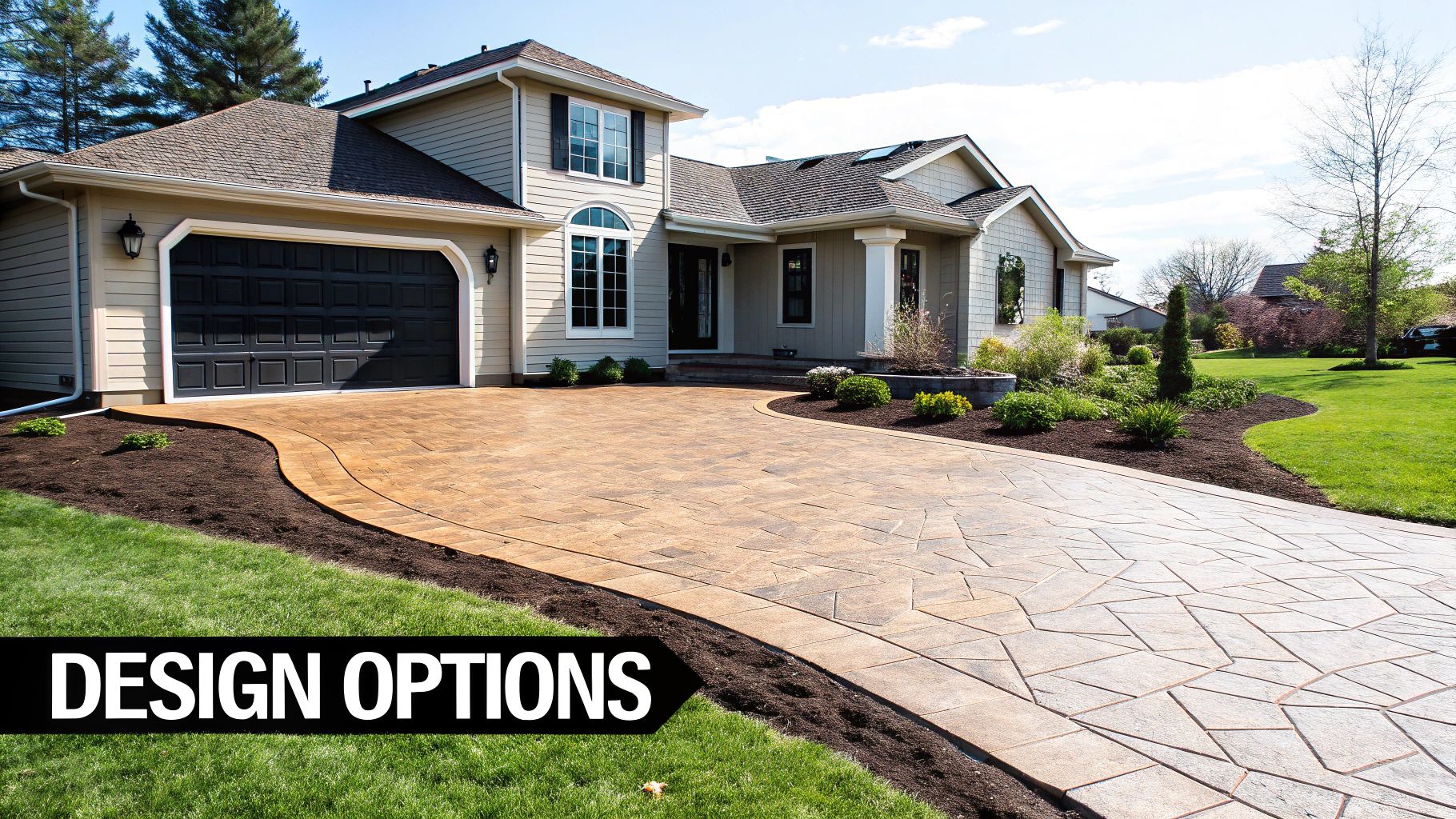
Unlocking Design Versatility with Concrete
If you want options, concrete is the clear winner. Think of it as a blank canvas waiting for an artist's touch. It allows you to create a surface that truly harmonizes with your home's architecture, landscaping, and color palette. The creative potential is vast, transforming a simple functional space into a standout design element.
For instance, a classic brick home in Marietta would look incredible with a driveway stamped to resemble timeless cobblestone or elegant herringbone brick. On the flip side, a contemporary home in Duluth might call for a sleek, smooth-finished concrete driveway with a subtle, integrated charcoal color.
Concrete's ability to be shaped, textured, and colored allows it to become an integral part of your property's design narrative, something monolithic black asphalt simply cannot achieve. This custom approach significantly boosts curb appeal and perceived value.
Popular Decorative Concrete Techniques
The real magic happens when we apply different finishing techniques. These methods can turn a standard gray slab into something spectacular, elevating the look of your entire property.
Here are a few of the most popular ways we do it:
- Stamped Concrete: This is how you get a high-end look without the high-end price tag. We use specialized molds to press patterns into the fresh concrete, creating a stunningly realistic impression of materials like slate, flagstone, brick, or even wood. A popular example is a "random stone" pattern for a rustic patio.
- Colored Concrete: Say goodbye to plain gray. We can mix pigments directly into the concrete to produce a wide spectrum of durable, fade-resistant colors. From warm terracotta tones to earthy tans and rich charcoals, we can dial in the perfect shade to complement your home's exterior.
- Broom and Trowel Finishes: Texture adds character and safety. A classic broom finish creates fine, slip-resistant lines that are perfect for sidewalks and pool decks. A smooth trowel finish, by contrast, provides a clean, minimalist look that’s ideal for garages or covered patios.
By mixing and matching these techniques, the design possibilities become endless. Picture a slate-stamped patio with a warm gray color integrated right into the mix, perfectly matching the stone accents on your house. That's a level of design cohesion you can only get with concrete. You can see what's possible by exploring our gallery of residential decorative concrete projects.
Remember, your driveway is just one piece of the puzzle. To really make your home stand out, you might also want to look into other strategies to boost your home's curb appeal and value, like new landscaping or lighting. But when it comes down to the paving material itself, the choice is simple: asphalt is a functional surface, but concrete is a design element.
Matching the Right Material to Your Project
Choosing between asphalt or concrete isn't just about picking a surface; it's about matching the material to the real-world demands of your project. The right choice for a quiet suburban driveway is rarely the best fit for a bustling commercial parking lot or a neighborhood pickleball court. Each surface has a job to do, and understanding that job is the first step toward a smart, lasting investment.
Here in Atlanta, this decision gets even more specific. We have to account for our hot summers, heavy downpours, and the red clay soil that can shift underneath. The details of your project—what kind of traffic it will see, the look you're going for, and your long-term budget—will ultimately point you to the clear winner.
Residential Driveways: The Case for Concrete
For most homeowners in the Atlanta area, a concrete driveway is hands-down the better long-term investment. I know the lower initial price tag on asphalt looks appealing, but concrete delivers far more value over its lifespan. A well-poured concrete driveway can easily last 30-50 years with very little maintenance, standing up to our Georgia climate without needing the resealing asphalt demands every few years.
Let's be honest, your driveway is a huge part of your home's curb appeal. Concrete gives you an incredible range of design choices, from rich colors that match your home's trim to stamped patterns that look like expensive flagstone or brick. It allows you to create a truly custom, high-end entrance that asphalt's basic black finish just can't replicate. If you want to see what's possible, you can check out our guide on residential driveway concrete.
Commercial Parking Lots: A Balanced Perspective
When it comes to big commercial parking lots, the asphalt vs. concrete debate gets a bit more complicated. Asphalt's lower upfront cost is a major plus for massive projects where the initial budget is tight. It also cures faster, which means less disruption for your business. For example, a retail store can have its lot paved and open for customers in just a few days.
But if you look at the total cost of ownership, concrete makes a very compelling case.
- Lower Maintenance: With concrete, you can forget about the recurring expense and hassle of shutting down sections of your lot for sealcoating.
- Tougher Surface: It holds up much better under the daily strain of delivery trucks and constant traffic, resisting the ruts and soft spots that plague asphalt.
- Brighter & Safer: A lighter-colored concrete surface reflects more light, making your property safer at night and often lowering your electricity bill for lot lighting.
So while asphalt can work, property managers focused on reducing long-term operating costs often find that concrete is the smarter financial move over the life of the property.
For any project where extreme durability and low lifecycle costs are the top priority, concrete is the clear winner. It's built to handle heavy loads and resist our intense summer heat, making it perfect for industrial driveways, loading docks, and high-traffic retail centers.
Pool Decks, Walkways, and Sport Courts
For some jobs, concrete isn't just the better option—it's the only one that makes sense. Think about pool decks and patios. You need a surface that can be finished for slip resistance and stays much cooler on bare feet than sun-baked black asphalt. Safety and comfort make concrete the obvious choice.
This is especially true for sport courts. Whether it's for basketball, tennis, or pickleball, you need a perfectly flat, rigid surface. The game depends on a true, predictable ball bounce. For example, a tennis ball will bounce consistently on a hard concrete court, but an asphalt surface can have subtle soft spots that deaden the bounce.
Asphalt is just too flexible; it can develop soft spots or dips over time that completely ruin the playing experience. Concrete delivers that hard, uniform surface needed for serious play, giving you a reliable and professional-grade court for years to come. When performance is non-negotiable, the debate over asphalt or concrete is over before it even starts.
To make things even clearer, here’s a quick breakdown of which material we recommend for common projects around Atlanta.
Material Recommendation by Project Type
| Project Type | Recommended Material | Key Reasons |
|---|---|---|
| Residential Driveway | Concrete | Superior lifespan, immense design flexibility, and high curb appeal add value to your home. |
| Commercial Parking Lot | Asphalt or Concrete | Asphalt for lower initial cost and speed; Concrete for lower long-term maintenance and durability. |
| Industrial Driveway/Docks | Concrete | Unmatched strength for heavy trucks and machinery; resists rutting and heat damage. |
| Walkways & Patios | Concrete | Safer (slip-resistant finishes), cooler underfoot, and offers endless decorative possibilities. |
| Pool Deck | Concrete | The only safe choice. Stays cooler, can be textured for grip, and withstands pool chemicals. |
| Sport Court (Tennis, etc.) | Concrete | Provides the rigid, true, and non-flexible surface required for consistent ball bounce. |
This table simplifies the decision, but every property is unique. The best choice always comes down to a conversation about your specific goals and budget.
Paving in Atlanta: Your Questions Answered
When you're weighing asphalt vs. concrete, the big-picture comparisons are helpful, but it's the practical, day-to-day questions that often seal the deal. Atlanta property owners need to know how their choice will impact their routine, their budget, and the longevity of their investment.
Let's break down some of the most common questions we hear from folks trying to make the right call.
How Soon Can I Park on My New Driveway?
This is where the two materials really diverge, and it's a huge factor for many people. An asphalt driveway is ready for action remarkably fast. In most cases, you can drive and park on it within 24 to 48 hours. For a busy household or a commercial property where downtime isn't an option, that quick turnaround is a massive plus.
Concrete, on the other hand, demands patience. It needs time to cure and build up its incredible strength. While you can typically walk on it the next day, you’ll need to keep vehicles off for at least 7 days. Rushing this is a mistake—that curing week is what ensures your driveway will stand up to decades of use without cracking under pressure. For example, parking a heavy SUV on 3-day-old concrete can create micro-fractures that lead to premature failure.
What’s the Best Choice for Heavy Vehicles?
If you've got an RV, a boat, or commercial trucks, this isn't even a contest: concrete is the clear winner. Its rigid, unyielding surface is built to handle immense weight without complaint. A typical residential concrete driveway is poured at 4 inches thick, but for an RV pad, we would recommend 5-6 inches with rebar reinforcement for extra strength.
Asphalt is a flexible pavement, which means under the pressure of a heavy, parked vehicle—especially during a sweltering Atlanta summer—it can develop ruts and depressions. A properly installed concrete slab provides the structural integrity needed to support those heavy loads year after year.
It's easy to focus on the initial price tag, but overlooking load-bearing capacity is a classic mistake. For any surface that will hold heavy or stationary vehicles, concrete's rigidity isn't just a nice-to-have; it's essential for avoiding expensive damage down the road.
Can I Get a Heated Driveway with Both?
Absolutely. You can install radiant heating systems under both asphalt and concrete to make icy mornings a thing of the past. That said, they tend to perform better and last longer with concrete.
Concrete's dense thermal mass helps it spread heat more evenly, and its sheer toughness offers better protection for the heating elements buried within the slab. For instance, the tubing for a hydronic heating system is less likely to be damaged during compaction or paving when encased in solid concrete. You're not just melting ice; you're safeguarding a significant investment for years to come.
Why Does a Professional Installation Matter So Much?
Here’s the bottom line: the final performance of your driveway or parking lot has everything to do with the quality of the installation. A pro handles the crucial steps that amateurs often miss—proper site grading, compacting the sub-base until it's rock-solid, and designing for proper drainage. For example, an improperly compacted base under concrete can lead to a hollow spot, causing the slab to crack under weight.
In Atlanta, local expertise is non-negotiable. Understanding our clay soil and preparing for our heavy rains is what separates a surface that lasts a few years from one that lasts a few decades. Getting it done right the first time saves you a fortune in the long run.
Ready to find the perfect paving solution for your Atlanta property? The team at Atlanta Concrete Solutions has the expertise to guide you through every step, from design to professional installation. Get your free, no-obligation quote today!