
When you start planning a concrete project, the first question is always about the bottom line. Here in the Atlanta area, the average cost of concrete per square foot usually lands somewhere between $8 to $18.
This price range is a solid starting point for budgeting. It typically covers a standard 4-inch thick slab of concrete—the kind you'd use for a new patio, walkway, or basic driveway—and includes the essential labor, materials, and initial site prep. For example, a simple 200-square-foot walkway could range from $1,600 to $3,600.
Your Quick Guide to Concrete Pricing
Think of that per-square-foot price as the sticker price on a new car. It’s a great baseline, but the final cost can change based on the features you add. Things like decorative finishes, complex layouts, or challenging site conditions are the "upgrades" that will adjust your final quote, just like adding leather seats or a sunroof would. For instance, opting for a stamped finish that mimics brick could add $4-$15 per square foot to the base cost.
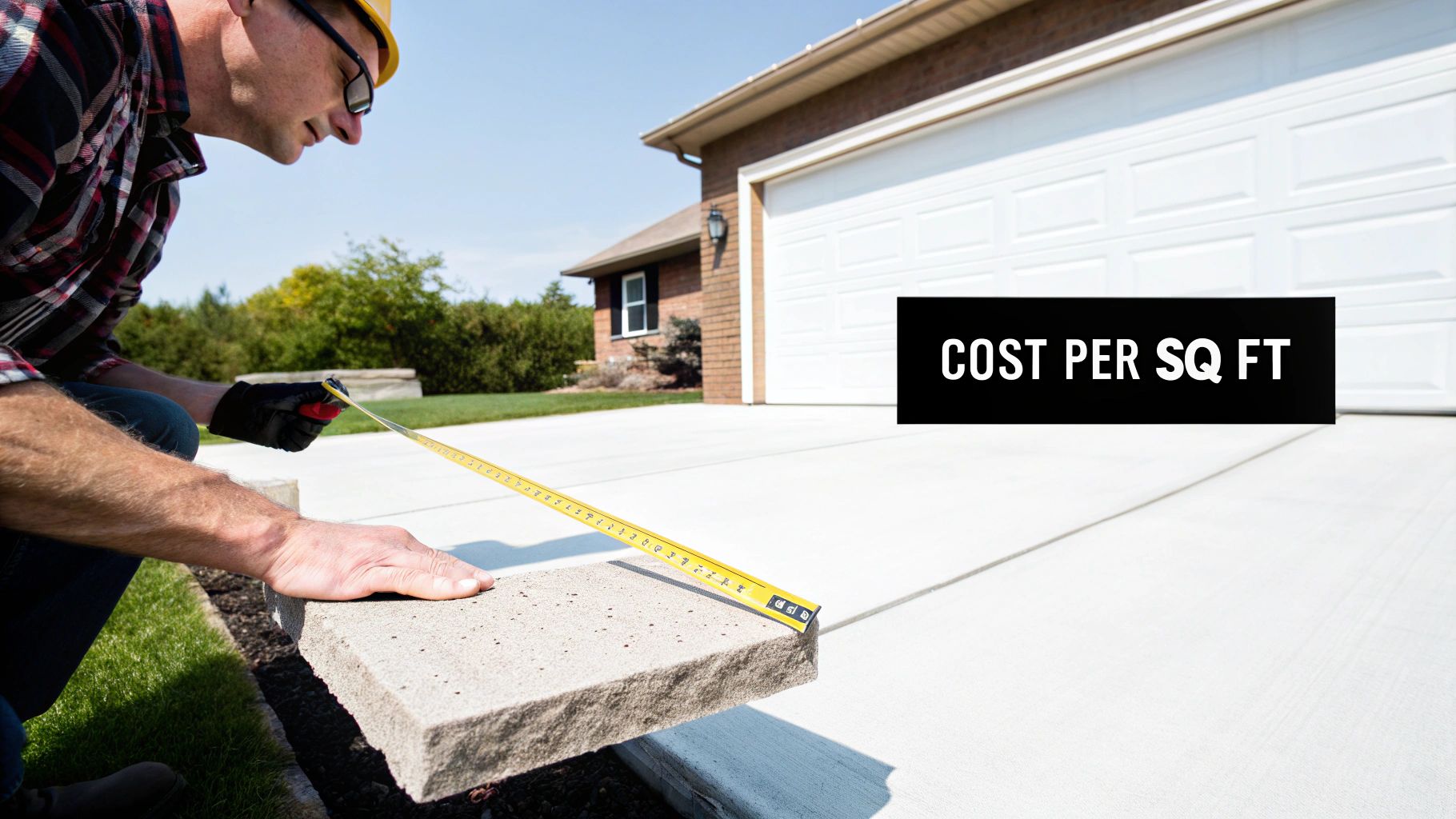
While every job has its own unique quirks, this initial estimate gives you a realistic number to work with for financial planning. It covers the core of what it takes to get a durable, professionally installed surface that will last for years.
A National Perspective on Concrete Costs
It's always helpful to see how our local Atlanta prices stack up against the rest of the country. Nationally, you'll often see a benchmark range of $6.00 to $9.50 per square foot for both materials and labor. So, if you were replacing a standard 500-square-foot driveway, the cost might be between $3,000 and $4,750 elsewhere. You can explore more about these national averages to get a better sense of how things like regional supply costs and labor rates make a difference. In contrast, Atlanta's slightly higher range often reflects strong local demand and specific material sourcing costs.
A clear understanding of the baseline cost is your best tool for budgeting. Knowing the expected range per square foot helps you set realistic expectations and evaluate quotes from contractors with confidence.
Estimated Concrete Costs Per Square Foot in Atlanta
To bring it all home, let's look at what you can expect to pay for different types of projects right here in the Atlanta metro. This table breaks down the typical costs and what drives them, giving you a quick reference for your specific needs.
| Project Type | Average Cost Per Square Foot | Key Considerations |
|---|---|---|
| Standard Driveway | $9 – $16 | Needs to be thicker (5-6 inches) and reinforced to handle the weight of vehicles. Example: A 600 sq ft driveway might include rebar for strength. |
| Basic Patio/Walkway | $8 – $14 | Usually a standard 4-inch slab with a simple, non-slip broom finish. Example: A 300 sq ft patio with straightforward access and a broom finish falls here. |
| Decorative/Stamped Concrete | $14 – $25+ | The price climbs with more intricate patterns, custom colors, and detailed finishes. Example: An Ashlar slate stamp with two-tone coloring adds significant labor and material costs. |
| Poured Foundation | $7 – $12 | Costs can vary based on the depth of excavation and amount of steel reinforcement required. Example: A garage foundation requiring deep footings will be on the higher end. |
This breakdown should help you line up your vision with a practical budget. Whether you're dreaming of a simple, functional patio or a show-stopping stamped concrete driveway, knowing the numbers is the first step.
What Really Drives Your Concrete Project's Price?
While an average cost per square foot gives you a ballpark figure, it's just the starting point. Think of it as the base price for a car—the final number on the sticker changes once you add the features you actually need. Several critical factors can swing your final quote up or down, and understanding them is the key to knowing exactly where your money is going.
The base price is for a simple, blank canvas. Every layer of complexity, from preparing that canvas to adding intricate colors and textures, contributes to the final masterpiece and its cost. Concrete work is no different. For instance, a simple rectangular slab is far less complex to form and pour than one with multiple curves and angles.
These aren't just minor details, either. They're the core components that dictate how long your project will last, how safe it is, and how good it looks. Let's break down the three biggest price drivers you'll encounter.
The Foundation of Cost: Slab Thickness
One of the most straightforward factors impacting your budget is the thickness of the concrete slab. It’s simple math: a thicker slab means more concrete, which means higher material costs. But the why behind the thickness is what really matters.
A standard patio or walkway that only sees foot traffic is perfectly fine with a 4-inch thick slab. It has all the strength it needs for that job. But a driveway? That’s a whole different story. It has to stand up to thousands of pounds of vehicle weight, day in and day out.
For that reason, a residential driveway needs a slab that's at least 5 to 6 inches thick. That extra depth, often beefed up with steel rebar for reinforcement, is what prevents catastrophic cracking and structural failure. This necessary upgrade in material is why a driveway project will always have a higher cost per square foot than a simple patio. For example, increasing a 600 sq. ft. driveway from 4 inches to 6 inches adds approximately 3.7 cubic yards of concrete, which can add over $700 in material costs alone.
The Hidden Workload: Site Preparation
Before a single drop of concrete gets poured, the ground underneath has to be perfect. Site preparation is often the most labor-intensive and unpredictable part of the job, and its complexity can have a huge impact on your budget.
Imagine the difference between painting a smooth, freshly primed wall versus an old, crumbling one that needs to be stripped, patched, and sanded. The real work—and cost—is in the prep. Concrete is exactly the same.
Proper site prep can involve several big steps:
- Demolition and Removal: If we're tearing out an old, busted-up driveway, that old concrete has to be broken apart and hauled away. That process alone can add $3 to $8 per square foot to the project cost. For a 500 sq. ft. driveway, this could mean an additional $1,500 to $4,000.
- Excavation and Grading: The land has to be dug out to the right depth and sloped perfectly to ensure water drains away from your house, not toward it. Bad grading is a recipe for water damage and a failed slab. A heavily sloped yard, for example, requires more excavation and soil removal than a flat one.
- Soil Compaction: Once graded, the soil beneath the slab needs to be professionally compacted into a stable, unmoving base. If you skip this, the concrete will settle and crack. It's not a matter of if, but when.
A clear, level, and easy-to-access site will always be cheaper to prep than a sloped, rocky, or tight spot that requires heavy machinery and a lot more time.
The quality of the prep work directly determines the longevity of your concrete. Investing in proper site preparation is the best way to protect your long-term investment and avoid costly future repairs.
The Final Touch: The Finish
The last major price driver is the finish. While a standard, non-slip broom finish is included in most baseline quotes, decorative options can turn your concrete from a functional surface into a true design feature. Each finish requires different tools, materials, and a higher level of skill, which is reflected in the price.
Here’s a quick look at how different finishes stack up:
- Broom Finish: This is the go-to standard. It creates a durable, non-slip texture that’s perfect for driveways and walkways. It’s the most budget-friendly choice.
- Stamped Concrete: For a high-end look, stamped concrete can perfectly mimic expensive materials like natural stone, brick, or even wood. The complexity of the pattern can add $4 to $15 or more per square foot. For instance, a complex flagstone pattern with multiple colors will be at the higher end of this range.
- Stained Concrete: Using acid or water-based stains, we can add rich, marbled color to your slab. This custom touch typically adds $3 to $10 per square foot to the final cost. An example would be using an acid stain to create a warm, leather-like finish on a basement floor.
Exploring the various concrete services and finishes we offer can help you find the perfect balance between your vision and your budget. After all, the finish is what you'll see every day—it's a great place to invest for maximum curb appeal.
Understanding the Bigger Picture of Concrete Costs
If you've been pricing out a new patio or driveway lately, you’ve probably noticed that the numbers are higher than you might have expected. It’s not just you, and it’s not just an Atlanta thing—it’s a reality across the entire country. The average cost of concrete per square foot is tangled up in a web of economic factors that start long before a single truck arrives at your property.
Getting a handle on these bigger market forces is key to setting a realistic budget. It helps you see that a quote from a trusted contractor like Atlanta Concrete Solutions isn't just a random number; it's a reflection of the real-world costs of doing business today. Think of it like grocery prices—when fuel and farming costs go up, the price of food on the shelf follows suit. Concrete is no different.
The Ripple Effect of Raw Material Costs
The concrete for your project starts its journey in quarries and processing plants. This is where its core ingredients—cement, sand, and gravel (also called aggregate)—are sourced. The price of these raw materials forms the absolute foundation of what you’ll end up paying.
So, when energy prices drive up the cost of producing cement, or a construction boom makes quality gravel harder to come by, those increases don’t just stay at the plant. They ripple all the way down the supply chain, directly impacting the final quote. For example, a sharp increase in diesel fuel costs can add several dollars per cubic yard to the delivery price of ready-mix concrete. It's not about contractors just deciding to charge more; it's a direct pass-through of what it now costs to simply make the concrete in the first place.
This chart really breaks down where the costs in a typical project come from, moving from the basic material to all the other work that goes into it.
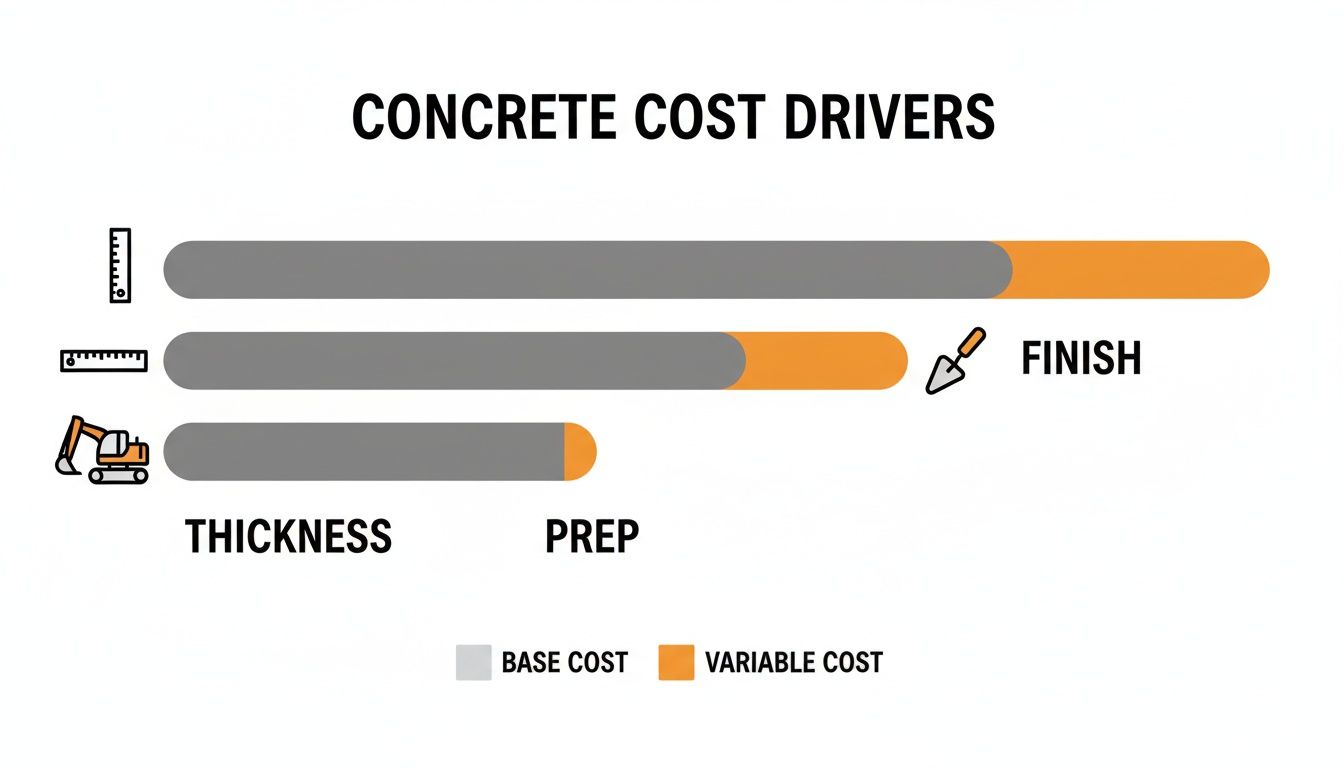
As you can see, the concrete itself is just the starting point. Things like specialized finishes and the amount of site prep needed can add significantly to the final ticket.
Labor and Logistics: The Unseen Price Shapers
Beyond the materials themselves, the two other heavy hitters are labor and transportation. There's a well-known shortage of skilled construction labor across the nation, which means good, experienced crews are in high demand—and their rates reflect that. You're not just paying for a pair of hands; you're paying for the expertise that ensures your new slab is poured correctly and will last for decades without cracking or heaving.
Transportation is the final piece of the puzzle. Concrete is incredibly heavy and, once mixed, it's on a ticking clock. It has to get from the plant to your home quickly. Every fluctuation in diesel prices directly hits the bottom line for running those big ready-mix trucks that deliver to your job site. For instance, a project 20 miles from the nearest plant will have a higher delivery cost than one just 5 miles away.
The Hard Numbers Behind Rising Concrete Prices
This isn't just a gut feeling; the economic data tells the same story. The U.S. producer price index for concrete products—a government measure of what producers are charging—has been on a steady, steep climb.
The index shot up from 210.8 in 2011 to 384.82 in 2024. That's a staggering 82.5% increase in just over a decade.
Looking at it more recently, the average cost for a cubic yard of ready-mix concrete has jumped from $113 in 2018 to $166.39 in the first half of 2024. If you want to dive deeper, you can discover more insights about these concrete price trends and see the data for yourself.
This all confirms that the rising average cost of concrete per square foot is a broad economic trend. Knowing this helps you approach your project with clear eyes, confident that your budget is grounded in the real-world costs of getting quality work done in today's market.
Real Project Examples in the Atlanta Area
General numbers and cost factors are a good starting point, but nothing brings a budget into focus like looking at real-world scenarios. To really get a feel for the average cost of concrete per square foot, let's walk through three common projects we handle every day right here in the Atlanta metro. These examples should help you visualize your own project and see how all the different pieces come together to form the final price tag.
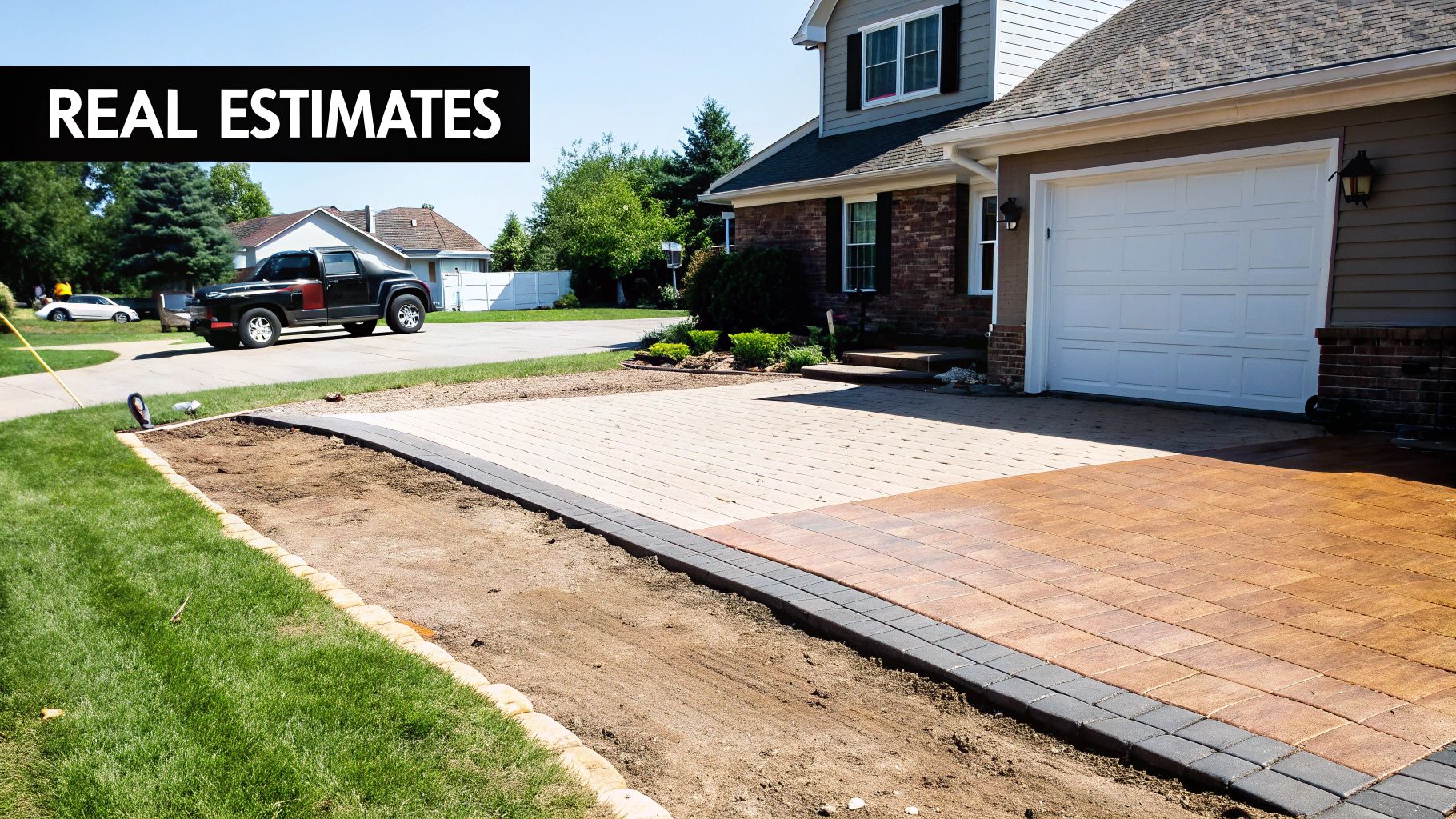
Each project tells a different story. One is a straightforward, functional slab, while another is a decorative backyard centerpiece. Seeing firsthand how size, thickness, and custom finishes affect the bottom line will give you a much more practical understanding of what to expect for your own home or business.
Sample Project Cost Breakdowns for Atlanta Concrete Work
To make it even clearer, the table below breaks down the estimated costs for three common residential and commercial concrete projects we see in the Atlanta area. It’s a side-by-side look at how different needs and finishes shape the final investment.
| Project Scenario | Total Square Feet | Estimated Cost Range | Key Cost Factors |
|---|---|---|---|
| Standard 2-Car Driveway | 600 sq. ft. | $7,200 – $10,800 | Demolition, 6" thickness, rebar reinforcement |
| Stamped Concrete Patio | 400 sq. ft. | $6,400 – $9,600 | Intricate stamping, color, sealer application |
| Community Sidewalk | 500 sq. ft. | $4,500 – $7,000 | Minimal prep, standard broom finish |
As you can see, the "per square foot" price isn't one-size-fits-all. It really comes down to what the concrete needs to do and what you want it to look like.
A Closer Look at the Projects
Let's dig into the details of each scenario.
Example 1: The Standard Two-Car Driveway Replacement
A cracked, failing driveway is probably the #1 reason Atlanta homeowners give us a call. A typical two-car driveway is a perfect example of a project where strength and longevity are everything.
- The Job: We’re looking at a space around 600 square feet (roughly 24 ft x 25 ft).
- The Guts: This isn’t just a surface—it’s a structural foundation that has to hold thousands of pounds of vehicle weight day in and day out. That means a 6-inch thick slab with steel rebar reinforcement is an absolute must for long-term durability. No cutting corners here.
- The Process: The work begins by breaking up and hauling away the old, busted concrete, which is a significant part of the labor and disposal cost. Then, we regrade the ground beneath it to ensure water runs away from your home before pouring the new, heavily reinforced slab. We finish it with a simple, non-slip broom finish.
For a job like this, homeowners in places like Marietta or Alpharetta can expect to invest between $7,200 and $10,800. That breaks down to about $12 to $18 per square foot, a higher rate that accounts for the heavy-duty demolition, extra concrete thickness, and steel reinforcement.
Example 2: The Decorative Stamped Concrete Patio
Now, let's switch gears to a project all about aesthetics and outdoor living: a brand-new stamped concrete patio for a home in Johns Creek. This is where plain gray concrete gets transformed into a true design feature.
- The Job: A comfortable 400 square feet (20 ft x 20 ft)—plenty of room for a grill, table, and chairs.
- The Guts: Since this patio only needs to handle foot traffic, a standard 4-inch thickness is perfectly fine. The real star of the show is the decorative finish. We'll imagine an Ashlar Slate stamped pattern with a charcoal release agent to give it that beautiful, two-toned depth and realistic texture.
- The Process: The site is a level, grassy backyard, so site preparation is minimal. The cost here is driven by the artistry—the specialized labor and materials needed for the stamping process. This includes the heavy pattern mats, color hardeners, release agents, and finally, a protective sealant to make the colors pop and protect the surface.
For this kind of decorative work, the total cost would likely land between $6,400 and $9,600. The average cost per square foot jumps to the $16 to $24 range, showing how premium, labor-intensive finishes increase the price, even on a smaller, thinner slab.
Example 3: The Community Sidewalk Installation
Lastly, let's look at a more utilitarian but vital project: putting in a new sidewalk for a local HOA or a commercial property in Duluth. For these jobs, the priorities are safety, code compliance, and durability.
- The Job: A long, straight section of walkway measuring 500 square feet (100 ft long by 5 ft wide).
- The Guts: A 4-inch thick slab is the standard for sidewalks. The finish has to be a non-slip broom texture to provide safe footing for everyone in any weather, and the whole installation must meet local building codes.
- The Process: This work requires very precise grading to ensure the sidewalk is perfectly level and drains properly. The long runs of wooden forms have to be set with meticulous care. The labor itself is straightforward, but it demands an incredible eye for detail to create a safe, uniform surface.
The total estimated cost for this sidewalk would be around $4,500 to $7,000, which comes out to $9 to $14 per square foot. This is a great example of how a simple, functional project without any demolition or fancy finishes falls on the lower end of the pricing scale.
Want to see more? You can check out the wide range of residential and commercial jobs we've completed by exploring our past concrete installation projects throughout the Atlanta area.
Smart Ways to Manage Your Concrete Budget
Knowing what drives the average cost of concrete per square foot is a great first step. But putting that knowledge into practice? That's how you get a great result without breaking the bank. A new concrete driveway or patio is a serious investment, but there are plenty of practical ways to manage the expense without ever cutting corners on quality.
Think of it like planning a big road trip. You wouldn't skip the oil change or buy sketchy tires to save a buck. Instead, you'd save money by traveling in the off-season or finding a more fuel-efficient route. The same logic applies right here with concrete—smart planning leads to the best long-term value, every time.
Time Your Project Strategically
Believe it or not, one of the best ways to get more for your money is to schedule your project during a contractor's slower season. Here in Atlanta, demand for outdoor work goes through the roof in spring and early summer when everyone's rushing to get their yards ready for the heat.
If you can wait and schedule your pour for the late fall or even a mild stretch in the winter, you'll often find that crews have more wiggle room in their schedules. That flexibility can sometimes translate into more competitive pricing, all without changing a single thing about your project's design.
Prepare Your Site to Reduce Labor Costs
As we covered earlier, a huge chunk of your labor cost comes from site prep. The more a crew has to do before they can even think about pouring concrete, the higher that final bill will be. This is one area where you can have a direct impact.
Taking a few simple steps yourself can make a real difference:
- Clear the Area: Get all the landscaping, old planters, grills, and debris out of the work zone.
- Ensure Access: Make sure there's a wide, clear path for workers and equipment to get in and out easily.
- Trim Branches: Cut back low-hanging tree limbs that might get in the way of machinery or the crew.
Every hour our team doesn't have to spend on basic cleanup is an hour of labor you don't have to pay for. When you're looking for smart ways to manage your concrete budget effectively, it pays to also consider broader strategies to reduce construction costs for an even bigger impact.
Choose Finishes That Balance Beauty and Budget
Those stunning stamped patterns and custom color jobs look incredible, but they definitely come at a premium. If your budget is a top priority, going with a classic, clean finish is a fantastic move. A professionally installed broom finish is timeless, gives you great traction, and offers bulletproof durability at a much more wallet-friendly price.
Investing where it counts is the core of a smart budget. Putting your money toward expert installation, thorough site prep, and a high-quality sealant is a 'spend smart' strategy. These are the things that prevent costly cracks, water damage, and future headaches, saving you thousands in repair bills down the road.
At the end of the day, managing your budget is all about making informed choices. When you focus your investment on the structural quality of the job and get strategic with your timing and finishes, you end up with a beautiful, long-lasting surface that delivers real value for years to come.
How to Get a Concrete Quote You Can Trust
Alright, you've done the research and you're ready to move forward. The final step is getting a quote that turns your vision into a real project plan. A trustworthy quote is much more than just a number at the bottom of a page; it’s a transparent roadmap that details every single part of the job.
This is what separates the pros from the rest. A good estimate ensures you know exactly what you’re paying for, based on the real average cost of concrete per square foot in our area, with absolutely no surprises. Think of it like an itemized grocery receipt—you wouldn't accept a bill that just says "Food," and you shouldn't accept a quote that just says "Concrete Work."
What to Look For in a Professional Quote
A clear, comprehensive quote is the calling card of a contractor who respects your investment. It should break down the entire project into easy-to-understand line items, leaving zero room for confusion or doubt. Vague estimates are often a red flag for hidden costs that will pop up later, so always demand total transparency from the get-go.
At a minimum, your quote should clearly detail these five key areas:
- Materials: This should specify the exact type and amount of concrete mix (e.g., 10 cubic yards of 4000 PSI concrete), as well as any reinforcement materials like rebar or wire mesh.
- Site Preparation: Look for costs associated with demolition of old concrete, excavation, proper grading, and hauling away debris.
- Labor: This line item should cover the cost for the skilled crew needed to complete the installation.
- Finishing: If you’ve chosen any special finishes like stamping, coloring, or sealing, these should be listed with their associated costs.
- Cleanup: A professional job isn't done until the site is clean. The quote should confirm that they'll leave your property looking tidy.
A quote is a promise. A detailed estimate is proof that a contractor has taken the time to thoroughly assess your project, understands exactly what you want, and is committed to delivering on their word without tacking on hidden fees.
Essential Questions for Any Concrete Contractor
Before you even think about signing a contract, you need to ask a few critical questions. The answers you get will reveal a lot about their professionalism, experience, and commitment to doing the job right. This conversation is just as important as comparing prices.
Keep this simple checklist handy:
- Are you licensed and insured? This is the most important question. It’s a non-negotiable that protects you from any liability if an accident or property damage occurs.
- Can you provide a project timeline? A true professional will be able to give you a clear start and end date for the work.
- How do you handle unexpected issues? Problems can happen on any job. You need to know their process for communicating with you and resolving issues fairly and quickly.
It's also important to understand that material costs can shift. For example, ready-mix concrete prices shot up by 28% in January 2022 compared to the year before. This kind of volatility is why getting a timely, local quote is so crucial—relying on old numbers is just asking for trouble. Once you have a few quotes, you can learn how to negotiate with concrete contractors to manage your budget and ensure you’re getting a fair deal.
Ready to see what a transparent, professional process looks like firsthand? We're here to help. Request a free, no-obligation estimate from Atlanta Concrete Solutions. We’ll provide a detailed quote that gives you the clarity and confidence to make the best decision for your home.
Your Top Concrete Cost Questions Answered
Even after breaking down all the numbers, you probably still have a few questions swirling around. That’s perfectly normal. Here are some of the most common things we get asked by homeowners around Atlanta.
How Much More Do Decorative Finishes Cost?
This is a great question. Moving beyond a basic grey slab to something with more personality definitely changes the budget, but it’s often worth it for the incredible boost in curb appeal. The extra cost comes down to more complex labor, specialized tools, and higher-end materials.
- Stamped Concrete: For that beautiful, textured look, you can expect to add $4 to $15 or more per square foot to your base price. A simple cobblestone pattern will be on the lower end, while a highly detailed, custom slate design will be on the higher end.
- Colored Concrete: Want to add a splash of color? This will typically increase the price by $3 to $10 per square foot. The price difference depends on whether we're mixing color into the concrete itself or applying a more intricate stain on top.
Think of it as turning a purely functional surface into a standout feature of your home. You get the look of expensive pavers or natural stone but with the durability and lower cost of concrete.
How Long Does a Concrete Driveway Last in Georgia?
When it’s done right, a concrete driveway is a long-term investment for your home. Here in the Atlanta area, with our hot summers and the occasional winter freeze, a properly installed driveway should easily last you 25 to 30 years.
The secret to that longevity isn't a secret at all—it's professional installation. Proper site prep, a compacted base, the right thickness, and steel reinforcement are non-negotiable. Skipping any of those steps is how you end up with cracks and settling issues down the road.
When Is the Best Time to Pour Concrete in Atlanta?
We can pour concrete pretty much any time of year, but the weather definitely makes the job easier during certain months. For us here in Atlanta, the sweet spots are easily the spring and fall.
The milder temperatures and more balanced humidity levels in these seasons are perfect for letting the concrete cure slowly and evenly, which is exactly what you want for maximum strength. Pouring in the dead of a July summer or during a surprise winter freeze requires special admixtures and extra steps to control the curing process, which can sometimes affect the final cost.
Do I Need a Permit for My Concrete Project?
Ah, the permit question. The answer is a classic "it depends." It really comes down to the size of your project and which city or county you're in around the metro area.
A small, simple patio in your backyard? You're probably in the clear. But for bigger jobs, you almost certainly need one. This includes:
- New Driveways: Especially if we have to cut into the curb at the street.
- Large Patios or Slabs: Most jurisdictions have a square footage limit that, once crossed, automatically requires a permit. For example, many cities require a permit for any flatwork over 200 square feet.
- Structural Foundations: Any new foundation work is a definite yes. This isn't just a suggestion; it's a requirement for safety and code compliance.
Figuring out the local rules can be a headache, but that's part of our job. A good contractor handles all the permitting for you, making sure everything is done by the book.
Ready to get a clear, detailed quote for your project? The team at Atlanta Concrete Solutions is here to provide a transparent estimate that answers all your questions and fits your budget. Get your free, no-obligation quote today at https://atlantaconcretesolutions.com.