
Googling "concrete driveway contractors near me" is the easy part. Sifting through the results to find a true expert you can trust? That's where things get tricky. We're here to help you cut through the noise and make a smart choice for your Atlanta-area home.
Let's walk through what really separates a great contractor from a merely good one, focusing on what matters most: local expertise, a complete service menu, and a reputation built on solid work.
Your Guide to Hiring Atlanta's Best Concrete Driveway Contractors
A new driveway isn't just a slab of concrete; it's a major investment in your home's curb appeal and daily function. And here in the Atlanta area, we have a unique challenge to contend with: that infamous Georgia red clay. Our shifting soil can be brutal on concrete, leading to premature cracks and heaving if the job isn't done right from the very beginning. For example, a driveway installed without a properly compacted gravel sub-base might look fine for a year, but heavy rains can cause the clay underneath to swell and shift, leading to large, structural cracks that can't be repaired.
This is why choosing the right pro is non-negotiable for a driveway that lasts. Think of this guide as your roadmap, designed to help you confidently vet contractors, understand exactly what your project needs, and get a beautiful, durable result you’ll be proud of for decades.
Key Factors for Choosing a Contractor
When you start evaluating your options, it really comes down to a few core principles. Nailing these will ensure you partner with a professional who not only knows their craft but also understands our local environment inside and out.
- Local Expertise: Does the contractor get Atlanta? Someone familiar with our soil and climate knows that proper sub-base preparation is everything. For instance, an experienced local contractor will recommend a minimum 4-inch compacted base of crushed stone (like #57 stone) to create a stable foundation that resists the shrink-swell nature of Georgia clay. This is what prevents those ugly cracks and settlement issues down the road.
- Comprehensive Services: You want a team that can do it all. Whether you need a simple patch repair, a full tear-out and replacement, or a high-end decorative stamped concrete installation, a one-stop-shop makes the process seamless. Imagine you need a crack filled but also want to explore adding a stamped patio next year; using the same trusted company simplifies everything.
- Stellar Reputation: Look for proof. A long list of happy local customers, a portfolio you can actually go see (for example, asking for addresses of projects they completed in your zip code), and clear, honest communication are the tell-tale signs of a company that stands by its work.
This handy visual breaks down the three main paths to think about as you make your decision.
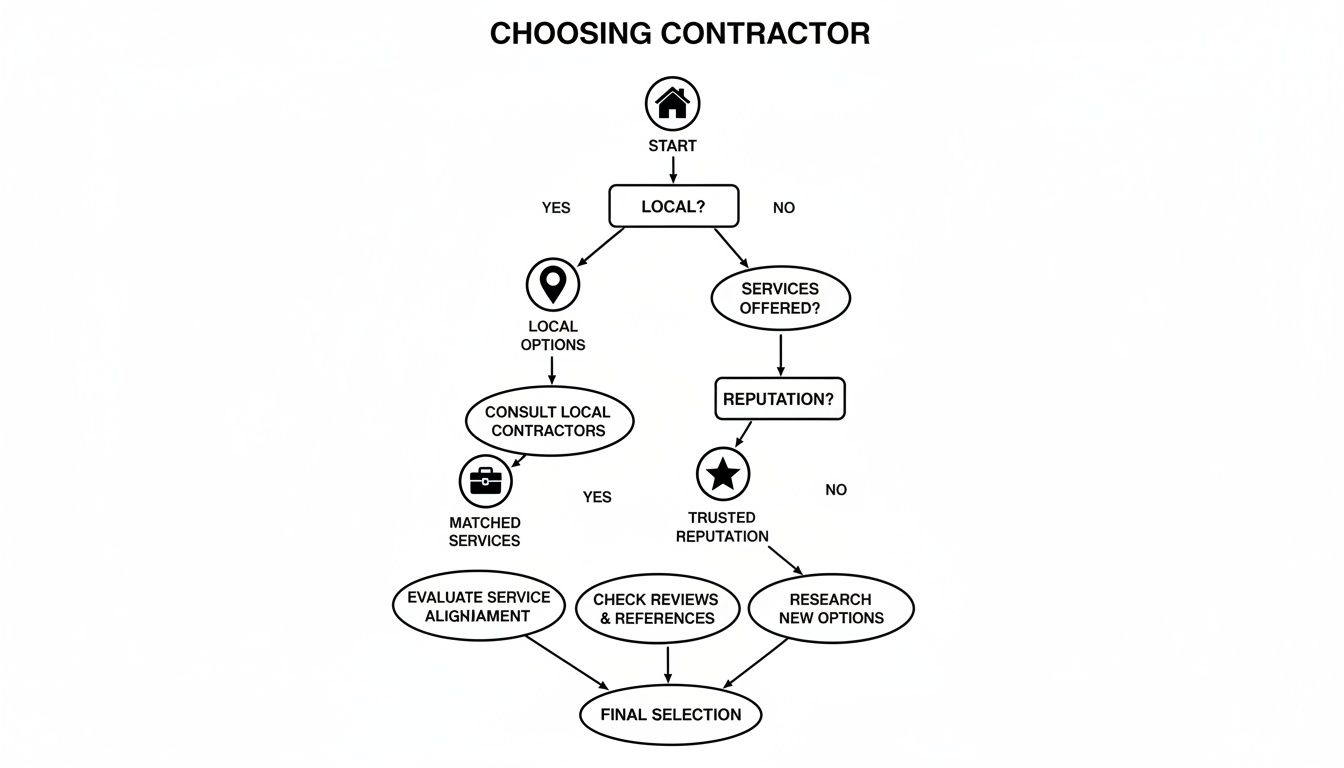
As the flowchart shows, a successful project starts with a simple evaluation of a contractor's local roots, the breadth of their services, and their standing in the community. And it's a big business—U.S. concrete contractors are projected to generate a staggering $91.2 billion in revenue in 2025, a testament to the construction boom in high-demand areas like ours. For a deeper dive into the numbers, you can find more industry insights about concrete contractors in this detailed report.
Is your driveway looking a little worse for wear? Trying to figure out if you need a quick patch-up, a facelift, or a complete do-over can be tricky. It's the classic homeowner's dilemma: you don't want to spend a fortune on a full replacement if a simple repair would have done the job, but you also don't want to throw good money after bad on a cosmetic fix that won't last.
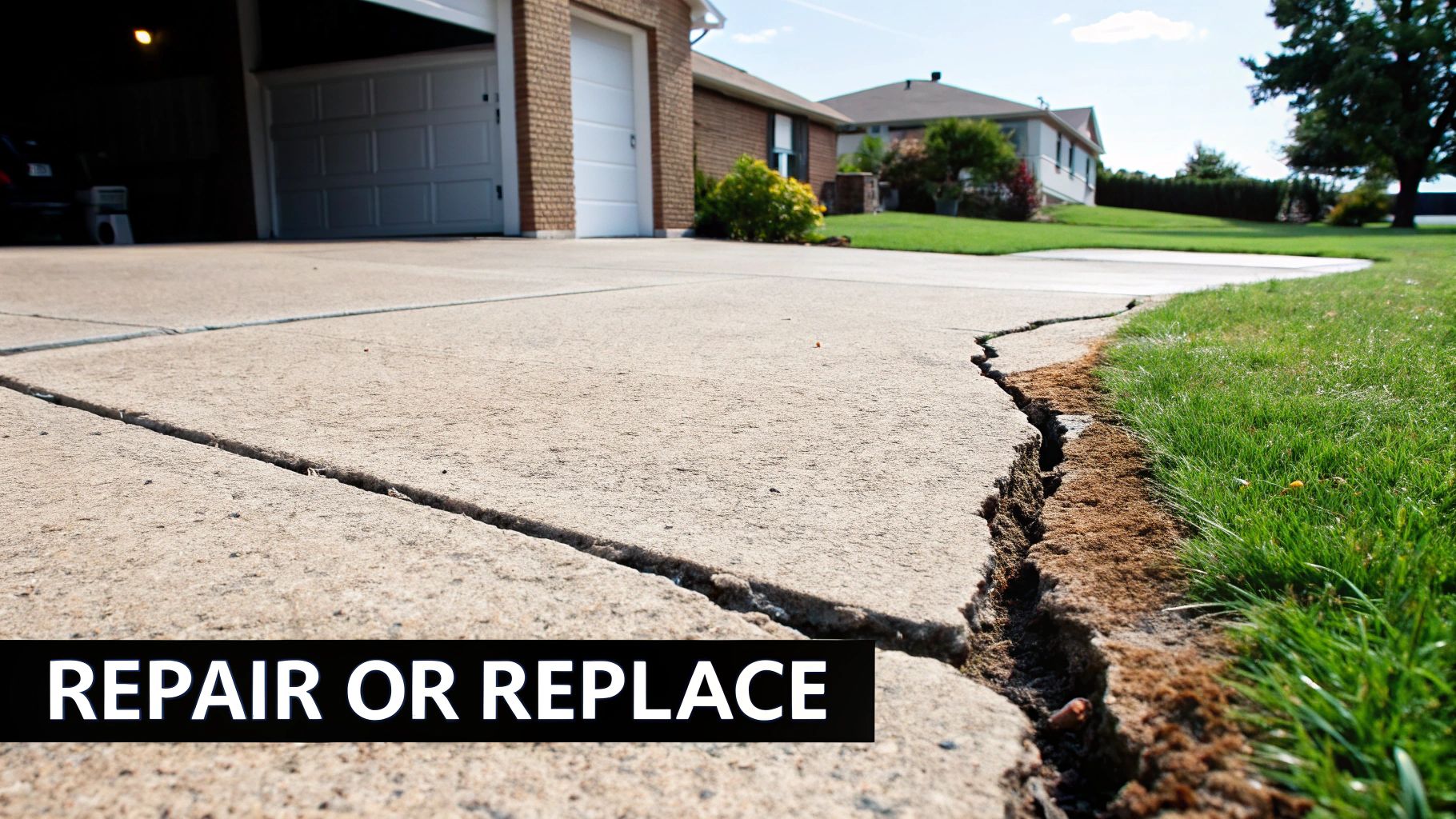
Think of it like this: a small, isolated crack is like a single pothole on a long road. You can patch it (repair). If the whole surface is faded and has a ton of tiny spiderweb cracks but is otherwise solid, it's like an old pair of jeans that just needs a new dye job (resurfacing). But when you have deep, interconnected cracks, crumbling edges, and sections that have sunk, that’s a sign the foundation is shot. The road needs to be completely rebuilt (replacement).
When a Simple Repair Makes Sense
Catching problems early is always the smartest (and cheapest) way to go. If the damage to your driveway is minor and contained, a targeted repair is often all you need to stop a small issue from becoming a big, expensive headache.
You're likely in the repair camp if you're seeing:
- Hairline Cracks: We're talking about those tiny cracks less than a quarter-inch wide that haven't spread across the entire slab. An example would be a small crack near the edge of one concrete section, often caused by shrinkage as the concrete cured.
- Minor Chipping or Flaking: Small bits of the surface popping off, usually from a dropped tool or a rough winter freeze. This is known as "spalling" and is often cosmetic if caught early.
- A Single Sunken Corner: Just one corner of one concrete slab has dipped slightly, but everything else is level and stable. This might happen if a downspout is draining right at that corner, slowly washing away the soil underneath.
Dealing with these issues right away prevents water from getting under the slab. That water is the real culprit—it erodes the base material, leading to the major structural failures that require a full replacement. For these kinds of issues, it's worth exploring professional residential concrete and masonry repair services to get an expert fix.
When to Consider Resurfacing
Resurfacing is your best friend when your driveway is structurally solid but just looks tired and old. It's essentially a cosmetic upgrade. We apply a thin, new layer of a polymer-modified cement overlay right on top of the old concrete, giving it a fresh, uniform finish.
This is a fantastic option if you're dealing with widespread discoloration, old oil stains that won't come out, or a network of very fine surface cracks. For example, if your 15-year-old driveway is structurally sound but has years of stains and looks blotchy, a resurfacing overlay can make it look brand new for significantly less than a full replacement. Remember, though—this only works if the concrete underneath is in good shape.
When a Full Replacement is the Only Real Option
Sometimes, a patch-up job just won't cut it. When the damage goes deeper than the surface, a full replacement is the only true long-term solution. It might feel like a big investment, but it's the right one for your home's safety and value when you see these major red flags:
- Deep, Wide Cracks: Any crack you can stick a finger in is a bad sign. These signal that the ground underneath has shifted. A prime example is a crack that runs all the way across a slab and is noticeably wider than a quarter.
- Multiple Sunken Slabs: If your driveway looks more like a series of rolling hills than a flat surface, the foundation has failed. You'll see this where two concrete slabs meet, with one being an inch or more lower than the other, creating a tripping hazard.
- Crumbling Edges and Potholes: This is called "spalling," where the concrete is actively breaking apart. It’s a clear sign of advanced decay, often seen along the control joints or edges of the driveway.
Any honest contractor will tell you that you can't just pour new concrete over a failing foundation. A proper replacement involves tearing out the old slab, re-grading and compacting the sub-base, and then pouring a new, reinforced driveway that will serve you well for decades to come.
Turn Your Driveway into a Statement with Decorative Concrete
Let's be honest, your driveway is the first thing people see. It’s more than just a path to your garage; it’s your home’s first impression. While a standard gray slab gets the job done, it doesn't have to be the final word. Decorative concrete throws the door wide open to incredible design possibilities, letting you turn a simple functional space into a genuine architectural feature that seriously boosts your home's curb appeal.
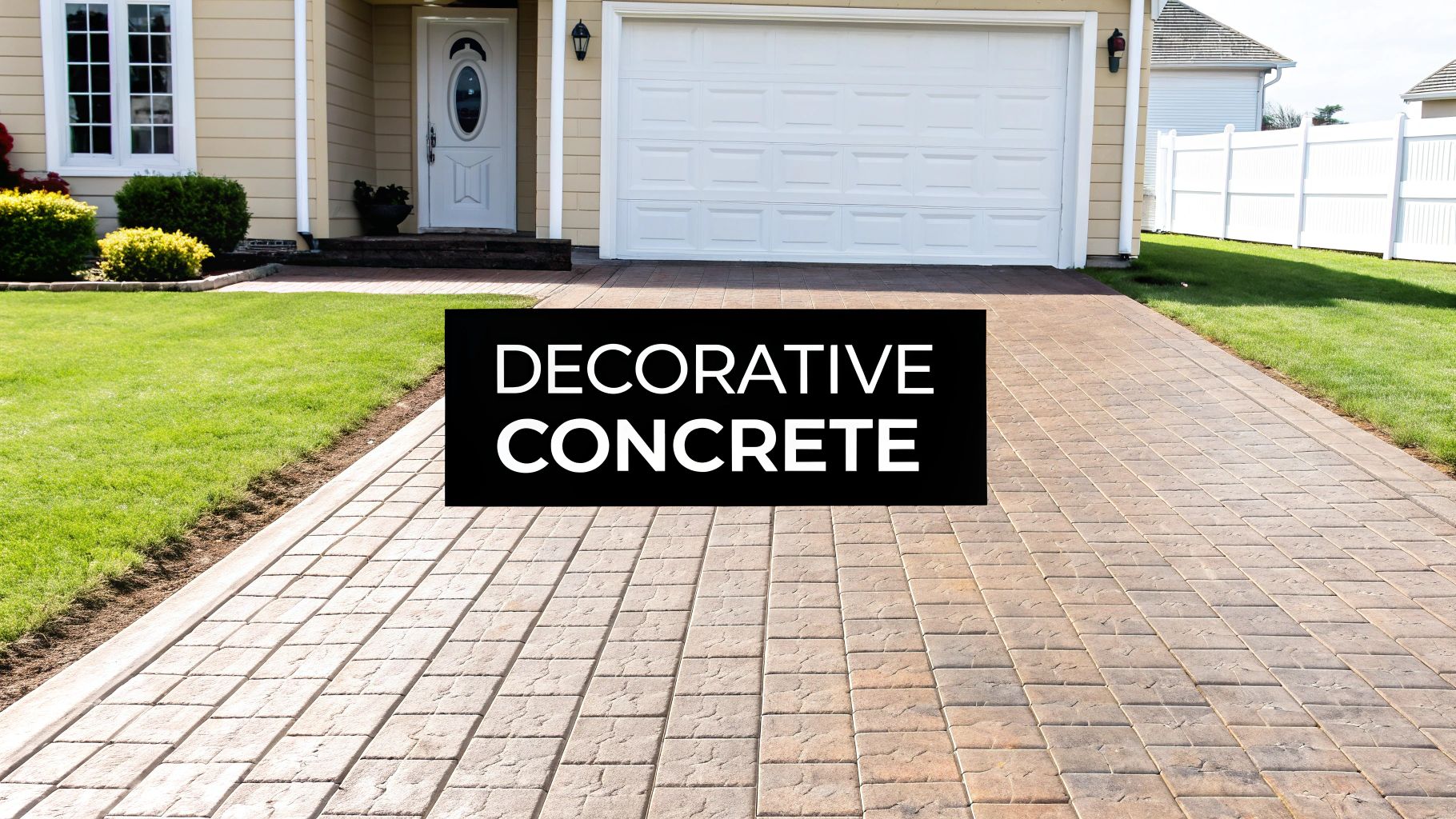
This isn't just about pouring concrete; it's a craft. Using special stamps, integrated colors, and rich stains, a skilled crew can convincingly mimic the look of high-end materials like natural stone, classic brick, or even old-world cobblestone. You get that premium, custom look without the hefty price tag or the constant upkeep those other materials often require. For example, a stamped flagstone pattern can cost less than half of what installing real flagstone would, and you'll never have to worry about pulling weeds from between the "stones."
Stamped Concrete Finishes
Stamped concrete is, by far, the most popular decorative option, and for good reason. The magic happens when we press large, flexible mats into the surface of freshly poured concrete. These mats are molded from the real thing—actual stone or brick—so they transfer incredibly realistic patterns and textures right onto your driveway.
The design flexibility is what gets homeowners excited. For example:
- A timeless running bond brick pattern is the perfect complement to a traditional colonial home in Marietta.
- The deep texture of cobblestone can add a touch of classic, European charm to a more rustic, Tudor-style property.
- For a sleek, modern home in Alpharetta, an Ashlar slate pattern creates a clean, sophisticated entrance that just works.
At the end of the day, stamped concrete gives you the exact aesthetic you're dreaming of, but with the rock-solid durability and strength that only a reinforced concrete slab can provide.
The Power of Color and Stain
Texture is only half the story. Color is where you can truly customize your driveway's personality. We often use integral colors, which are mixed directly into the concrete batch before we pour. This creates a deep, consistent color that runs all the way through the slab, meaning if you ever get a chip years from now, the color won't flake off. For instance, a "sandstone" integral color gives a warm, earthy tone throughout the entire slab.
Another approach is using acid stains or water-based dyes after the concrete has cured. These products penetrate the surface and react with the minerals in the concrete, creating beautiful, multi-toned effects that look a lot like natural stone. For example, an amber acid stain applied over a light gray concrete can produce a rich, variegated look with hints of gold and brown. This method produces a truly unique, artistic finish, ensuring your driveway is one-of-a-kind. Our team has a lot of experience with these techniques, and you can see some of the amazing results on our residential decorative concrete page.
Decorative concrete is more than just a pretty face; it’s a strategic investment. A custom driveway creates a high-end, polished look that can increase your home's perceived value and make it stand out from every other house on the block.
This isn't just a niche trend, either. The demand from homeowners for exteriors that are both beautiful and built to last is exploding. The global decorative concrete market hit USD 19.84 billion in 2025 and is on track to reach a massive USD 33.89 billion by 2035. That kind of growth tells you everything you need to know about where homeowner priorities are headed. You can read more about the growth of the decorative concrete market and what’s driving it.
What to Expect During Your Driveway Installation
Knowing what happens during construction takes all the stress and guesswork out of the process. We believe a professional driveway replacement is a lot like baking a cake from scratch—the final result is only as good as the ingredients, the prep work, and giving it the proper time to set.
This overview walks you through what our team does on your property, step by step. Each part of the process is non-negotiable for building a driveway that will last you for decades. This way, you'll know exactly what’s happening and, more importantly, why it matters.
Site Preparation and Demolition
The very first phase is all about creating a clean, solid canvas. Before we even think about pouring concrete, we have to handle the groundwork. A solid foundation is everything, and a deep understanding of proper site prep is what separates a great driveway from a problem one. For an in-depth look, check out this ultimate guide to driveway excavation and leveling.
Our site prep process is meticulous:
- Demolition and Removal: We start by breaking up your old, cracked, or failing driveway using equipment like jackhammers and skid steers. Every last piece of debris is loaded into a dump truck and hauled away, leaving the area completely clear.
- Excavation and Grading: Next, we dig down to the proper depth, typically 8-10 inches below the final surface level. We carefully grade the soil to create the right slope for drainage (a minimum of 1/4 inch per foot is standard), making sure water flows away from your home’s foundation, not toward it.
- Sub-Base Compaction: We then lay and spread a thick layer of crushed stone aggregate, usually 4-6 inches deep. This sub-base is mechanically compacted with a plate compactor until it’s rock-solid, creating a stable foundation that prevents shifting and settling. Honestly, this is the most critical step for long-term durability.
Forming, Pouring, and Finishing
With a bulletproof foundation in place, it’s time to build the frame and pour the concrete. This is the stage where your driveway really begins to take shape, and our skilled crew works with precision to get a perfect finish.
The worldwide concrete market soared to USD 1.89 billion in 2025 and is projected to hit USD 2.28 billion by 2030, with pavements and roadways leading growth. This surge powers contractors who specialize in replacements that handle heavy loads, from residential drives in Marietta to industrial park roads.
Here’s how the pour comes together:
- Setting Forms: We build sturdy wooden forms (usually from 2×4 lumber) around the perimeter. These act as a mold, defining the exact shape and edges of your new driveway.
- Placing Reinforcement: We install a grid of steel rebar or fiber mesh inside the forms. This gives the concrete incredible tensile strength, helping it resist cracking from vehicle weight and natural ground movement. For example, a rebar grid is essential for sections that will bear the weight of a heavy SUV or truck.
- The Pour: We pour a high-quality concrete mix into the forms, spread it evenly, and level it off using a screed to ensure a consistent thickness from edge to edge.
- Finishing Touches: Finally, we apply your chosen finish. This could be a classic non-slip broom finish, which is done by lightly dragging a specialized broom across the surface, or a beautiful decorative stamped pattern. You can see the possibilities on our page about residential concrete driveways.
The last, and arguably most important, step is curing. Concrete doesn’t just “dry” out like paint. It goes through a chemical reaction called hydration, which is how it builds its strength over time. We'll give you clear instructions, but generally, you'll need to stay off the new surface for at least 24 hours for foot traffic and a full 7-10 days before parking any vehicles on it. A little patience here pays off for years to come.
How to Choose the Right Concrete Contractor in Atlanta
Let’s be honest: picking the right crew for your new driveway is the most critical decision you’ll make. This choice is what separates a beautiful, long-lasting driveway that boosts your home's value from a costly nightmare of cracks and repairs just a few years down the line.
Typing "concrete driveway contractors near me" into a search bar is easy—it's sifting through the results that gets tricky. The real pros stand out not just on price, but on their experience, professionalism, and how they communicate with you.
Your Vetting Checklist
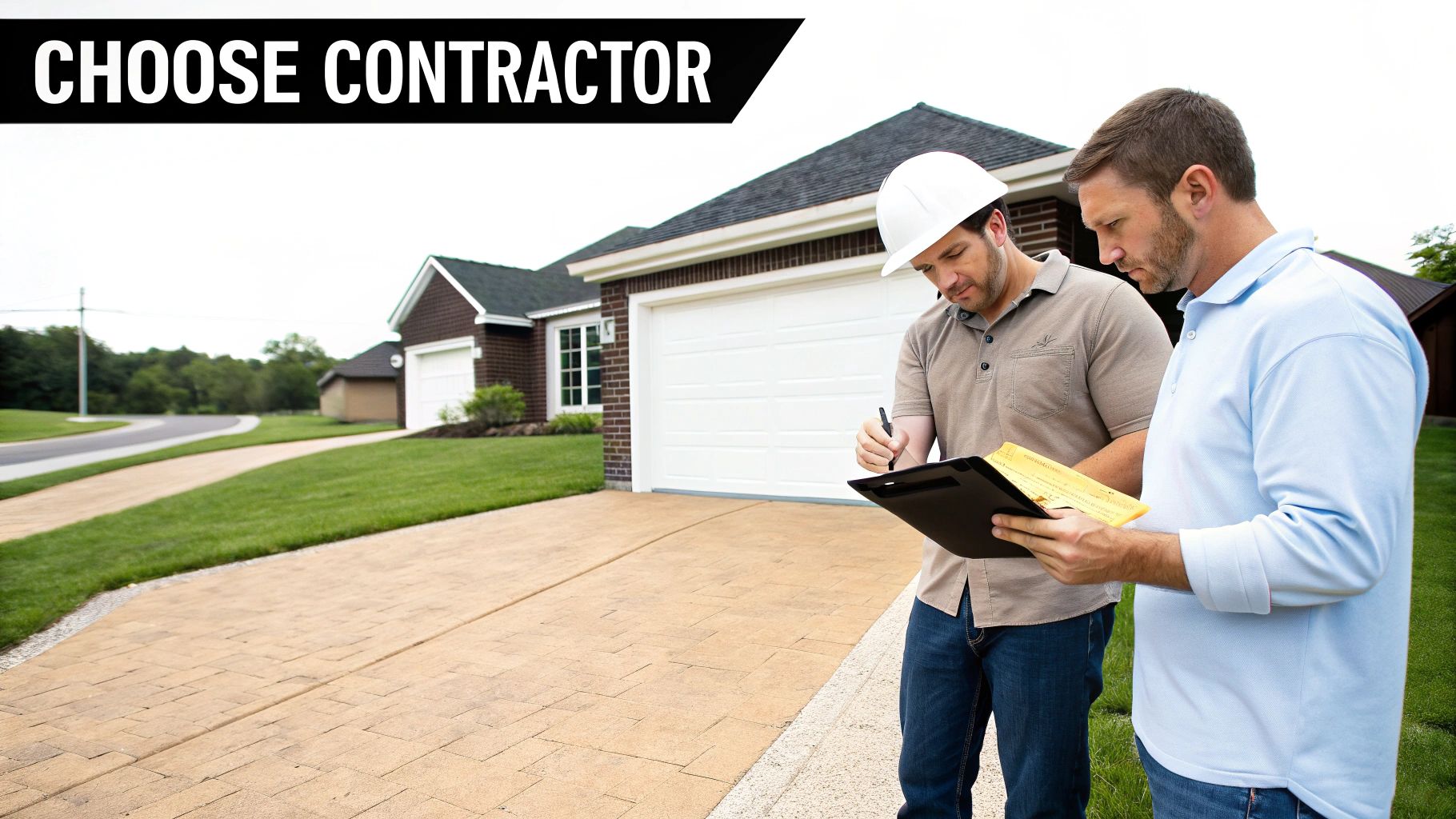
Think of your first meeting with a potential contractor as a job interview—because it is. A reputable company will be more than willing to provide all the documentation and answers you need to feel comfortable hiring them.
Here's a simple checklist to get you started:
- Verify License and Insurance: This is non-negotiable. Ask to see a current Certificate of Insurance for their general liability and worker's compensation. This simple step protects you and your home from any liability if an accident happens on your property.
- Check Their Local Portfolio: Any contractor worth their salt will be proud of their work and happy to share addresses of recent projects nearby. For instance, ask, "Can you give me the address of a stamped driveway you installed in my neighborhood last year?" There's no better way to judge quality than to see it for yourself.
- Read Recent Reviews: Go beyond the star rating. Look for detailed reviews on a few different sites like Google, Yelp, or Angi. You want to see how they communicate, if they stick to the schedule, and—most importantly—how they solve problems when they pop up. A review saying, "They hit a sprinkler line by accident but had it professionally repaired the same day at their own cost," tells you a lot.
A well-organized company that manages its projects and clients smoothly is always a good sign. The best in the business often rely on specialized software, like CRM solutions for the construction industry, to keep everything on track.
Key Questions to Ask Every Contractor
Once you have a shortlist, it's time to dig a little deeper into their process. The quality of their answers will tell you everything you need to know about their expertise.
Don’t be shy about asking technical questions. A true expert will appreciate your interest and be happy to explain why they do things a certain way. If you get vague or dismissive answers, that’s a major red flag.
Make sure to get clear answers to these three questions:
- Can you explain your sub-base preparation process? A solid answer should involve completely removing the old driveway, grading the area for proper drainage, and laying and compacting a thick stone base. A great answer would be, "We remove all old material, grade the soil for a 1% slope, and then install and compact a 4-inch base of #57 stone." This is the most critical step for preventing cracks and sinking later on.
- What concrete mix (PSI) do you use for driveways? For our Atlanta climate, the answer should be at least 4,000 PSI (Pounds per Square Inch). Anything less won't hold up to the weight of vehicles and our temperature swings. Some contractors might also mention adding air-entrainment to the mix, which helps the concrete resist freeze-thaw damage.
- What does your project warranty cover? Ask for the specifics and make sure you get it in writing. A good warranty will cover both materials and workmanship for at least a year. For example, it should cover issues like significant cracking or surface spalling that occurs due to installation error.
Answering Your Concrete Driveway Questions
When you're thinking about a new driveway, a lot of questions pop up. It's a big investment, and you want to feel sure you're making the right choice. We get it. Here are some straight answers to the questions we hear most often from homeowners around Atlanta.
What Does a New Concrete Driveway Cost in Atlanta?
Around the Atlanta area, you can generally expect a new concrete driveway to cost somewhere between $8 and $18 per square foot.
So, what makes the price land on one end of that range or the other? A few things come into play: the overall size of your driveway, how thick we need to pour the concrete, and the amount of site prep involved. For example, a simple 600-square-foot rectangular driveway on a flat lot might cost around $9/sq ft. However, a curvy 1,000-square-foot driveway on a sloped lot that requires extra excavation and a stamped finish could be closer to $16/sq ft. If you're looking for more decorative options like stamped patterns or custom colors, that will naturally move the cost toward the higher end. We believe in total transparency, so our quotes always break down every single cost for you.
How Long Does It Take to Replace a Concrete Driveway?
For most homes, we can get a full driveway replacement done in about 3 to 7 days, from breaking up the old concrete to finishing the new pour. The first day or two is usually focused on demolition, hauling away the old material, and getting the ground underneath perfectly prepared. The actual pour is a big day, but it's typically done in just one. For instance, a standard two-car driveway might take 3-4 days, while a larger, more complex project with extensive grading could take the full week.
After the concrete is poured, the waiting game begins. This is the curing process, and it's absolutely crucial. You can usually walk on the new surface after 24 to 48 hours, but we can't stress this enough: you must wait at least 7 full days before parking your cars on it. Giving it that time to harden is the secret to a driveway that will last for decades.
What Kind of Maintenance Does a Concrete Driveway Need?
One of the best things about concrete is how little maintenance it requires. A few simple steps will keep it looking great and protect your investment for years to come.
The most important thing you can do is have it sealed every 2-3 years. Think of sealant as a protective shield for your driveway. It stops water from seeping in, repels stains from things like oil and other chemicals, and helps prevent damage from road salts during those occasional icy Atlanta winters. A good quality acrylic sealer is a popular choice for this.
A couple of other easy tips will make a big difference:
- Keep It Clean: Hitting it with a pressure washer or just a good scrub brush every so often will wash away dirt and keep it looking fresh. For example, hosing it down after mowing the lawn prevents grass stains.
- Clean Spills Quickly: If you spill oil, gasoline, or even fertilizer, try to clean it up right away. This prevents the spill from soaking in and leaving a permanent stain. Using a degreaser for oil spots is a good example of a quick response.
Ready to get answers specific to your own driveway project? The team at Atlanta Concrete Solutions is here to give you a clear, no-pressure estimate and walk you through the entire process. Get your free quote today and take the first step toward a beautiful, long-lasting driveway.