
So, you're thinking about a new concrete driveway in Atlanta. The first question on everyone's mind is always the same: "What's this going to cost me?" Let's get right into the numbers.
For a standard, no-frills concrete driveway here in the Atlanta area, you're typically looking at a range of $8 to $15 per square foot. If you want to step it up with decorative options like stamped patterns or integrated color, the price moves to about $10 to $18 or more per square foot.
What does that mean for your total project cost? A common two-car driveway, for example, a 20-foot by 20-foot pad (400 square feet), could be anywhere from $3,200 to over $7,200, all depending on the size and finishes you choose.
Your Quick Guide To Atlanta Concrete Driveway Costs
Getting a handle on the cost is the essential first step to upgrading your home's curb appeal. While the price per square foot gives you a great starting point, the final number on your quote will depend on several factors we'll dig into. Think of it less as an expense and more as a foundational investment in your property.
A professionally poured concrete driveway is genuinely one of the smartest upgrades you can make. It’s tough as nails, requires far less upkeep than asphalt, and can seriously boost your property value. A clean, solid driveway makes a powerful first impression, telling everyone that this is a well-cared-for home. For example, a cracked, stained asphalt driveway can make an otherwise beautiful home look neglected, while a crisp, new concrete driveway instantly elevates the entire property's appearance.
A Snapshot Of Driveway Costs
Nationally, the average for a new concrete driveway falls somewhere between $5 and $18 per square foot. For a standard 640-square-foot driveway, that translates to a total project cost of $3,200 to $13,000, based on size, the complexity of the finish, and your local market.
Here in Atlanta, we fall right in line with those numbers. A typical 20×20 foot driveway (400 sq ft) will generally run between $3,200 and $6,000, with the average hovering around $4,600.
This chart breaks down the typical cost difference between a standard finish and a more decorative one.
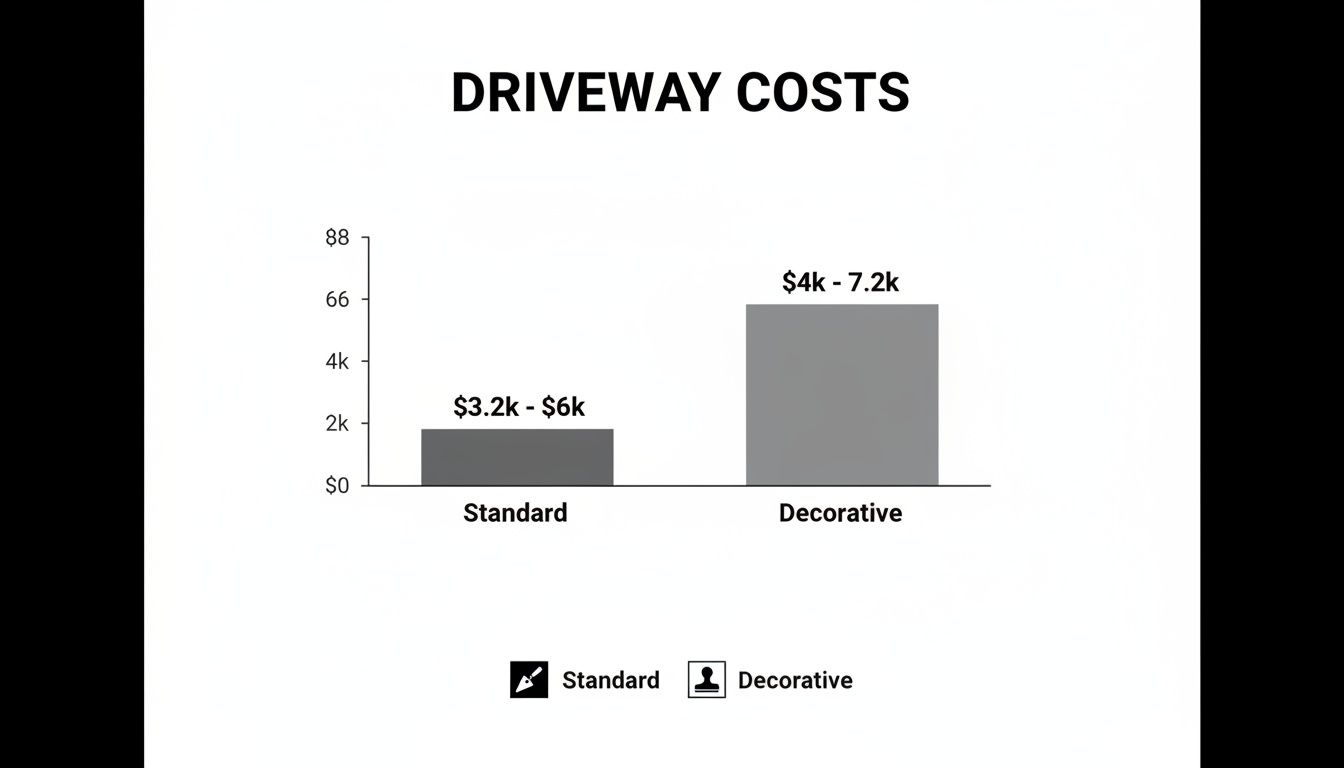
As you can see, the jump to a decorative finish is a relatively modest part of the overall cost, but it can make a massive difference in how your home looks.
Estimating Your Total Investment
To help you get a real-world idea of what your budget might look like, it’s useful to see these per-square-foot costs applied to common driveway sizes. Just remember, these are solid estimates—your final quote will be based on the unique details of your property.
A new concrete driveway is more than just a surface to park on; it's a long-term investment in your property's durability, safety, and curb appeal. Choosing the right materials and contractor ensures you get the best return on that investment for decades to come.
Here's a simple table to give you a clearer picture of potential costs for typical residential driveways around Atlanta.
Estimated Concrete Driveway Costs In Atlanta
This table provides estimated total project costs for different driveway sizes and finishes, helping homeowners budget accordingly.
| Driveway Size (Square Feet) | Standard Gray Concrete (Estimated Cost) | Decorative or Stamped Concrete (Estimated Cost) |
|---|---|---|
| 400 sq ft (20'x20') | $3,200 – $6,000 | $4,000 – $7,200 |
| 600 sq ft (24'x25') | $4,800 – $9,000 | $6,000 – $10,800 |
| 800 sq ft (20'x40') | $6,400 – $12,000 | $8,000 – $14,400 |
Seeing the numbers laid out like this gives you a practical financial starting point. Now, we can get into the specific factors that influence where your project will land within these ranges.
What Really Drives the Cost of a New Driveway?
When you start gathering quotes for a new concrete driveway, you’ll quickly notice that no two are exactly alike. Even for what seems like the same job, the numbers can vary. That’s because pricing a driveway isn't just a simple length-times-width calculation. Think of it more like commissioning a custom piece of furniture than buying something off a shelf; a whole host of variables come together to determine that final price tag. For instance, two neighbors could request quotes for identical 600 sq ft driveways, but one quote might be thousands higher because their property has a steep slope requiring more extensive grading and a retaining wall.
Getting a handle on these key cost drivers is your first step toward having a meaningful conversation with a contractor. It helps you understand exactly where your money is going and gives you context for why one bid might be higher—or lower—than another. Let's pull back the curtain and look at what truly shapes your project's total cost.
Driveway Size and Slab Thickness
This one seems obvious, but there are two parts to it. The first is the total square footage. It’s simple math: a larger driveway needs more concrete, more gravel, and more labor, all of which drive up the cost. A long, curving drive will naturally cost more than a standard two-car parking pad.
The second, and equally important, part is the thickness of the concrete slab itself. Most residential driveways are poured at a 4-inch thickness, which is perfectly fine for everyday cars and light trucks. But what if you own a heavy-duty work truck, a large RV, or a boat on a trailer? In that case, upgrading to a 5-inch or even 6-inch slab isn't just a good idea—it's a critical investment in longevity.
Adding just one inch of thickness might increase your material cost by 15-25%, but it can nearly double the slab's load-bearing capacity. It’s a small upfront cost that prevents the kind of expensive cracks and structural failures that can happen down the road.
Site Preparation and Demolition
What your property looks like before the concrete truck shows up has a massive impact on the final bill. You can't just pour concrete over grass and call it a day. The site needs to be professionally prepped, which involves a few key steps:
- Excavation: The crew has to dig out the entire area to the right depth. This makes room for both the gravel sub-base and the concrete. If you have challenging soil or a sloped lot, this part of the job gets more complex and labor-intensive. For example, a property with heavy clay soil, common in Georgia, requires deeper excavation and more sub-base material than one with sandy loam.
- Grading: This is crucial. The ground has to be carefully graded to make sure water drains away from your house's foundation. Getting this wrong can lead to pooling water that damages both your new driveway and your home.
- Sub-base Installation: A solid layer of compacted gravel is laid down first. This sub-base is the unsung hero of a great driveway—it provides a stable platform and helps distribute the weight of vehicles evenly.
And if you already have an old, busted-up driveway? That has to go first. The cost of demolition and hauling away the old asphalt or concrete will typically add $1 to $4 per square foot to your project total.
Job Site Accessibility
Here’s a practical question that directly affects your quote: how easy is it to get heavy equipment to the job site? If a big concrete truck can pull right up and start pouring, the process is smooth and efficient.
But if your driveway is tucked away in a backyard, blocked by trees or fences, or on a steep hill, things get tricky. The crew might have to use wheelbarrows or rent a special concrete pump to get the material where it needs to go. That extra labor and equipment will definitely show up on the final invoice. For example, a job requiring a concrete pump can add several hundred dollars to the total cost for the rental and additional labor to operate it.
Reinforcement Materials
What goes inside the concrete is just as important as the concrete itself. Reinforcement adds tensile strength, which is what helps the slab fight off cracks from pressure and temperature swings. The two most common options are:
- Wire Mesh: This is a grid of steel wires that gets laid down before the concrete is poured. It's a solid, cost-effective choice for adding basic crack resistance.
- Steel Rebar: These are thicker, more robust steel rods arranged in a grid pattern. Rebar offers far superior structural strength and is the go-to recommendation for thicker slabs or any driveway that will see heavy use. For example, #3 rebar (3/8" diameter) is often used for residential driveways, spaced in a 2-foot grid pattern for optimal strength.
Some contractors are also using macro synthetic fibers, which are mixed directly into the concrete batch. While rebar is still seen as the gold standard for strength, your contractor can help you decide on the best reinforcement based on your specific needs and Atlanta's local soil conditions.
Upgrading Your Curb Appeal With Decorative Concrete Options
Sure, a standard gray concrete driveway gets the job done. It's tough, practical, and a solid choice. But let's be honest—it's just the starting point. Think of decorative concrete as transforming that functional slab into a true design feature, one that boosts your home’s curb appeal the moment someone pulls up.
It’s a lot like picking out the flooring inside your house. You could lay down basic, functional tile, or you could choose hand-scraped hardwood or intricate stone to really define the space. Decorative concrete gives you that same creative control for your home's exterior, letting you craft a look that perfectly complements its architecture and your own style.
Stamped Concrete Finishes
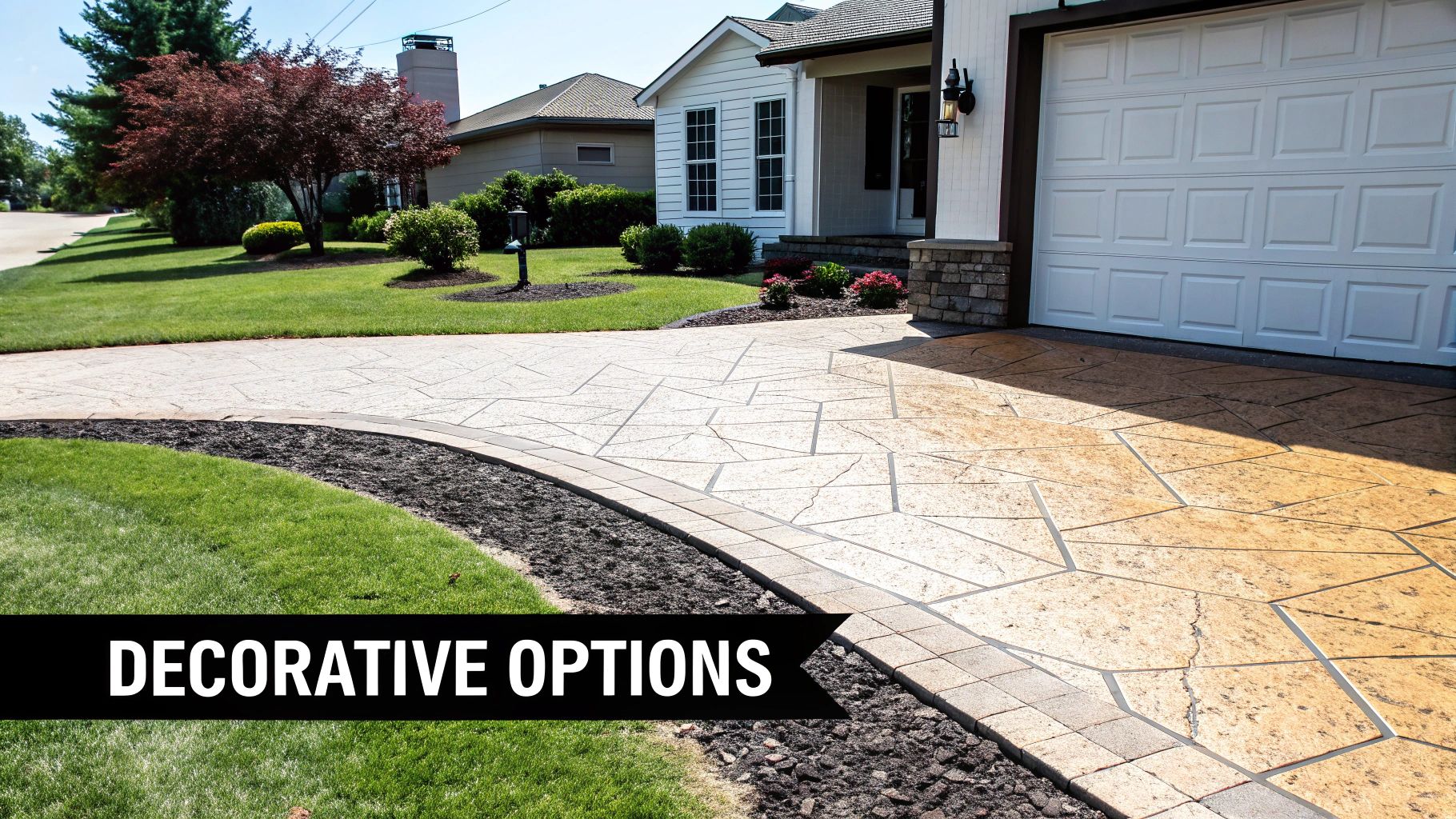
Stamped concrete is hands-down one of the most popular ways to get a premium, high-end look without the eye-watering price tag. The magic happens when we press large, flexible stamps into fresh concrete, creating patterns that convincingly mimic materials like classic brick, old-world cobblestone, natural slate, or even the grain of wood planks.
It’s a process that’s equal parts art and science. Once the concrete is poured and perfectly leveled, we broadcast a color hardener across the surface. Then comes a release agent, which keeps the stamps from sticking as the crew methodically presses them in, leaving behind a deep, realistic pattern.
What you get is a driveway with the authentic texture and visual appeal of expensive masonry, but with the built-in strength, durability, and low maintenance of a single, solid slab of concrete. It’s truly the best of both worlds.
Example: Imagine a homeowner in Marietta with a beautiful Tudor-style home. They want the classic charm of a cobblestone drive to complete the look. Instead of dealing with the cost and hassle of laying thousands of individual stones, they choose stamped concrete. For a fraction of the price, they get a seamless, durable driveway that perfectly captures that timeless aesthetic.
Colored Concrete And Dyes
If you're looking to add personality beyond basic gray but prefer a clean, consistent look, colored concrete is a fantastic option. Rather than just painting a color on top that can eventually chip or peel, we use an integral color that’s mixed directly into the concrete batch before it’s even poured.
This ensures the color permeates the entire slab, so it can’t fade or wear away. The possibilities are huge, from warm tans and rich terracottas to sophisticated deep charcoals. You can dial in the perfect shade to match your home's siding, trim, or landscaping. For instance, a homeowner might choose a warm "Sandstone" integral color to complement their brick ranch home, creating a cohesive and upscale look.
It’s no surprise that demand for these custom looks is booming. The decorative concrete market has already grown from $19.35 billion to $20.56 billion and is on track to hit $29.76 billion by 2032. For Atlanta homeowners considering finishes like stamping or coloring, the cost usually falls between $8 to $18 per square foot. For a typical 400 sq ft driveway, that means a total project cost of roughly $4,000 to $7,200. You can see just how fast this market is growing in recent industry research.
Thinking about how these different finishes stack up against each other? Here’s a quick breakdown of what you can expect to add to the base cost for each style.
Cost Comparison Of Decorative Concrete Finishes
| Finish Type | Added Cost Per Square Foot | Key Benefits |
|---|---|---|
| Integral Color | $1 – $3 | Color runs through the entire slab; won't chip or fade. |
| Stamped Concrete | $2 – $6 | Mimics high-end materials like stone or brick at a lower cost. |
| Exposed Aggregate | $2 – $4 | Unique texture, excellent slip resistance, and very durable. |
| Stains & Dyes | $2 – $5 | Versatile colors; can be used on new or existing concrete. |
As you can see, a small investment per square foot can make a massive difference in the final look and feel of your driveway.
Exposed Aggregate Finishes
For a look that’s both unique and highly functional, an exposed aggregate finish is tough to beat. We create this by pouring a special concrete mix that includes decorative stones, river rock, or even recycled glass. Before it fully cures, we gently wash away the top layer of cement paste, revealing the beautiful, textured aggregate just beneath the surface.
This finish isn’t just for looks—it’s incredibly practical. That textured surface provides fantastic grip and slip resistance, making it a smart choice for sloped driveways or any area that gets slippery during Atlanta’s rainy seasons. It's built to withstand heavy traffic and looks great doing it. An example would be using local Georgia river rock in the mix to create a driveway that is not only safe and durable but also reflects the natural beauty of the region.
To get a better sense of how these styles can be customized for your property, take a look at our guide on residential decorative concrete services.
The Long-Term Value Of A Concrete Driveway
It’s easy to get sticker shock and see a new driveway as just another big expense. But that's like looking at a down payment without thinking about the mortgage. The initial concrete driveway cost is just the first chapter of a much bigger story—a story of a long-term investment in your property’s function, look, and market value.
When you step back and look past that first invoice, the real financial picture comes into focus. Unlike other paving materials that demand constant attention, concrete is built to last. That durability directly translates into real savings over the decades, making it the smarter financial play in the long run.
Concrete Vs. Asphalt: A 30-Year Cost Showdown
The classic debate for homeowners always comes down to concrete versus asphalt. On paper, asphalt often wins the day-one price battle. But this is where we need to talk about the Total Cost of Ownership (TCO).
TCO isn't about the installation price; it’s about every single dollar you'll spend on that driveway for as long as you own it. When you run the numbers this way, concrete doesn't just win—it laps the competition.
Any initial savings from an asphalt driveway quickly get eaten up by its relentless maintenance needs. The constant sealing, patching, and eventual replacement make it a far more expensive surface to own over its life compared to concrete.
Let's break it down over a typical 30-year homeownership period right here in Atlanta:
- Asphalt Driveway: You're lucky if an asphalt driveway lasts 10-15 years before it needs a complete, and expensive, tear-out and replacement. On top of that, it needs to be professionally resealed every 2-3 years to fend off cracks from the sun and rain. Over 30 years, you aren't paying for one driveway; you're paying for two, plus at least a decade's worth of sealing treatments.
- Concrete Driveway: A professionally poured concrete driveway, however, can easily go for 30+ years. Its main upkeep is a simple cleaning and resealing every 3-5 years. This minimal effort protects it from the Georgia elements and keeps it looking sharp for decades with very little fuss.
The difference is night and day. While you’re shelling out money to replace an asphalt driveway for the second time, a concrete driveway is still going strong, having cost you only a fraction in maintenance.
Boosting Curb Appeal And Property Value
Beyond saving you money on upkeep, a great concrete driveway delivers a powerful Return on Investment (ROI) by making your whole property more valuable. A clean, solid driveway sends an immediate signal of quality and care, which is a massive boost to your curb appeal. And that feeling isn't just in your head—it shows up in the sale price when it's time to move. For example, real estate agents often highlight features like a "new stamped concrete driveway" in property listings because they know it's a major selling point for buyers.
The data backs this up. Concrete driveways offer fantastic long-term value, lasting 2-3 times longer than asphalt and delivering an impressive ROI that can hit 80%. While asphalt might seem like a bargain at first, its short life and constant replacement costs add up. You can find more driveway cost and value insights on Angi.com to see the full picture.
At the end of the day, a high-quality concrete driveway is more than just a place to park. It's a foundational upgrade that pays you back with lower lifetime costs, fewer headaches, and a real, measurable increase in your home’s value. It’s an investment built to stand the test of time.
How To Get A Reliable And Accurate Quote
Trying to compare quotes from different contractors can feel like you're comparing apples and oranges. To get a truly accurate estimate for your concrete driveway, you need to make sure every contractor is bidding on the exact same project.
Think of it like commissioning a painting. If you tell one artist you want a "landscape" and another you want a "portrait," you're going to get two wildly different prices. You have to give them the same set of instructions. The same holds true for your driveway.
Preparing For The On-Site Consultation
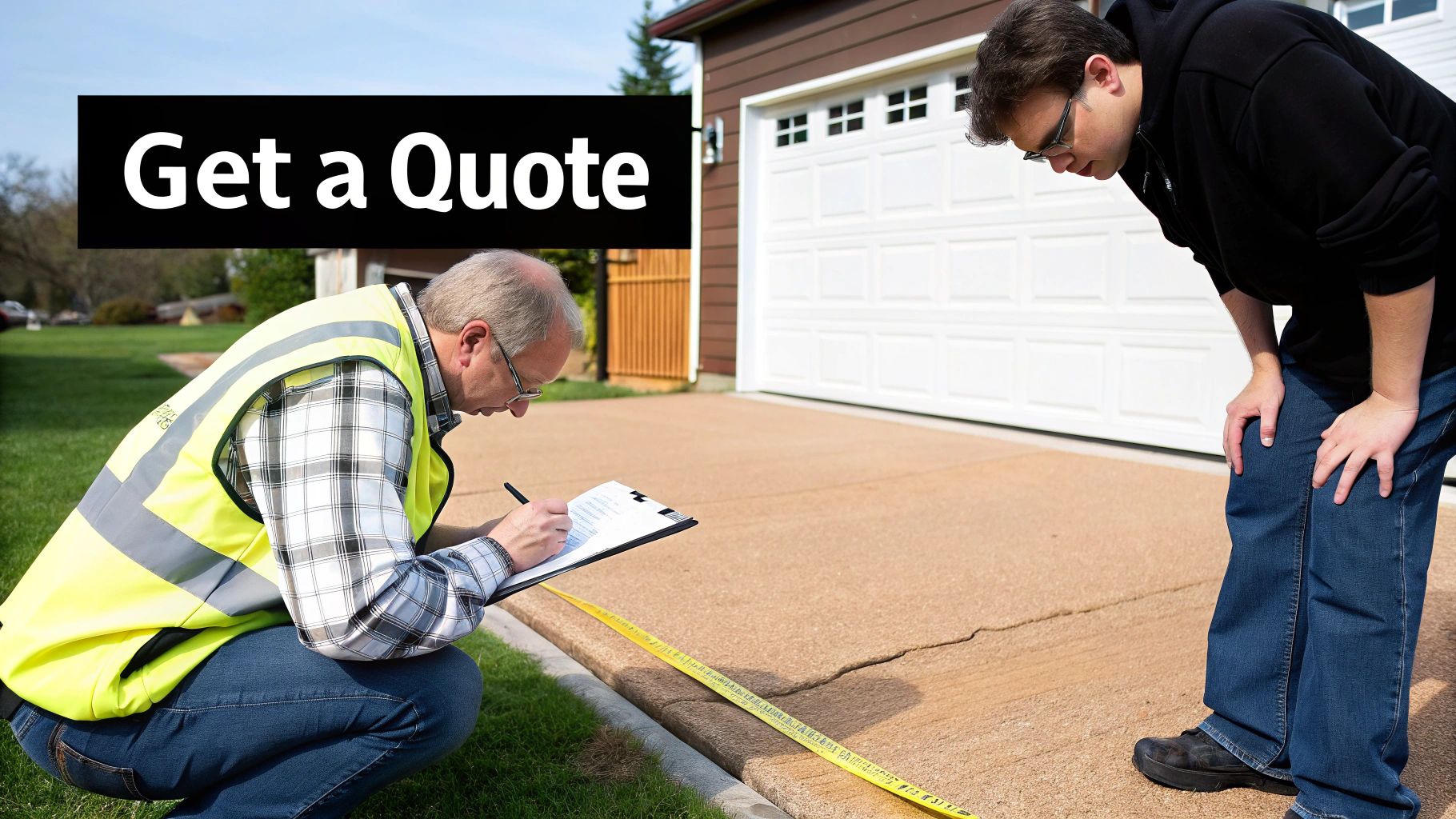
Any reputable concrete pro will insist on seeing the job site in person before giving you a firm price. This isn't just a formality—it's the only way to uncover all the little details that can affect the final cost. To get the most out of this meeting, it pays to do a little homework first.
Come prepared to talk about:
- Project Dimensions: Have a rough idea of the square footage you're working with.
- Desired Finish: Know whether you're leaning toward standard gray concrete or something more decorative like a stamped, colored, or exposed aggregate finish.
- Site Conditions: Be sure to point out any potential challenges, like a steep slope, areas with poor drainage, or tight access that might make it tough for heavy equipment to get in.
- Existing Surface: Let them know if there's an old driveway that needs to be torn out and hauled away first.
Having this information ready helps the contractor take accurate measurements, properly assess the prep work involved, and truly understand what you're looking for. The result? A quote you can actually rely on.
A quote that isn't based on an in-person site visit is just a guess. A reliable estimate requires a professional to physically assess the grade, soil, accessibility, and exact measurements of your property.
Deconstructing The Contractor's Proposal
When you get a proposal, it should be much more than a single number on a page. A transparent, professional quote breaks everything down into line items, so you can see exactly where every dollar is going.
Here’s what you should look for in a detailed breakdown:
- Demolition and Removal: A specific cost for tearing out and disposing of any old concrete or asphalt. For example: "Demolition and haul-away of existing 500 sq ft asphalt driveway: $750."
- Site Preparation: This covers the cost of excavation, grading the land, and putting down the all-important gravel sub-base.
- Materials: The price for the concrete itself (including the specified thickness) and the reinforcement, like rebar or wire mesh.
- Labor and Installation: The cost for the crew’s time to build the forms, pour the concrete, finish the surface, and cut the control joints.
- Finishing Touches: Any separate charges for decorative stamping, adding color, or applying a high-performance sealant.
This level of detail is a good sign you’re dealing with a pro. It proves they've considered every step of the job and aren't burying costs. Understanding what goes into a quote is key for any home project in Georgia, whether it's a driveway or figuring out the cost to aerate a lawn.
When you're ready to get a clear, itemized proposal for your own project, feel free to get a free, no-obligation estimate from our team.
Common Questions About Concrete Driveway Costs
Even after breaking down all the numbers, a big home improvement project like a new driveway always brings up a few more questions. You want to feel confident in your decision, and that means getting all the details straight. We've put together the most common questions we hear from Atlanta homeowners about concrete driveways to clear up any final uncertainties.
Think of this as the last piece of the puzzle. We’ll give you direct, practical answers from our years of experience, making sure you’re ready to move forward.
How Much More Does It Cost To Replace An Old Driveway?
Tearing out an old driveway definitely adds to the bottom line, usually tacking on an extra $1 to $4 per square foot. This isn't just about pouring new concrete; it covers the tough work of demolition and hauling away all the old material.
For a typical 600-square-foot driveway here in Atlanta, you can expect that to add anywhere from $600 to $2,400 to the project. That price tag includes bringing in heavy equipment to break up the old asphalt or concrete, the crew's time to load it all up, and the fees for getting rid of it responsibly.
A good contractor will never hide this cost. They’ll list demolition and removal as a separate, clear line item on your quote. Seeing that transparency is a great sign you're working with a true professional.
Is A Thicker Concrete Driveway Worth The Extra Money?
It absolutely can be, but only if your vehicles demand it. For the vast majority of homeowners driving cars, SUVs, or light trucks, a standard 4-inch thick slab is plenty strong and will last for decades. It's the industry go-to for a reason.
But if you own something heavy—like a big RV, a boat on a trailer, or a commercial work truck—upgrading to a 5-inch or 6-inch slab is a smart move. That extra inch dramatically increases the driveway's ability to handle heavy loads, which is your best defense against cracks and structural failure down the road.
Sure, upgrading the thickness might add 15% to 25% to the initial cost, but it can literally double the slab's strength. You're making a small upfront investment to prevent huge, costly repairs later on. It’s a targeted upgrade that pays for itself over and over again. For example, a homeowner with a 30-foot Class A motorhome should absolutely opt for a 6-inch slab with rebar reinforcement to avoid costly structural damage over time.
For heavy vehicles, think of a thicker slab not as a cost, but as insurance. It’s an investment in the structural integrity of your driveway, ensuring it can handle the load you place on it year after year without failing.
How Long Will My New Driveway Last In The Atlanta Climate?
A concrete driveway that’s installed correctly should easily last 30 years or more here in the Atlanta area. Our climate, with its sticky summer heat and the occasional winter freeze, puts unique stress on concrete. Reaching that 30-year mark isn't a given—it all comes down to the quality of the installation.
To get that kind of lifespan in Georgia, a few things are non-negotiable:
- A Proper Concrete Mix: The recipe has to be right for our climate, with the perfect water-to-cement ratio for maximum strength. This often means using a 4000 PSI (pounds per square inch) mix.
- Expert Subgrade Preparation: The ground underneath has to be graded perfectly for drainage and compacted into a rock-solid base.
- Correct Reinforcement: Steel rebar or wire mesh provides the muscle, helping the slab fight back against cracks caused by soil shifting and temperature swings.
- Strategically Placed Control Joints: Those lines you see in a driveway aren't just for looks. They give the concrete a designated place to crack as it expands and contracts, preventing ugly, random fractures.
To really maximize its life, we always tell clients to seal their driveway every 3-5 years. It’s a simple bit of maintenance that acts like a shield, protecting the surface from water damage, oil stains, and general wear. This is the key to keeping it looking great for decades.
Are There Financing Options Available For Driveway Projects?
Yes, absolutely. Many reputable contractors, including our team, offer financing. We get it—a new driveway is a major investment, and it’s not always something homeowners have saved up for in cash.
Flexible financing plans are designed to make the project more manageable. By breaking the concrete driveway cost into affordable monthly payments, you can get the beautiful, durable driveway you need now without draining your savings. It’s a great way to boost your curb appeal and property value right away and pay for it over time. For example, a $6,000 project might be broken down into payments of around $125 per month over 60 months, depending on the terms.
Don't hesitate to ask about financing options during your initial consultation. A quality company will be happy to walk you through the process and find a plan that works for your budget, making the whole experience much less stressful.
What Is The Best Time Of Year To Install A Concrete Driveway?
For us here in Atlanta, spring and fall are the sweet spots for pouring a new driveway. The weather during these seasons creates the ideal conditions for concrete to cure properly.
It’s all about moderate temperatures. Concrete hardens through a chemical reaction that works best when it’s not too hot and not too cold. Blazing summer heat can make the water in the mix evaporate too fast, leading to a weaker slab. On the flip side, a sudden freeze can stop the curing process in its tracks, permanently damaging the concrete.
Spring and fall give you that perfect “Goldilocks” weather, allowing the concrete to cure slowly and evenly. The result is a much stronger, more durable final product that will stand the test of time.
Ready to transform your home's entrance with a durable, beautiful new driveway? The team at Atlanta Concrete Solutions has the expertise to deliver a flawless installation tailored to your needs and budget.