
Choosing between a concrete driveway and pavers is a huge decision for any Atlanta homeowner. It's a classic tug-of-war between upfront cost and long-term value. Concrete is often the first thought for its affordability and clean, traditional look. But if you're prioritizing design, sheer durability, and performance that stands up to Georgia's weather, pavers really start to pull ahead for lifetime performance. For example, a homeowner in a historic Roswell neighborhood might choose pavers to match the classic aesthetic, while a new build in Alpharetta might opt for sleek, modern stamped concrete.
Choosing The Right Driveway For Your Atlanta Home
A new driveway is a serious investment, one that has a massive impact on your home's curb appeal and day-to-day function. Here in the Atlanta area, this isn't just about looks. It's about picking a material that can handle our unique challenges, from those intense downpours that can cause washouts to the infamous red clay soil that loves to shift and settle, often leading to cracks in rigid surfaces.
Both concrete and pavers bring something different to the table, and getting to the bottom of those differences is how you'll make a decision you feel good about for years to come. This guide will walk you through a head-to-head comparison, breaking down everything from the initial price tag and maintenance needs to how each one holds up over time. If the timeless appeal of concrete has your attention, a great place to start is understanding what goes into a professionally installed residential concrete driveway.
Concrete Vs Pavers: A Quick Comparison
For a quick, at-a-glance overview, this table boils down the essential differences between these two popular driveway materials. It’s designed to help you quickly see which option might be a better fit for your priorities right now—and for the long haul.
| Decision Factor | Poured Concrete Driveway | Interlocking Paver Driveway |
|---|---|---|
| Initial Cost | Lower; often 40-60% cheaper upfront | Higher initial investment due to materials and labor |
| Curb Appeal | Classic, uniform look; decorative options available | Highly customizable with endless colors and patterns |
| Durability | Prone to cracking over time due to soil shifting | Flexible system resists cracking; individual paver replacement |
| Maintenance | Requires sealing every few years to prevent stains | Requires joint sand replenishment and occasional weeding |
| Repair | Difficult to patch without visible seams or color mismatch | Easy and seamless; replace only the damaged pavers |
| Lifespan | Typically 20-30 years with proper maintenance | Can last 50 years or more with proper installation |
This side-by-side look makes it clear: the lower upfront cost of concrete is balanced against the incredible longevity and easy repairability of pavers. Now, let’s dig deeper into the specifics that matter most for your Atlanta home.
A Practical Cost Analysis For Driveway Installation
When you're planning a new driveway, the first question on your mind is almost always about the budget. But understanding the true cost isn't as simple as looking at a price per square foot. It’s about breaking down the materials, the labor involved, and the necessary site prep—all of which are worlds apart when comparing a concrete driveway to one made of pavers.
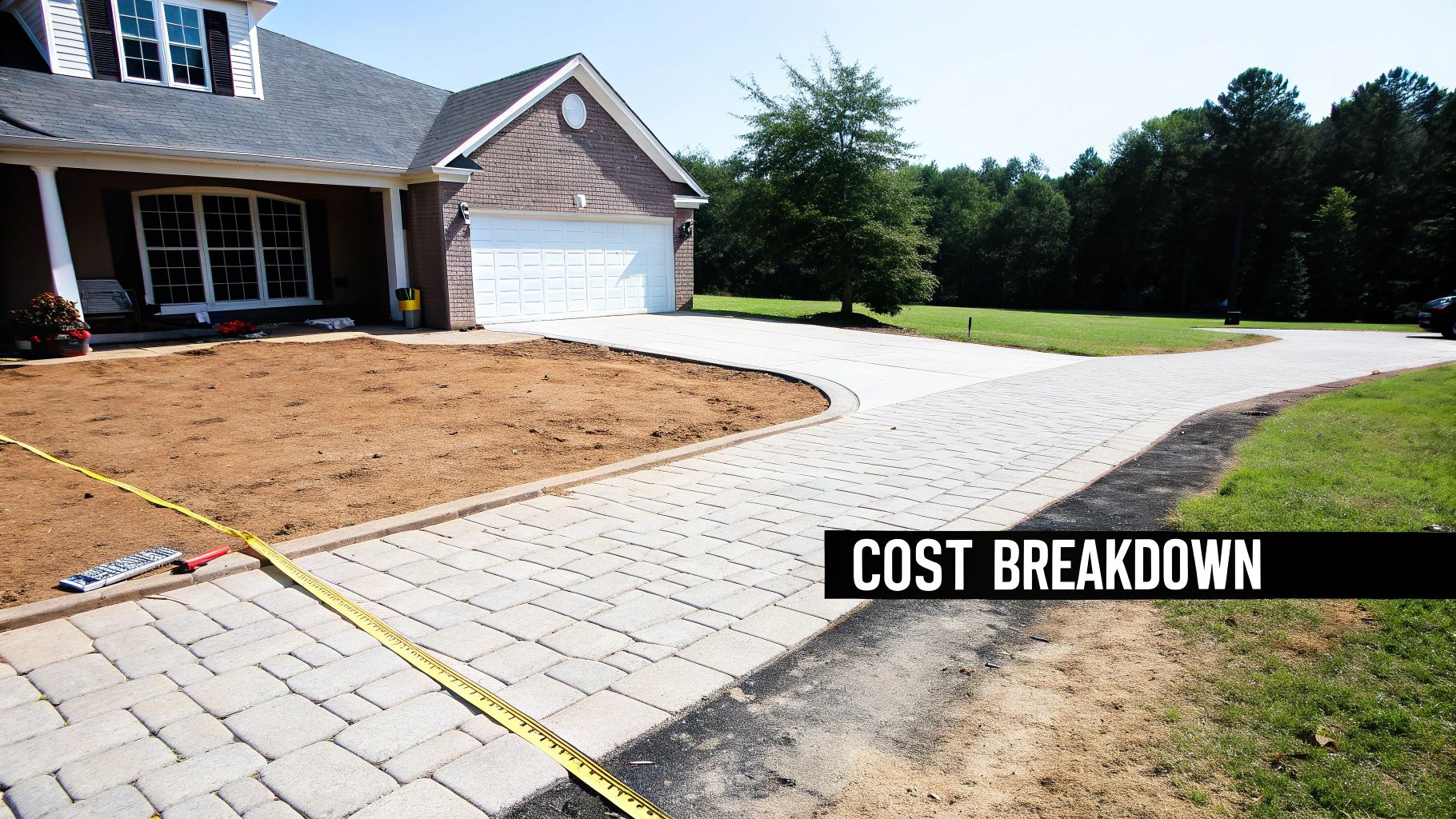
The initial financial hit is where you’ll see the biggest difference between these two. Straight up, concrete is almost always the more economical choice right out of the gate. A big reason for this is that the installation, while definitely requiring a skilled crew, is just a faster process than laying hundreds of individual pavers by hand. For example, a concrete pour can often be completed in a single day, while a paver installation of the same size might take several days of meticulous hand-setting.
Breaking Down Concrete Driveway Costs
Installing a concrete driveway has a few key cost drivers. First, we have to grade the site properly to create a stable base—you can't just pour concrete on unprepared ground. Then, we build wooden forms to hold the wet concrete in place and lay down a grid of wire mesh or rebar for reinforcement. This steel grid is critical for adding tensile strength, helping the slab resist the forces that cause cracking.
The last major expenses are the concrete itself, typically a 4000 PSI mix for driveway applications, and the labor for the pour and finishing work. For a standard, broom-finished surface, all these elements come together to create a tough, long-lasting driveway that doesn't break the bank. The efficiency of the whole operation is what keeps that initial price tag down.
Key Takeaway: The upfront savings with concrete are significant. The process is more streamlined, involving fewer individual components and less intricate labor compared to the meticulous groundwork required for pavers.
The Labor-Intensive Nature of Paver Costs
On the flip side, paver driveways come with a higher initial cost, and it's almost entirely because of the painstaking, labor-intensive installation. The process starts with a much deeper excavation, often 6 to 12 inches deep, to build a multi-layered aggregate base of crushed stone. This base is absolutely critical for proper drainage and stability, especially in areas with clay soil.
Each layer of that base has to be compacted perfectly using a plate compactor. After that, a layer of sand is screeded to create a flawless, level bed for the pavers. Finally, every single paver is set by hand in a precise process that ensures tight joints and a solid, interlocking surface. The job is finished with an edge restraint system, like concrete curbing or plastic edging, to prevent the pavers from shifting outward.
When you're digging into the cost analysis for your project, understanding what goes into an expert paver installation can really put the budget into perspective. The sheer number of skilled labor hours is the primary driver behind that higher ticket price.
A Real-World Atlanta Driveway Example
Let's ground this in a typical Atlanta scenario: a standard two-car driveway, roughly 600 square feet.
When you compare the upfront installation costs, concrete is the clear winner for your wallet. It typically ranges from $4 to $15 per square foot installed, while pavers run between $10 and $30 per square foot. For our average driveway, that's a total of $2,400 to $9,000 for basic concrete, but $6,000 to $18,000 for pavers. That makes concrete anywhere from 40-60% cheaper at the start.
This significant price difference makes poured concrete a compelling choice for homeowners who are focused on the immediate budget.
How Premium Options Affect Your Budget
Of course, you’re not limited to the basics. Both materials have premium upgrades that can either narrow the price gap or widen it even more.
- Stamped Concrete: This is a fantastic decorative option. We can make your driveway look like high-end slate, brick, or cobblestone for a fraction of what those real materials would cost. For example, an "Ashlar Slate" pattern can give a sophisticated, natural stone look. It gives you a major boost in curb appeal while keeping the price well below a standard paver installation.
- High-End Pavers: If you go for natural stone pavers like travertine or bluestone, or you want an intricate pattern like herringbone, the cost of your paver driveway will quickly climb to the very top of the price range. A driveway using imported travertine pavers, for instance, could easily exceed $30 per square foot.
At the end of the day, while pavers have undeniable aesthetic charm and some long-term repair advantages, concrete delivers an affordable, durable, and attractive solution that provides exceptional value right from day one.
Comparing Long-Term Durability And Maintenance Needs
A driveway’s real value isn't just about how it looks on day one; it's measured in decades of performance and the maintenance it's going to demand. When you're weighing a concrete driveway against pavers, their basic structures are what dictate how they'll age, handle stress, and respond to repairs. Looking at the long game is where the differences really start to show.
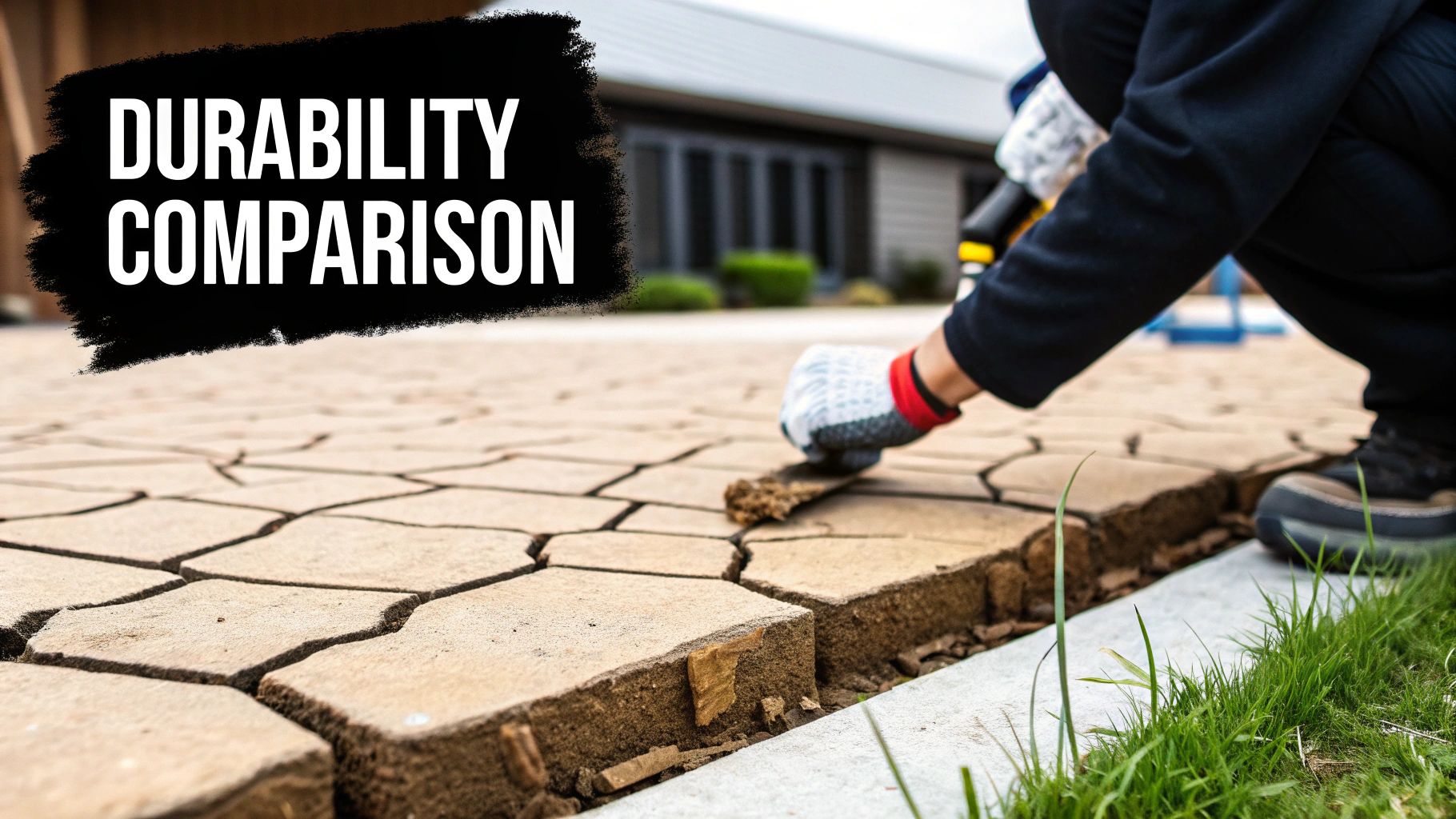
The biggest distinction comes down to how each surface deals with pressure and movement. Poured concrete is one big, rigid slab. While it's incredibly strong when you're talking about direct compression (it can withstand thousands of pounds per square inch), that very inflexibility becomes a problem when the ground underneath shifts—something we see all the time with Atlanta’s clay soil. This movement creates tension that a solid slab just can't absorb, which is why cracks eventually show up.
Interlocking pavers, on the other hand, form a flexible, segmented surface. Each paver is its own unit, and the sand-filled joints between them allow for tiny, almost imperceptible movements. This system can flex and give way to ground settlement, pressure from tree roots, and seasonal expansion and contraction, all without damaging the driveway's surface.
Lifespan Expectations and Real-World Performance
When it comes to pure longevity, pavers often have the edge, especially in climates with ground movement. Paver driveways can last an impressive 25-75+ years, while concrete typically clocks in around 30-50 years. This is all thanks to that flexible, interlocking design that moves with the earth instead of fighting against it.
A rigid concrete slab just doesn't have that give. When the ground shifts from freeze-thaw cycles or settling soil, the concrete is forced to crack under the stress. For instance, a small tree root that would simply cause a minor lift in a few pavers could create a large, spiderweb crack across an entire concrete section. That first crack in a concrete slab is often just the beginning, as it lets moisture seep in and start causing bigger problems down the road.
The Reality of Driveway Repairs
Let's be realistic: no driveway is bulletproof. A heavy impact from a dropped tool, a stubborn oil leak, or major ground movement can take a toll on any surface. The real difference is how you deal with that damage.
Repairing Paver Driveways: A Simple Fix
Suppose a single paver cracks or gets stained beyond cleaning by a transmission fluid leak. Fixing it is surprisingly simple and clean.
- You just pry out the one damaged paver using two flathead screwdrivers.
- Level the sand base underneath to make sure it's even.
- Pop in a new, matching paver from the extras left over from installation.
- Sweep some fresh polymeric joint sand into the gaps and lightly mist with water to activate it.
The result is a perfect, invisible repair. The driveway looks brand new again, and its structural integrity is completely intact.
Repairing Concrete Driveways: A Visible Patch
Now, think about a big crack in a concrete driveway. The repair is a lot messier and, unfortunately, a lot more obvious. You can fill the crack with patching compounds, but they almost never match the original concrete's color and texture, leaving a permanent scar that looks like a gray line drawn on your driveway. For more serious damage, like spalling or "pop-outs," you might have to cut out a whole section and repour it, which creates ugly, visible seams that are prime spots for future cracks. For homeowners staring down this kind of problem, understanding the challenges of professional concrete and masonry repair is the first step to figuring out a solution.
The Repair Bottom Line: Pavers give you a simple, cost-effective, and invisible fix by letting you replace individual stones. Concrete repairs, however, are usually just cosmetic patches that you'll be looking at for the life of the driveway.
Routine Maintenance and Upkeep
Beyond major repairs, everyday upkeep is key to getting the most out of your driveway's lifespan and appearance. When you're budgeting, it's smart to think beyond the installation and factor in long-term things like understanding driveway cleaning costs and sealing.
For a concrete driveway, the most important job is sealing. Applying a quality penetrating acrylic sealant every 3-5 years is a must. This protective coat helps prevent stains from oil and other spills, cuts down on surface spalling from moisture, and generally keeps the driveway looking its best.
Paver driveways need a slightly different kind of attention. The main task is topping off the joint sand every 2-3 years, as rain and weather can wash it out over time. Using polymeric sand, which hardens when wet, can help prevent this and also inhibit weed growth. Sealing pavers is also a great idea; it protects their color from fading in the sun and helps keep weeds from sprouting in the joints.
Exploring Design Flexibility And Curb Appeal
Your driveway is more than just a place to park; it's the first handshake your home offers visitors. It really sets the tone for your entire property. When weighing a concrete driveway vs. pavers, the look you can achieve with each one is a massive factor for any homeowner aiming to boost their curb appeal.
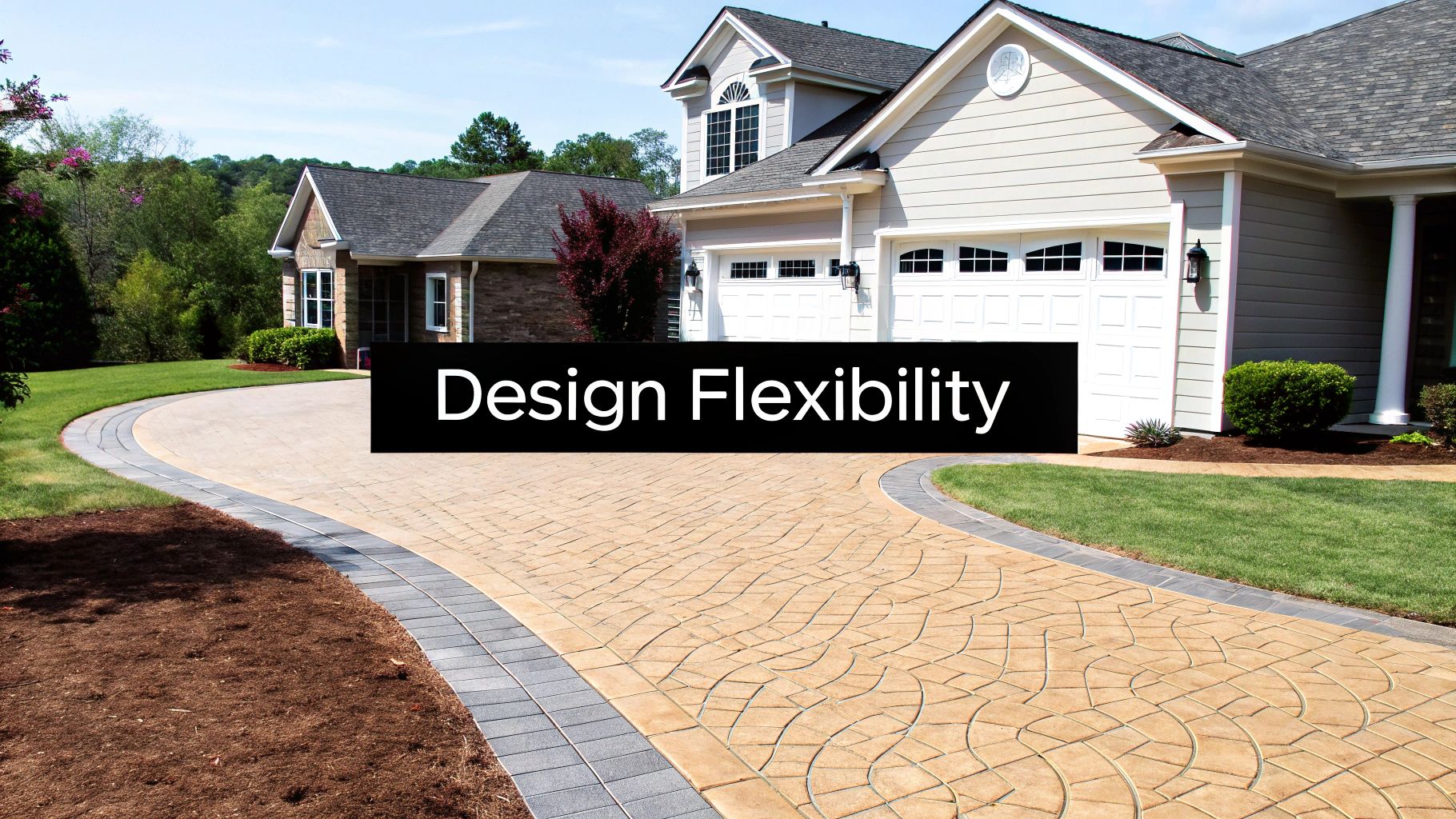
This is where the decision gets personal, and it has everything to do with your home's unique style. Both materials can lead to a stunning finish, but they get there in very different ways. The real trick is figuring out which one lines up best with your vision and your budget.
The Limitless Design Potential of Pavers
When it comes to pure, unadulterated design versatility, pavers are in a league of their own. You have an almost endless menu of shapes, colors, textures, and patterns to choose from. This lets you create a truly custom driveway that feels like it was made just for your home.
Think of it like creating a mosaic for your front yard. You can mix and match different pavers to craft custom borders, design intricate inlays like a compass rose or your house number, or lay down sweeping curves that guide the eye right to your front door. It’s this level of personalization that makes pavers a go-to for homeowners who want a unique, high-end look.
A few popular styles we see around Atlanta include:
- Classic Cobblestone: Absolutely perfect for traditional or historic homes in areas like Inman Park, giving off that timeless, old-world charm.
- Sleek Modern Layouts: Using large-format, smooth-faced pavers in cool grays or charcoals creates a clean, contemporary vibe that complements modern architecture in places like Midtown.
- Rustic Herringbone Patterns: This is a classic for a reason. It adds a touch of elegance and visual interest to just about any style of home, from a brick Tudor in Druid Hills to a suburban home in Marietta.
This freedom means you can tie your driveway design seamlessly into your home's existing brick, stone, or siding, creating a polished and totally cohesive first impression.
Concrete: Way More Than Just a Gray Slab
Sure, a standard gray concrete driveway is clean and gets the job done. But that's just the opening act. Modern techniques have completely transformed concrete into a surprisingly flexible design tool, capable of delivering high-end looks without the price tag of natural stone or complex paver installations.
This is where decorative concrete steals the show. We often see homeowners' jaws drop when they realize the range of aesthetic options available. From rich, integrated colors to complex textures, you can dramatically elevate your property's curb appeal. For anyone leaning this way, I always recommend exploring the world of residential decorative concrete to see just how far it's come.
Stamped concrete is easily one of the most popular choices. We use molds, or "stamps," to press patterns into the fresh concrete, allowing it to convincingly mimic the look of much pricier materials. For example, a "random stone" pattern can replicate the look of natural flagstone, complete with color variations achieved by broadcasting colored powders onto the surface before stamping.
Expert Insight: Stamped concrete gives you the visual punch of materials like natural slate, flagstone, or brick, but you get the structural integrity and lower cost of a single, reinforced concrete slab. It’s a powerful way to get a premium look on a more practical budget.
This approach lets you combine sophisticated patterns and color variations to create the illusion of individual stones, delivering a high-end finish that can seriously boost your home’s curb appeal.
Making The Final Aesthetic Choice
At the end of the day, your decision on curb appeal comes down to balancing your dream look with your budget and what you want long-term.
- Choose pavers if your top priority is maximum customization, intricate patterns, and a classic, premium appearance that you can tailor to any architectural style. For example, if you want a perfect match for the brick on your house, you can select pavers in the exact same color family.
- Choose decorative concrete if you love the look of stone or brick but need a more budget-friendly solution that still delivers a huge visual impact. For instance, if you want a slate look for your driveway but the price of real slate is prohibitive, stamped concrete is an excellent alternative.
Both are fantastic options for enhancing your home's value and making that first impression count. The right choice is simply the one whose unique strengths best fit your personal style and the specific needs of your project.
How Each Driveway Holds Up in Atlanta's Climate
When you're picking a driveway material in Atlanta, you're not just choosing a look. You're choosing a surface that has to go to battle with our city's unique weather. We've got it all: blistering summer heat that can make asphalt soft, sudden torrential downpours, and the occasional winter freeze. All that puts a ton of stress on your driveway, and how it holds up determines how long it will last and how good it will look in a few years.
But the biggest fight isn't with the weather you see; it's with the ground right under your feet. Most of the metro Atlanta area is built on that infamous red clay. This stuff is notorious for swelling up like a sponge when it's wet and shrinking and cracking when it dries out. This constant push-and-pull movement puts incredible pressure on anything built over it.
The Problem with Our Red Clay
That shifting Atlanta clay is the sworn enemy of anything rigid. Think about a standard poured concrete driveway—it's one giant, solid slab. It has absolutely zero give. So, as the clay soil swells and contracts underneath, massive stress builds up inside the concrete.
Eventually, that tension has to go somewhere. The result? Cracks. You might first see a hairline crack appear near a corner, but over seasons of soil movement, it can widen and spread across the entire slab. These aren't just little surface-level blemishes. They're structural failures that get worse over time, letting water seep in and create even bigger problems down the road.
This is where interlocking pavers play a completely different game. A paver system is engineered for flexibility. Each paver is an individual unit, and the sand in the joints between them acts like a series of tiny shock absorbers. This design lets the whole driveway surface shift ever so slightly with the movement of the clay soil, distributing the pressure instead of resisting it.
This built-in flexibility is precisely why paver driveways are so much better at resisting cracks in Atlanta. They’re designed to move with the ground, not fight against it, giving them a huge advantage for long-term durability.
Handling Atlanta's Heavy Rains
We all know how an Atlanta thunderstorm can dump a month's worth of rain in an hour. Dealing with all that stormwater is a big deal for homeowners and the city, and many local rules are now focused on cutting down on surfaces that don't let water pass through.
A typical concrete driveway is like a giant waterproof sheet. When it rains, every drop runs right off into the street, flooding storm drains and washing pollutants along with it. This can lead to erosion at the end of your driveway and localized flooding in your neighborhood.
Pavers, however, are a game-changer for managing water. Those sand-filled joints between each stone create a surface that lets water through. While a standard installation isn't a fully permeable system (unless designed that way), those joints allow a good amount of rainwater to slowly seep into the gravel base below instead of sheeting off immediately. This simple feature does a few great things:
- Reduces Stormwater Runoff: Less water rushes off your property into the city's drainage system.
- Recharges Groundwater: It puts water back into the soil naturally, right where it falls.
- Prevents Puddles: The driveway drains better, so you don't get those annoying pools of standing water after a storm.
This natural ability to handle our heavy rains makes pavers a smarter and more eco-friendly choice for Atlanta, fitting perfectly with today's focus on sustainable building.
Making Your Final Driveway Decision
So, you've weighed the pros and cons. When it comes to choosing between a concrete driveway and pavers, the decision really boils down to balancing your immediate budget, long-term goals, and personal style.
There isn't a single "right" answer. Each material offers a different path forward, and the best choice depends entirely on what matters most for your Atlanta home. This isn't just about cost versus looks; it's a practical choice that affects your maintenance routine, how your property handles our weather, and your home’s overall curb appeal.
Your Priorities Will Guide Your Choice
To cut through the noise in the concrete driveway vs pavers debate, it helps to think about which of these homeowner profiles sounds most like you. This little exercise can quickly clarify which material is a better fit.
-
The Budget-Conscious Renovator: If your top priority is keeping initial costs down while getting a durable, clean-looking surface, poured concrete is your best bet. For example, a young family that just bought their first home might choose concrete to stay within budget, with plans to upgrade later. It delivers a strong, functional driveway without the significant upfront investment that pavers require.
-
The Curb Appeal Maximizer: For homeowners aiming to make a powerful visual statement and perfectly complement their home’s architecture, pavers are the clear winner. A homeowner with a custom-built home, for example, might choose pavers to create a unique circular drive with an intricate central pattern. With a nearly endless variety of colors, shapes, and patterns, you can create a truly custom, high-end look.
-
The Long-Term Value Seeker: If your main goal is to minimize future headaches and invest in a surface built to last a lifetime, pavers offer superior long-term value. Someone planning to stay in their "forever home" would benefit most from this, as the easy, seamless repairability and natural resistance to cracking in Atlanta's clay soil mean you'll avoid major fixes down the road.
This decision tree breaks down the choice by focusing on how each option stands up to Atlanta's unique climate challenges.
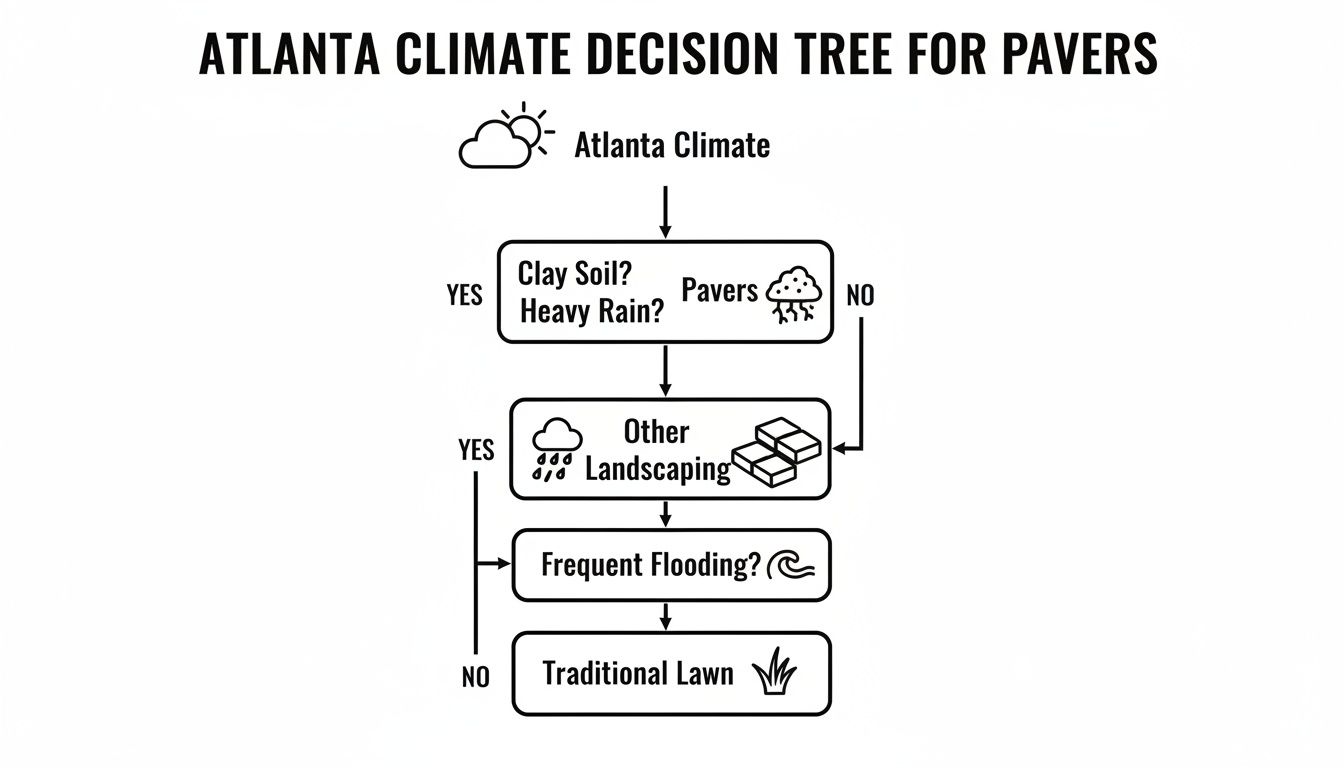
As you can see, for dealing with our notorious red clay soil and heavy rainfall, pavers often come out ahead.
Taking The Next Step
Once you feel confident in your choice, it’s time to get some real-world numbers for your specific property. A professional quote is the only way to know for sure what your project will cost. Here at Atlanta Concrete Solutions, we provide detailed, no-obligation estimates for both traditional and decorative concrete driveways.
When you're ready to talk to a contractor, it’s good to have a few questions handy.
Key Questions for Your Contractor: A good contractor should be able to walk you through their entire process. Ask them about their base preparation methods (e.g., "How deep will you excavate and what kind of aggregate will you use?"), what kind of reinforcement they use for concrete (rebar or wire mesh), the warranty they offer, and how they plan to manage drainage on your property.
Their answers will tell you a lot about their experience and attention to detail. A contractor who gives a thorough response understands what it takes to build a driveway that lasts in our region.
Ready to get started? Reach out to our team at Atlanta Concrete Solutions to schedule your free, detailed estimate today.
Common Questions We Hear About Driveway Materials in Atlanta
Even after comparing the good and the bad, most homeowners still have a few questions rolling around in their minds. It's totally normal. Getting straight answers to these last-minute concerns is what helps you make that final call between concrete and pavers with real confidence. Here are the questions we get asked most often by folks right here in the Atlanta area.
Which Driveway Material Adds More Value to My Home: Pavers or Concrete?
Let's be clear: any new, well-kept driveway is a plus for your home's curb appeal. But when it comes to return on investment, pavers usually have the edge. The upscale, custom appearance of a paver driveway sends a strong message to potential buyers, creating a first impression that can seriously boost what they think your home is worth.
Think about it this way. A house with a striking herringbone paver driveway that perfectly matches its architecture is going to catch the eye far more than the one next door with a plain concrete slab. This isn't just about looks; it translates into real dollars. That "wow" factor can lead to a higher selling price and a quicker sale because it gives the home a high-end, move-in-ready vibe that buyers will pay a premium for.
How Long Does It Take to Install a New Driveway?
The timelines for concrete and pavers are pretty different. One is a waiting game, while the other is more about upfront labor.
- Concrete Driveway: The pour itself is quick. A good crew can prep the ground, build the forms, and pour the concrete for a typical driveway in just 1-3 days. The catch is the curing time. You absolutely have to stay off of it for at least 7-10 days while it hardens and gains strength. You can typically walk on it after 24-48 hours, but no vehicles.
- Paver Driveway: This one takes more hands-on work from the start. All the digging, base prep, and laying each paver one by one means the job can take a week or even a bit longer for a large or complex project. The huge upside? The second the crew sweeps in the final sand and compacts the pavers, your driveway is ready to use immediately. No waiting required.
Can You Just Install Pavers on Top of My Old Concrete Driveway?
Yes, sometimes you can! It's a popular, budget-friendly choice, but it all comes down to the health of your existing concrete. If your old driveway is solid—no huge cracks, sinking spots, or crumbling edges—we can lay a sand base and install pavers right on top. This is called an overlay, and it saves a ton of time and money because you skip the messy demolition and hauling away of the old slab.
A Word of Caution: An overlay is only as strong as its foundation. If your current concrete driveway is failing, with significant "heaving" or deep cracks, it has to go. Trying to put beautiful new pavers over a busted slab is just asking for trouble; you'll end up with an uneven, unstable mess in no time.
When it comes to pouring new concrete, however, starting fresh is almost always the only way. We have to tear out the old slab completely to make sure we build a solid, stable foundation from the ground up.
Ready to transform your home's entrance with a durable, beautiful concrete driveway? The team at Atlanta Concrete Solutions has the local expertise to deliver a flawless installation tailored to your home and budget. Contact us today for a free, no-obligation quote!