
Concrete is far more than just a foundational gray slab; it’s a versatile canvas capable of dramatically enhancing your property's functionality, safety, and curb appeal. The final step in any concrete installation, the finish, is what dictates its texture, durability, and ultimate aesthetic. For homeowners and property managers in the Atlanta area, choosing the right finish is not just a design decision-it's a practical one, essential for withstanding our region's distinct climate of hot, humid summers and occasional winter freezes. An improper finish can lead to premature cracking, spalling, or dangerously slippery surfaces when wet. For example, a smooth troweled finish on an outdoor patio can become a serious slip hazard during a summer rainstorm.
This comprehensive guide is designed to demystify the world of concrete finishing techniques. We will explore ten distinct methods, ranging from the classic, functional broomed finish ideal for driveways to the sleek, modern appeal of polished concrete for interior floors. Each section provides a clear, actionable overview, covering the specific tools required, typical cost ranges you can expect in the Atlanta market, and a balanced look at the pros and cons. For instance, we'll explain why a stamped concrete patio might cost between $12-$20 per square foot, while a simple broomed finish could be as low as $6-$10.
Whether you're planning a new stamped concrete patio, resurfacing a commercial walkway, or considering an epoxy coating for your garage, this article will equip you with the necessary knowledge. We'll provide practical examples, maintenance advice tailored to Georgia's weather, and clear guidance on when a project is suitable for a DIY approach versus when it’s best to call in a professional contractor. This roundup will help you select the perfect finish to achieve your aesthetic goals while ensuring long-term performance and value for your investment.
1. Stamped Concrete
Stamped concrete is a versatile and popular decorative finish that transforms standard concrete into a high-end, textured surface. This technique uses specialized stamps or molds, often made from polyurethane, to press patterns into freshly poured concrete. For example, an "Ashlar Slate" stamp creates the look of rectangular cut stone, while a "Cobblestone" stamp mimics the rounded stones of historic European streets. The result is a durable surface that successfully mimics the look of more expensive materials like natural stone, brick, slate, or even wood planks, but at a fraction of the cost.
This concrete finishing technique is highly valued for its ability to combine the strength and longevity of concrete with sophisticated aesthetic appeal. In Atlanta, you'll often see stamped concrete used for residential driveways in neighborhoods like Alpharetta, creating the look of cobblestone or natural pavers. It's also a go-to for commercial properties, enhancing outdoor patios and walkways in shopping centers, like those found in the Avalon development, to create a more inviting atmosphere.
Best Applications and Key Considerations
Stamped concrete is ideal for projects where both durability and visual impact are priorities. Its most common applications include:
- Patios and Pool Decks: Creates a non-slip, decorative surface that complements outdoor living spaces. A popular example is a "flagstone" pattern stamped around a pool for a natural, rustic look.
- Driveways and Walkways: Provides immense curb appeal by replicating the look of premium materials like flagstone or brick. A "herringbone brick" stamp is a classic choice for driveways.
- Interior Floors: Offers a unique and rustic flooring option for basements, sunrooms, or commercial lobbies, such as a "wood plank" stamp for a farmhouse-style basement floor.
Pro Tip: Timing is everything with stamped concrete. The stamps must be applied when the concrete has reached the perfect stage of plasticity-firm enough to hold the pattern but soft enough to be imprinted. In Atlanta's humid climate, this window can be shorter, making professional installation crucial for achieving a clean, consistent impression. For instance, on a hot July day, the working time might be reduced by 30-40% compared to a cooler spring day.
For homeowners and property managers looking to elevate their property's appearance with a durable, custom solution, stamped concrete is an excellent choice. To see a gallery of local projects and understand how it can be applied to your home, you can find more information about Atlanta's residential decorative concrete options. Proper sealing every couple of years is essential to protect the color and intricate patterns from wear and tear, especially in high-traffic areas.
2. Polished Concrete
Polished concrete is an industrial-grade finishing technique that uses specialized diamond grinding equipment to create a smooth, glossy, and highly reflective surface. The process involves multiple stages of grinding with progressively finer diamond grits—starting with a coarse 40-grit and moving up to a super-fine 3000-grit for a mirror-like finish—often combined with a chemical densifier that hardens the concrete. This transforms a standard concrete slab into a sleek, modern floor that rivals natural stone in appearance while providing superior durability and ease of maintenance.
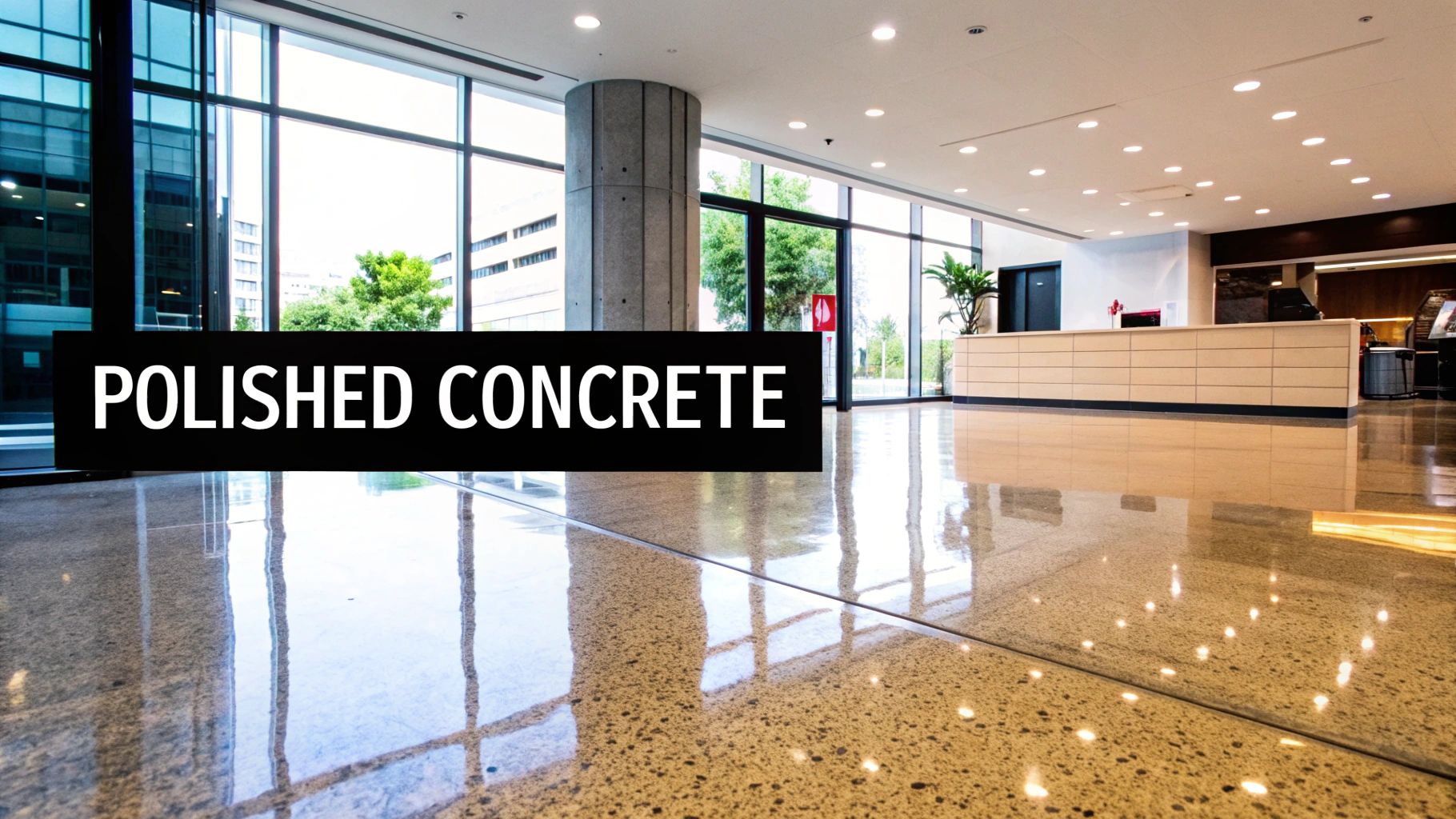
This concrete finishing technique is celebrated for its blend of minimalist aesthetics and high performance. In Atlanta, you'll find polished concrete floors in modern commercial office lobbies, creating a sophisticated first impression. It is also a popular choice for retail showrooms in areas like Marietta, where its clean, contemporary look enhances product displays and withstands heavy foot traffic with minimal upkeep. A prime example is its use in modern art galleries or high-end car showrooms where the floor's reflectivity enhances the items on display.
Best Applications and Key Considerations
Polished concrete is the ideal solution for environments demanding a durable, low-maintenance, and visually impressive flooring system. Its most common applications include:
- Commercial and Retail Spaces: Provides a high-end, modern aesthetic for lobbies, showrooms, and stores. For example, a grocery store might use a semi-polished finish for durability and easy cleaning.
- Industrial and Warehouse Floors: Offers an abrasion-resistant, dust-free surface perfect for manufacturing plants and distribution centers where cleanliness and floor flatness are critical for forklift operation.
- High-End Residential Interiors: Used in modern homes for a seamless, luxurious flooring option in living areas, kitchens, and basements.
- Sports Facilities: Delivers a smooth, high-performance surface suitable for indoor basketball and pickleball courts.
Pro Tip: The final gloss level is a critical decision. A high-gloss finish (Level 4, 3000-grit) provides maximum reflectivity and a striking look, but it may require more frequent buffing to maintain its shine in high-traffic areas. A lower-gloss satin or matte finish (Level 2, 400-grit) is more forgiving and hides minor imperfections, making it a practical choice for many commercial settings.
For property managers and business owners seeking a sophisticated yet resilient flooring solution, polished concrete is an excellent long-term investment. To explore how this can be implemented in a business setting, you can find more information about Atlanta's commercial decorative concrete services. Regular cleaning with a pH-neutral cleaner and using protective mats at entryways will preserve the floor's beauty and integrity for years to come.
3. Broomed Finish
A broomed finish is one of the most practical and widely used concrete finishing techniques, created by lightly dragging a specialized broom across freshly poured, partially hardened concrete. This simple action creates fine, parallel lines that form a slip-resistant, textured surface. The depth of the texture can be controlled by the stiffness of the broom's bristles; a soft-bristle broom creates a light texture, while a stiff-bristle broom produces a coarser, more aggressive finish. It is a cost-effective and highly functional finish valued for its safety features and durability.
This technique is a cornerstone of concrete work due to its straightforward application and significant safety benefits. In Atlanta, you will find broomed finishes on nearly every residential driveway in communities from Marietta to Decatur, where its excellent traction provides safety in wet or icy conditions. It's also the required standard for most municipal projects, such as sidewalks and public parking areas throughout the metro area, ensuring pedestrian safety and meeting ACI (American Concrete Institute) guidelines for slip resistance.
Best Applications and Key Considerations
A broomed finish is the ideal choice for projects where slip resistance, durability, and budget are the primary concerns. Its most common applications include:
- Driveways and Walkways: Provides essential traction for both vehicles and pedestrians, especially on sloped surfaces.
- Patios and Pool Deck Perimeters: Creates a safer, non-slip surface around outdoor living areas, often used in combination with decorative borders.
- Ramps and Industrial Floors: Offers a functional, high-traction surface for commercial and accessibility applications, like loading docks or wheelchair ramps.
Pro Tip: The direction of the broom strokes is critical for maximizing safety. For optimal water drainage and grip, the lines should always be brushed perpendicular to the primary direction of foot or vehicle traffic. For example, on a sidewalk, the broom strokes should run from one side to the other, not along its length. A consistent, single-direction pull is key to achieving a clean, uniform look.
For homeowners seeking a safe, long-lasting, and affordable surface, a broomed finish is an excellent and reliable option. To understand how this finish is applied in local projects, you can explore options for Atlanta's residential driveway concrete. Regular cleaning or power washing will keep the grooves free of debris, maintaining both its appearance and its slip-resistant qualities for years to come.
4. Exposed Aggregate
Exposed aggregate is a highly durable and visually striking decorative finish achieved by removing the top layer of cement paste to reveal the aggregate (pebbles, stones, and sand) mixed within the concrete. This process, often done using a chemical surface retarder and a pressure washer, creates a terrazzo-like surface with natural color variations and a rugged texture. The technique offers both sophisticated beauty and practical functionality, making it one of the most resilient concrete finishing techniques available.
This finish is prized for its skid-resistant surface and ability to withstand harsh weather and heavy foot traffic. In Atlanta, you can see exposed aggregate used for upscale residential patios and pool decks in neighborhoods like Alpharetta, where its natural look complements lush landscapes. It’s also frequently used for commercial applications, such as the pedestrian walkways at Chastain Park or high-end retail entryways in downtown Atlanta, providing a durable and elegant walking surface.
Best Applications and Key Considerations
Exposed aggregate is the perfect choice for areas where slip resistance, durability, and a natural aesthetic are paramount. Its most common applications include:
- Pool Decks and Spa Surrounds: The textured surface provides excellent, safe footing around wet areas, superior to a slippery, smooth finish.
- Driveways and Sidewalks: Offers a robust, long-lasting finish that can handle vehicle and foot traffic while hiding minor imperfections and stains.
- Patios and Plazas: Creates a beautiful, natural stone appearance that integrates well with outdoor environments and landscaping features like stone retaining walls.
Pro Tip: The final look of an exposed aggregate surface is determined by the choice of stone. You can customize the color, size, and shape of the aggregate to match your property’s architecture. For a distinct local feel in Atlanta, consider using regional stones like river rock for a smooth, multi-colored look or crushed granite for a more angular, modern aesthetic.
For homeowners and property managers seeking a low-maintenance yet beautiful surface, exposed aggregate is an exceptional option. Proper sealing is recommended every few years to protect the surface and enhance the natural colors of the stone. To learn more about how this finish can be customized for your project, explore the possibilities with Atlanta’s residential decorative concrete options.
5. Troweled Finish
A troweled finish is one of the most fundamental and widely used concrete finishing techniques, designed to create a smooth, hard, and dense surface. The process involves using hand trowels or large, engine-driven power trowels (also known as "helicopters") to progressively smooth the concrete after it has been screeded and floated. Multiple passes are made over the surface, with each pass increasing the pressure and angle of the steel trowel blades to refine the finish from smooth to glass-like.
This technique is essential for achieving a professional, clean look and serves as the foundation for many other decorative applications like staining or polishing. In the Atlanta area, a smooth troweled finish is standard for commercial and industrial settings. You'll see it on the polished floors of lobbies in Midtown office buildings and across the expansive interior slabs of distribution centers near Hartsfield-Jackson, where surface durability and flatness are paramount. It’s also the go-to finish for residential garage floors throughout suburbs like Marietta and Roswell before any coating is applied.
Best Applications and Key Considerations
A troweled finish is the ideal choice for interior concrete surfaces where a flat, smooth, and easy-to-clean floor is required. Its primary applications include:
- Garage and Basement Floors: Provides a clean, durable surface that resists dust and is easy to maintain. A hard-troweled finish makes sweeping up dirt and debris simple.
- Commercial and Retail Spaces: Creates a sleek, modern aesthetic suitable for showrooms, stores, and office buildings where carpeting or tile will be installed on top.
- Industrial and Warehouse Slabs: Delivers a hard, level surface capable of withstanding heavy forklift traffic and machinery, meeting strict floor flatness (FF) and floor levelness (FL) specifications.
Pro Tip: The timing of the first troweling pass is critical. It must begin after the bleed water has evaporated and the concrete can support a finisher's weight with only a minimal indentation (about 1/4 inch). Starting too early can trap water under the surface, leading to future blistering or delamination, a common issue if not handled by an experienced crew familiar with Atlanta's variable humidity.
For property owners seeking a functional and professional-grade floor, a troweled finish is the industry standard. This technique ensures the concrete is properly compacted, resulting in a stronger and more abrasion-resistant surface. Proper curing and the application of a high-quality sealer are crucial steps to protect the finish and enhance its longevity.
6. Acid Staining
Acid staining is a reactive and transformative concrete finishing technique that uses a chemical solution of metallic salts and acid to permanently color a concrete slab. Unlike paints or coatings that sit on the surface, acid stains penetrate the concrete and react with the free lime (calcium hydroxide), creating unique, mottled, and translucent color effects. For example, a stain containing iron chloride will produce brown and tan tones, while one with copper sulfate creates blue-green hues. The result is a rich, variegated appearance that mimics aged stone, marble, or even leather.
This sophisticated technique is prized for its ability to produce deep, earthy tones and one-of-a-kind patterns that enhance the concrete's natural texture. In Atlanta, you can see its artistic application in high-end retail boutiques in Buckhead, where it provides a luxurious and durable flooring solution. It is also a popular choice for design-focused residential homes, adding an element of bespoke artistry to interior floors, basements, and patios—for example, creating a "Cola" or "Walnut" colored floor in a rustic-themed basement bar.
Best Applications and Key Considerations
Acid staining is perfectly suited for projects demanding a unique, high-end finish that is both durable and low-maintenance. Its most common applications include:
- Interior Floors: Ideal for creating stunning, custom floors in living areas, kitchens, basements, and commercial showrooms.
- Patios and Walkways: Provides a decorative, weather-resistant surface that elevates outdoor living spaces with rich, permanent color.
- Commercial and Retail Spaces: Offers a sophisticated and hard-wearing flooring option for restaurants, galleries, and wellness centers where a unique ambiance is desired.
Pro Tip: The final color of an acid stain is heavily dependent on the composition and age of the concrete it's applied to. Always perform a test on a small, inconspicuous area—like inside a closet—to see how the stain will react and to confirm the color before committing to the entire surface. This step is crucial for managing expectations and achieving the desired aesthetic.
For property owners seeking a truly custom and artistic surface, acid staining delivers an unmatched designer look. It's important to distinguish this decorative process from other chemical treatments; for instance, while 'acid staining' specifically colors concrete, other treatments exist, such as understanding the acid wash pool cost for rejuvenating pool surfaces, which cleans and etches them. A high-quality sealer is mandatory after staining to protect the surface, enrich the color, and provide a lasting, easy-to-clean finish.
7. Epoxy Coating
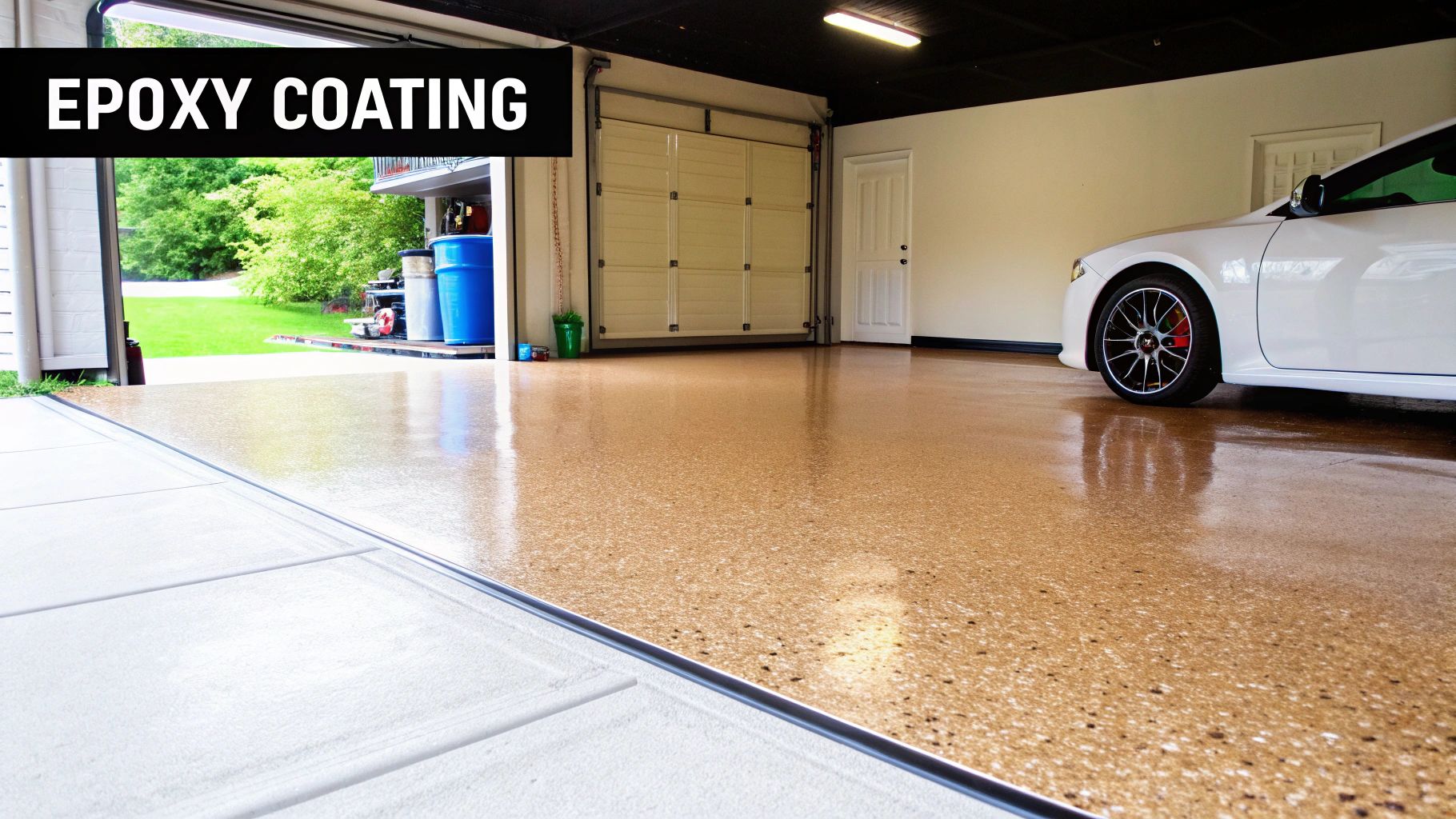
Epoxy coating is a two-part resin system, combining a resin and a hardener, that is applied to concrete surfaces to create a durable, high-performance finish. When properly applied, epoxy creates a hard, glossy, moisture-resistant barrier that bonds tightly to the concrete substrate. Available in multiple colors and finishes—such as solid colors, metallic sheens, or decorative flakes that create a terrazzo look—epoxy coatings provide excellent protection against stains, chemicals, and heavy traffic.
This concrete finishing technique is highly valued for its seamless, resilient, and decorative qualities. In Atlanta, you'll see industrial-strength epoxy on commercial garage floors and in manufacturing facilities requiring chemical resistance. It's also a popular choice for residential garages, transforming them from dusty, stained surfaces into clean, professional-looking spaces. A common example is a "Tuxedo" flake system with black, white, and grey vinyl chips broadcast into the epoxy.
Best Applications and Key Considerations
Epoxy coating is ideal for surfaces that demand exceptional durability, easy maintenance, and a clean, finished look. Its most common applications include:
- Garage Floors: Protects against oil stains, tire marks, and chemicals while being easy to sweep and mop.
- Commercial and Retail Spaces: Provides a bright, high-gloss finish that can withstand heavy foot traffic in places like hair salons or auto showrooms.
- Industrial and Healthcare Facilities: Offers a seamless, hygienic surface that resists bacteria and harsh cleaning agents, essential for hospitals and food processing plants.
Pro Tip: Surface preparation is non-negotiable for a successful epoxy application. The concrete must be thoroughly cleaned, degreased, and then profiled, typically through diamond grinding or acid etching, to achieve a Concrete Surface Profile (CSP) of 2-3. This creates a porous texture for the epoxy to form a strong mechanical bond. Skipping this step is the number one cause of epoxy floor failure.
Understanding how to prepare the foundation is key. Before applying a coating, it's beneficial to consult guides on the best flooring for concrete slabs, which often discuss moisture handling and material compatibility for these robust foundations. Proper sealing and allowing the full cure time, often up to 72 hours, are essential for achieving a long-lasting, resilient surface.
8. Salt Finish
A salt finish is a subtle yet effective concrete finishing technique that creates a delicate, speckled texture on the surface. The process involves pressing rock salt crystals—the same kind used in water softeners or for de-icing—onto freshly poured concrete. After the concrete has partially cured, the salt is washed away with water, leaving behind a pattern of small, shallow pits. This results in a unique, weathered appearance that adds character and enhances slip resistance.
This technique is valued for its understated elegance and functional benefits. It provides a unique texture that is less aggressive than a broom finish but more visually interesting than a smooth trowel. In the Atlanta area, you might see a salt finish on pool decks in Sandy Springs or on the entryways of commercial buildings in Buckhead, where a refined, non-slip surface is desired to complement a high-end aesthetic. The look is often compared to that of travertine stone.
Best Applications and Key Considerations
A salt finish is an excellent choice for projects requiring a decorative, slip-resistant surface that isn't overly pronounced. Its most common applications include:
- Pool Decks and Spa Areas: The texture provides excellent grip for wet feet, making it a safer and more attractive option than standard concrete.
- Patios and Walkways: It offers a durable and visually appealing surface that elevates outdoor living spaces without being overwhelming.
- Commercial Plazas and Entryways: Provides a sophisticated, non-slip surface suitable for high-foot-traffic areas, adding a subtle design element.
Pro Tip: The size of the rock salt crystals directly impacts the final look. Larger crystals create deeper, more noticeable pits, while smaller crystals produce a finer, more subtle texture. The salt must be washed away at the right time, typically within 24 hours, to prevent it from becoming permanently embedded in the concrete, which could lead to surface deterioration over time.
For property owners seeking a unique finish that blends beauty with safety, the salt finish technique is an outstanding option. This method can also be combined with integral color or acid stains to create an even more customized and dynamic look. For example, a light tan integral color with a salt finish can beautifully mimic the appearance of sandstone. Proper sealing is recommended to protect the surface from stains and make cleaning easier.
9. Colored Concrete
Colored concrete moves beyond the standard gray, infusing personality and design intent directly into the slab itself. This popular concrete finishing technique involves adding pigments or dyes to create a wide spectrum of hues, from subtle earth tones to bold, vibrant colors. The color can be introduced integrally, by adding mineral oxide pigments to the concrete mix before it's poured for a deep, consistent color, or applied to the surface using stains, dyes, or color hardeners for a more variegated, artistic effect.
This method is highly sought after for its ability to seamlessly integrate concrete with a property’s overall design scheme. In Atlanta, you’ll see colored concrete used in residential driveways in neighborhoods like Johns Creek, with hues like "Mesa Buff" or "Smokey Beige" selected to perfectly complement a home’s exterior brick or siding. Commercial properties also leverage this technique, using brand-specific colors for storefronts or creating inviting, color-coordinated plazas.
Best Applications and Key Considerations
Colored concrete is an excellent choice for projects where aesthetic cohesion and customization are key. Its most common applications include:
- Driveways and Walkways: Provides a custom look that elevates curb appeal and coordinates with landscaping and architecture. For example, a charcoal-colored driveway creates a modern, dramatic entrance.
- Patios and Pool Decks: Creates a unique and inviting outdoor living space. A light, sand-colored concrete can make a pool area feel more like a beach resort.
- Commercial and Retail Floors: Offers a durable, brand-aligned flooring solution that can withstand heavy foot traffic while making a visual statement.
Pro Tip: Always request physical color samples before making a final decision. The final cured color can be influenced by the cement type, aggregates, water content, and even the weather on pour day. Viewing a sample in the actual project location helps ensure the chosen hue matches the surrounding materials and lighting conditions perfectly.
For property owners aiming for a truly custom finish, colored concrete provides limitless design possibilities. Proper sealing is crucial to protect the pigment from UV fading and staining, ensuring the color remains rich and vibrant for years. To discuss color options and see how this technique can be integrated into your project, you can learn more about Atlanta's residential decorative concrete options. Regular maintenance, including resealing every few years, will preserve the beauty and intensity of your colored concrete.
10. Slip-Resistant Finish
A slip-resistant finish is a crucial safety enhancement applied to concrete surfaces to increase traction and reduce the risk of accidents, especially in wet or slick conditions. This is not a single technique but a category of concrete finishing techniques that prioritize safety. Methods range from broadcasting anti-slip aggregates like silica sand or aluminum oxide into a wet sealer, to applying specialized textured epoxies and coatings that create a high-friction surface profile. Even a simple broom finish falls into this category.
This finish is essential for both commercial and residential properties where safety is paramount. In Atlanta, you'll find slip-resistant finishes on public pool decks to meet safety compliance and on commercial ramps to ensure ADA requirements are met. It's also a standard for industrial facilities with wet processing areas and restaurant kitchens, where a safe footing is critical for operational efficiency and liability protection. For example, a restaurant kitchen floor may have a quartz aggregate broadcast into an epoxy coating for maximum durability and grip.
Best Applications and Key Considerations
A slip-resistant finish is ideal for any concrete surface where moisture, spills, or foot traffic create a potential hazard. Its most important applications include:
- Pool Decks and Patios: Provides essential grip for wet, bare feet, preventing dangerous slips and falls.
- Walkways, Ramps, and Stairs: Ensures safe passage for pedestrians, especially in rainy Atlanta weather or for those with mobility challenges.
- Commercial Kitchens and Garages: Resists oils, grease, and water, maintaining a safe working environment.
- Industrial and Medical Facilities: Delivers compliant, safe flooring for high-traffic and safety-sensitive zones.
Pro Tip: Always verify the required Coefficient of Friction (COF) rating for your specific application before selecting a product. Commercial spaces often have strict ADA or OSHA standards to meet, which typically require a DCOF (Dynamic Coefficient of Friction) of 0.42 or higher for level surfaces. Combining a slip-resistant coating with a physically textured finish like a broom finish can create redundant safety layers.
For property managers and homeowners prioritizing safety and liability reduction, a professionally applied slip-resistant finish is a non-negotiable investment. Regular cleaning is necessary to ensure the textured surface remains free of debris that could reduce its effectiveness. To explore options that meet both safety and aesthetic needs for your property, you can find more information about Atlanta's commercial concrete solutions.
10-Point Comparison: Concrete Finishing Techniques
| Technique | 🔄 Implementation complexity | ⚡ Resource requirements & speed | ⭐📊 Expected outcomes | Ideal use cases | 💡 Key advantages |
|---|---|---|---|---|---|
| Stamped Concrete | Medium–High — skilled timing and patterning required | Specialized stamps, colorants, sealant; moderate install time | ⭐ High aesthetic appeal; 📊 Durable with periodic resealing | Driveways, patios, commercial outdoor spaces, HOAs | Mimics stone/brick affordably; highly customizable |
| Polished Concrete | High — multi-stage grinding & densifying process | Heavy diamond grinders, densifiers, skilled crew; slower process | ⭐⭐⭐ Very durable, glossy finish; 📊 Improves light reflectance & lowers dust | Office lobbies, showrooms, warehouses, modern residences | Low maintenance, reflective, long-lasting surface |
| Broomed Finish | Low — simple brushing technique | Basic brooms, fast to apply; low cost and quick cure | ⭐ Functional safety finish; 📊 Excellent slip resistance | Sidewalks, driveways, ramps, pool perimeters | Most economical; superior traction in wet conditions |
| Exposed Aggregate | Medium–High — careful exposure timing and technique | Aggregate selection, washing/grinding equipment; moderate timeline | ⭐ Distinctive decorative look; 📊 Good traction and durability | Patios, plazas, pool decks, upscale outdoor spaces | Natural terrazzo-like appearance; customizable aggregates |
| Troweled Finish | Medium — skill-dependent hand or power troweling | Trowels or power trowels; moderate labor & timing sensitivity | ⭐ Smooth, professional surface; 📊 Good base for coatings | Interior floors, garages, commercial spaces, slabs | Smooth, easy-to-clean base ideal for finishes or coatings |
| Acid Staining | High — chemical application with variable results | Acid stains, ventilation, experienced applicator; moderate time | ⭐ Unique variegated color; 📊 Permanent but unpredictable tones | Upscale patios, boutiques, galleries, design-focused interiors | One-of-a-kind, translucent color that enhances natural concrete |
| Epoxy Coating | High — meticulous prep and time-sensitive mixing | Two-part epoxy, primers, controlled environment; curing time required | ⭐⭐ Very durable & chemical resistant; 📊 Seamless, easy-to-clean surface | Garages, industrial floors, hospitals, commercial kitchens | Excellent stain/chemical resistance and decorative options |
| Salt Finish | Low — simple sprinkling and washing technique | Rock salt crystals, minimal equipment; quick application | ⭐ Modest decorative effect; 📊 Good slip resistance, textured surface | Driveways, rustic patios, pool decks, entries | Inexpensive, unique pitted texture with enhanced traction |
| Colored Concrete | Medium — pigment control and mix consistency needed | Integral pigments or stains, testing samples; moderate cost | ⭐ Custom color coordination; 📊 Long-lasting when integral color used | Branded plazas, HOAs, decorative driveways, patios | Integral color options offer consistent, permanent hues |
| Slip-Resistant Finish | Medium — method-dependent (coatings, aggregates) | Anti-slip additives, textured sealers, COF testing; moderate prep | ⭐ High safety performance; 📊 Reduces slip/fall risk and liability | Pool decks, ramps, kitchens, healthcare, public walkways | Code-compliant traction solutions; configurable aesthetics |
Choosing the Right Pro for a Flawless Finish in Atlanta
We’ve journeyed through a comprehensive roundup of ten distinct concrete finishing techniques, from the rustic charm of exposed aggregate to the sleek, modern appeal of polished concrete. Each method offers a unique combination of aesthetics, durability, and function, transforming a simple slab of concrete into a defining feature of your property. You now have the foundational knowledge to distinguish between a broom finish for your driveway and an acid stain for your basement floor, understanding the specific tools, pros, cons, and maintenance needs associated with each choice.
The key takeaway is that concrete is far from a one-size-fits-all material. The final appearance and long-term performance of your surface are dictated by the finishing process you select. A stamped concrete patio requires a completely different skill set and material consideration than an epoxy-coated garage floor, especially when navigating Atlanta's humid summers and occasional winter freezes.
From Knowledge to Action: Making the Right Decision
Armed with this information, your next step is to evaluate your specific project needs against the techniques we've discussed. Consider these critical factors as you move forward:
- Functionality First: Before focusing on aesthetics, define the primary purpose of the surface. Is it a high-traffic commercial entryway needing a slip-resistant finish, or a decorative pool deck where a salt finish could add both texture and safety? An example of a functional choice is using an industrial epoxy coating in a mechanic's shop to resist oil spills.
- Aesthetic Alignment: How does the finish complement your property's existing architecture? The earthy tones of colored concrete or the natural look of exposed aggregate might suit a traditional home in Marietta, while polished or trowel-finished concrete could be ideal for a contemporary loft in Midtown.
- Budget and Longevity: Balance your initial investment with long-term value. While a simple broomed finish is cost-effective upfront, a sealed and stamped surface may offer greater curb appeal and a higher return on investment, requiring only periodic resealing. For example, a stamped concrete driveway can increase a home's resale value more than a plain one.
- Atlanta's Climate: Remember that our local weather plays a huge role. Techniques requiring specific curing times, like acid staining, must be planned around temperature and humidity forecasts. A knowledgeable local contractor will understand how to adjust mixes and application schedules to prevent moisture issues or surface defects.
Why Professional Execution is Non-Negotiable
While a simple broom finish might seem like a manageable DIY project, the majority of these concrete finishing techniques demand professional expertise. The window of opportunity to stamp, trowel, or stain concrete is incredibly brief and unforgiving. An inexperienced hand can easily result in an uneven pattern, a blotchy color application, or a surface that fails to cure properly, leading to spalling and cracks down the road.
Imagine investing in a beautiful stamped concrete pattern only to have it wash out due to a poorly timed rain shower or improper sealing. Or consider a polished concrete floor that looks dull and scuffed because the grinding and densifying stages were rushed. These are costly mistakes that a seasoned professional knows how to avoid. A specialist understands the nuances of mix designs, the precise moment to apply a color hardener, and the critical importance of a high-quality sealant to protect your investment against Atlanta’s red clay stains and humid conditions. They don't just pour concrete; they craft a durable, functional, and beautiful surface tailored to your exact needs.
Transforming your vision into a stunning and durable concrete surface requires more than just the right materials; it requires a team with proven expertise in a wide array of concrete finishing techniques. For over a decade, Atlanta Concrete Solutions has been the trusted partner for homeowners and businesses across the metro area, delivering flawless results on everything from intricate stamped patios to high-performance commercial floors. Let our experts guide you through the selection process and execute your project with the precision and quality your investment deserves.
Contact Atlanta Concrete Solutions for a Free, No-Obligation Quote Today!