
When you're trying to decide between painting or staining your concrete, it boils down to one simple concept: paint sits on top of the surface, while stain soaks into it. Paint creates a thick, solid-colored film that literally covers the concrete. Stain, on the other hand, penetrates the pores and creates a translucent, permanent color from within.
This single difference is the most important one, as it affects everything else—from looks and durability to how you'll have to maintain it down the road. For example, a painted garage floor might look great for a year, but the heat from your tires can cause it to peel, a problem a stained floor simply doesn't have.
Understanding the Core Differences
Choosing the right finish for your concrete means looking past the color chip. How each product actually bonds with the concrete is what really dictates its performance and where it works best.
I like to use an analogy: painting concrete is like putting on a heavy winter coat. It’s a thick, protective layer that can hide a lot of flaws underneath. Staining is more like dyeing a t-shirt—the color becomes a part of the material itself, changing its appearance without covering its texture.
This core distinction creates a whole ripple effect of other differences you need to weigh.
How Each Product Works
Paint is what we call a topical coating. It literally just sticks to the surface of the concrete, forming a solid-colored, non-porous layer. This film can completely change the look of a slab, masking minor imperfections, old stains, and even previous repairs. But because it doesn't soak in, it’s also prone to surface damage. If moisture gets trapped underneath, you’ll see peeling, chipping, and bubbling. For example, a common latex or acrylic concrete paint forms this surface bond.
Stain is a penetrative colorant. Acid-based stains create a chemical reaction with the lime in the concrete, resulting in rich, mottled earth tones like deep browns, tans, and soft blue-greens that look incredibly natural. Water-based stains act more like dyes, soaking into the concrete's pores to add color from a much wider palette, including vibrant reds, yellows, and blacks. Neither one forms a film on top; they become a permanent part of the concrete itself. That’s why you’ll never see a stained surface peel or chip.
Key Takeaway: Paint is a surface-level coating that hides the concrete, making it a great choice for covering flaws. Stain is a penetrative treatment that enhances the concrete, perfect for showing off its natural texture.
| Feature | Concrete Paint | Concrete Stain |
|---|---|---|
| Interaction | Sits on top of the surface | Penetrates into the concrete |
| Appearance | Opaque, solid color | Translucent, mottled color |
| Imperfections | Hides flaws and discoloration | Highlights existing texture |
| Failure Mode | Peels, chips, or bubbles | Fades over time; never peels |
Getting these basics down is the first step. To get a better sense of how these finishes can transform your property, take a look at our guide to residential decorative concrete and see what’s possible.
A Head-to-Head Comparison of Concrete Finishes
Deciding between concrete paint and stain goes way beyond just picking a color for your floor or patio. It's a choice that defines the surface's entire look, its feel underfoot, and how it will stand up to the test of time. To make the right call, we need to move past simple pros and cons and look at how these finishes perform under real-world pressures—from the scorching Atlanta sun to everyday foot traffic.
This simple visual breaks down the core difference: paint sits on top of the concrete, while stain becomes part of it.
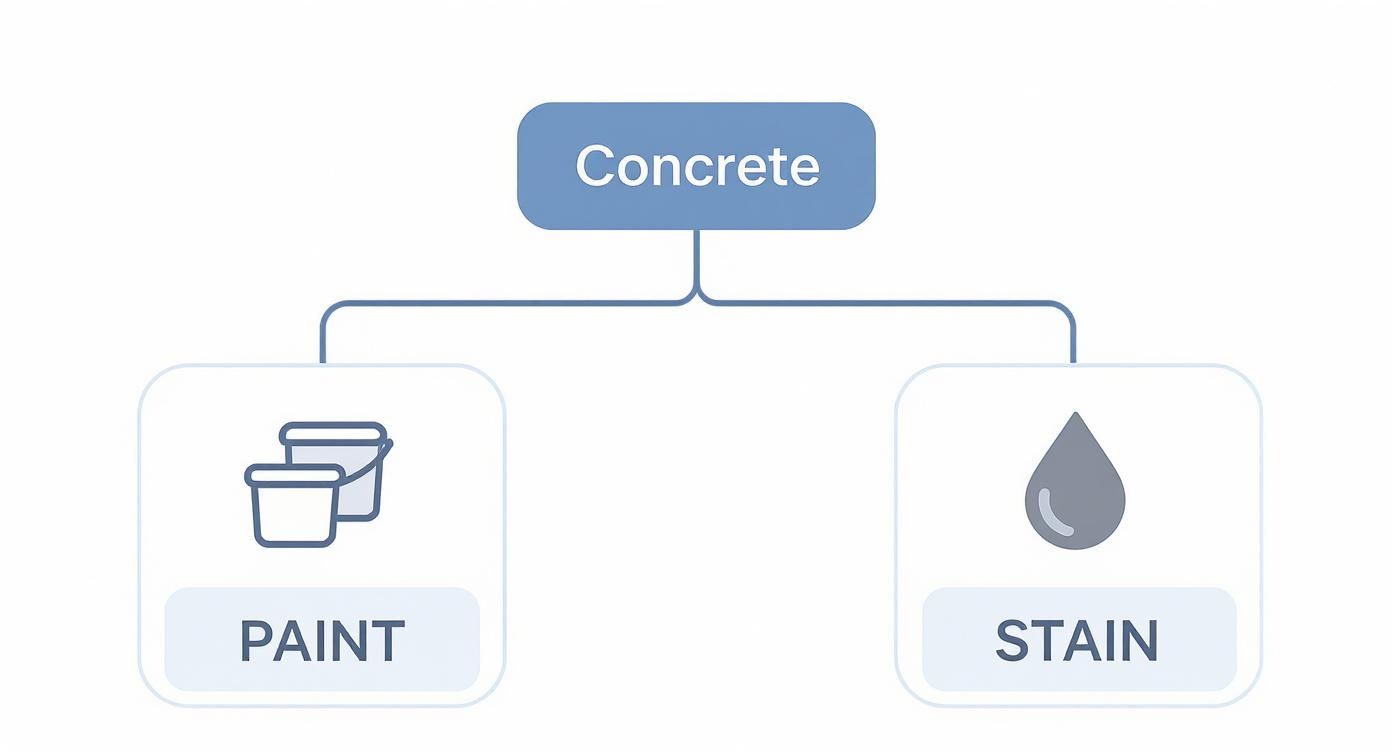
This really gets to the heart of it. Your first question should be whether you want to cover the concrete's surface or enhance what's already there.
Aesthetic Outcomes and Visual Appeal
The most obvious difference between paint and stain is what you see at the end of the day. Paint delivers a uniform, opaque finish, completely blanketing the concrete’s original character. This makes it a fantastic choice for hiding imperfections like small cracks, discolored patches, or old repairs. If you're after a bold, solid color for a garage or basement floor—for example, a clean "Battleship Gray"—paint provides that clean, consistent look.
On the other hand, stain offers a translucent, variegated appearance. It seeps into the concrete, reacting with its unique texture and mineral content. The result is a mottled, multi-toned finish that often looks like natural stone. For instance, an acid stain might create a warm, leather-like effect on a patio, with subtle color shifts that make each slab unique. Because stain isn't a solid coating, it won’t hide flaws; in fact, it often incorporates them into a one-of-a-kind, organic look.
Key Insight: Choose paint if your goal is a flawless, monochromatic surface that hides the concrete's past. Opt for stain if you want to celebrate the concrete's natural texture and create a rich, layered aesthetic that can't be duplicated.
Durability Under Real-World Stress
How a finish holds up to daily abuse is where the rubber really meets the road in the concrete paint vs. stain debate. Since paint forms a film on the surface, it’s susceptible to physical damage. In a garage, for instance, the heat from your tires can soften the paint, causing it to lift and peel away—a common issue known as hot-tire pickup.
High-traffic areas also pose a serious challenge for painted concrete. The constant friction from shoes gradually grinds down the paint layer, leading to scuffs, chips, and noticeable wear paths over time. A painted walkway, for example, will often show worn spots where foot traffic is heaviest. This means painted patios, walkways, and interior floors almost always require frequent touch-ups to look their best.
Stain, because it penetrates the concrete, is a different story entirely. Since the color is in the concrete, it cannot chip, flake, or peel. It’s completely immune to hot-tire pickup. Under heavy foot traffic, a stained surface doesn't wear away; the concrete itself would have to erode for the color to vanish. The main enemy of stain is gradual fading from UV exposure, but this is easily managed by maintaining a protective sealer.
A quality sealer over a stain can last 3-5 years before needing a new coat, while a painted surface in a busy area might need to be redone in as little as 1-2 years.
Surface Preparation and Application Complexity
Proper prep work is non-negotiable for both products, but the focus is different. For paint to stick, the concrete must be perfectly clean, free of grease, and usually etched with a mild acid (like muriatic or phosphoric acid) to create a rougher profile for the paint to grip. Skipping this step is the number one reason paint jobs fail.
Staining also demands a spotless surface, but the main goal is ensuring porosity. The concrete has to be able to drink in the stain evenly. Any old sealers, coatings, or oil spots that could block absorption must be completely stripped away, often with a mechanical grinder. For those looking for a premium, high-gloss interior finish, you can learn more about the intensive prep involved with our residential polished concrete services, which follows similar principles.
When it comes to the application itself, painting concrete is fairly straightforward, much like painting a wall, often using a roller. Achieving a professional, even finish with stain—especially acid stain—is more of an art. It's typically applied with a pump sprayer in random, overlapping patterns to create a natural look and avoid ugly lap marks or blotchy areas.
Quick Comparison: Paint vs. Stain at a Glance
For a fast rundown, this table boils down the essential differences to help guide your decision.
| Feature | Concrete Paint | Concrete Stain |
|---|---|---|
| Look & Feel | Opaque, uniform, solid color | Translucent, variegated, mottled |
| Best For | Hiding imperfections, bold colors | Enhancing natural texture, rich look |
| Durability Issue | Peels, chips, hot-tire pickup | Fades over time (UV exposure) |
| Lifespan | 2-5 years before recoating | 10+ years (sealer needs recoating) |
| Prep Work | Intensive cleaning and etching | Intensive cleaning, must be porous |
| Application | Relatively simple, like wall paint | Requires skill for even results |
Ultimately, this side-by-side comparison makes one thing clear: neither option is better than the other across the board. The best choice is the one that perfectly matches your project's specific needs, from the look you want to achieve to the performance you expect.
Analyzing the True Cost Over a Project's Lifetime
When you're choosing between concrete paint and stain, don't just look at the price on the can. That's only the first chapter of the story. To really understand the cost, you have to look at the total investment over the entire life of the finish.
Paint often looks like the cheaper option upfront, and for the initial materials, it is. But the long-term costs can sneak up on you.
Breaking Down the Initial Numbers
Let's start with the materials. A high-quality concrete or epoxy paint will usually set you back between $0.75 and $1.50 per square foot. On the other hand, a good penetrating stain system, which includes the required sealer, typically runs from $2.00 to $4.00 per square foot.
So, for a standard 400-square-foot patio, you might spend around $400 on paint. That same patio could cost closer to $1,200 for stain and sealer. But this is where the simple math stops.
Factoring in Prep Work and Labor
The biggest chunk of your budget won't be the materials—it's the labor. The prep work needed for a finish that actually lasts is intense, and this is where the real costs hide. Both paint and stain need a perfectly clean surface, but you'll pay a much bigger price for cutting corners with paint.
- Prepping for Paint: This is a multi-step process. You're looking at deep cleaning, degreasing, and then either acid etching or mechanically grinding the concrete. This creates a rough profile for the paint to grab onto. If you mess this up, the paint will peel. Guaranteed.
- Prepping for Stain: With stain, the focus is on making sure the concrete is porous enough to soak up the color. This often means stripping off old sealers or grinding the surface to open up those pores, which is just as labor-intensive. For example, a professional might use a planetary grinder with a 30-grit diamond tooling to remove an old coating before staining.
Financial Reality Check: Professional labor for surface prep and application can easily make up 60-75% of your total project cost. Putting cheap material over a poorly prepared surface is just throwing money away.
The Long-Term Maintenance Cycle
This is where the financial difference between paint and stain really comes into focus. Paint's shorter lifespan means you're signing up for a cycle of scraping, sanding, and re-coating that adds up fast.
A painted concrete surface, especially one that gets a lot of foot traffic or has to endure Atlanta’s weather, will likely need a complete overhaul every 2-5 years. And we’re not talking about a quick touch-up. This means scraping off all the peeling paint, sanding, cleaning, and starting from scratch. Each time, you're paying for materials and labor all over again.
Stain, however, tells a different story. Since the color becomes part of the concrete, a properly sealed stain can last for a decade or more. Your only recurring task is reapplying the protective topcoat sealer every 3-5 years—a job that’s far simpler and cheaper than a full repaint. For example, resealing a 400 sq. ft. stained patio might cost $200-$300, while completely repainting it could cost over $1,000.
Over ten years, a stained surface might just need two simple reseals. A painted surface could easily require three complete—and costly—reapplications. This is a crucial factor we consider when planning projects and is central to the professional concrete services we offer at Atlanta Concrete Solutions, because we always build for long-term value, not just a quick fix.
Choosing the Right Finish for Your Space
The real heart of the concrete paint vs. stain debate isn't just about looks or initial cost—it's about performance in specific areas of your home. A finish that works beautifully in a basement might be a total failure on a sun-baked patio. Picking the right one means understanding the unique demands of each space, which is the only way to get a result that looks great and actually lasts.
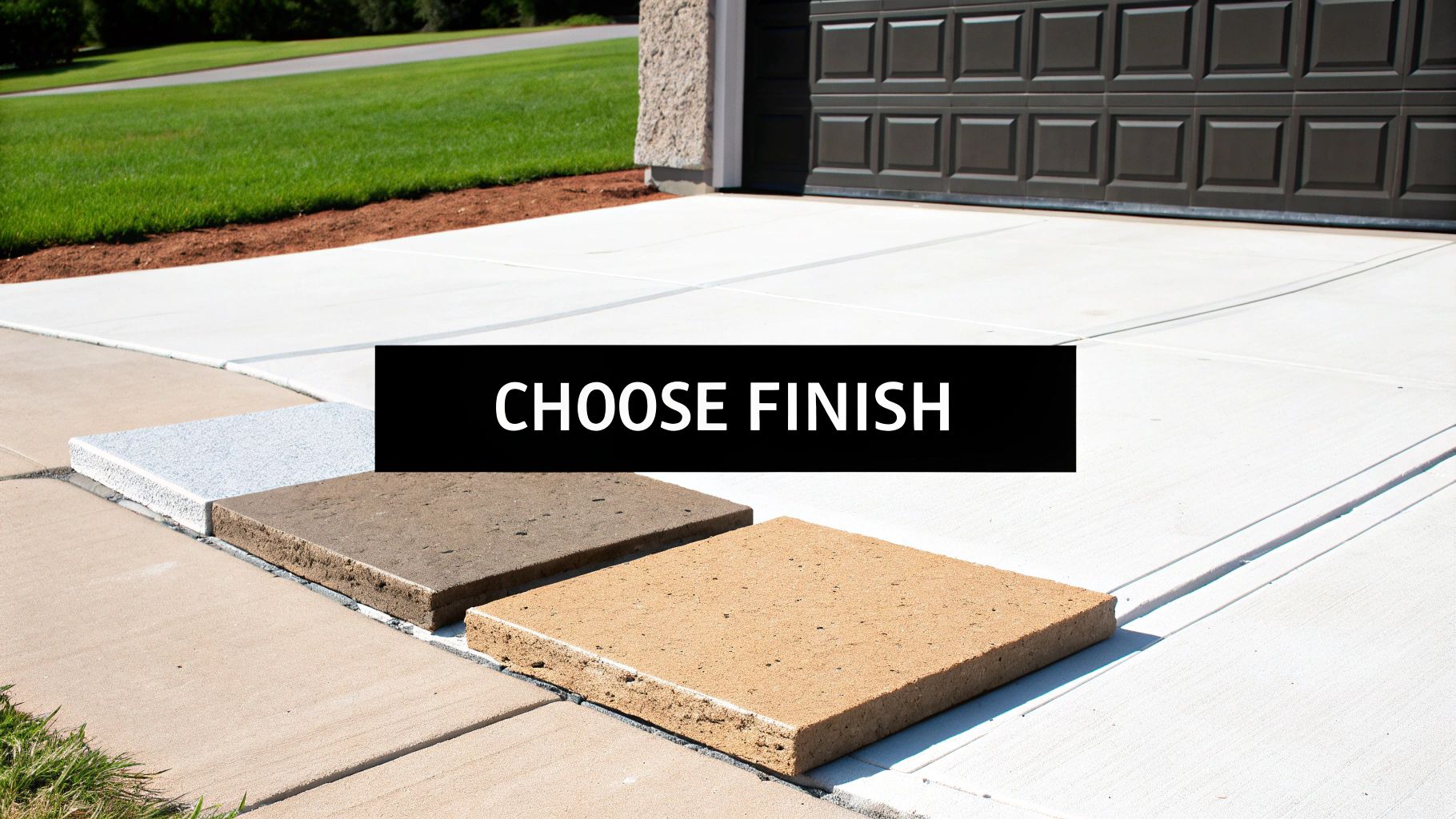
So, let's move past the technical specs and talk about what this means for your property in the real world.
High-Traffic Driveways
Your driveway takes a beating unlike any other surface. It has to handle the sheer weight of vehicles, spills from oil and other fluids, and the notorious problem of hot-tire pickup. This is where paint almost always fails. Heat from your car's tires can literally soften the paint's film, causing it to lift right off the surface. You're left with ugly, peeling patches that are impossible to ignore.
This makes a penetrating stain the hands-down winner for driveways. Because the color soaks into the concrete, it becomes part of the slab itself. It can’t peel, it won't flake, and it can’t be lifted by hot tires. Stained driveways hold their color and integrity for far longer, typically just needing a reseal every few years to keep them looking fresh and protected. An example would be using a dark walnut or cola-colored acid stain to hide future oil drips while providing a durable, upscale look.
Patios and Pool Decks
When it comes to outdoor living spaces, aesthetics and safety are everything. Concrete paint gives you a world of bold, solid colors, but it has a massive downside: it gets incredibly slippery when wet. While you can find paints with anti-slip additives, they often change the texture and can wear down over time, creating a real hazard around a pool.
Stain is a far better choice here. It provides a rich, organic look that feels more like natural stone, perfectly complementing an outdoor setting. More importantly, since stain doesn't form a film on top, the concrete keeps its natural texture. Pair that with a quality sealer that has a slip-resistant additive (like a fine grit broadcast into the final coat), and you get a surface that’s both beautiful and much safer for bare feet and backyard fun.
A classic mistake we see all over Atlanta is someone trying to hide cracks on their patio with a thick coat of paint. It looks fine until the first summer rain, and suddenly they have a slick, dangerous hazard. A semi-transparent stain would have celebrated the concrete's character while keeping everyone safely on their feet.
Interior Spaces: Garages and Basements
Inside your home, the choice boils down to one question: are you going for pure utility or a more decorative look?
For a utilitarian garage floor, where the main goal is to cover up old oil spots and create a cleanable surface, a two-part epoxy-based concrete paint is a solid contender. Its thick, opaque film does an excellent job of hiding years of stains and imperfections, giving you a uniform, tough floor that's simple to sweep and wipe clean.
But for any interior space where you want more than just a functional surface, stain is the way to go.
Think about these specific interior uses:
- Creating a rich, mottled look on a sunroom floor: An acid or water-based stain can produce a one-of-a-kind, marble-like effect that paint simply can't touch. The translucent color lets light play across the surface, adding a real sense of depth and character. For example, layering a light tan and a dark brown water-based stain can mimic the look of travertine tile.
- For a high-end, polished basement floor: Staining the concrete and then polishing it to a high shine creates a sophisticated, durable finish perfect for a game room or finished living area. It transforms the concrete from a mere subfloor into a true design feature.
At the end of the day, the best finish always depends on the context. Paint can be a quick fix for covering flaws in purely functional areas like a garage. But for any space where durability, safety, and visual appeal are top priorities—like your driveway, patio, or a decorative interior floor—the penetrating power of concrete stain consistently delivers a more elegant and longer-lasting result.
How Atlanta's Climate Affects Your Concrete Finish
When you're deciding between paint and stain for your concrete, you're not just picking a color. Here in Atlanta, you're choosing a finish that has to go toe-to-toe with our specific climate. Between the intense summer sun, the sticky humidity, and those sudden downpours, our weather can make or break a concrete coating. Picking the wrong one can mean you’re redoing the whole job next year.
Let’s talk about Atlanta’s number one paint-killer: humidity. Paint creates a film on top of the concrete, and it needs a dry, low-moisture environment to stick properly. When you try to paint concrete during a classic humid Georgia summer, you risk trapping moisture underneath. That trapped moisture is what causes those ugly bubbles, blisters, and peeling you see on failed jobs.
Stain, on the other hand, plays by a completely different set of rules. It doesn't sit on the surface; it soaks into the concrete's pores. Because it becomes part of the concrete itself, there's no film to trap moisture. This simple difference makes it fundamentally better equipped to handle the muggy conditions we live with for months on end.
Surviving Georgia’s Sun and Rain
The relentless Georgia sun is another major factor. Intense UV radiation is brutal on concrete paint, breaking down the pigments and causing them to fade and turn chalky. A freshly painted dark gray driveway can look washed out in just a year or two.
Stains hold up much better against UV damage, especially when they're paired with a quality UV-resistant sealer. Think of the sealer as a sacrificial layer; it takes the beating from the sun, protecting the color that’s been absorbed into the concrete below. It’s far easier—and cheaper—to re-apply a coat of sealer every few years than it is to scrape off peeling paint and start from scratch.
Local Insight: Those heavy afternoon thunderstorms we get all summer? They saturate the ground and the concrete. As that moisture tries to evaporate, it creates upward pressure. For paint, this pressure can literally push the film right off the surface. A breathable stain system, however, lets that moisture escape without harming the finish.
Why Stains Are the Go-To in the Southeast
Considering these challenges, it’s easy to see why stains are becoming the clear winner for beautiful, long-lasting concrete here in the Southeast. The market for these products is booming. The North American concrete stains market is already valued at around USD 1.8 billion and is expected to grow to nearly USD 3.1 billion by 2034.
This trend is driven by homeowners and pros who need something that works with our weather, not against it. You can see the full analysis on this growing preference for concrete stains from Zion Market Research.
At the end of the day, making the right choice comes down to understanding how a product will perform in Atlanta's unique environment. While paint might give you a quick, cheap color change, its film-forming nature is a serious disadvantage in our climate. A penetrating stain system works with the concrete to deliver a finish that’s not only beautiful but also built to last through Georgia’s heat and humidity.
DIY or Pro: Who Should Handle Your Concrete Project?
So, you've weighed the pros and cons of concrete paint versus stain. Now comes the big question: should you do it yourself or bring in a professional? It's tempting to think of this as a weekend project, but making the wrong call here can turn a simple upgrade into a costly disaster. You really need to be honest about your skills, the tools you have, and the time you can commit.
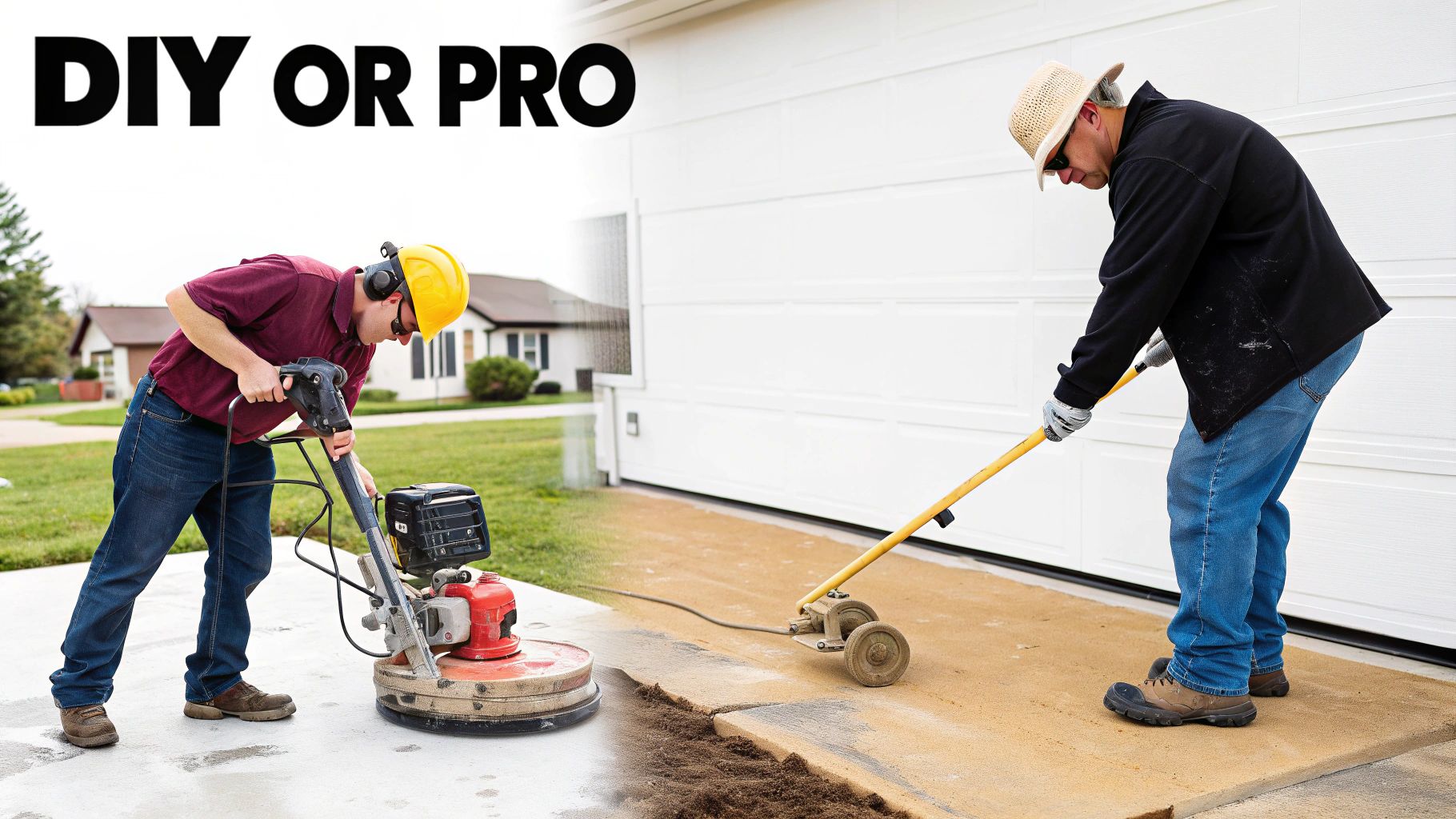
Whether you go with paint or stain, your project's success boils down to one critical step that DIY-ers almost always underestimate.
The Hidden Risks of a DIY Job
The number one reason concrete coatings fail is improper surface preparation. This isn't just about a quick sweep and a wash. Real prep is an intense, multi-stage process that often demands heavy-duty equipment like concrete grinders and powerful pressure washers. If you skip this, paint is guaranteed to peel, and stain will soak in unevenly, leaving you with a blotchy, unprofessional mess.
Staining, in particular, requires a real feel for the material. Getting that beautiful, marbled look with acid or water-based stains is more art than science. It’s incredibly easy for a novice to leave behind ugly lap marks, drips, or patchy spots that become a permanent eyesore on your concrete. For example, spraying too close or moving too slowly can create dark lines that are impossible to remove once the stain reacts.
Expert Insight: We see it all the time. A homeowner tries to save a few bucks with a DIY kit, but the project goes south. The cost to fix it—stripping the failed coating, grinding the concrete back to a usable state, and then starting over—ends up being far more than it would have cost to hire a pro in the first place.
When It's Time to Call in the Experts
For most homeowners, hiring a professional is the smarter, safer bet for a lasting result. This is especially true for any large, high-traffic, or highly visible area like a driveway, main patio, or an indoor floor where every mistake will be on full display.
You should seriously consider calling a team like Atlanta Concrete Solutions when:
- The concrete isn't perfect: If you're dealing with old paint, stubborn sealers, or deep-set oil stains, you'll need specialized equipment to mechanically remove them. A professional will have access to shot blasters or planetary grinders that are not available for rent at a typical hardware store.
- You're aiming for a premium look: A flawless, decorative finish with stain is a craft. Professionals have the techniques to manage color and consistency for that truly high-end result.
- The job is big: A pro crew has the team and the tools to tackle large areas efficiently, ensuring the final look is seamless and uniform from end to end.
Painting a small back porch or a utility room floor might be a doable DIY task. But for anything more significant, the technical demands of surface prep and stain application make hiring a professional a very wise decision. It’s the best way to guarantee a beautiful, durable finish that actually enhances your property’s value.
Common Questions on Concrete Finishes
When you're trying to decide between painting or staining your concrete, you're bound to have questions. It's a common crossroads for homeowners, and getting the right answers is crucial for a finish that not only looks fantastic but also holds up to your lifestyle and Atlanta’s specific climate. We've gathered the most frequent questions we hear to help you make a confident decision.
Getting these details straight will help you choose the right path for your project, steering you clear of common mistakes and ensuring the result is beautiful and long-lasting.
Can You Put Stain on Top of Painted Concrete?
I get this question all the time, and the short answer is no. Concrete stain works by soaking into the concrete, reacting with it to create color. It needs direct access to the concrete's pores to do its job. Paint, on the other hand, forms a solid film over the top, completely sealing off those pores.
If you want to stain concrete that’s already been painted, you have to get every last bit of that paint off first. It’s a tough, messy job that usually requires some serious equipment:
- Chemical Strippers: These are strong solvents that break down and dissolve the paint.
- Concrete Grinders: Professional grinders with diamond-tooled heads are often needed to physically wear the paint layer away.
- Sandblasting: This method uses high-pressure air to blast the paint off with an abrasive material.
Only when the concrete is back to its original raw, porous state can you even think about applying a stain. For example, if you tried to apply stain over a painted surface, it would simply sit on top and wipe right off, never bonding with the concrete.
Which One Is Better for Hiding Cracks and Blemishes?
Paint is the clear winner here. Think of it like a thick blanket of color. Because it’s an opaque coating that sits on the surface, it does a fantastic job of covering up hairline cracks, old stains, discoloration, and patch-up jobs. If you're looking for a perfectly uniform, brand-new look, paint is your best bet.
A stain is transparent, so it won’t hide anything. It's designed to enhance the natural texture and character of the concrete. Any existing cracks, color variations, or flaws will show right through—they become part of the finished look, for better or worse. For example, a fine crack on a patio will still be visible after staining, though it might become a part of the "marbled stone" aesthetic.
How Long Does Paint or Stain Last in Atlanta's Weather?
Atlanta's climate, with its high humidity and powerful summer sun, is brutal on exterior finishes. A top-quality concrete paint might give you 2-5 years before it starts to chip, peel, or fade. That surface film just can't stand up to the constant moisture and UV exposure forever.
A penetrating stain, however, is a different story. Since the color is in the concrete, it can't physically chip or peel away. A professionally applied stain can easily look great for a decade or more. The key is the sealer applied on top. That protective topcoat is what shields the color from UV fading and moisture. You'll need to reapply the sealer every 3-5 years to keep the whole system protected and looking its best.
Still weighing the pros and cons of concrete paint vs. stain? Or maybe you're ready for an expert eye on your project? The team at Atlanta Concrete Solutions brings years of local experience to every job. Reach out to us for a free, no-obligation quote by visiting https://atlantaconcretesolutions.com.