
An undersized patio limits your ability to entertain, relax, and fully enjoy Atlanta's beautiful seasons. Extending your concrete patio is one of the most effective ways to enhance your home's value, functionality, and aesthetic appeal. However, the world of concrete has evolved far beyond simple gray slabs. Today’s options offer a stunning array of textures, colors, and finishes that can mimic expensive natural stone, create sleek modern surfaces, or even help manage stormwater runoff.
This guide explores a curated list of concrete patio extension ideas specifically tailored for Atlanta homeowners. We'll dive into the practical details of each option, from stamped and polished to permeable and decorative overlays, providing the information you need to make an informed decision. For each idea, we will cover the specific implementation details necessary for a successful project.
You will find a comprehensive breakdown for each concept, including:
- Recommended Concrete Types & Finishes: Learn whether stamped, exposed aggregate, or polished concrete is right for your vision.
- Layout & Size Guidance: Get practical tips for designing a functional and proportionate extension.
- Estimated Cost Ranges: Understand the potential investment for different styles and complexities.
- Pros & Cons: Weigh the benefits and drawbacks of each approach to find the perfect fit.
- Maintenance Tips: Discover how to protect your investment and keep it looking great for years.
- Atlanta-Specific Site Considerations: We’ll address local drainage, soil conditions, and potential permit requirements unique to our area.
By the end of this roundup, you will have a clear understanding of the possibilities and be equipped to choose the perfect solution to expand your outdoor living space. Let’s explore the innovative and stylish ways to transform your backyard.
1. Stamped Concrete Patio Extension: The Chameleon of Outdoor Surfaces
Stamped concrete is a versatile and popular choice that imprints patterns, textures, and designs onto freshly poured concrete. This technique masterfully mimics high-end materials like natural stone, brick, pavers, or even wood, all while retaining concrete's inherent durability and cost-effectiveness. It’s an ideal solution for extending your patio with significant aesthetic value without the premium price tag of authentic materials. The process allows for seamless integration with your existing patio, creating a cohesive and expansive outdoor living area.
Best Use Case & Layout Guidance
A stamped concrete patio extension is perfect for homeowners wanting to achieve a luxurious look on a practical budget. It’s particularly effective for creating defined "zones" within a larger outdoor space. For instance, you could extend your existing broom-finished patio with a stamped section that resembles cobblestone, designating it as a dedicated fire pit area. Another popular example is using a wood plank stamp for an outdoor dining section to create the feel of a deck without the maintenance.
For a cohesive look, consider a "picture frame" border around the extension, using a complementary stamp pattern like a soldier course brick. A popular layout in Atlanta suburbs involves a curvilinear or free-form extension that softens the hard lines of a home and yard, making the space feel more organic and integrated with the landscape.
Recommended Concrete & Finish
The ideal choice here is a poured, integrally colored concrete slab with a stamped finish. Integral coloring ensures the hue permeates the entire slab, so minor chips or scratches won't reveal a plain gray concrete underneath. Popular stamp patterns that work well in Georgia's architectural landscape include Ashlar Slate for a classic look, Random Stone for a rustic feel, and Classic Wood Plank for a modern farmhouse style. A high-quality sealer with a non-slip additive is crucial to protect the surface from Atlanta's humidity and rain while ensuring safety.
Atlanta-Specific Considerations
- Soil & Drainage: The prevalent red clay soil in the Atlanta area requires proper base preparation to prevent shifting and cracking. Ensure your contractor uses a compacted gravel base (at least 4 inches) and addresses drainage to channel rainwater away from your home's foundation.
- Permits: Extensions exceeding a certain square footage (often 200 sq. ft.) may require a permit from your local municipality, whether it's Fulton County, DeKalb, or another metro-area jurisdiction. Always check local building codes before starting.
- Maintenance: To maintain its vibrant look, a stamped concrete patio should be cleaned and resealed every 2-3 years. This protects it from UV fading and moisture penetration, which can be significant during hot, humid summers.
Ready to explore the endless design possibilities of a stamped concrete patio extension? Contact us today for a free, no-obligation consultation and quote!
2. Permeable Concrete Patio Extension: The Eco-Friendly Drainage Solution
Permeable concrete, also known as pervious or porous concrete, is an innovative and environmentally responsible option for extending your patio. Unlike a traditional solid slab, this material is engineered with a special mix of cement, coarse aggregate, and water, creating a web of interconnected voids. This structure allows rainwater to pass directly through the surface into a gravel base below, where it can naturally filter back into the soil. This process dramatically reduces stormwater runoff, recharges groundwater, and helps prevent erosion and overwhelmed city storm drains.
Best Use Case & Layout Guidance
A permeable concrete patio extension is the ideal choice for homeowners dealing with drainage issues or those who want to minimize their environmental impact. It’s particularly effective in Atlanta for properties with significant hardscaping, strict local stormwater regulations, or yards prone to standing water after heavy rains. A common example is extending a patio near a downspout, allowing roof runoff to be managed on-site instead of being directed into the yard.
For layouts, consider extending from an existing solid patio to create a dedicated dining or seating area where drainage is a key concern. You can also integrate permeable sections with traditional concrete or pavers to create a visually interesting, multi-textured surface. A simple rectangular extension that follows the lines of the house works well, allowing for straightforward installation of the necessary subsurface drainage system.
Recommended Concrete & Finish
The recommended choice is a professionally installed permeable concrete system. The success of this patio extension idea hinges entirely on the proper preparation of the sub-base, which typically requires a deep layer of open-grade crushed stone to act as a reservoir. The concrete mix itself is specialized and must be placed, compacted, and cured carefully to maintain its porosity. The natural finish is a unique, open-textured surface that provides excellent slip resistance, making it very safe.
Atlanta-Specific Considerations
- Soil & Sub-base: Atlanta's dense clay soil is not ideal for drainage. Therefore, a robust sub-base is non-negotiable. Your contractor must excavate deeper than for a standard patio (often 8-12 inches or more) and install a substantial compacted aggregate layer to handle water infiltration effectively.
- Permits & Incentives: Some Atlanta-area municipalities, like the City of Atlanta, actively encourage or even offer incentives for using green infrastructure like permeable surfaces to manage stormwater. Check with your local planning department to see if your project qualifies for a tax credit or a reduction in stormwater utility fees.
- Maintenance: To keep the pores from clogging with dirt and debris, a permeable patio should be gently cleaned with a leaf blower or vacuumed annually. Avoid using sand for jointing or winter traction, as it will clog the system.
Interested in an eco-conscious patio extension that solves drainage problems? Contact us today for a free, no-obligation consultation and quote!
3. Polished Concrete Patio Extension: Sleek, Modern Sophistication
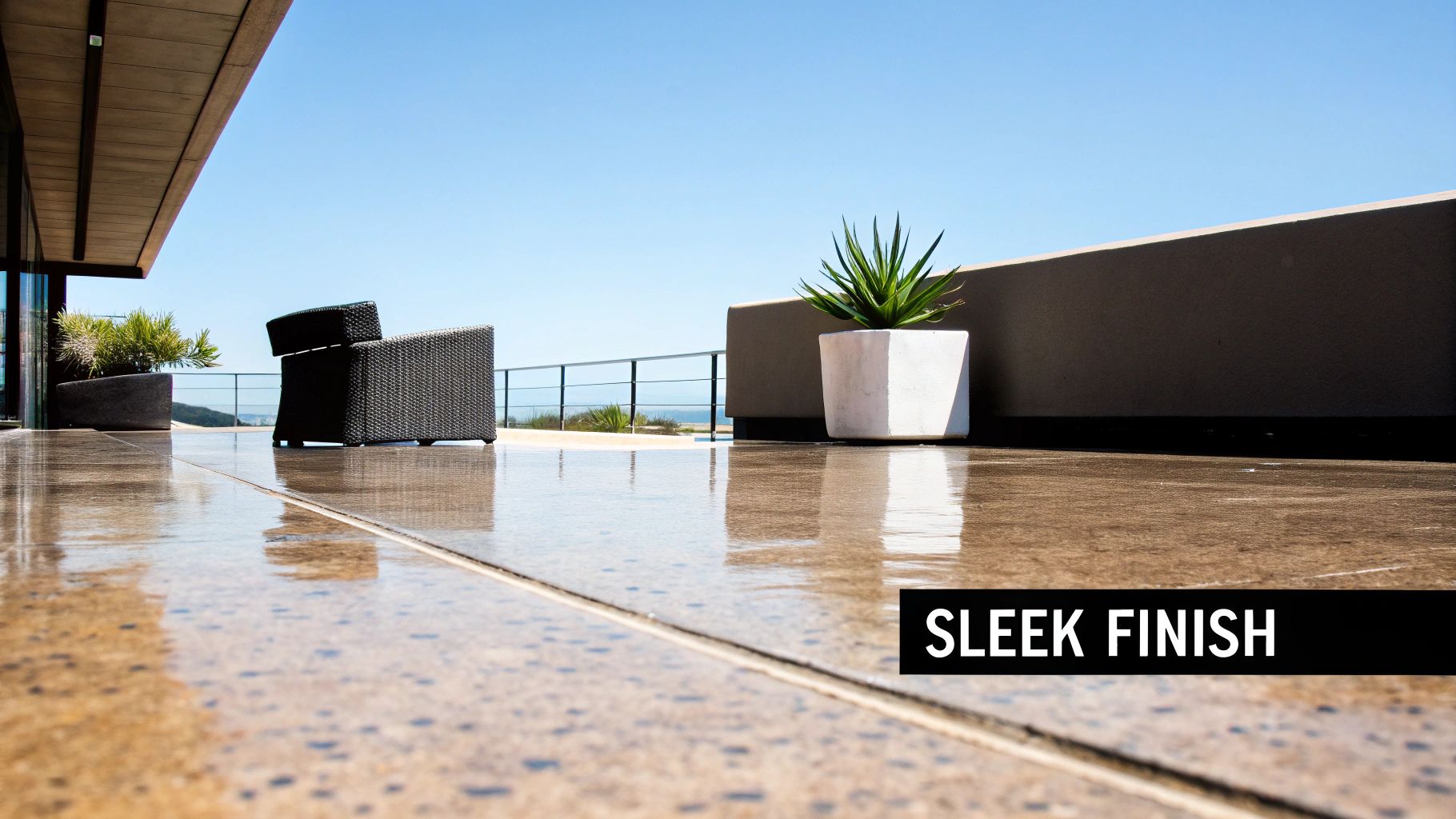
Polished concrete transforms a standard slab into a high-gloss, reflective surface that exudes modern luxury. This process involves mechanically grinding and honing the concrete with progressively finer diamond abrasives to achieve a smooth, mirror-like finish. The technique can expose the decorative aggregate within the concrete mix, creating a terrazzo-like effect that elevates the patio from a simple utility space to a sophisticated design feature. It's a premium choice for extending your patio with a clean, contemporary aesthetic that’s incredibly durable and low-maintenance.
Best Use Case & Layout Guidance
A polished concrete patio extension is ideal for homeowners aiming for a seamless indoor-outdoor transition, especially in homes with modern, minimalist, or industrial architectural styles. For example, if your home features polished concrete floors inside, extending that same finish outdoors creates an elegant, continuous floor plane that makes both the interior and exterior spaces feel larger and more connected.
For a layout, consider a simple geometric extension, like a large rectangle or square, that complements the clean lines of a modern home. This approach works well for creating an outdoor lounge or dining area that feels like a natural extension of your indoor living room. You can also integrate features like linear fire pits or built-in planters directly into the polished surface for a fully custom look.
Recommended Concrete & Finish
The best result comes from a poured concrete slab with a carefully selected decorative aggregate, which is then ground to the desired level of exposure and sheen. You can choose from a high-gloss, satin, or even a matte finish. For outdoor use in a climate like Atlanta's, a satin or matte finish is highly recommended to reduce glare and improve slip resistance. Applying a high-quality penetrating sealer is essential to protect the surface from stains and moisture, while a non-slip additive can be included for enhanced safety around pools or in rainy conditions.
Atlanta-Specific Considerations
- Surface Temperature: Polished concrete, especially in darker shades, can become hot under the intense Georgia sun. Consider lighter integral colors like tan or light gray, or strategic placement of shade structures like pergolas or shade sails to keep the surface comfortable.
- Professional Installation: Polishing concrete is a highly specialized skill requiring expensive, heavy equipment. It is not a DIY project. Hiring an experienced Atlanta contractor is crucial for achieving a flawless, durable finish that accounts for our local climate.
- Upkeep: While low-maintenance, the high-gloss look requires some care. Regular dust mopping and cleaning with a pH-neutral cleaner will prevent grit from dulling the surface. Depending on traffic, the patio may need to be rebuffed and resealed every few years to restore its original luster.
Ready to bring the sleek, contemporary elegance of a polished concrete patio extension to your home? Learn more about our residential polished concrete services and get a free quote today!
4. Decorative Concrete Overlay: An Artistic Upgrade
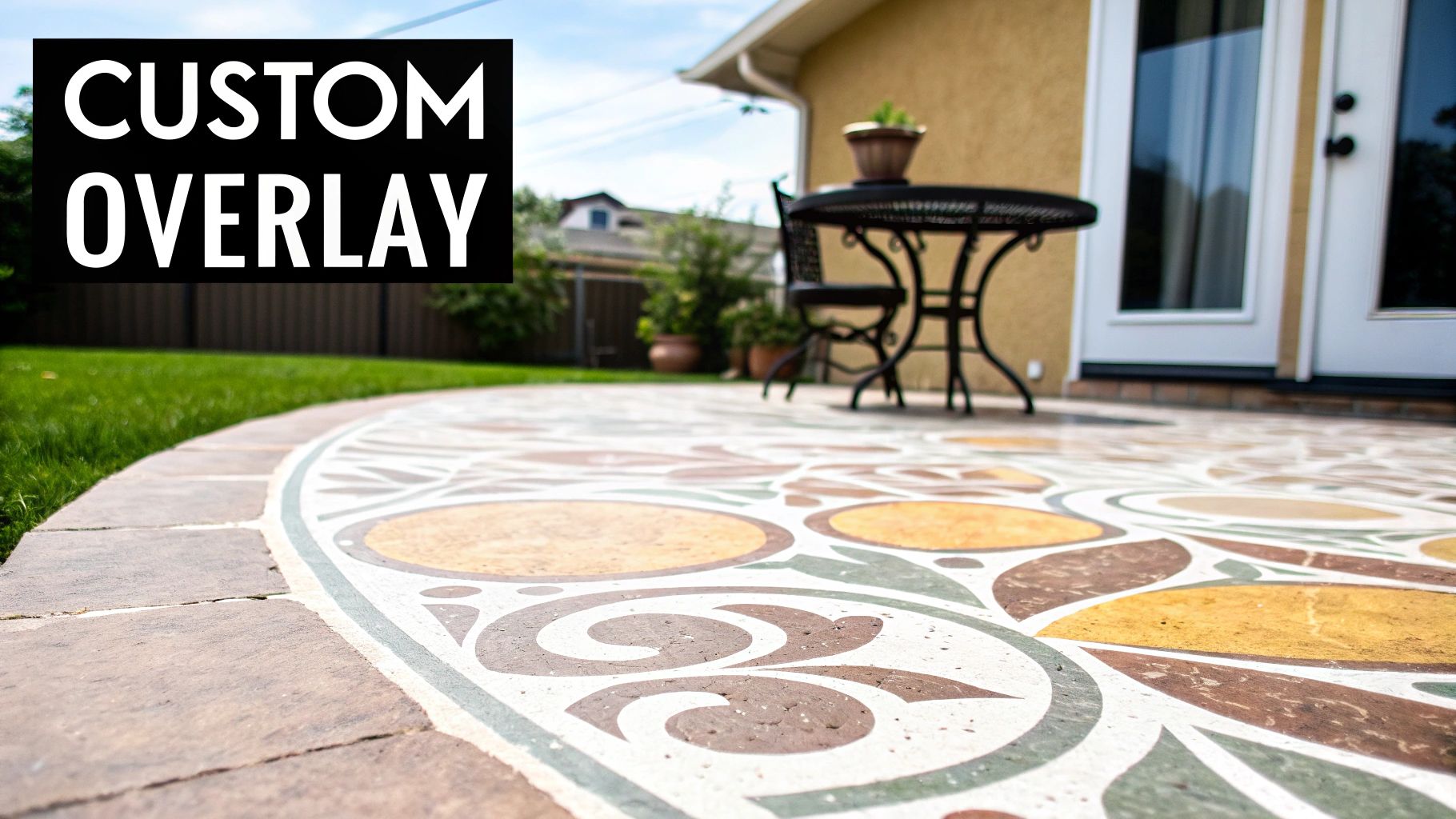
A decorative concrete overlay is a thin, polymer-modified cementitious coating applied directly over an existing concrete slab. This technique is a game-changer for revitalizing old, worn surfaces or for seamlessly blending a new extension with an old patio. It allows for incredible artistic freedom, enabling the creation of custom colors, textures, and even intricate stenciled patterns without the need for complete demolition and replacement. It's an excellent way to add a personalized, high-design touch to your outdoor living space.
Best Use Case & Layout Guidance
This method is ideal for homeowners who have an existing, structurally sound concrete patio they wish to expand and unify with a fresh, new look. Overlays excel at covering minor imperfections and discoloration, creating a single, cohesive surface across both the old and new sections. A popular application is extending a basic patio and then applying an overlay across the entire area to look like large-format stone tiles or even a custom mural.
For layout, consider using a stenciled border that mimics classic tilework to frame the entire patio area. This creates a sophisticated, room-like feel. Another creative idea is to embed a custom design, like a family monogram or a compass rose, in the center of the extension, making it a true focal point of your backyard.
Recommended Concrete & Finish
The extension itself should be a standard poured concrete slab, properly bonded to the existing patio. The magic happens with the thin-stamped or microtopping overlay applied over the entire surface. These specialized products are designed for durability and adhesion. For a truly unique look, consider hand-troweled textures for a Tuscan feel or using multiple colors for a marbled or slate-like appearance.
A high-performance, UV-stable sealer is non-negotiable. It protects the intricate design and color from the intense Georgia sun and frequent rain, ensuring the artwork remains vibrant and the surface is easy to clean. You can explore a wide variety of finishes with a professional. Learn more about the possibilities of decorative concrete in Atlanta.
Atlanta-Specific Considerations
- Surface Preparation: The success of an overlay hinges on meticulous preparation. The existing concrete must be thoroughly cleaned, and any significant cracks must be properly repaired. In Atlanta's humid climate, pressure washing to remove mold or mildew is a critical first step.
- Adhesion: A high-quality bonding agent or primer must be used to ensure the overlay permanently adheres to both the old and new concrete sections, preventing delamination during freeze-thaw cycles.
- Curing Time: High humidity can affect the curing time of the overlay and sealer. Work with a contractor who understands how to manage the application process according to Atlanta's specific weather conditions to ensure a flawless, durable finish.
Ready to transform your patio with a custom artistic finish? Contact us today for a free, no-obligation consultation and quote!
5. Concrete Paver Extension with Grout Fill: The Flexible Craftsman
A concrete paver extension offers a classic, sophisticated look by using individual pre-cast concrete blocks arranged in stunning patterns. Instead of a single poured slab, this method provides textural depth and design flexibility. The joints between the pavers are filled with polymeric sand or a specialized grout, which hardens to lock them in place, prevent weed growth, and create a durable, unified surface. This approach perfectly merges the custom aesthetic of individual pavers with the strength and longevity expected from concrete patio extension ideas.
Best Use Case & Layout Guidance
This method is ideal for homeowners who want intricate designs and value the ability to make easy repairs. Unlike a single slab, a cracked or stained paver can be individually replaced. It’s also excellent for seamlessly blending a new patio space with existing hardscapes or garden pathways. A great example is extending a patio towards a garden with pavers that transition into a matching walkway.
Consider a herringbone or basket-weave pattern to add visual interest and a sense of movement to your extension. For Atlanta homes with traditional architecture, a running bond pattern using rectangular pavers can beautifully complement the existing brickwork. You can also create a contrasting border with a different color or paver shape to clearly define the new zone, such as a dining or lounging area.
Recommended Concrete & Finish
The key here is using high-quality interlocking concrete pavers from reputable manufacturers like Belgard or Unilock. These are engineered for consistent size, color, and high compressive strength. The “finish” comes from the paver’s texture (smooth, tumbled, slate-textured) and the joint fill material. Polymeric sand is the modern standard; it’s a mix of fine sand and a polymer that hardens when wetted, creating a firm yet flexible joint that resists weeds and insect infestation.
Atlanta-Specific Considerations
- Proper Base is Non-Negotiable: Atlanta's clay soil makes a robust, well-compacted base of gravel and sand absolutely critical. A minimum 4-6 inch base is needed to prevent the pavers from shifting, sinking, or becoming uneven over time due to soil movement.
- Drainage and Slope: A paver patio must have a slight, carefully calculated slope (about 1/4 inch per foot) to direct rainwater away from your home's foundation. For example, a 12-foot wide patio extension should drop about 3 inches from the house side to the yard side.
- Maintenance: To keep pavers looking their best, they should be cleaned and sealed every 3-4 years to protect against staining and fading from the strong Georgia sun. The polymeric sand in the joints may also need to be replenished or touched up periodically.
Interested in the timeless elegance and design flexibility of a concrete paver patio extension? Contact us today for a free, no-obligation consultation and quote!
6. Exposed Aggregate Concrete Patio Extension: A Textured, Natural Appeal
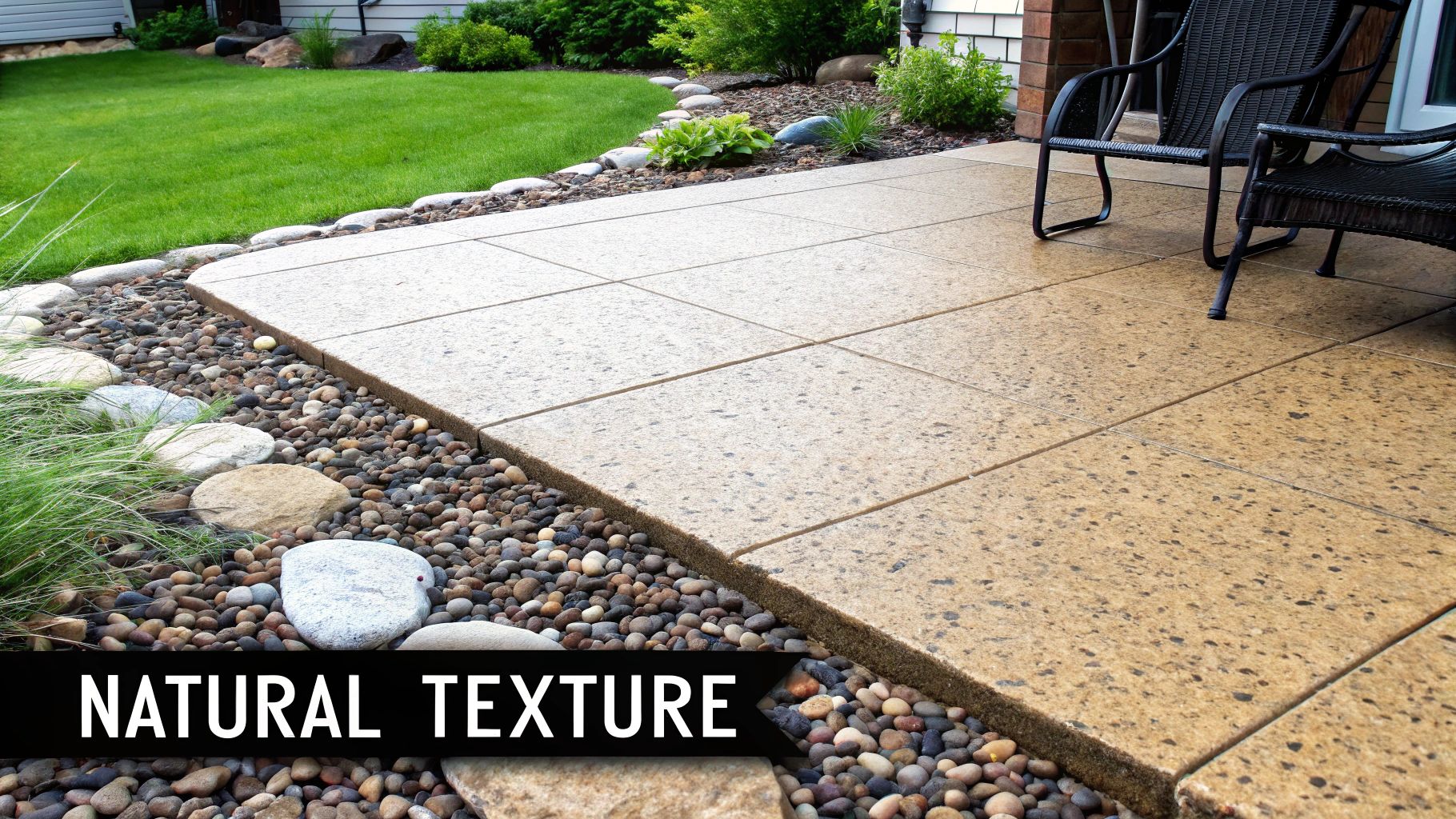
Exposed aggregate is a classic yet stunning finish that offers a unique, textured surface by washing away the top layer of cement paste to reveal the decorative stones and pebbles within the mix. This technique results in a durable, visually interesting surface that provides excellent slip resistance, making it one of the most practical and beautiful concrete patio extension ideas. It creates a seamless transition from your home to your landscape, offering a look that feels both high-end and naturally grounded.
Best Use Case & Layout Guidance
An exposed aggregate extension is an excellent choice for poolside patios, walkways, and areas where slip resistance is a top priority. It’s also ideal for homeowners who want to add texture and a natural, organic feel that complements garden beds and landscaping. The multi-tonal appearance of the revealed stones masterfully hides minor dirt and imperfections. A perfect example is using it for the area around a pool or hot tub, where its non-slip quality is paramount.
A great layout strategy is to use the exposed aggregate to create a contrasting border around a simple broom-finished main patio. Alternatively, a large, flowing exposed aggregate extension can serve as the main attraction, perhaps leading to a water feature or a secluded garden bench. Selecting aggregate colors and sizes that echo your home's exterior stone or brickwork can create a harmonious, custom-designed aesthetic.
Recommended Concrete & Finish
The best result comes from a poured concrete slab with a custom-selected decorative aggregate mix. The key is choosing the right stones. Options range from small, smooth river pebbles for a comfortable feel underfoot to larger, more angular crushed stone for a rugged look. The aggregate can be seeded onto the surface before curing or mixed integrally for consistent exposure. A high-penetration, non-slip sealer is essential to protect the surface and enhance the stones' natural colors without making the patio slippery.
Atlanta-Specific Considerations
- Proper Exposure Technique: The timing for washing away the surface layer is critical and can be affected by Atlanta's high humidity and heat. An experienced local contractor will know how to adjust for these conditions to achieve the perfect reveal without dislodging the stones.
- Tree Debris & Cleaning: Given the area's lush tree canopy, the textured surface can trap leaves and pollen. Regular cleaning with a leaf blower or a soft-bristle brush is recommended. Avoid high-pressure washing, which can damage the surface over time.
- Aggregate Sourcing: Sourcing local Georgia granite or river stones for your aggregate mix can be a cost-effective choice that ties your patio directly to its regional environment. Check with your contractor about locally available options. Learn more about the versatility of poured concrete solutions for your home.
Interested in the timeless, non-slip beauty of an exposed aggregate patio extension? Contact us today for a free, no-obligation consultation and quote!
7. Stained Concrete Patio Extension: The Artisan's Canvas
A stained concrete patio extension transforms a simple slab into a unique, artistic surface. Unlike paint, which coats the top, concrete stains penetrate the pores to create deep, translucent, and variegated colors. This method allows for a rich, marbled appearance reminiscent of natural stone or aged leather, providing a high-end custom look while leveraging the affordability and strength of concrete. It's a fantastic way to add character and personality, turning your patio extension into a true focal point.
Best Use Case & Layout Guidance
Stained concrete is the perfect choice for homeowners who want a one-of-a-kind finish that cannot be replicated. It’s ideal for creating a seamless transition from indoor flooring, like tile or hardwood, to your outdoor living space by matching or complementing interior color schemes. An excellent layout idea is to use staining to define a specific area, for example, creating a dark, walnut-colored "rug" effect under an outdoor dining set.
For a sophisticated look, consider a multi-toned application. A popular approach in Atlanta's modern homes is to use a darker, coffee-colored stain for the main field and a lighter, amber-toned stain for a subtle border. This adds depth and visual interest without overwhelming the space. The organic, free-flowing nature of the stain makes it well-suited for both geometric and curvilinear patio extensions.
Recommended Concrete & Finish
The best foundation for this idea is a newly poured, broom-finished concrete slab. The light texture of a broom finish provides enough grip for safety while allowing the stain to absorb evenly. Both acid-based and water-based stains work well, but acid stains are known for their unique, mottled, and earthy tones (think tans, browns, and soft blue-greens). Water-based stains offer a much wider and more vibrant color palette, including reds, blues, and yellows. Applying a high-quality, UV-stable sealer is non-negotiable to protect the color from fading in the Georgia sun and to make cleaning a breeze.
Atlanta-Specific Considerations
- Surface Preparation: Atlanta's humid climate can promote mildew growth on existing concrete. Before staining an older, adjoining slab for a cohesive look, it must be thoroughly pressure-washed and cleaned to ensure the stain penetrates properly. Any previous sealers or coatings must be completely removed.
- Permits: While staining itself doesn't require a permit, the physical patio extension often does, especially if it alters drainage or exceeds a specific size. Check with your city or county, like Gwinnett or Cobb, to confirm local requirements.
- Curing Time & Weather: Concrete must be fully cured (typically 28 days) before staining. Applying stain during Atlanta’s high-humidity summer days can affect absorption and drying times, so it’s crucial to work with a professional who understands how to manage the process in our local climate.
Ready to create a unique, artistically stained patio extension? Contact us today for a free, no-obligation consultation and quote!
8. Hybrid Concrete-Paver Composite Extension: The Best of Both Worlds
Why choose between the robust, seamless surface of poured concrete and the intricate, classic appeal of pavers? A hybrid approach combines these two powerhouse materials, offering unparalleled design flexibility and structural integrity. This method typically involves a primary poured concrete slab extension accented with paver inlays, borders, or even entire sections. It allows you to create a truly custom look that leverages the affordability and durability of concrete with the high-end texture and color of pavers. This makes it one of the most dynamic concrete patio extension ideas available.
Best Use Case & Layout Guidance
This composite style is perfect for homeowners who want to add a touch of luxury and visual complexity to their outdoor space. It excels at breaking up large, monolithic concrete surfaces and defining distinct functional areas. For example, you could extend your patio with a poured concrete slab for your main seating area but use a wide, elegant paver border to frame the entire space.
A popular layout in upscale Atlanta neighborhoods involves creating a "rug" effect, where a section of intricate pavers is inlaid into the center of the concrete extension, sitting directly under a dining or conversation set. This creates a stunning focal point. For a more subtle integration, consider a paver-lined path leading from the extension into the garden, seamlessly connecting the hardscape to the landscape.
Recommended Concrete & Finish
The foundation of this extension should be a poured concrete slab, providing a stable and durable base. For the concrete portion, a simple broom finish offers excellent traction and a clean look that allows the pavers to stand out. If you prefer more texture, a light exposed aggregate finish can complement the natural stone or clay of the pavers.
The pavers themselves should be high-quality, dense, and rated for outdoor use. Choose pavers that complement your home's exterior and the color of the concrete. Materials like travertine, bluestone, or classic brick pavers are excellent choices that provide a beautiful contrast in texture and color.
Atlanta-Specific Considerations
- Proper Base & Jointing: The entire area, both for concrete and pavers, needs a meticulously prepared and compacted gravel base to handle Atlanta's red clay soil. It is critical that your contractor installs a proper expansion joint where the concrete meets the paver sections to allow for independent movement and prevent cracking.
- Drainage at Transitions: Water management is key where two different materials meet. Ensure there is a slight, consistent grade away from the house and that the transition points between concrete and pavers do not create areas where water can pool.
- Sealing Both Surfaces: Both the concrete and the pavers require sealing, but they may need different types of sealers. For example, a penetrating sealer works best for concrete, while a film-forming sealer might enhance the color of the pavers. Using the correct product for each material is crucial.
Interested in the sophisticated look of a hybrid concrete and paver patio? Contact us today for a free, no-obligation consultation and quote!
8-Option Concrete Patio Extension Comparison
| Patio Option | Implementation Complexity 🔄 | Resource Requirements ⚡ | Expected Outcomes ⭐📊 | Ideal Use Cases 💡 | Key Advantages ⭐ |
|---|---|---|---|---|---|
| Stamped Concrete Patio Extension | Moderate — skilled stamping and finishing required 🔄 | Moderate materials & labor; pigments, sealer; $8–$15/ft² ⚡ | High aesthetic mimicry of stone/wood; durable; moderate maintenance ⭐📊 | Residential patio extensions, resorts, aesthetic upgrades 💡 | Affordable stone look, highly customizable, seamless transitions ⭐ |
| Permeable Concrete Patio Extension | High — substrate, drainage layer and careful installation 🔄 | Higher cost & specialist installers; drainage materials; $12–$18/ft² ⚡ | Excellent stormwater management, reduced runoff, cooler surface ⭐📊 | Sustainable projects, poor-drainage sites, municipal incentives 💡 | Reduces flooding/runoff, meets green codes, eco-friendly ⭐ |
| Polished Concrete Patio Extension | High — intensive grinding/polishing stages; labor-heavy 🔄 | Medium–high equipment & skilled labor; sealers; $10–$20/ft² ⚡ | Sleek reflective finish, durable, easy clean but can be slippery when wet ⭐📊 | Modern homes, showrooms, high-end patios seeking sleek look 💡 | Contemporary aesthetic, low cleaning, improved light reflection ⭐ |
| Decorative Concrete Overlay Patio Extension | Moderate — critical surface prep; thin decorative application 🔄 | Low–moderate materials & labor; bonding agents; $6–$12/ft² ⚡ | Fast aesthetic refresh, hides imperfections, shorter lifespan vs full replacement ⭐📊 | Renovations, budget-friendly design updates, themed patios 💡 | Cost-effective, highly customizable, minimal demolition ⭐ |
| Concrete Paver Extension with Grout Fill | High — precise base prep and pattern installation 🔄 | High labor & material cost; polymeric sand/grout; $12–$20/ft² ⚡ | Flexible patterned surface; repairable; good drainage if permeable joints used ⭐📊 | Driveways, high-traffic patios, design-focused hardscaping 💡 | Easy individual repairs, pattern variety, reduced slab cracking ⭐ |
| Exposed Aggregate Concrete Patio Extension | Moderate — timing and finishing technique critical 🔄 | Moderate materials & skilled finishing; sealers; $8–$14/ft² ⚡ | Natural textured stone appearance, strong slip resistance, durable ⭐📊 | Pool decks, safety-focused patios, natural landscape settings 💡 | Excellent traction, natural look, low maintenance ⭐ |
| Stained Concrete Patio Extension | Low–Moderate — surface cleaning and controlled application 🔄 | Low materials & labor; stains + sealer; $4–$10/ft² ⚡ | Rich variegated colors, revitalizes existing slabs, results vary with substrate ⭐📊 | Revamps, artistic/colored patios, budget-conscious projects 💡 | Highly customizable color, affordable, works over existing concrete ⭐ |
| Hybrid Concrete-Paver Composite Extension | High — coordination of concrete and paver installation 🔄 | High planning & skilled contractors; mixed materials; $10–$18/ft² ⚡ | Durable concrete base with decorative paver accents; integrated aesthetics ⭐📊 | Upscale residential patios, accent borders, mixed-material designs 💡 | Combines strength and aesthetic flexibility; more economical than full paver ⭐ |
Ready to Build Your Dream Patio? Let's Get Started.
We have journeyed through a wide array of concrete patio extension ideas, each offering a unique blend of style, function, and value for your Atlanta home. From the intricate patterns of stamped concrete that mimic natural stone to the eco-conscious functionality of permeable surfaces, it's clear that expanding your outdoor living space is far more than just pouring a simple slab. The right choice elevates your backyard from a patch of grass into a purposeful, beautiful, and highly functional extension of your home.
This exploration has revealed that your options are as diverse as your imagination. You might be drawn to the sleek, modern aesthetic of a polished concrete extension, perfect for a contemporary home in Midtown. Alternatively, the rustic charm of an exposed aggregate finish could be the ideal complement to a traditional Roswell property, offering both beauty and a non-slip surface for poolside safety. The key takeaway is that concrete is not a one-size-fits-all material; it's a versatile medium ready to be customized to your specific lifestyle and architectural vision.
Key Considerations Before You Break Ground
Before moving forward, it's vital to synthesize the practical advice shared throughout this guide. Making an informed decision involves carefully balancing several critical factors unique to our region.
- Atlanta’s Climate and Soil: Remember, our humid subtropical climate and prevalence of clay soil demand specific installation techniques. Proper site grading, sub-base preparation, and effective drainage solutions are not optional extras; they are fundamental requirements for a patio that will last for decades without cracking, shifting, or creating water problems.
- Aesthetics Meet Functionality: The most successful concrete patio extension ideas are those that marry form and function. Consider how you will use the space. Is it for large family barbecues, a quiet morning coffee nook, or a durable play area for kids? Your intended use will heavily influence the best finish, from the durability of a simple poured slab to the decorative flair of a stained concrete design.
- Budget and Long-Term Value: While initial cost is a significant factor, don't overlook the long-term maintenance and value. A decorative overlay might be a cost-effective way to refresh an existing surface, while a brand-new stamped concrete installation is a larger upfront investment that can deliver a significant return through enhanced curb appeal and home value.
- Permitting and Regulations: Never underestimate the importance of local compliance. Depending on your location within the metro Atlanta area (be it Fulton, DeKalb, Cobb, or Gwinnett County), the requirements for permits, setbacks, and impervious surface limitations can vary. Partnering with a knowledgeable local contractor is the surest way to navigate this process smoothly.
Your Path to a Perfect Patio Extension
The journey from idea to reality is a structured process. Start by revisiting the options that resonated most with you. Gather inspiration from your neighborhood, online galleries, and your own backyard's potential. Once you have a clearer vision, the most crucial step is to engage with a professional. An experienced concrete specialist can perform a site assessment, discuss the pros and cons of each material in the context of your specific property, and provide a realistic, detailed estimate.
Choosing to invest in a concrete patio extension is an investment in your quality of life. It's about creating a space for making memories, hosting loved ones, and enjoying the beautiful Georgia outdoors. With the right design, materials, and expert installation, your new patio will be a source of pride and enjoyment for many years to come.
Ready to transform your backyard with a stunning and durable patio extension? The experts at Atlanta Concrete Solutions have the local knowledge and craftsmanship to bring your vision to life, ensuring your project is built to last in the Georgia climate. Contact Atlanta Concrete Solutions today for a free, no-obligation consultation and take the first step toward your dream outdoor space.