
Having a small backyard in the Atlanta area doesn't mean you have to sacrifice style or functionality. A well-designed concrete patio can transform a compact outdoor area into a charming and highly usable extension of your home. Forget the image of plain, gray slabs; modern concrete offers a versatile and durable canvas for creativity, making it one of the most practical concrete patio ideas for small backyards. From the high-end look of stamped patterns that mimic natural stone to the eco-friendly benefits of permeable surfaces, the right choice can make your space feel larger, more inviting, and perfectly suited to your lifestyle.
This guide moves beyond generic suggestions to provide a detailed roadmap for creating the perfect small-scale outdoor oasis. We will explore eight innovative and actionable concrete patio concepts, each specifically adapted for compact spaces. You will find practical implementation details for each idea, including:
- Concept Descriptions: What defines each style and why it works for small yards.
- Space-Saving Layouts: Suggested dimensions and configurations to maximize every square foot.
- Finishes and Patterns: A close look at stamped, stained, exposed aggregate, and other finishes.
- Furniture and Planting Tips: How to complement your patio without causing clutter.
- Atlanta-Specific Notes: Local climate considerations, permit guidance, and material suggestions.
- Budget and Maintenance: Realistic cost expectations and long-term care advice.
We'll break down the aesthetics, costs, and maintenance for each option, empowering you to make an informed decision. Whether you're envisioning a cozy spot for morning coffee or a chic platform for entertaining, the foundation for your dream backyard starts right here.
1. Stamped Concrete Patio
Stamped concrete offers the ultimate design flexibility, making it one of the most popular concrete patio ideas for small backyards. This technique involves pressing three-dimensional patterns into freshly poured concrete, allowing it to mimic the look of more expensive materials like natural stone, brick, slate, or even wood planks. For instance, a small 10'x12' patio can be stamped with a large-format Ashlar slate pattern, creating fewer grout lines and giving the illusion of a more expansive surface. The result is a high-end, textured surface that combines the durability and affordability of concrete with the sophisticated aesthetic of premium paving materials.
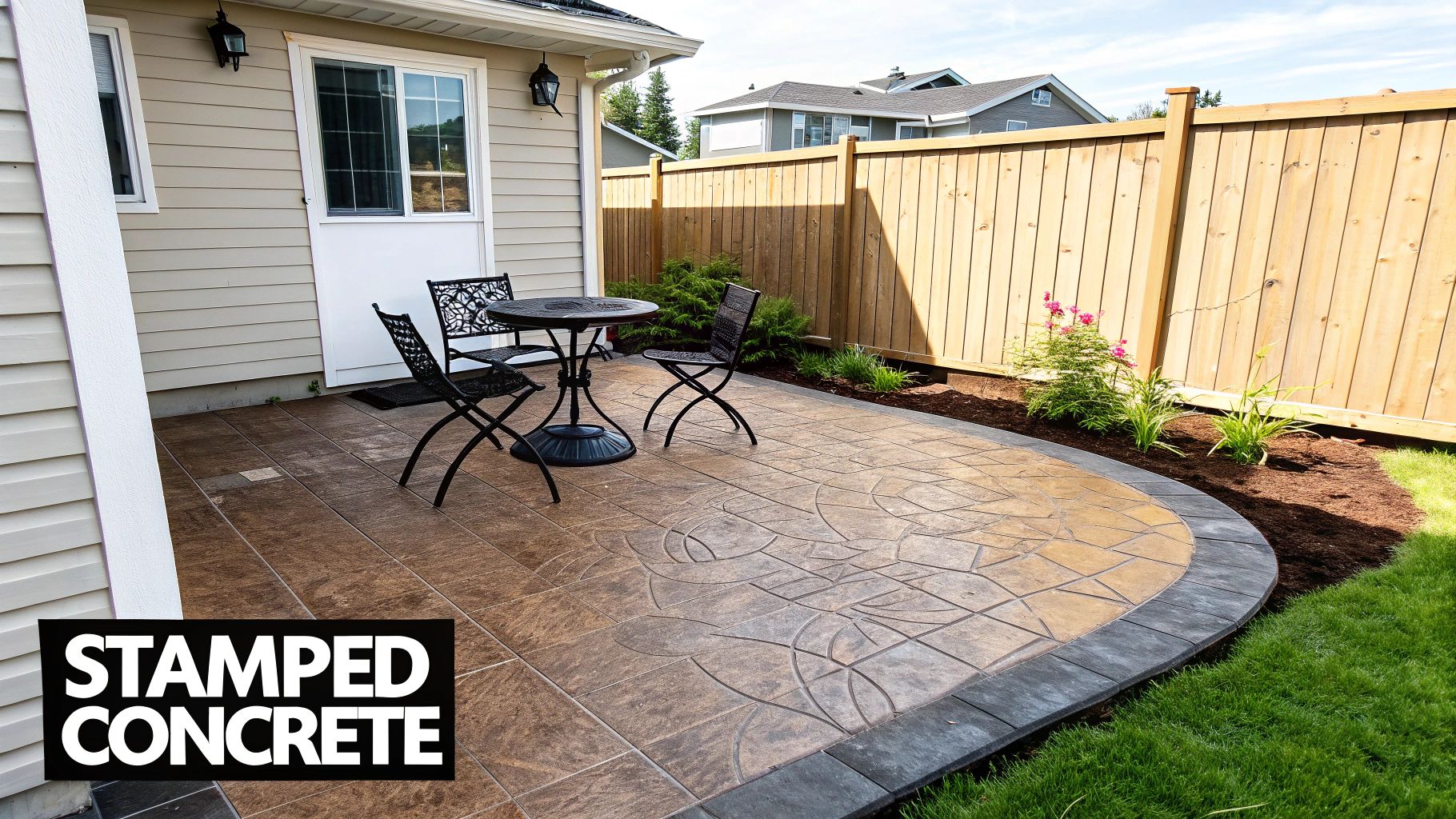
This method is particularly effective for compact spaces because it provides a visually interesting surface without the clutter of individual pavers, which can make a small area feel busy. For example, a seamless Ashlar slate pattern can create a clean, expansive look, while a wood plank stamp offers a warm, contemporary feel that connects the home to the garden.
Key Considerations for Small Spaces
- Pattern & Color: Opt for larger, less intricate patterns like a running bond brick or a large slate texture. Lighter colors, such as beige, light gray, or sand tones, reflect more light and can create the illusion of a larger, more open patio. For example, a "Sandstone" integral color with a light "Walnut" release agent creates a warm, natural look.
- Layout: A simple square or rectangular layout often works best to maximize usable space. Consider adding a stamped border in a complementary pattern or color to define the patio's edge without adding physical barriers, which helps maintain an open feel. A "soldier course" brick border is a classic example.
- Furniture & Planting: Choose streamlined, multi-functional furniture like a storage bench or a small bistro set. Surround the patio with vertical plantings like trellises or tall, narrow planters to draw the eye upward and enhance the sense of space.
Project Snapshot
- Suggested Dimensions: Ideal for patios from 8'x10' to 12'x14'.
- Budget: $$ (Moderate). Stamped concrete is more expensive than a basic broom finish but significantly more affordable than installing real stone or high-quality pavers.
- DIY-Friendly? No. Stamping concrete is a time-sensitive process that requires specialized tools (stamps, release agents, specialized color hardeners) and expertise to achieve a professional, uniform finish. This is a job best left to experienced concrete contractors.
- Atlanta Note: The freeze-thaw cycles in the Atlanta climate require proper joint placement and a high-quality sealant to prevent cracking and moisture damage. A professionally installed stamped concrete patio will withstand these conditions effectively.
2. Exposed Aggregate Concrete Patio
Exposed aggregate is a highly durable and visually appealing finish, making it a fantastic choice for concrete patio ideas for small backyards. This technique involves revealing the natural textures and colors of the stones (aggregate) mixed into the concrete by removing the thin top layer of cement paste before it fully cures. For example, using a mix of local river rock or granite chips can create a surface unique to the region. The result is a stunning, multi-tonal surface with a slightly rugged texture that is naturally slip-resistant and exceptionally long-lasting.
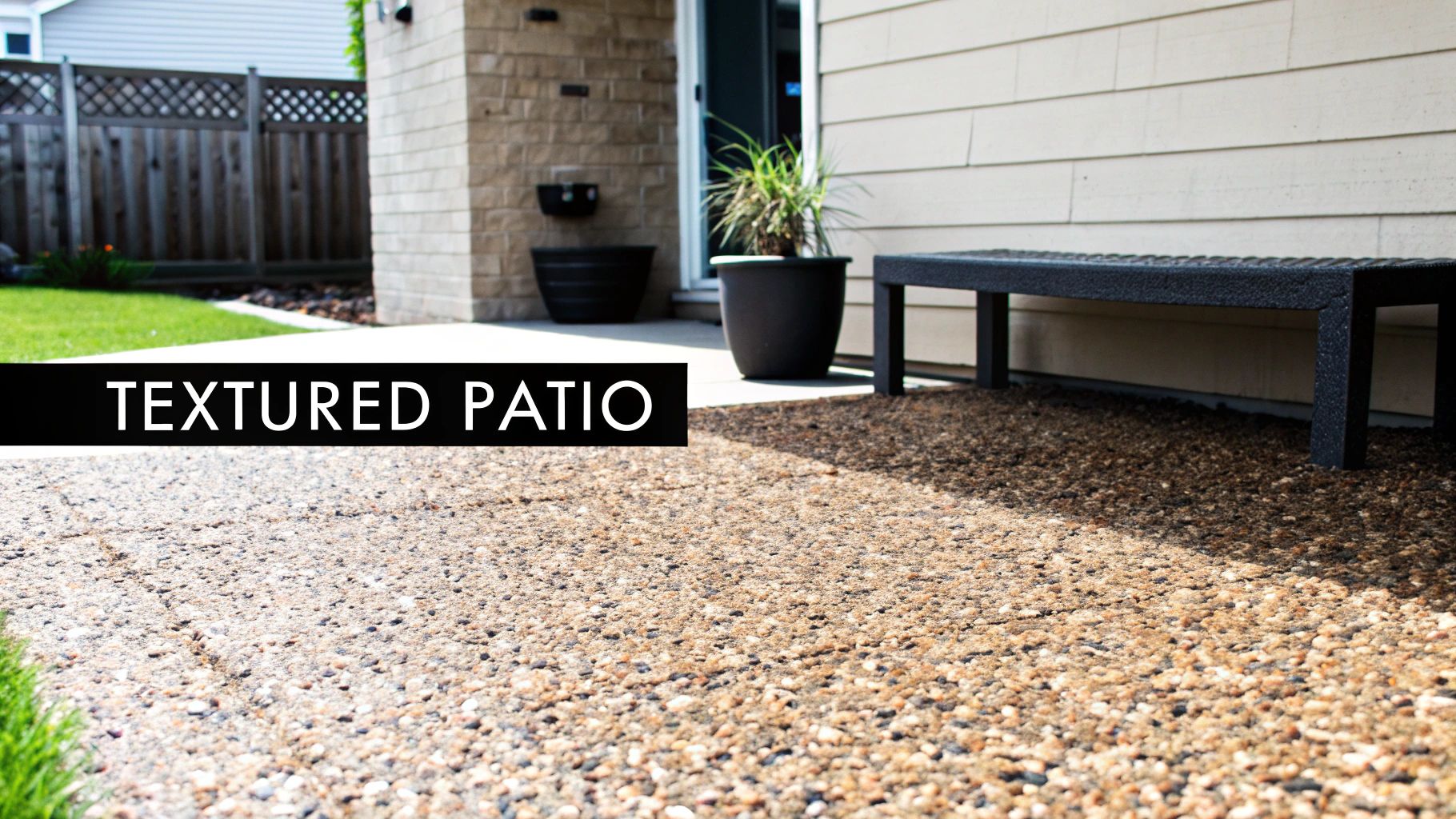
This method adds a layer of sophistication and dimension that is perfect for smaller patios. Instead of a plain, flat surface, you get a mosaic-like finish that catches the light and creates visual interest without overwhelming the space. The look is often seen in contemporary urban courtyards or resort-style landscapes, bringing a touch of natural, earthy elegance to even the most compact outdoor areas.
Key Considerations for Small Spaces
- Aggregate Size & Color: For a more comfortable and refined surface suitable for bare feet and patio furniture, select a smaller, smoother aggregate like pea gravel. Coordinate the stone colors with your home’s exterior and landscaping for a cohesive design. A mix of tan and brown pebbles complements brick homes well.
- Layout & Zones: Combine the textured exposed aggregate with bands of smooth, broom-finished concrete to create distinct zones for seating or a grill. This breaks up the texture and adds a custom, high-end design element that makes the space feel more intentional and organized. For example, a 2-foot smooth border around the patio perimeter.
- Lighting & Planting: Use ground-level ambient lighting, like solar-powered puck lights, to highlight the beautiful texture of the stones at night. Soften the hardscape by surrounding the patio with lush potted plants and container gardens, which contrast beautifully with the pebbled surface.
Project Snapshot
- Suggested Dimensions: Works well for any size, from a small 6'x8' landing to a 10'x12' dining area.
- Budget: $$ (Moderate). The cost is comparable to stamped concrete, falling between a basic slab and more expensive pavers. The price varies based on the type of aggregate chosen.
- DIY-Friendly? No. Achieving a uniform exposure without dislodging the aggregate requires precise timing, specific chemical retardants, and pressure-washing equipment. This is a job that requires professional skill for quality results. See examples of professionally installed exposed aggregate patios on our projects page.
- Atlanta Note: The excellent traction of an exposed aggregate surface is ideal for Atlanta’s rainy climate, reducing slip hazards. A proper application of a high-quality sealant is crucial to protect the surface from moisture and mildew growth in the humid environment.
3. Polished Concrete Patio
For those seeking a sleek, modern, and high-end finish, a polished concrete patio is an outstanding choice. This technique involves mechanically grinding and honing a concrete surface with progressively finer abrasives (e.g., from 50-grit up to 3000-grit diamond pads) to achieve a smooth, reflective sheen. The process reveals the natural beauty of the aggregate within the concrete, creating a luxurious, terrazzo-like surface that transforms a simple slab into a sophisticated design element. It’s one of the most elegant concrete patio ideas for small backyards because its reflective quality enhances natural light, making the space feel brighter and more expansive.
Popularized by the industrial design movement and minimalist architects, this finish is perfect for contemporary homes. A polished concrete surface creates a seamless transition from indoor to outdoor living spaces, especially when used in conjunction with large glass doors. The smooth, continuous surface avoids the busy look of pavers, providing a clean, uncluttered foundation for modern patio furniture and minimalist landscaping.
Key Considerations for Small Spaces
- Finish & Color: The level of sheen can be customized from a low-gloss satin (400-grit finish) to a high-gloss mirror-like finish (1500-grit or higher). Lighter integral colors or stains applied before polishing can further brighten the area. A high-gloss finish will maximize light reflection, a significant advantage in a small or shaded yard.
- Safety & Layout: A polished surface can become slippery when wet. It's crucial to apply a high-quality, non-slip sealer or additive specifically designed for exterior polished concrete. Consider a simple, clean layout like a square or L-shape to complement the minimalist aesthetic and maximize the patio’s usable area.
- Furniture & Planting: Pair the patio with sleek, low-profile furniture made from materials like powder-coated aluminum or teak. Use simple, architectural planters with sculptural plants like snake plants or horsetail reeds to maintain a clean, modern vibe without overwhelming the space.
Project Snapshot
- Suggested Dimensions: Best for patios from 10'x10' to 12'x16'.
- Budget: $$$ (High). The multi-step grinding and polishing process requires specialized equipment and significant labor, making it one of the more premium concrete finish options.
- DIY-Friendly? No. Achieving a uniform, high-quality polish is a highly technical skill. It demands professional-grade grinders, diamond-impregnated pads, and expertise in concrete densifiers and sealants. This job should always be handled by a specialized concrete polishing contractor.
- Atlanta Note: The high humidity and frequent rain in Atlanta make a non-slip additive an absolute necessity for safety. A professionally applied penetrating sealer is also vital to protect the polished surface from moisture intrusion and staining caused by fallen leaves or pollen.
4. Permeable Concrete Patio (Pervious/Porous Concrete)
Permeable concrete is an innovative and eco-friendly solution that is gaining traction as one of the smartest concrete patio ideas for small backyards. Also known as pervious or porous concrete, this material is engineered with a unique mix of cement, coarse aggregate, and water, creating a matrix of interconnected voids. This structure allows rainwater to pass directly through the surface at a rate of several gallons per minute, seeping naturally into the ground below, which helps recharge groundwater tables and significantly reduces stormwater runoff.
This sustainable approach is ideal for small urban yards where poor drainage, standing water, and compliance with local impervious surface regulations are common concerns. Instead of a solid slab that directs water toward your home's foundation or overwhelms storm drains, a permeable patio manages rainwater right where it falls. It creates a dry, usable surface almost immediately after a storm, maximizing the enjoyment of your compact outdoor living area.
Key Considerations for Small Spaces
- Drainage & Base: Proper installation is critical. A deep, graded base layer of open-graded gravel or crushed stone (typically 6-12 inches deep) must be installed underneath to act as a reservoir, holding water as it percolates into the subsoil. A soil test is recommended to ensure your ground can absorb water effectively.
- Aesthetics & Finish: While permeable concrete has a more textured, open-pored appearance than traditional concrete, it can be colored with integral pigments to match your home’s exterior. Its unique, natural-looking finish adds visual interest without overwhelming a small space.
- Landscaping Integration: Pair a permeable patio with a rain garden or bioswale along its edge to manage heavy rainfall and create a lush, sustainable landscape. For example, planting native water-loving plants like irises or ferns in a shallow depression next to the patio.
Project Snapshot
- Suggested Dimensions: Excellent for any size, particularly 10'x10' or 12'x12' patios in areas with drainage challenges.
- Budget: $$$ (Moderate to High). The specialized materials, required sub-base preparation, and certified installation make it more expensive than standard or stamped concrete.
- DIY-Friendly? No. Installing pervious concrete requires specific knowledge of mix designs, placement techniques, and sub-base engineering. This job must be handled by certified professionals to ensure proper function and long-term durability.
- Atlanta Note: Given Atlanta's frequent heavy rainstorms, a permeable patio is an excellent solution for managing stormwater runoff and may help homeowners comply with local impervious surface limits. Professional installation is key to handling the area's clay soil, which requires a robust drainage base.
5. Stained Concrete Patio
For those seeking a custom look without the high cost of stamping or pavers, a stained concrete patio is an exceptional choice. This technique uses acid-based or water-based stains that penetrate the concrete to create rich, permanent color. Unlike paint, which creates an opaque layer on top, stains produce a variegated, translucent finish that allows the unique character and texture of the concrete to show through. For example, an acid stain like "Cola" or "Amber" will react with the lime in the concrete to create a marbled, leather-like effect.
This method is one of the most versatile concrete patio ideas for small backyards because it enhances a simple slab with custom color, making the space feel more intentional and designed. For instance, a two-tone design with a lighter central area and a darker border can create the illusion of a rug, defining a seating zone. Similarly, warm, earthy tones like amber, rust, and brown can make a small patio feel cozy and seamlessly blend it with the surrounding garden landscape.
Key Considerations for Small Spaces
- Color & Technique: Lighter, more neutral stains like tan, light brown, or soft terracotta can make a small area feel larger and more open. Consider using multiple colors in a gradient or creating subtle, free-form patterns to add artistic flair without overwhelming the space. A popular technique involves spraying two complementary colors to create a soft, mottled look.
- Layout & Definition: Even on a simple square slab, you can use stains to create visual zones. Use a darker stain around the perimeter to frame the patio or use stencils to create a simple geometric pattern, like a compass rose, in the center, drawing the eye inward.
- Furniture & Planting: The rich, warm tones of stained concrete pair beautifully with dark metal or wood furniture. Complement earthy stains with lush green plants in terracotta or ceramic pots to create a vibrant, harmonious outdoor retreat.
Project Snapshot
- Suggested Dimensions: Works for any size, but excels in 10'x10' to 12'x12' areas where color can have a big impact.
- Budget: $ (Low to Moderate). Staining is one of the most cost-effective ways to customize concrete, with costs depending on the complexity of the design and the type of stain used.
- DIY-Friendly? Yes, for basic single-color applications. The process involves thoroughly cleaning the concrete, applying the stain (often with a sprayer or roller), and then sealing it. However, for complex patterns, multi-color designs, or acid staining (which involves a chemical reaction), hiring a professional is recommended to ensure a safe and even application.
- Atlanta Note: A high-quality, UV-resistant sealer is crucial in the sunny Atlanta climate to protect the stain from fading over time. The sealer also provides a protective barrier against moisture, helping to prevent damage during occasional freeze-thaw cycles.
6. Concrete Paver Inlay Patio
A concrete paver inlay patio creates a truly custom look by combining the strength of poured concrete with the decorative appeal of other materials. This hybrid approach is one of the more artistic concrete patio ideas for small backyards, where individual pavers, tiles, or stones are set directly into the wet concrete surface. For example, you can create a decorative border using tumbled travertine pavers or place hand-painted ceramic tiles in a random pattern for a mosaic effect. This technique allows for unique, personalized designs that blend the durability of concrete with the distinct texture and color of materials like travertine, flagstone, or even artistic ceramic tiles.
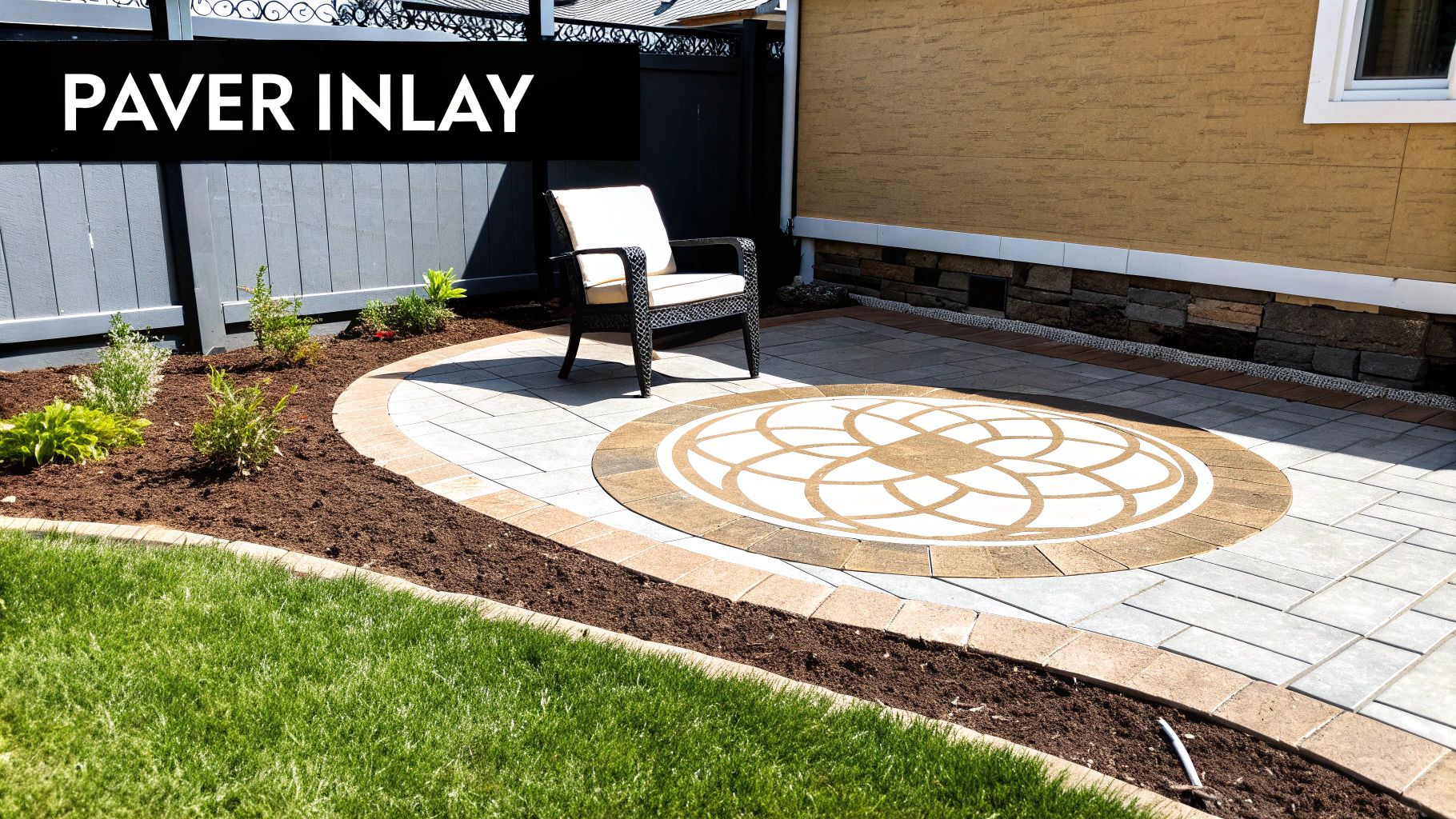
This method is perfect for small yards because it allows you to introduce high-end materials and intricate patterns without the full cost of a paver-only installation. You can create a stunning focal point, such as a mosaic-style centerpiece, or a simple, elegant border frame that defines the space. For example, a sleek, modern home might feature dark gray concrete with inlays of smooth, light-colored river rock, while a Mediterranean-style backyard could have terracotta-colored concrete with vibrant tile inserts.
Key Considerations for Small Spaces
- Pattern & Scale: Use inlays to create a visual anchor or a defined border. A paver "rug" design in the center of the patio can ground a seating area, making the space feel more intentional and organized. Avoid overly complex patterns that can overwhelm a small footprint.
- Material & Color Contrast: Select inlay materials that contrast with the concrete color to make the design pop. For instance, dark slate pavers set into light gray concrete create a bold, contemporary look that adds visual depth without clutter.
- Layout: A border inlay is an excellent strategy for small patios. It frames the area, adds a touch of elegance, and helps define the usable space without requiring physical barriers like walls or planters, which preserves an open, airy feeling. An example is a single row of brick-sized pavers along the edge.
Project Snapshot
- Suggested Dimensions: Works well for any size, particularly effective on 10'x12' or 12'x12' patios where a central design can be appreciated.
- Budget: $$$ (Moderate to High). The cost depends heavily on the price of the inlay materials and the complexity of the design. The labor is more intensive than a standard pour.
- DIY-Friendly? No. Properly setting inlays into wet concrete requires precise timing, skill, and an understanding of how different materials will bond with the concrete. This is a highly specialized job best handled by experienced decorative concrete professionals.
- Atlanta Note: In Atlanta, it's crucial to ensure the inlay materials are rated for outdoor use and can withstand local humidity and temperature shifts. A professional installer will use the correct bonding agents and sealants to prevent moisture from seeping between the concrete and the inlays, protecting against pop-outs or cracking.
7. Concrete Patio with Integrated Seating
For the ultimate in space-saving design, a concrete patio with integrated seating is one of the most brilliant concrete patio ideas for small backyards. This approach involves pouring built-in benches, retaining walls, and ledges directly into the patio's structure. By combining flooring and furniture into a single, cohesive element, it eliminates the need for bulky, separate chairs, maximizing usable floor space and creating a clean, modern, and uncluttered aesthetic. For example, a low, L-shaped wall along two sides of a patio can provide seating for 6-8 people without a single chair.
This method transforms the patio perimeter from dead space into a functional and stylish seating area. Imagine a contemporary courtyard where a smooth concrete bench wraps around a fire pit or a sleek urban patio where a low retaining wall doubles as a perfect spot for guests. The result is a highly intentional, architectural feature that feels both expansive and intimate.
Key Considerations for Small Spaces
- Design & Placement: Design seating to a comfortable height, typically 18-20 inches, and a depth of 18-24 inches. Angle benches toward a key focal point like a garden view or a water feature. Incorporating varied levels or multi-tiered ledges can add visual interest and define different zones within the patio.
- Comfort & Style: While concrete is durable, it can be hard. Plan to add weather-resistant outdoor cushions for comfort and a splash of color. This allows you to easily update the look of your patio without a major renovation. The concrete can be finished with a smooth, honed surface or even incorporate subtle textures.
- Functionality: Built-in seating can be designed to include hollow cavities for built-in planters or storage, further enhancing its utility in a compact backyard. Consider capping the concrete with wood or composite for a warmer, more comfortable seating surface.
Project Snapshot
- Suggested Dimensions: Best for patios where the perimeter can be clearly defined, from 10'x12' to 15'x15'.
- Budget: $$$ (Moderate to High). This is a custom project that requires significant formwork, planning, and more labor than a simple slab. Costs increase with complex shapes, backrests, and premium finishes.
- DIY-Friendly? No. Designing and pouring structural elements like benches requires professional expertise in form-building, reinforcement, and finishing to ensure they are safe, durable, and comfortable. Find out more about professionally installed poured concrete solutions.
- Atlanta Note: In Atlanta's climate, ensuring proper drainage around the base of integrated seating is critical to prevent water pooling and potential freeze-thaw damage. A high-quality penetrating sealer is essential to protect the concrete surfaces from moisture and stains.
8. Colored and Decorative Border Concrete Patio
Adding a colored and decorative border is one of the most effective and budget-friendly concrete patio ideas for small backyards. This design approach involves pouring a standard concrete slab and then adding a contrasting colored border around the perimeter. The border can be created using integral color mixed into the concrete, a topical stain, or a decorative overlay. For example, a simple broom-finished patio can be dramatically enhanced by staining a 12-inch border with a dark walnut color, providing a custom look without the cost of a fully colored or stamped surface.
This technique adds a frame to the patio, which defines the space and creates a sense of intention and polish. For a small backyard, a well-defined border can make the patio feel like a distinct outdoor room, visually separating it from the surrounding lawn or garden beds. For example, a modern home might feature a light gray concrete patio with a sharp charcoal border, while a Southwestern-style space could use a terracotta-colored border to add warmth and character.
Key Considerations for Small Spaces
- Proportion is Key: The border's width should be proportional to the patio size. A border that is too wide can shrink the perceived area, while one that is too narrow will get lost. A width of 12-18 inches is often a good starting point for smaller patios (e.g., a 10'x12' size).
- Color Coordination: Choose a border color that complements your home's exterior trim, shutters, or other architectural features. This creates a cohesive and integrated look that ties the patio to the house, making the entire backyard feel more unified. For instance, matching the border to the color of your front door.
- Zone Definition: Use borders not just on the perimeter but also to create subtle zones within the patio itself. A simple band of color can delineate a dining area from a small seating nook without adding physical clutter.
Project Snapshot
- Suggested Dimensions: Works well on patios of any size, from a compact 8'x8' to a more standard 10'x12'.
- Budget: $ (Budget-Friendly). This technique adds minimal cost to a standard concrete pour, making it an excellent way to achieve a custom look on a tight budget.
- DIY-Friendly? Yes, for experienced DIYers. Applying concrete stain or color hardener for the border is manageable. However, for a perfectly crisp line and uniform color, hiring a professional contractor is recommended.
- Atlanta Note: High-quality, UV-stable concrete stains and sealants are crucial in Atlanta's sunny climate to prevent the border color from fading. A professional will use products designed to withstand intense sun and humidity. To explore more advanced options, learn more about the residential decorative concrete services available in Atlanta for lasting beauty.
8-Option Comparison: Small Backyard Concrete Patios
| Design Option | 🔄 Implementation Complexity | ⚡ Resource & Cost | ⭐ Expected Quality / Outcome | 📊 Ideal Use Cases | 💡 Key Advantages / Tips |
|---|---|---|---|---|---|
| Stamped Concrete Patio | Medium–High: professional stamping required; pattern fixed at pour | $8–18/ft² + resealing every 1–3 yrs | ⭐⭐⭐⭐ Realistic stone/wood look; durable (20–25 yrs) | Small backyards seeking high-end appearance on a budget | Durable, seamless; choose lighter colors, ensure drainage, reseal annually |
| Exposed Aggregate Concrete Patio | Medium: surface exposure technique; requires finishing and sealing | $6–15/ft²; periodic pressure washing | ⭐⭐⭐⭐ Textured, rustic look with excellent slip resistance | Pool decks, wet areas, contemporary yards needing traction | Very slip-resistant; use smaller aggregate for comfort, seal annually |
| Polished Concrete Patio | High: specialized grinding/polishing equipment and expertise | $3–12/ft² for polishing (total install higher); anti-slip treatments add cost | ⭐⭐⭐⭐⭐ Sleek, reflective modern finish; low-maintenance surface | Minimalist/industrial small yards; spaces where reflection adds depth | Ultra-modern and easy to clean; add anti-slip coatings and mix with non-slip zones |
| Permeable (Pervious) Concrete Patio | High: requires site evaluation, base design and pro installation | Moderate; lower than complex drainage systems but site-dependent | ⭐⭐⭐⭐ Environmentally sustainable; eliminates surface runoff | Eco-focused yards, poor-drainage sites, green-certified projects | Supports groundwater recharge; test soil, grade base correctly, schedule cleaning to prevent clogging |
| Stained Concrete Patio | Low–Medium: can be DIY or pro; requires sealing | $1–3/ft² (very affordable) | ⭐⭐⭐ Customizable permanent color; good for renovations | Budget renovations, adding color to existing patios | Cheap and versatile; test colors, combine stains, always seal to protect color |
| Concrete Paver Inlay Patio | High: precision inlay work; skilled installer required | $10–25+/ft² depending on materials and complexity | ⭐⭐⭐⭐ Highly decorative and custom; focal-point potential | Custom designs, artistic patios, homes seeking unique patterns | Extremely customizable; use durable outdoor-rated materials and plan layout for maintenance |
| Concrete Patio with Integrated Seating | High: requires design/engineering and accurate pours | $15–30+/ft²; custom design increases cost | ⭐⭐⭐⭐ Very functional and space-efficient; permanent built-in seating | Small yards needing built-in seating/storage, rooftop patios | Maximizes space and flow; design seating ergonomics (18–24 in), add cushions for comfort |
| Colored & Decorative Border Concrete Patio | Low: simple addition to pours or applied to existing slabs | +$0.50–2/ft² extra for borders/stains | ⭐⭐⭐ Adds definition and perceived size with minimal change | Budget-friendly updates, zoning small patios, complementing landscaping | Affordable visual framing; choose border width proportionate to patio and seal for longevity |
Bring Your Atlanta Backyard Vision to life
Your small backyard is not a limitation; it's a canvas awaiting the right design. Throughout this guide, we've explored a diverse range of concrete patio ideas for small backyards, demonstrating that even the most compact spaces can become stunning, functional outdoor retreats. The key takeaway is that modern concrete is far more than a simple gray slab. It's a versatile, durable, and highly customizable material that can be tailored to fit your specific aesthetic, lifestyle, and spatial constraints.
From the high-end look of stamped patterns that mimic natural stone to the eco-conscious functionality of permeable surfaces, the options are vast. You can achieve the sleek, modern feel of a polished patio or the rich, vibrant hues of a stained concrete design. Each idea we've discussed, whether it's the texture of exposed aggregate or the clever space-saving design of integrated seating, offers a unique solution to the challenges of a smaller yard.
Synthesizing Your Patio Plan
The most successful projects begin with a clear understanding of your goals and the unique characteristics of your space. Before you break ground, it's essential to revisit the core concepts we've covered and ask yourself some final questions to solidify your plan:
- Functionality First: How will you truly use this space? Is it for quiet morning coffee, intimate dinners, or a safe play area for kids? Your primary use case will heavily influence the best layout and finish. For instance, a simple broom finish is excellent for high-traffic zones, while a polished surface might be perfect for a chic, covered seating area.
- Style and Cohesion: Does your chosen patio design complement your home's architecture and your personal style? A rustic flagstone stamp pattern might clash with an ultra-modern home, just as a sleek, polished patio might feel out of place with a traditional brick ranch. Look for designs that create a seamless transition from indoors to outdoors.
- Budget vs. Long-Term Value: While upfront cost is a significant factor, consider the long-term investment. Permeable concrete, for example, might have a higher initial cost but can solve drainage issues, potentially saving you thousands in landscape repairs down the line. Similarly, investing in professional sealing for a stained patio protects its color and vibrancy for years to come.
- Atlanta-Specific Considerations: Remember the unique challenges and opportunities of our local climate. The humidity and potential for heavy rains make proper drainage and non-slip surfaces paramount. Adhering to local building codes in Fulton or Gwinnett County isn't just a suggestion; it's a requirement for a safe and durable installation.
Taking the Next Step from Idea to Reality
Transforming these concrete patio ideas for small backyards into a tangible, beautiful outdoor living area is an exciting process. You've done the research, you've weighed the options, and you have a vision. Now, the final step is execution. For many of these projects, especially those involving complex finishes, significant grading, or specific drainage solutions, partnering with a seasoned professional is the most reliable path to success.
An experienced contractor can navigate the permitting process, ensure the sub-base is properly prepared for Georgia's clay soil, and expertly apply the chosen finish. This professional touch guarantees not only a visually stunning result but also a patio that is structurally sound and built to withstand decades of use, from hot Atlanta summers to the occasional winter freeze. Your small backyard has immense potential, and the right concrete patio is the foundation for unlocking it, turning an overlooked patch of land into the heart of your home.
Ready to transform your small Atlanta backyard with a beautiful and durable concrete patio? The team at Atlanta Concrete Solutions specializes in bringing custom designs to life, from stamped and stained finishes to functional, space-saving layouts. Contact us today for a free, no-obligation estimate and let's start building your perfect outdoor oasis.