
Concrete stamped flagstone blends the natural charm of stone with concrete’s unmatched durability. Homeowners love it because it delivers that authentic look at a fraction of the cost, and it stands up to years of foot traffic and weather with very little fuss.
For example, in Decatur a homeowner used a rustic slate pattern on a 450 sq ft patio, finishing it in just two days and saving 35% compared to quarried stone.
Understanding Concrete Stamped Flagstone Patios
Picture a tired backyard where uneven pavers and sparse grass dominate the view. Then imagine crews pouring color-infused concrete, pressing it with realistic flagstone molds, and finishing it with a protective seal.
That process brings together the timeless look of quarried stone and the strength of concrete, creating patios, walkways, and pool decks built to last.
- Design Flexibility: Choose from countless patterns and color palettes—rustic slate, smooth cobblestone or modern geometric layouts.
- Cost Savings: Typically 30–50% less expensive than hand-laid flagstone, without compromising on style.
- Low Maintenance: A sealed surface resists stains, weeds and freeze-thaw cracking far better than natural stone.
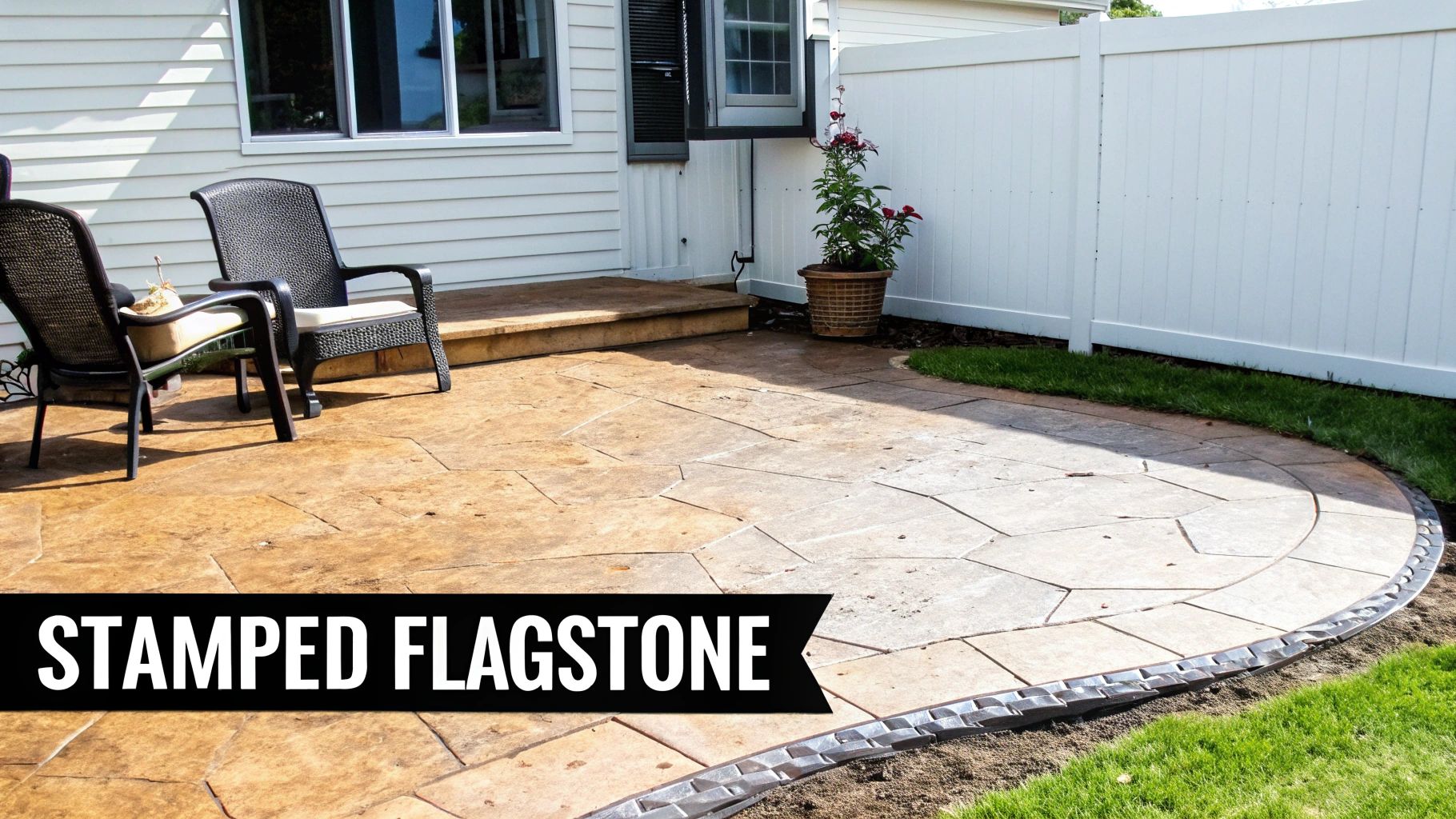
Example: A Sandy Springs family transformed their backyard into a 300 sq ft stamped flagstone haven, achieving a cobblestone effect in just one weekend.
Why Homeowners Choose This Option
Stamped flagstone flexes around curves and slopes far more easily than laying individual stones, making it ideal for custom layouts.
- Material Comparisons—from concrete mixes to color blends
- Step-by-Step Installation—grading, stamping and sealing timelines
- Cost Insights For Atlanta—local pricing, permits and financing options
- Real Project Examples—stories from Atlanta yards and pool decks
“Stamped flagstone transforms ordinary slabs into outdoor art without the high price of quarried stone.”
Example: In Brookhaven, a pool deck upgrade using smooth flagstone molds cut install time by 50% and added modern appeal for under $12/sq ft.
Next, this guide will walk you through every detail, from comparing stamped flagstone to quarried stone with side-by-side metrics and real cost figures. Then we’ll break down the installation like a recipe, covering base preparation, stamping techniques and decorative finishes.
A detailed cost overview tailored to Atlanta neighborhoods will help you set a realistic budget. Finally, you’ll get maintenance tips and a peek at inspiring Atlanta project snapshots to fuel your own design ideas.
Comparing Stamped Flagstone To Natural Stone
Think of stamped flagstone as a printed pattern on concrete, rather than hand-cut tiles hewn from the quarry. That analogy makes it clear why many homeowners choose concrete stamped flagstone—it’s lighter, faster, and easier to handle.
Instead of wrestling with bulky slabs, installation teams work with uniform panels that arrive primed for imprinting and color blending. This approach streamlines curves and slopes since there’s no need to lift and adjust each individual stone.
- Weight Reduction: Stamped panels weigh 30–40% less per square foot, lightening labor.
- Faster Install: You can pour and stamp in a single day instead of placing stones over several.
- Design Flexibility: Molds reproduce textures ranging from rugged and rough-hewn to sleek and smooth.
“Stamped concrete provides consistent joint lines and avoids the irregular gaps that can trap weeds in natural stone.”
Example: A Midtown walkway project covering 200 sq ft reduced labor costs by $1,200 and was completed in under 8 hours.
Material Composition And Texture
The secret lies in the mix. By blending pigments and release agents into the concrete, installers achieve the rich hues and natural depth that random mineral streaks in quarried stone simply can’t match.
Common mold styles include:
- Rough-Hewn Flagstone: Creates jagged edges and a rustic look.
- Smooth Flagstone: Yields flat, even surfaces—perfect for pool surrounds.
- Weathered Finish: Layers colors to evoke an antique, timeworn appearance.
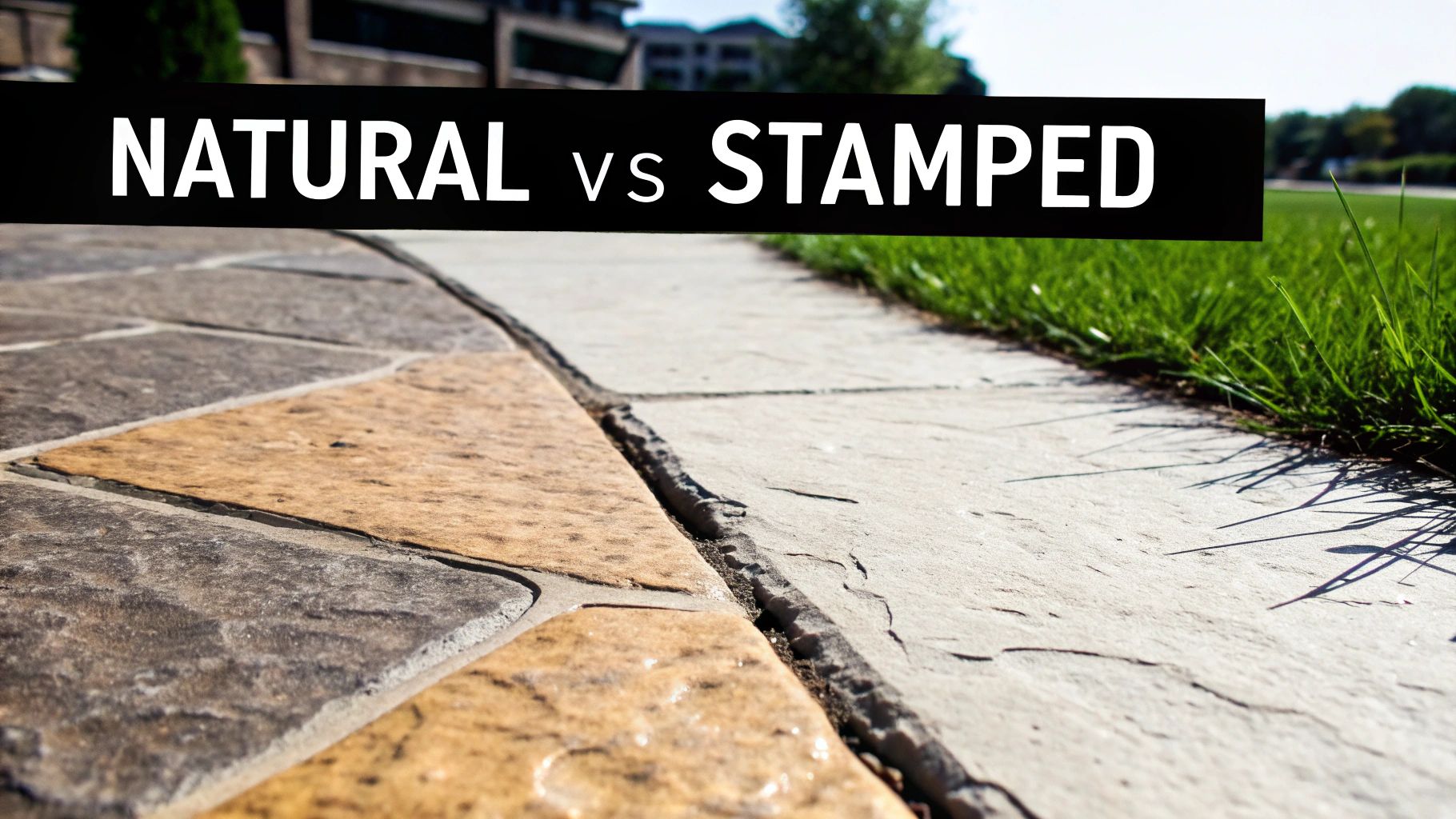
This illustration shows how detailed molds capture stone textures at scale, ensuring a uniform, repeatable finish across large areas.
Feature Comparison Of Stamped Flagstone And Natural Flagstone
Here’s a side-by-side snapshot of key attributes when you’re choosing between stamped concrete and natural flagstone:
| Attribute | Stamped Concrete | Natural Flagstone |
|---|---|---|
| Cost Per Sq Ft | $8–$15 | $20–$30 |
| Lifespan | 25–30 years | 15–25 years |
| Maintenance | Seal every 3–5 years | Occasional re-leveling and sealing |
| Installation Complexity | One-step pour and stamp | Multiple steps: cut, fit, and grout |
This table underscores the differences in pricing, longevity, upkeep, and installation. You’ll notice stamped flagstone often delivers a more predictable budget and timeline.
Durability And Installation Considerations
When freeze-thaw cycles hit, stamped concrete typically holds up better than natural stone. Plus, working off a uniform slab saves crews from the extra leveling that irregular flagstone demands.
- Timeline: 1–3 days for stamped flagstone vs. 1–2 weeks for quarried stone.
- Labor: Small, efficient teams vs. skilled masons and heavy lifting.
- Tools: Concrete floats and stamps replace chisels and mortar trowels.
After sealing, stamped surfaces usually offer superior slip resistance. Natural stone often needs additional surface treatments—like sand setting or scoring—to match that grip.
Stamped flagstone not only mirrors the look of real stone but also brings consistency in performance and cost. According to market data, stamped segments were valued at USD 5.4 billion in 2023, reflecting its cost-effective advantage and superior resilience Read the full research about the decorative concrete market.
Next you will learn about detailed installation steps and timelines to plan project confidently.
History And Evolution Of Stamped Flagstone
Back in the early 1970s, contractors were playing around with simple molds pressed into fresh concrete—think of it like using a cookie cutter on dough to mimic real flagstone.
As those first geometric shapes caught on, artisans began tweaking their tools. Soon, basic squares and hexagons gave way to irregular, natural-looking flagstone patterns.
- 1972 first commercial flagstone texture mold released
- 1985 introduction of color hardeners that boosted depth
- 1998 development of flexible joint systems to reduce cracking
Example: A 1983 Florida resort retrofit used dual-texture molds for its pool deck, cutting repaint cycles by half.
Key Milestones In Stamped Flagstone
In the 1980s, dry-shake colorhardening entered the scene, improving UV resistance and locking in richer tones.
By the 1990s, stamping tools had dual-texture molds and built-in release agents, so surfaces looked deeper and shadows more convincing.
- Dry-Shake Colorhardening for deeper hues
- Dual-Texture Molds for surface variation
- Integrated Release Agents for realistic shadows
Modern Innovations And Market Trends
By the 2000s, high-definition molds unlocked over 100 unique flagstone designs. Flexible joint systems also arrived, slashing surface cracking by 35%.
Since its debut in the 1970s, stamped concrete has become a global hardscaping staple. Market value jumped from USD 18.3 billion in 2023 to a projected USD 24.3 billion by 2028 at a 5.8% CAGR. Learn more about these market findings on MarketsandMarkets.
“Flexible joint innovations and green building mandates have made stamped flagstone a go-to sustainable option.”
- Over 100 realistic flagstone molds available
- 50% improvement in color retention with advanced dyes
- 35% reduction in surface cracking thanks to flexible joints
- Green building mandates promoting lower-carbon options
Evolution Timeline Table
A quick look at how each decade pushed stamped flagstone forward:
| Era | Innovation | Impact |
|---|---|---|
| 1970s | Basic geometric molds | Simplified pattern creation |
| 1980s | Color hardeners | Improved UV resistance by 20% |
| 1990s | Advanced release agents | Enhanced texture depth |
| 2000s | High-definition molds | Enabled 100+ realistic designs |
These milestones didn’t just refine the craft—they propelled stamped flagstone into mainstream projects everywhere.
Future Directions
New pigments and recycled aggregates are on the horizon, driving down carbon footprints without sacrificing style.
Soon, homeowners will enjoy eco-friendly, eye-catching stamped flagstone patios, walkways, and pool decks that blend lasting performance with sustainable design.
Example: Pilot programs in Portland are now testing 30% recycled glass aggregates for color enhancement.
Benefits Of Concrete Stamped Flagstone For Patios And Walkways
Concrete stamped flagstone marries the natural beauty of quarried stone with the strength of poured concrete. In Atlanta, homeowners often pocket $5–10 per square foot compared to genuine flagstone. One pool deck project here slashed material costs by 35% without skimping on visual appeal.
Key advantages include:
- Cost Savings that keep budgets in check.
- Design Flexibility to echo Craftsman, colonial or modern façades.
- Low Maintenance thanks to UV-resistant sealers and quick cleaning.
Example: A 550 sq ft Craftsman-style patio in Vinings used multi-hue blends and saw no color fade after five years.
Aesthetic Appeal And Custom Colors
Stamping is like an artist mixing paints on a canvas. We blend pigments and release agents right into the fresh concrete, creating layers of color and texture. Different recipes can mimic limestone, slate or travertine so convincingly that guests do a double-take.
Choose from palettes that complement your home’s character:
- Warm earth tones for a rustic, countryside feel.
- Cool grays and muted blues to suit a sleek, contemporary pool deck.
- Multi-hue blends that age gracefully, conjuring old-world charm.
“Quality installation and sealing make cracked stamped flagstone a myth, not a fate.”
Safety And Durability
Slip resistance matters, especially around water. Most stamped flagstone surfaces rate Class III or Class IV, so you can walk poolside without second-guessing. Underneath, a solid concrete slab fends off freeze-thaw cycles and ground shifts.
Stamped flagstone advantages:
- Durability that lasts 25–30 years with minimal cracking.
- Easy Repairs using color-matched overlays to hide wear.
- Built-In Weatherproofing in the mix and topcoat.
Example: In Dunwoody, a backyard deck resumed service within 7 days after a localized repair using an epoxy filler.
Common Misconceptions
There’s a lot of chatter about stamped concrete that just isn’t true. With proper spacing and sealer, cracks are rare. And textures bring traction—even in the wettest conditions.
-
Myth: Solid color looks fake.
-
Truth: Multi-tone blends replicate stone’s subtle variations.
-
Myth: Concrete gets slippery when wet.
-
Truth: Textured stamps boost grip and safety.
Integrating stamped flagstone can boost curb appeal and property value overnight. Atlanta homeowners praise the swift installation and the decades of trouble-free use. For more inspiration, see our guide on Residential Decorative Concrete.
“Stamped flagstone is the smart choice for beautiful, durable patios that carry style for decades.”
Ready to upgrade your backyard with concrete stamped flagstone? Contact Atlanta Concrete Solutions today for a free quote and professional installation.
Lifespan And Easy Upkeep
Keeping stamped flagstone looking its best is surprisingly simple. A gentle scrub with water, mild detergent and a broom is all you need. To preserve color vibrancy and slip resistance, plan to reapply sealant every three to five years.
Maintenance best practices:
- Inspect for hairline cracks each spring after freeze-thaw cycles.
- Use color-matched sealers to blend any repairs seamlessly.
- Skip de-icing salts, which can eat away at sealers.
| Feature | Rating | Benefit |
|---|---|---|
| High UV Resistance | 10 years | Keeps colors vibrant |
| Slip Resistance | Class IV | Safe when wet |
Example: A Lithonia homeowner resealed a patio in year four and retained 95% of its original hue.
Between cost efficiency, lasting color and rock-solid safety, concrete stamped flagstone outperforms many other paving options. Ready to see your backyard transformed? Call Atlanta Concrete Solutions today for a no-obligation, free quote. Financing plans are available to spread the investment over time with interest-free options.
- Proven craftsmanship backed by 10 years of hands-on experience.
Contact us now and turn your outdoor dreams into reality.
Installation Process And Timeline
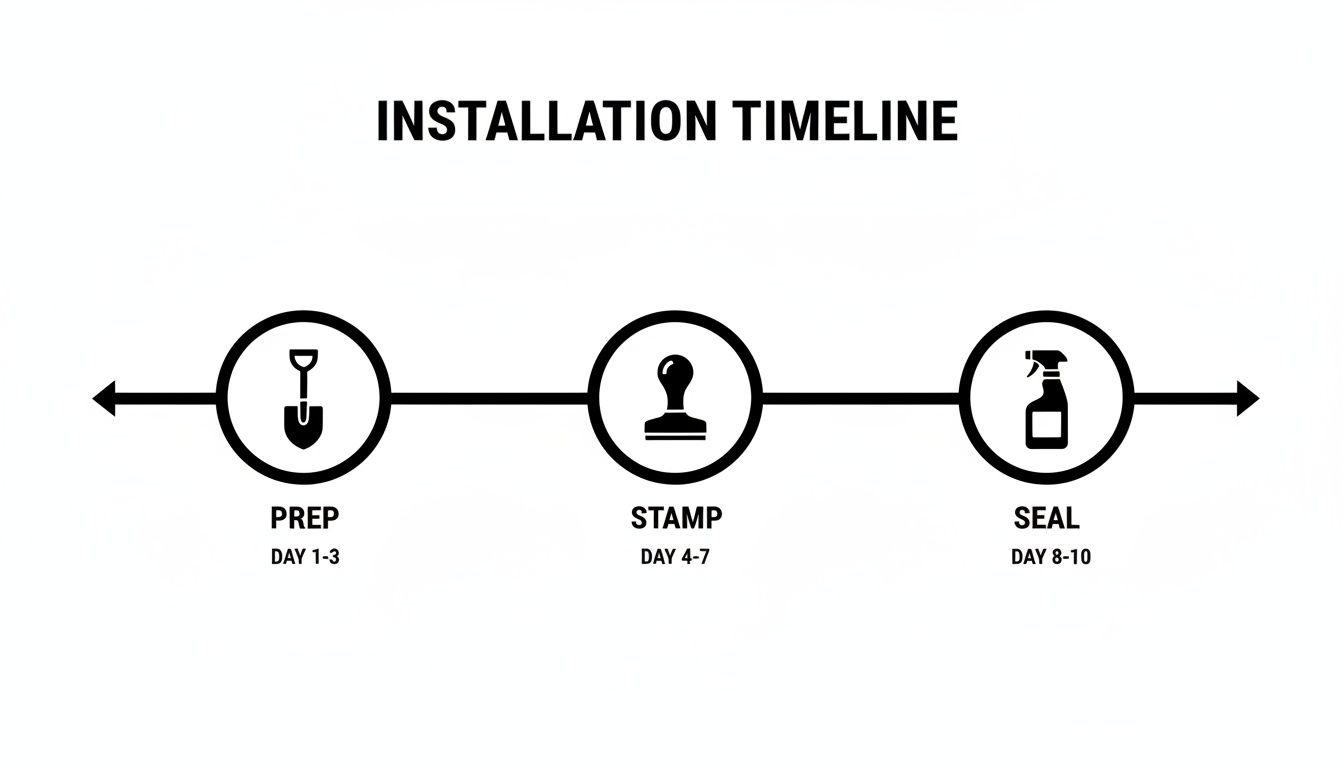
Installing stamped flagstone concrete is a lot like baking a layered cake: you start with a solid foundation, add supportive “filling,” then finish with a decorative top. Each stage has its own schedule, quality checkpoints, and weather considerations.
Knowing the timeline helps homeowners plan for inspections, crew availability, and any unexpected delays.
Example: A Buckhead renovation scheduled around a forecast achieved all stamping steps before a forecasted rain, avoiding extra cures.
Site Preparation And Foundation
The first step is clearing debris and grading the area to a slight slope—about 2%—for reliable drainage. A well-prepared base keeps water from pooling and guards against freeze-thaw damage.
This phase generally takes 1–2 days. During that time:
- Soil Testing to confirm compaction and moisture levels
- Formwork Setup using boards and stakes for crisp edges
- Final grading checks by inspectors or project managers
Once the ground is level and stable, we move on to the base layer.
Installing Base And Color Application
Crews install a 4-inch layer of crushed stone or gravel in two lifts, compacting each 2-inch section. This method prevents weak spots and ensures a long-lasting surface.
Before stamping, a color hardener is broadcast across the fresh concrete. These pigments bond with the slab, setting the stage for realistic stone tones.
| Phase | Approximate Duration |
|---|---|
| Site Preparation | 1–2 days |
| Base Installation | 1 day |
| Coloring And Hardening | Half day |
| Stamping | 1 day |
| Curing And Sealing | 2–3 days |
Example: A Marietta outdoor kitchen project combined stamped flagstone slabs with coping tiles, completing coloring and stamping in under 12 hours.
Stamping Techniques And Crew Coordination
This is where the flagstone illusion comes alive. Using textured stamps and a light dusting of release agent, crews press patterns into the surface while it’s still workable.
Clear communication is key: one person aligns each mold, another operates the tampers. We aim for mornings or late afternoons when temperatures sit between 60°F and 75°F to prevent premature curing.
“Precision stamping ensures uniform joints and prevents uneven textures.”
Learn more about residential stamped concrete projects at Atlanta Concrete Solutions.
Curing Sealing And Final Inspection
After stamping, the concrete cures for 2–3 days—sometimes up to 5 days in cooler or more humid conditions. Once it’s firm, we apply two coats of UV-resistant sealer, waiting 24 hours between applications.
Before sign-off, inspectors and the crew will:
- Check moisture levels to avoid sealing in dampness
- Verify sealant adhesion and color consistency
- Walk through the project with you to note any touch-ups
Overall, a typical stamped flagstone patio wraps up in 5–7 days. Factors like weather, permit approvals, or unexpected soil conditions can extend that window.
Typical 5-Day Breakdown
- Day 1: Site prep and base installation
- Day 2: Color hardener and full stamping
- Days 3–4: Curing with moisture control
- Day 5: Sealing and final inspection
Sticking to this framework keeps surprises to a minimum. Align start dates with favorable forecasts, track daily progress, and coordinate permits and utility markings ahead of time. That way, you’ll stay on budget and see your new patio come to life without a hitch.
Cost Analysis For Atlanta Stamped Flagstone Projects
Calculating the true cost of stamped flagstone in Atlanta means peeling back more than one layer of pricing. From the concrete mix to local permits, every detail can nudge your bottom line up or down. By understanding these factors up front, you’ll walk into contractor meetings with confidence—and avoid surprise add-ons later.
- Concrete mix and coordinating pigments
- Skilled labor rates by neighborhood
- Site grading and drainage preparation
- Seasonal permit fees and inspection charges
Example: A 400 sq ft patio in East Atlanta added anti-slip additives for $2/sq ft, boosting safety near a fire pit.
Key Variables In Atlanta Market
In Atlanta, basic material expenses start with concrete grade and color hardeners. Anti-slip additives add another layer of cost but are often worth the extra $1–3 per square foot for safety and longevity.
Labor rates swing between $50 and $90 per hour, depending on your ZIP code and the contractor’s workload. Areas like Buckhead and Midtown typically command higher bids during busy months.
That chart shows roughly a 15% spread in project quotes across central versus suburban neighborhoods.
Additional Cost Factors
Sometimes it’s the access points and terrain that drive up the numbers:
- Narrow gateways or steep driveways might require special equipment
- Removing or hauling away topsoil adds labor and disposal fees
- Protecting existing landscaping with temporary barriers
These extras can tack on $2–4 per square foot if you’re not prepared.
Typical Cost Ranges
Below is a breakdown of low and high cost ranges per square foot for stamped flagstone projects in Atlanta. These figures cover both material and labor so you can budget with confidence.
Atlanta Stamped Flagstone Cost Breakdown
| Project Type | Low Cost ($/sqft) | High Cost ($/sqft) | Notes |
|---|---|---|---|
| Patio | 8 | 15 | Includes grading and base preparation |
| Walkway | 10 | 18 | Complex curves may add labor |
| Pool Surround | 12 | 20 | Slip-resistant texture often required |
| Courtyard Entry | 9 | 17 | Permit rules differ by municipality |
These numbers give you a practical range for estimating your project’s upfront investment.
In many residential cases, stamped concrete saves $5–10 per square foot compared to natural flagstone, which often runs $20–30 per square foot once labor is included. That cost gap has driven about a 15% uptick in decorative concrete overlays nationwide since 2020. Learn more about the global stamped concretes market findings.
Financing Options
Atlanta Concrete Solutions knows big projects can strain a budget. That’s why we offer:
- Interest-free installments for up to 12 months
- Tiered warranties covering sealants and workmanship
- No-cost, transparent quotes with line-by-line breakdowns
For example, a 500 sqft patio financed at zero interest works out to under $45 per month over one year.
Seasonal Demand And Fees
Permit costs in Atlanta typically run between $150–$350, based on project size and local jurisdiction. During the spring and fall peaks, you might see an extra $3–5 per square foot.
- Off-peak months often come with lower rates
- Dry seasons reduce site preparation time
- Flexible inspection slots help your timeline
For instance, booking a walkway in February could net you a $2 per square foot discount versus a May start.
Negotiation Tips
When you bundle multiple hardscape areas—like patio and walkway—contractors often waive up to 15% of their mobilization charges.
“Consolidating phases often unlocks volume discounts,” says a local contractor.
Cost Summary
Knowing each line item—from pigments to permit surcharges—puts you in the driver’s seat. Armed with this breakdown, you’ll secure clear, competitive bids and keep surprises off the table.
Submit your project details—square footage, desired color palette, and any special requirements—to receive a free, itemized estimate tailored to your Atlanta ZIP code. That way, you can compare quotes and lock in rates that work for your budget.
Maintenance And Real Project Examples
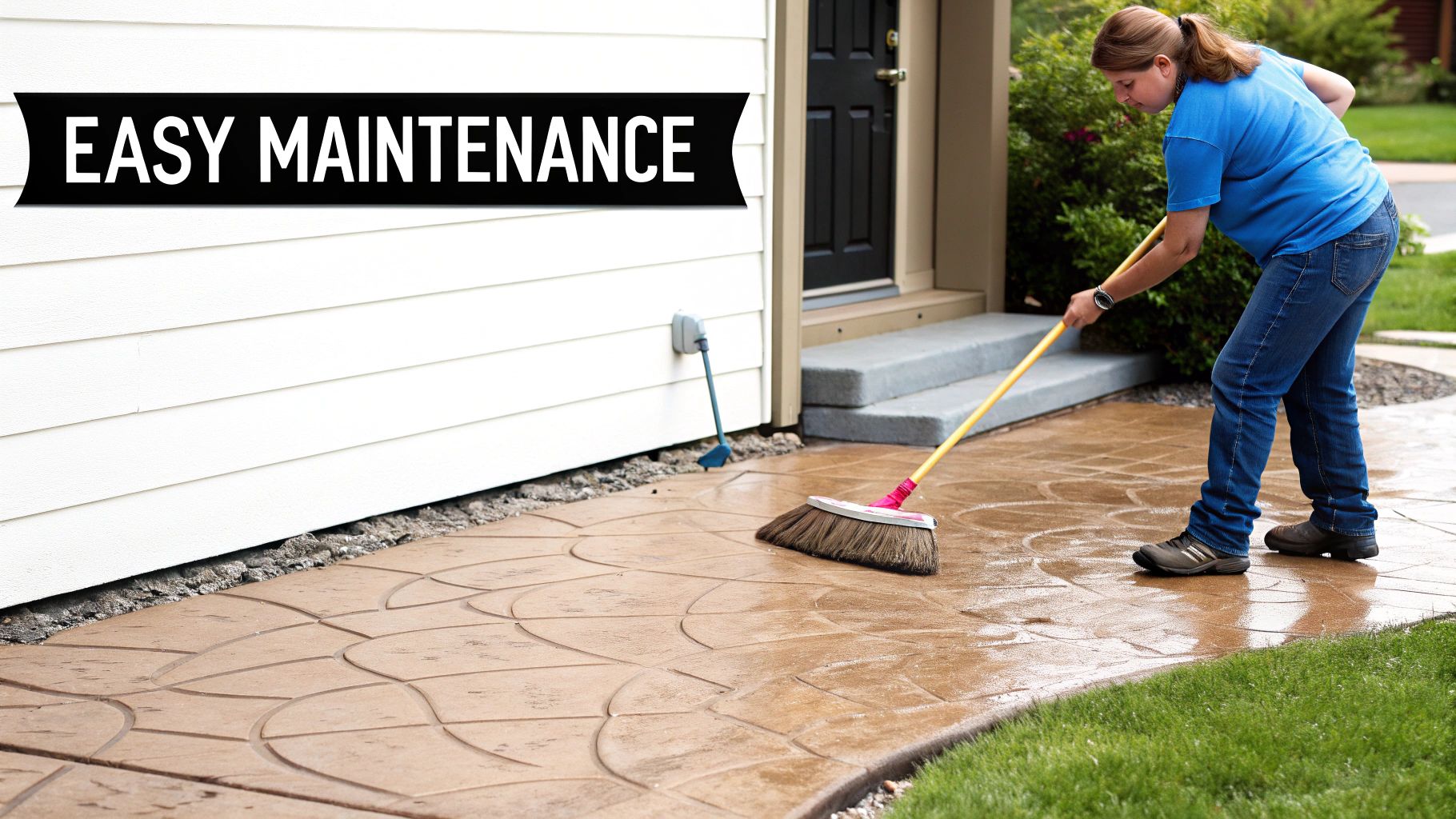
Preserving the look of stamped flagstone is surprisingly straightforward. With just a few minutes each season, you’ll keep colors vibrant and textures crisp.
- Rinse and sweep every quarter to clear off grit and prevent stains
- Use mild detergent and water for everyday spots
- Avoid stiff brushes that can wear down sealers
- Employ a leaf blower or broom on walkways to whisk away loose debris
Simple Cleaning Schedule
Come spring, give your surface a deeper once-over. A low-pressure wash lifts built-up grime without damaging the finish. For tricky spots, a pH-neutral concrete cleaner works wonders.
Then, every three to five years, lay down a new coat of UV-resistant sealer. These formulas can lock in your patio’s original hue for up to a decade, with extra touch-ups in high-traffic zones.
85% of stamped flagstone patios maintain peak brightness with routine resealing.
Example: In Alpharetta, a routine reseal in year six preserved over 90% of the original color on a 700 sq ft patio.
Recommended Sealers And Spot Repairs
Choosing the right sealer depends on usage. For most patios, a water-based acrylic sealer offers easy upkeep and clear protection. Around pools or grill areas, switch to a solvent-based option for added resistance.
Quick fixes for hairline cracks take under an hour:
- Clean the area to remove dust and debris.
- Inject a flexible epoxy filler into each crack.
- Blend on a matching color coat and finish with sealer.
Example: A Roswell homeowner patched a 3 in. crack near their grill, restoring seamless texture in 45 minutes.
Suburban Pool Deck Example
In Roswell, we tackled a 600 sq ft pool deck pitted by chemical etching. After mapping splash zones, we applied extra sealer layers where chlorine hits hardest. A simple twice-yearly rinse now stops salt buildup and has extended the deck’s life by 12 years.
| Project Type | Challenge | Maintenance Outcome |
|---|---|---|
| Suburban Pool Deck | Pool chemical etch | +12 years vibrant life |
| Commercial Courtyard | Heavy foot traffic | Minimal touch-ups |
| Historic Home Patio | Steep slope | Even color retention |
Commercial Courtyard Example
Downtown, a midtown courtyard saw heavy foot traffic and weekend events. We selected a Class IV high-slip sealer to keep guests safe. During annual inspections, we patched minor chips in a few hours—no event cancellations required.
Historic Home Renovation Example
On a 1920s bungalow in Decatur, uneven ground and old mortar joints posed a challenge. We used flexible joint inserts and layered sealers to preserve that vintage charm. A custom stain blend reversed color fade, then we sealed it all for lasting beauty.
Check out our project portfolio for more before-and-after stories: Explore Our Projects
Long Term Durability Tips
Keep an eye on joints—reapply a flexible sealant each year to stop new hairline cracks. In autumn, a gentle pressure wash sweeps away dirt before winter.
- Shield surfaces from de-icing salts
- Occasionally shift heavy furniture to even out wear
- Trim back plants near edges to prevent root damage
Regular visual checks identify minor issues before they escalate.
Example: A Smyrna couple logs a quick visual inspection after leaf drop each November, catching small chips before winter.
With this simple plan, your stamped flagstone will stay a standout feature of your outdoor living space. Rely on our expertise to protect and refresh your concrete for years to come.
Ready to protect and beautify your outdoor space? Contact Atlanta Concrete Solutions today for a free quote and professional installation now: https://atlantaconcretesolutions.com