
When you start thinking about stamped concrete for your home in the Atlanta area, one of the first questions is always about the cost. Generally, you can expect a professionally installed stamped concrete project to run anywhere from $15 to $25 per square foot. For a standard 400-square-foot patio, this translates to a typical project cost between $6,000 and $10,000.
That range is a great starting point, but the final number really depends on what you have in mind. The complexity of the pattern, the number of colors you want, and even the unique layout of your property all play a part. For example, a simple broom-finish pattern in a single color might be closer to the $15/sq. ft. mark, while a multi-color, hand-stained ashlar slate design with a custom border will push the price toward $25/sq. ft. or more. It's this flexibility that makes stamped concrete such a smart investment—it delivers that high-end look of stone or pavers without the hefty price tag.
An Overview Of Stamped Concrete Costs
Budgeting is always the first step for any big home improvement project, whether it's a new patio, driveway, or pool deck. This is where stamped concrete really shines. It gives you the beautiful, textured appearance of natural materials like slate, brick, or even hardwood, but at a cost that’s much easier to swallow. It’s more than just pouring a slab; it’s an artistic process that transforms your outdoor space, boosting both curb appeal and everyday usability. For instance, you can achieve the look of a rustic wood plank deck for a fraction of the cost and without the maintenance headaches of real wood.
This blend of beauty and value is why stamped concrete is more popular than ever. In fact, the global market was valued at USD 13,328.1 million in 2024 and is expected to keep climbing. Homeowners are catching on that it’s a brilliant, cost-effective alternative to pricier materials like natural flagstone or individual pavers, which can easily cost $25 to $50 per square foot or more. If you're curious about the numbers, you can find detailed market insights on Custom Market Insights.
Common Project Estimates In Atlanta
So, what does this look like for a real-world project here in Atlanta? To give you a clearer picture, it helps to look at some typical scenarios. A straightforward design with a single pattern and color will always be more budget-friendly than a complex, multi-toned masterpiece with custom borders. For example, a single-color, seamless texture stamp is less labor-intensive than a two-color random stone pattern that requires hand-staining. And, of course, the total size matters—larger projects often benefit from economies of scale, which can bring down the price per square foot just a bit.
Here’s a table with some ballpark estimates to help you visualize the potential costs for different projects around your home.
Estimated Stamped Concrete Costs in Atlanta by Project
| Project Type | Typical Size (Sq. Ft.) | Estimated Cost Range | Example Scenario |
|---|---|---|---|
| Small Patio | 200 sq. ft. | $3,000 – $5,000 | A simple seating area with a basic stamp pattern like a lightly textured skin. |
| Standard Driveway | 600 sq. ft. | $9,000 – $15,000 | A double-car driveway with a durable cobblestone pattern and one color. |
| Walkway | 150 sq. ft. | $2,250 – $3,750 | A front walkway featuring a classic running bond brick pattern. |
| Pool Deck | 400 sq. ft. | $6,000 – $10,000 | A cool-to-the-touch surface with a flagstone stamp and non-slip sealer. |
Keep in mind, these numbers are a great starting point for budgeting.
Key Takeaway: While these figures provide a solid baseline, every project is unique. The only way to get a truly accurate price is to have a professional from Atlanta Concrete Solutions come out, look at your space, and talk through your design ideas with you.
There are other variables that can affect the final quote. For instance, a yard that’s on a steep slope will require more site prep and grading work than a perfectly flat, accessible area. We’ll dive deeper into all those factors a little later on.
Understanding What Drives Your Final Price
When you get a quote for stamped concrete, you’ll quickly realize it’s not as simple as multiplying the square footage by a flat rate. I've seen two patios of the exact same size end up with completely different price tags. The real key to understanding your project's cost is to look at the specific factors that add complexity, materials, and labor to your job.
Think of it like commissioning a custom piece of furniture. A simple pine bookshelf serves its purpose, but it’s never going to cost the same as an ornate, hand-carved cherry wood cabinet. Your stamped concrete project is the same. Every design choice adds another layer of skill and artistry, and that's reflected in the final price.
This visual really helps break down where stamped concrete sits in terms of value—it’s the intersection of cost, looks, and long-term investment.
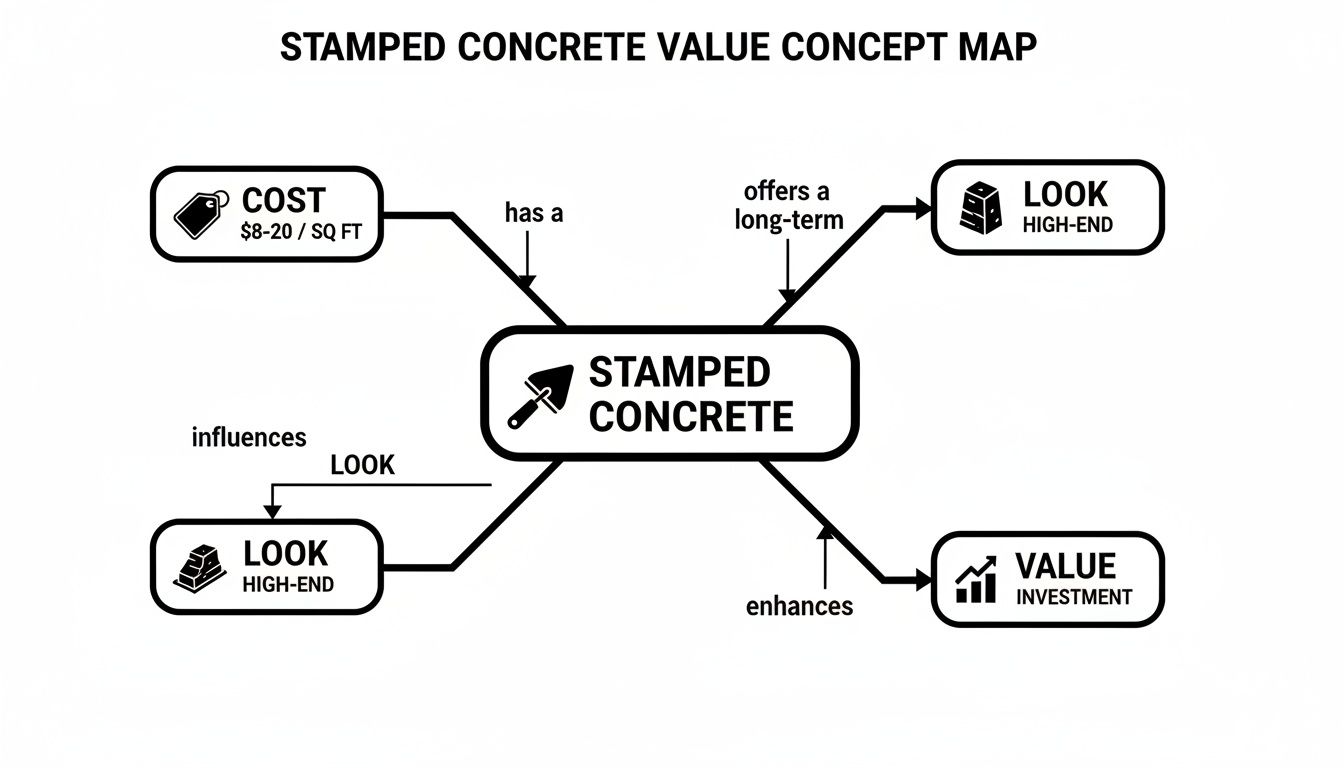
As you can see, it hits a sweet spot. You get that high-end appearance and a solid return on investment without paying the premium for natural stone or pavers.
The Complexity Of Your Design
The single biggest thing that moves the price needle is how intricate your design is. A simple, single pattern is always going to be the most straightforward and affordable. But as you start layering in more sophisticated elements, the cost naturally climbs.
Here are the main design choices that will affect your budget:
- Pattern Choice: More detailed patterns, like a complex ashlar slate or a random flagstone look, take more time and precision from the crew. If you're looking at custom designs or patterns that mimic wood planks, you're asking for a higher level of craftsmanship, which costs more. For example, a simple "running bond" brick pattern is faster to install than an intricate "herringbone" pattern that requires more careful alignment.
- Color Selections: The most budget-friendly option is using a single "integral" color that's mixed right into the concrete. Once we start adding a secondary color with a release agent for depth, or hand-applying stains for custom highlights, we’re adding material and labor costs. A good example is creating a flagstone look where each "stone" is individually stained a slightly different shade to mimic natural variation.
- Borders and Edges: Adding a border—say, a brick pattern around a slate patio—is a fantastic look. But it requires separate forming, stamping, and coloring. That detail adds a ton of visual pop, but it also makes the job more complex and adds to the final price. A simple picture-frame border is less complex than, for example, a custom compass rose design stamped in the center.
When you start combining multiple patterns, several colors, and a custom border, you're creating a top-tier project. That's when you'll see prices push toward the $25 per square foot mark, or even higher.
Site Preparation And Accessibility
Long before we pour a single drop of concrete, we have to get the ground ready. This is the foundation of the whole project, and it's absolutely critical for making sure your stamped concrete lasts for decades. A perfect site is flat, clear, and easy for our trucks and equipment to get to.
Of course, most Atlanta-area properties aren't that simple, and that’s where extra work comes in.
Expert Insight: I can't stress this enough: proper site prep is non-negotiable. If you cut corners on the base, you're almost guaranteed to see cracks or settling down the road. That beautiful investment quickly becomes a major headache.
Here are a few things that can add to the site prep costs, with examples:
- Demolition and Removal: If you have an old, cracked patio or a wooden deck that needs to be removed, we have to factor in the labor to break it up and the cost to haul it all away. This could add $2 to $5 per square foot to the project cost.
- Grading and Excavation: Many yards here have a slope. We need to grade the area properly to ensure water drains away from your home and the surface is perfectly level. If your yard requires a small retaining wall or bringing in several cubic yards of fill dirt, this can add $1,000 or more to the total price.
- Accessibility Issues: Can we get a full-sized concrete truck right up to the job site? If not—maybe because of a narrow gate or protected trees—we have to use wheelbarrows or a concrete pump. A concrete pump rental can add $500 to $1,000 to the cost of the pour.
Stamped Concrete Versus Other Paving Options
Choosing the right material for your patio, driveway, or walkway is a big decision. It’s a balancing act between the look you want, the budget you have, and how much work you’re willing to put in down the road. While there are a few classic options, a closer look at how stamped concrete stacks up often reveals its incredible value. It's simply the smartest way to get that high-end look without the sticker shock.
When you start looking at hardscaping materials, the conversation usually circles back to three main alternatives: plain old poured concrete, interlocking pavers, and natural stone like slate or flagstone. Each has its pros and cons, but stamped concrete consistently hits the sweet spot for Atlanta homeowners, delivering a powerful mix of beauty, durability, and cost-effectiveness that’s tough to beat.
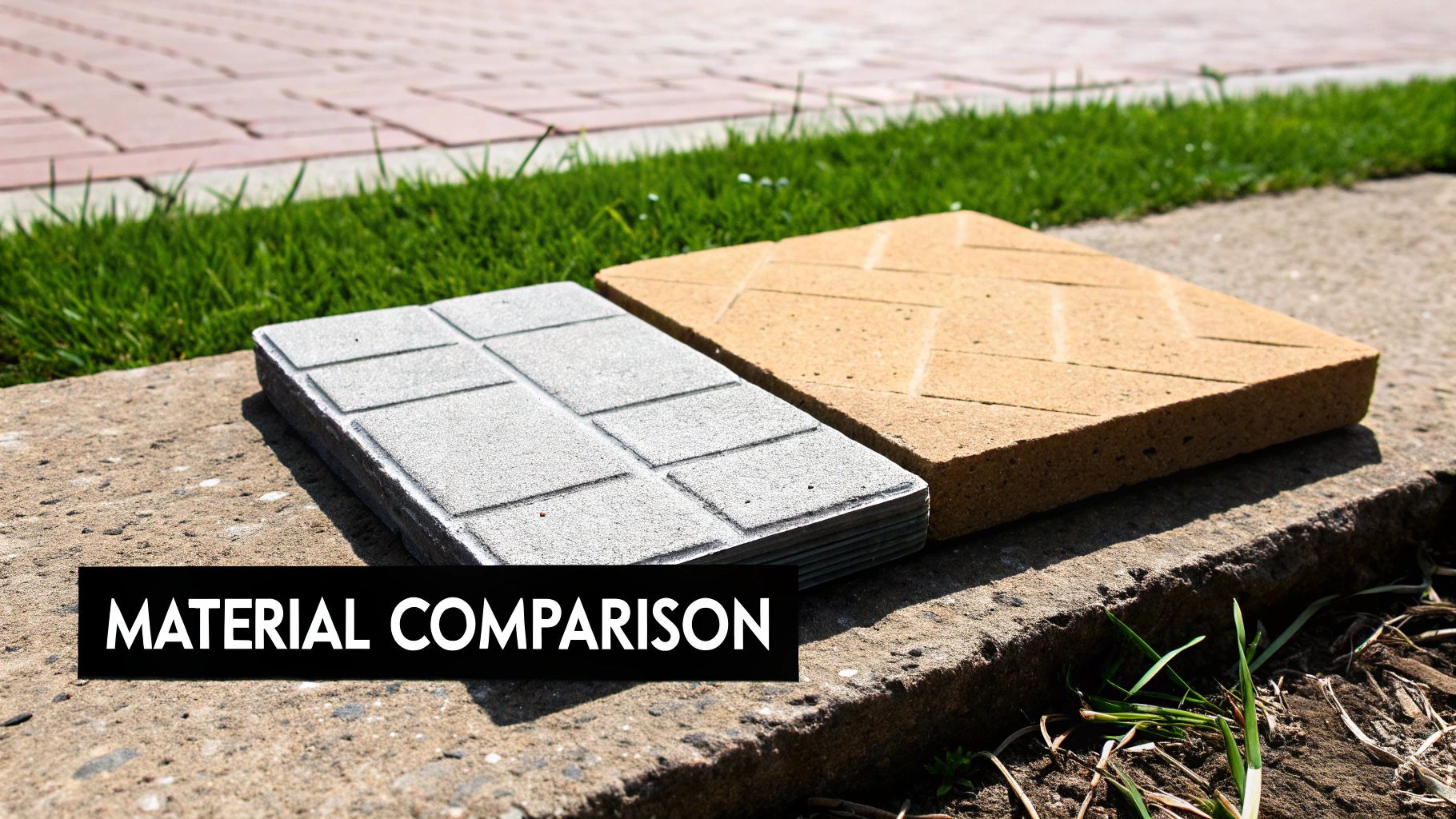
A Head-to-Head Comparison
So, let's get down to it. How do these materials really compare in the areas that matter most to you—upfront cost, long-term maintenance, and overall lifespan? This comparison really highlights why stamped concrete has become such a go-to choice for projects all over the Atlanta area.
You don't just have to take our word for it. The global market for decorative concrete was valued at a whopping USD 18.3 billion in 2023 and is expected to climb to USD 24.3 billion by 2028. A huge driver of that growth is the demand for stamped concrete as an affordable, beautiful flooring solution. While typical U.S. installations run $10-$22 per square foot—about 40% less than natural quarried stone—it delivers a very similar upscale finish. This trend is well-documented on industry sites like MarketsandMarkets.com.
To make things even clearer, we’ve put together a simple table that gives you a side-by-side look at your options.
Cost and Feature Comparison Paving Materials
This table breaks down the essentials for the most popular paving materials we see here in Georgia. Notice not just the initial cost, but what it takes to keep each one looking good over the years.
| Material | Average Installed Cost/Sq. Ft. | Estimated Lifespan | Typical Maintenance Needs |
|---|---|---|---|
| Stamped Concrete | $15 – $25 | 25+ years | Periodic cleaning and resealing every 2-3 years. |
| Interlocking Pavers | $18 – $30 | 30+ years | Regular weed removal, joint re-sanding, and re-leveling of sunken pavers. |
| Natural Stone | $25 – $50+ | 50+ years | Sealing to prevent stains, occasional re-grouting, and replacing cracked stones. |
| Traditional Concrete | $8 – $12 | 20-30 years | Basic cleaning and crack repair; limited aesthetic appeal. |
As you can see, while pavers and stone might boast a longer lifespan on paper, that extra time often comes with a lot more hands-on work and potential costs.
The True Cost of Interlocking Pavers
On the surface, pavers and stamped concrete can seem pretty close in their initial cost. But the long-term reality is a whole different story. The biggest headache with pavers is the constant battle against Mother Nature.
No matter what you do, weeds and grass will eventually find their way up through the sand-filled joints, meaning you're stuck with tedious, ongoing removal. Worse yet, our Atlanta freeze-thaw cycles and natural soil settlement can cause individual pavers to shift, sink, or heave. For example, a heavy rainstorm can wash away joint sand, allowing pavers to wobble and sink, creating an uneven, trip-hazard-riddled surface that requires frustrating and recurring re-leveling.
Key Difference: Stamped concrete is one solid, continuous slab. There are absolutely no joints for weeds to pop through and no individual pieces that can shift or settle over time. A simple cleaning and resealing every few years is all it takes to keep it looking fantastic.
Achieving The Natural Stone Look For Less
There’s no denying the beauty of natural stone like flagstone or slate. But that elegance comes at a very steep price—often double or even triple what a stamped concrete installation costs. The raw material is expensive to quarry and ship, and the installation is incredibly labor-intensive, as every single stone must be placed and mortared by hand. For example, a 400-square-foot flagstone patio could easily cost $12,000 to $20,000, whereas a beautifully crafted stamped concrete patio replicating that same look might only cost $7,000 to $10,000.
This is where stamped concrete truly shines. Using sophisticated stamping mats and artistic coloring techniques, our skilled crews can perfectly replicate the rich textures, unique patterns, and subtle color variations of real stone. You get that same organic, high-end look that seriously boosts curb appeal, all without draining your bank account.
If you want to see just what's possible, take a look at our guide on residential decorative concrete. Stamped concrete lets you achieve that million-dollar look for a fraction of the cost, making it an incredibly smart investment in your home's value.
Putting It All Together: Real-World Stamped Concrete Costs in Atlanta
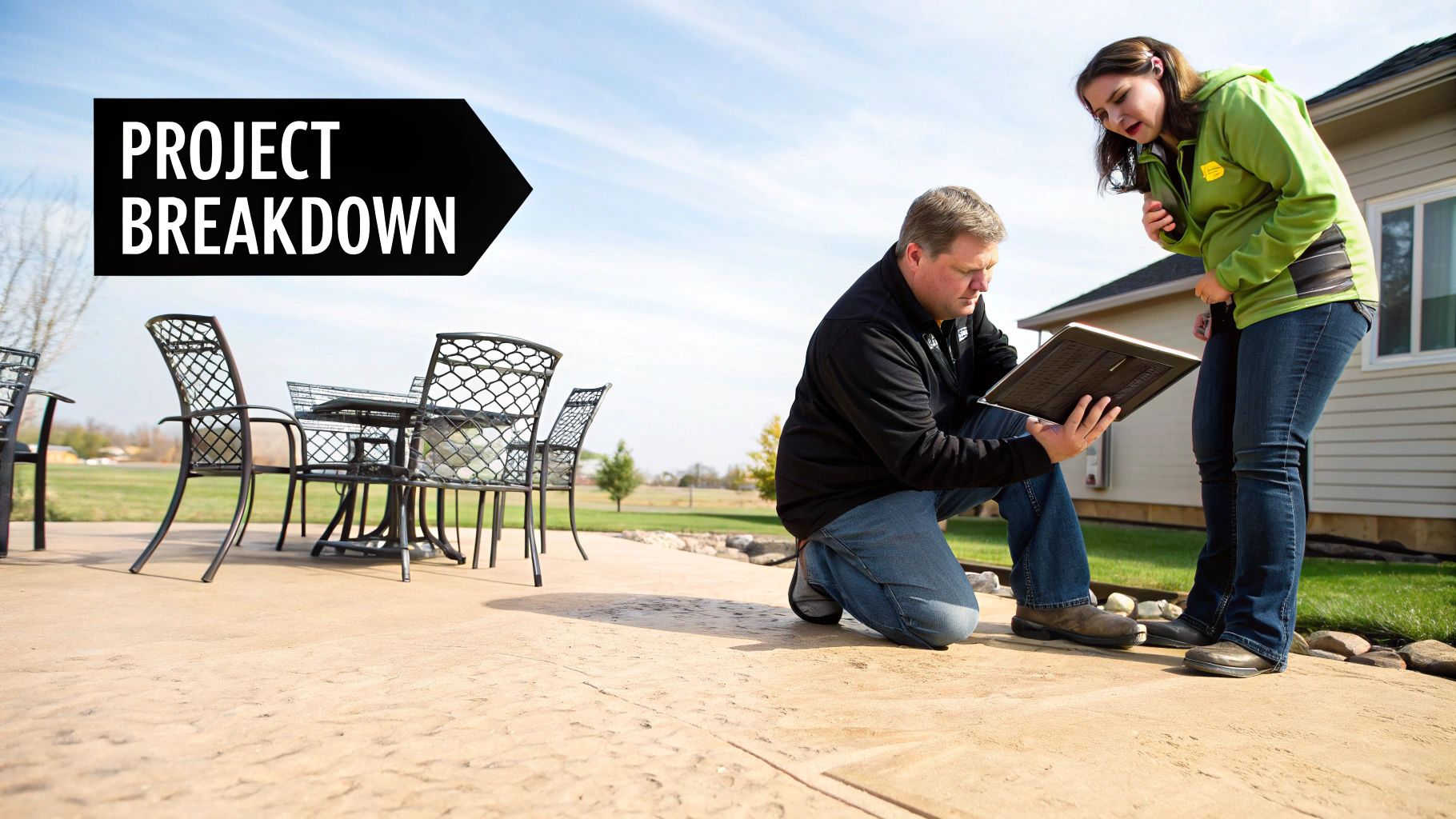
The price per square foot is a helpful starting point, but let's be honest—it doesn't really tell you what your project will cost. To give you a clearer picture, let's walk through a few common scenarios we see right here in the Atlanta area.
Seeing how size, pattern choices, and a few custom touches affect the final price tag helps you connect the dots. It’s one thing to see numbers on a page, but it's another thing entirely to visualize how they come together to create a stunning patio or walkway you'll use for years.
Example 1: The Alpharetta Family Patio
Picture a family in Alpharetta who wants to finally build that perfect outdoor space for weekend barbecues and relaxing evenings. They’ve settled on a 600-square-foot patio, which is a great size for a dining set and a grill. Their home has a classic vibe, so they go with a timeless Ashlar Slate pattern that won't go out of style.
To add some dimension without breaking the bank, they choose a single integral color mixed into the concrete and then add a contrasting charcoal release agent. This simple trick makes the slate pattern pop. The backyard is pretty flat and easy for our crew to access, which keeps the site prep costs down.
Here's how their investment breaks down:
- Project Size: 600 sq. ft.
- Pattern Choice: Ashlar Slate (Standard Complexity)
- Color Scheme: Integral Color + One Release Agent
- Site Prep: Minimal grading needed
- Total Investment: Around $10,200 (which comes out to $17 per sq. ft.)
This project is a perfect example of how a mid-range budget can deliver a huge aesthetic punch.
Example 2: The Marietta Commercial Walkway
Now let's switch gears to a local business in Marietta. They want to boost their curb appeal by replacing a cracked, dated entryway with something that looks professional and welcoming. The project is for a 1,200-square-foot walkway leading to their front door.
For a high-traffic area like this, durability is key. They choose a subtle textured stone pattern in a darker gray that’s great at hiding dirt. To give it a sharp, clean finish, we add saw-cut borders. Of course, safety is a top priority, so a non-slip additive is mixed into the sealer. The job also involves the demo and haul-away of the old concrete, which adds to the labor costs.
Globally, the value of stamped concrete is undeniable. While it can command a 100% price premium over plain concrete due to the added materials and labor, it often delivers double or triple the lifespan and aesthetic return. In 2023, it captured nearly 40% of the revenue share in the decorative concrete market, proving its popularity for both homes and businesses. You can explore detailed decorative concrete market reports to see more on this trend.
Here’s the breakdown for this commercial upgrade:
- Project Size: 1,200 sq. ft.
- Pattern Choice: Textured Stone with Saw-Cut Border (Moderate Complexity)
- Color Scheme: Single Integral Color
- Additional Work: Demolition, Haul-Away, Non-Slip Sealer
- Total Investment: Approximately $25,200 (or $21 per sq. ft.)
Example 3: The Johns Creek Luxury Pool Deck
Finally, let's look at a dream backyard project for a homeowner in Johns Creek. They're building a new pool and want a gorgeous, multi-level 800-square-foot pool deck that looks like high-end travertine stone—without the high-end maintenance.
This is a true artisan project. The design calls for a random stone pattern, and our team will hand-stain it with multiple colors to get that natural, variegated look. We're also stamping a custom border and pouring integrated steps to connect the different levels. Since it's around a pool, a premium non-slip sealer is non-negotiable. The curves and multiple elevations make this a much more detailed and labor-intensive job.
- Project Size: 800 sq. ft.
- Pattern Choice: Random Stone with Custom Border (High Complexity)
- Color Scheme: Multiple Hand-Applied Stains
- Special Features: Multi-Level Design, Integrated Steps
- Total Investment: Roughly $20,000 (or $25 per sq. ft.)
As you can see, the final cost really depends on your vision and the unique needs of your property. To get inspired and see what's possible, feel free to browse through our completed projects gallery.
The Long-Term Value Of Stamped Concrete
When you’re looking at how much does stamped concrete cost, it’s easy to focus only on the initial price tag. But that's just one piece of a much bigger puzzle. The real story here is the long-term value you get from your investment. Think of it less as a one-time purchase and more as a durable, low-maintenance surface designed to look fantastic for decades.
It's a huge departure from the constant upkeep required by other materials. You won't be spending your weekends pulling weeds from between pavers or re-staining a wood deck every couple of years. With a quality installation and a little bit of care, your stamped concrete patio or driveway can easily last 25 years or more, standing up to everything Atlanta's hot summers and occasional freezes can throw at it.
Keeping Your Stamped Concrete Looking New
So, what's the secret to that longevity? It all comes down to two simple steps: cleaning and sealing. A good sealer is your best friend here—it’s the protective shield for your investment.
This isn't just about adding a nice sheen. A properly sealed surface is what protects your concrete from the elements and everyday life. Here’s what it's defending against:
- UV Damage: The strong Georgia sun can make colors fade, but a UV-resistant sealer keeps your patterns looking vibrant.
- Staining: Spills from a BBQ, oil drips from a car, or even fallen leaves are much less likely to soak in and leave a permanent mark.
- Freeze-Thaw Cycles: Sealing stops water from getting into the concrete's pores. That's critical because trapped water is what freezes, expands, and causes cracks in the winter.
Professional Tip: We can't stress this enough—reseal your stamped concrete every two to three years. It's the single most effective thing you can do to protect your investment and keep it looking as good as the day it was installed.
The Cost Of Maintenance: DIY vs Professional
The good news is that this essential maintenance is pretty affordable and straightforward. You've got a couple of options when it’s time to reseal, each with different costs.
DIY Resealing: If you don’t mind a bit of weekend work, you can tackle this yourself. For a typical 500-square-foot patio, you’ll probably spend between $200 and $400 for a high-quality sealer and the tools you'll need, like a roller or sprayer. For example, a 5-gallon pail of quality acrylic sealer costs about $150-$200, which is enough for two coats on a 500 sq. ft. area.
Professional Resealing: For a perfect finish with commercial-grade products, hiring a pro is the way to go. For that same 500-square-foot space, a professional resealing service will generally run between $500 and $800. This fee covers a deep cleaning and the application of a premium sealer. This typically works out to $1.00 – $1.60 per square foot.
When you stack this minimal cost against the annual expense of staining a wood deck or the endless chore of de-weeding pavers, the long-term savings really start to add up. Stamped concrete gives you that high-end look without the high-maintenance headache, delivering real value year after year.
Get A Transparent Quote For Your Project
Figuring out how much stamped concrete costs is really the first step in bringing your vision to life. As we've seen, this isn't just a slab of concrete; it's a smart investment that gives you the high-end look of materials like natural stone or pavers, but without the hefty price tag and constant upkeep. For homeowners here in Atlanta, it's the ideal sweet spot between toughness, beauty, and real long-term value.
Whether it’s a beautiful new patio soaking up the sun in Alpharetta or a durable, eye-catching driveway in Marietta, stamped concrete offers a solid, seamless surface that's built to handle whatever Georgia's weather throws at it. It requires very little maintenance and provides a stunning finish that will boost your home's curb appeal for years, not just a season or two.
Now that you've got a handle on the costs and the benefits, the next move is to get a real price for your specific project.
Why Choose Atlanta Concrete Solutions
Picking the right material is only half the battle; finding the right contractor is just as critical. Here at Atlanta Concrete Solutions, we’ve spent more than a decade working exclusively in the Atlanta area. We know the local soil, we understand the climate patterns from Johns Creek to Duluth, and we know how to build a foundation that lasts.
We’re committed to clear, honest pricing—no hidden fees, no last-minute surprises. We've always believed that an informed customer is a happy one, so we take the time to walk you through every line of your quote. Our team handles the entire job from start to finish, which means you get consistent quality and a smooth process.
A project’s success hinges on trust and expertise. We pride ourselves on building both, delivering results that are not only beautiful but are also structurally sound and built to endure for years to come.
Your Personalized Project Estimate
Every yard is different, and no online calculator can truly capture the unique details of your property. The only way to get a solid, reliable number for your project is to have an expert take a look on-site.
We keep the process straightforward and completely pressure-free. One of our specialists will come out to your home, listen to what you have in mind, measure the area, and answer every question you can think of. From there, we’ll put together a detailed, no-obligation quote that’s built around your specific goals and budget.
Ready to see what’s possible for your property? Take the final step and schedule your free consultation with our team today. Let’s work together to create an outdoor space you’ll be proud of.
Got Questions About Stamped Concrete? We've Got Answers.
When you're thinking about a big project, questions are a good thing. It means you're doing your homework. Here are some of the most common ones we hear from homeowners right here in the Atlanta area, answered straight up.
Is Stamped Concrete More Prone To Cracking?
That's a myth we're happy to bust. Nope. When it’s done right, stamped concrete is every bit as tough as a standard concrete slab. The secret is in the professional installation.
We place control joints in precise locations to give the concrete a planned place to crack as it naturally expands and contracts. This keeps any potential cracks tucked away in a neat, straight line where you'll barely notice them. Plus, we reinforce every slab with steel rebar or fiber mesh to make sure it can handle anything from SUV traffic on a driveway to years of patio parties. It's all about a solid foundation and proper sealing to protect it from Georgia's weather.
How Long Does The Installation Process Take?
The timeline really hinges on the size and detail of your project. For a straightforward patio or walkway of about 500 square feet, we can typically get the whole job done in about 3 to 5 days.
Here’s a quick look at how that time is spent:
- Day 1: We're on-site prepping the area. This includes excavation, setting up forms for the pour, and laying down a compacted gravel base.
- Day 2: This is the big day—we pour the concrete, mix in the colors, and get the pattern stamped.
- Day 3-5: It's all about the finishing touches. We'll do any detail work like saw-cutting joints, give it a good pressure wash, and apply the final coats of protective sealer.
Keep in mind, you’ll need to wait about 24 to 48 hours after that final seal coat before walking on it, and about a week before driving on a new driveway.
A Quick Note on Weather: We’re always watching the Atlanta forecast. Rain or crazy temperatures can throw a wrench in the curing process, so we plan our work carefully to make sure everything sets up perfectly.
Can You Stamp Over My Old, Ugly Concrete Slab?
Absolutely! In many cases, a stamped concrete overlay is a brilliant and budget-friendly solution. As long as your existing concrete is structurally sound—no major cracks or giant heaved sections—we can apply a special polymer-modified cement overlay right on top. An overlay is typically about 1/4 to 3/4 inch thick.
Think of it as resurfacing. We give your old slab a brand-new face that we can then stamp and color to look like a completely new installation. The team at Atlanta Concrete Solutions can pop by and inspect your current concrete to see if an overlay is the right long-term fix for you.
How Slippery Is Stamped Concrete, Really?
It’s a common concern, especially for pool decks and walkways. While the glossy sealer might look slick, the stamped texture itself actually provides a good amount of grip. For example, a heavy slate or stone texture has more natural grip than a smoother, tile-like finish.
For areas where you want extra peace of mind, we have a simple solution. We mix a non-slip additive right into the final coat of sealer. It's a fine, gritty substance that's basically invisible but gives the surface a texture like fine-grit sandpaper. This makes it much safer to walk on, even when it's wet.
Ready to see how stamped concrete could transform your property? The team at Atlanta Concrete Solutions is here to give you a clear, no-pressure quote customized for your project. Contact us today and let's get started.