
That sinking patio or uneven driveway isn't just an eyesore—it's a clear signal that something is wrong underneath. When you're looking at how to fix uneven concrete slabs, the first step is always to figure out why it's happening. More often than not, the problem isn't the concrete itself but the ground it's sitting on. For example, a downspout discharging water next to a walkway can slowly wash away the soil, creating a void that causes the concrete to sink.
From professional polyurethane foam lifting for major structural problems like a sunken garage floor to a simple DIY patch for a minor surface flaw on a basement floor, the right fix depends entirely on the root cause. Getting that diagnosis right is the key to a solution that actually lasts.
Why Your Concrete Is Sinking and What to Do Next
An uneven concrete slab is one of those nagging home issues. At first, you might ignore it, but eventually, that sunken sidewalk panel becomes a serious trip hazard, or a tilted patio slab makes your outdoor furniture wobble. So, what’s really going on beneath the surface?
The culprit is almost always the soil. Over time, the ground supporting your driveway, walkway, or patio can shift, settle, or wash away. This creates empty spaces, or voids, and the heavy concrete slab above has no choice but to sink and crack. What starts as a small issue, like a quarter-inch drop, can quickly snowball into a multi-inch problem that could cost much more to repair if you leave it alone.
Common Causes of Uneven Slabs
Nine times out of ten, the problem behind sinking concrete is water. Poor drainage is a concrete slab's absolute worst enemy. Think about a misplaced downspout that dumps gallons of water right next to your walkway every time it rains. That constant flow erodes the soil, literally washing away the foundation your concrete slab needs to stay put. An example of this is when you see dirt stains on the side of a slab, indicating that soil has been carried away by water.
Beyond water issues, a few other common culprits are at play:
- Poor Initial Compaction: This is a big one. If the crew that poured the concrete didn't properly compact the soil and gravel base in layers, it's going to settle over time. As the ground slowly compacts under the heavy weight of the concrete (and your car, in the case of a driveway), the slab sinks right along with it.
- Tree Roots: That beautiful, mature oak tree in your yard has a massive root system. These roots can suck moisture out of the soil, causing it to shrink and create voids. On the flip side, growing roots can also push a slab upward, causing it to heave and crack. A classic example is a sidewalk panel that is lifted up on one side, creating a dangerous trip hazard.
- Freeze-Thaw Cycles: Here in areas with four seasons, the ground is constantly moving. It freezes and expands in the winter, then thaws and contracts in the spring. This "frost heave" cycle puts incredible stress on concrete, shifting and cracking slabs over the years. You might notice this more in the spring after the ground has thawed.
Your On-Site Diagnostic Checklist
Before you can even think about a fix, you need to play detective. Grab a tape measure and a long level to get a clear picture of what you're dealing with.
A simple trick I use is to lay a long, straight 2×4 across the entire slab, spanning the high and low spots. Then, I measure the biggest gap between the bottom of the board and the sunken concrete. If you're seeing a gap of more than an inch, you're likely dealing with a significant soil problem that a simple patch kit won't solve. For instance, if one side of your patio slab has dropped 1.5 inches compared to the side next to your house, that's a structural issue.
Look for other clues around the area. Are there signs of water erosion, like washed-out mulch or little gullies in the dirt next to the slab? Are the cracks in the concrete wide and growing, or are they just thin, hairline fractures on the surface? The answers will tell you whether this is a cosmetic touch-up or a structural issue that needs a professional.
Comparing Professional Concrete Leveling Methods
When a DIY patch isn't going to solve the problem, it’s time to call in the pros. Understanding the main ways contractors fix uneven concrete—polyurethane foam lifting and traditional mudjacking being the two most common—helps you ask the right questions and pick the best solution for your property.
After all, leveling a settled pool deck that needs to be perfectly even is a completely different ballgame than lifting a heavy garage floor that has to support two SUVs. The best method really boils down to the specific situation, how long you can wait for it to cure, and your budget.
Polyurethane Foam Lifting: The Modern Standard
This technique, often called polyjacking, is the go-to for most modern concrete leveling jobs. We start by drilling a few small, dime-sized holes (typically 5/8 inch) into the sunken slab. From there, we inject a specialized, high-density polyurethane foam underneath.
This foam expands in seconds, filling every void in the soil below and gently lifting the concrete back to its original height. What’s amazing is that the foam is incredibly lightweight, yet it becomes exceptionally strong and rigid once it cures. A huge advantage is that it’s waterproof, so it won’t wash away over time, which is key to preventing the slab from sinking again. For example, lifting a sunken driveway with polyfoam not only levels it but also creates a water-resistant barrier under the slab.
The control you get with polyjacking is second to none. A skilled technician can raise a slab with pinpoint accuracy, which is critical when you’re trying to align a walkway perfectly with a front door without overdoing it. We can lift it in increments as small as a fraction of an inch.
Traditional Mudjacking: The Tried-and-True Method
Mudjacking, sometimes called slabjacking, is the old-school approach. The basic idea is the same as polyjacking, but the materials and process are quite different. Instead of a sleek foam, mudjacking uses a heavy slurry made from cement, topsoil, sand, and water.
This goopy mixture is pumped through much larger holes—usually 1 to 2 inches in diameter—drilled into the slab. The hydraulic pressure of the slurry is what forces the concrete up. While it certainly works, the material is far heavier than polyurethane foam, adding a lot of extra weight to soil that’s likely already struggling to provide support. Imagine adding hundreds of pounds of wet material onto soil that is already compressed and failing; it can sometimes lead to future settling.
To give you a better handle on which method might work for you, take a look at this comparison table.
Comparing Professional Concrete Leveling Methods
This table breaks down the most common professional slab repair techniques to help you quickly compare them and see what fits your situation best.
| Method | Process | Best For | Cost | Cure Time |
|---|---|---|---|---|
| Polyurethane Foam Lifting | High-density foam is injected through small, dime-sized holes to lift the slab. The foam expands and hardens. | Precision jobs, areas needing quick use (driveways, patios), and locations with weak soil. An example is lifting a pool deck that needs to be usable the same day. | $$ – $$$ | 15-30 minutes |
| Mudjacking | A slurry of cement, soil, and sand is pumped under the slab through larger, 1-2 inch holes to lift it. | Budget-conscious projects, large voids, and situations where added weight isn't a concern. For example, lifting a large, thick shop floor. | $ – $$ | 24-48 hours |
| Grinding & Patching | A grinder shaves down high spots and trip hazards. Patching fills cracks and spalls. | Minor trip hazards (under 1 inch), surface imperfections, and cosmetic repairs. A common example is grinding the raised edge of a sidewalk panel. | $ | Immediate |
| Full Replacement | The old, damaged slab is completely demolished, removed, and a new concrete slab is poured. | Severely cracked, crumbling, or structurally compromised concrete that is beyond repair. For instance, a driveway that has shattered into multiple pieces. | $$$$ | 7-28 days |
Each option has its place, but for most residential and commercial repairs today, the benefits of polyurethane foam lifting often make it the superior long-term choice.
Here's a quick visual guide to help you start thinking through your slab's issues before calling for a professional opinion.
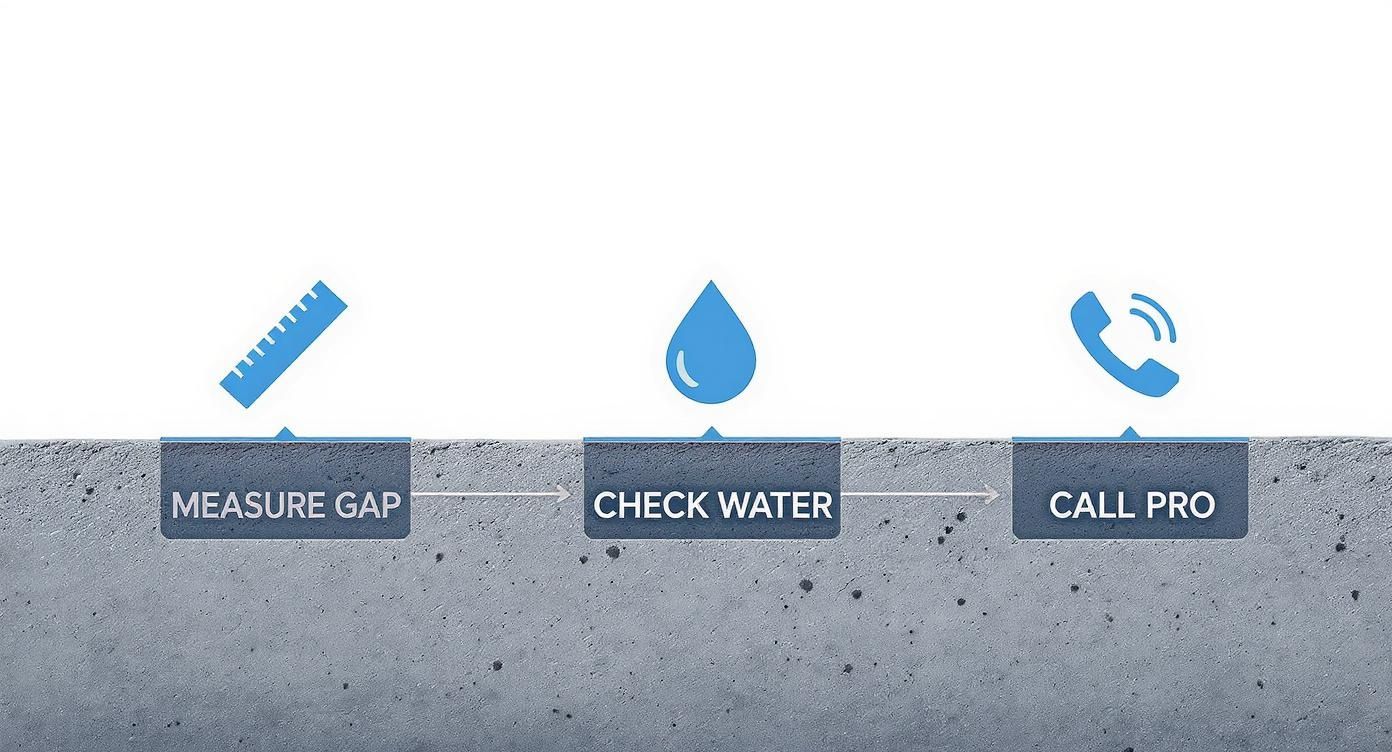
This chart helps you walk through those first few crucial steps, like measuring how much the slab has sunk and checking for signs of water damage, which are key clues to the root cause.
Concrete Grinding for Minor Trip Hazards
Sometimes the problem isn't a whole sunken slab but just one edge that's heaved up a little, creating a nasty trip hazard. For these smaller issues, concrete grinding is a practical and budget-friendly fix. Instead of lifting anything, this process uses a heavy-duty grinder with diamond-abrasive discs to literally shave down the high spot, creating a smooth and safe transition.
Grinding is perfect for height differences of less than an inch. Think about a sidewalk panel pushed up by a tree root—grinding that edge gets rid of the danger immediately. Just keep in mind that grinding is a surface-level fix. It doesn’t solve the underlying soil problem that caused the slab to move in the first place.
When Full Slab Replacement Is Necessary
While lifting and grinding work wonders in many cases, some slabs are just too far gone. If your concrete is a mess of cracks, crumbling at the edges (a condition called spalling), or has broken into multiple pieces, replacement is usually the only way to go. For example, if a driveway slab is so cracked that it resembles a spiderweb and pieces are loose, it has lost its structural integrity. Pouring a brand-new slab is the only way to guarantee a fresh, structurally sound foundation.
A professional evaluation will tell you for sure if a slab has reached the end of its life. For a deeper dive into all your options, from minor fixes to major overhauls, check out our guide on residential concrete and masonry repair. It can help you decide whether a repair or a full replacement is the right long-term investment for your home.
DIY Fixes for Minor Concrete Imperfections
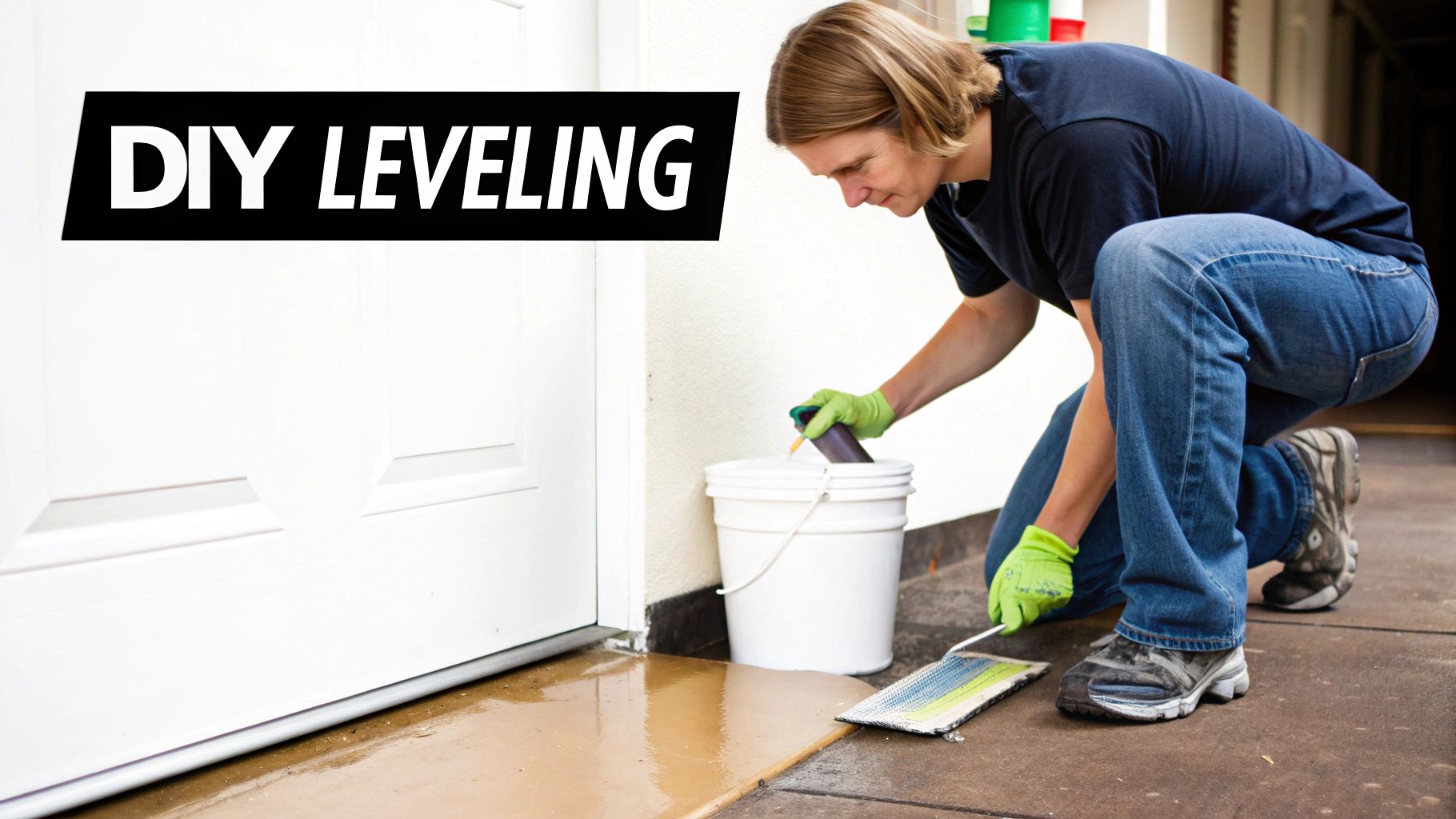
Look, not every uneven slab needs a full crew with heavy machinery. If you're dealing with a minor dip in the garage, a slightly sloped patio corner, or just some surface-level cracks, a DIY approach can save you a good chunk of change.
But let's be crystal clear about one thing: these are temporary, cosmetic fixes. They're great for improving the look and tripping safety of a surface, but they absolutely do not address the root cause of why your concrete is sinking or heaving in the first place.
Using Self-Leveling Compounds
Think about that annoying puddle that forms in the corner of your garage every time it rains. That’s a perfect scenario for a self-leveling compound. This stuff is a cement-based mix, but it’s much thinner than regular concrete. You pour it on, and gravity does the hard work, flowing into the low areas to create a flat, smooth finish.
The real secret to making it last, though, is all in the prep work—and this is where most people get it wrong. You can't just pour it over a dirty floor and hope for the best.
- Scrub It Clean: Get rid of every bit of oil, grease, dirt, and any loose concrete flakes. I usually recommend a pressure washer and a good concrete degreaser to give the new material a clean surface to grab onto. For example, an oil stain from a car leak must be completely removed, or the compound won't adhere properly.
- Prime the Surface: Old concrete is like a sponge; it will suck the moisture right out of the self-leveler, causing it to cure too fast and fail. A dedicated concrete primer seals the pores, which is critical for creating a strong, permanent bond. This step is often skipped, leading to a weak, flaky finish.
These products are incredibly popular for a reason—they work well for surface issues. The global market for self-leveling concrete was already valued at USD 4.94 billion in 2023, and that number is only climbing as more people tackle renovation projects. You can read more about the growth of self-leveling concrete solutions to see just how common these fixes have become.
Patching Minor Cracks
Small, hairline cracks often go hand-in-hand with uneven concrete. While a wide, deep crack signals a major structural problem, you can tackle the smaller ones with a concrete patching compound or an epoxy crack filler from the hardware store.
These fillers are designed to get into the crack and bond everything together. More importantly, they keep water out, which prevents the crack from getting worse when water freezes, expands, and breaks the concrete apart from the inside. The process is simple: use a wire brush and a shop vac to clean out the crack completely, then force the filler in with a putty knife. For a crack that's a bit wider, you may need to use a caulk gun with a specialized concrete sealant.
Crucial Tip: A self-leveler is a surface treatment. If your walkway has sunk two inches because of soil washout, pouring a thin layer of self-leveling compound over the top is like putting a band-aid on a broken bone. It will look better for a little while, but the slab will keep sinking, and the new layer will just crack. This is the exact point where a DIY patch job is no longer the answer and you need to call in a professional for a real solution like polyjacking.
Budgeting for Your Concrete Leveling Project
Alright, let's talk about the bottom line. Knowing what to expect financially is a critical step in planning your concrete repair. The final price can swing quite a bit depending on the job, but having a solid ballpark figure helps you budget properly and move forward with confidence.
It's not just about the square footage, either. The complexity of the problem is a huge factor. A single, easy-to-reach walkway slab is a straightforward fix. A huge, deeply sunken garage floor that requires lifting around heavy equipment? That's a different story, requiring a lot more material and time.
Key Factors That Drive the Cost
When you get a quote, several things are being calculated behind the scenes. Understanding them will help you see why one estimate might be higher or lower than another.
- Slab Size: This one's pretty simple—a bigger slab takes more material and more time to lift. A 10×10 patio slab will cost less than a 20×20 one.
- How Bad is the Sinking?: The deeper the void under your concrete, the more polyurethane foam or slurry we need to pump in. Lifting a slab that’s sunk three inches will cost more than lifting one that's only dropped by an inch because it requires significantly more material.
- Site Accessibility: Can we get our truck and equipment close to the problem area? If we have to run extra-long hoses to a backyard patio or manually haul gear through a narrow gate, that extra labor will factor into the cost.
Realistic Cost Ranges for Common Repairs
Every project has its own unique challenges, but I can give you some general price ranges for professional concrete leveling here in the Atlanta area. This should give you a clearer picture.
A classic example we see all the time is a two-panel section of a driveway that has sunk, creating that jarring bump every time you pull in. For a job like that, polyurethane foam lifting typically runs between $900 and $2,500. For the same repair, traditional mudjacking might be a bit cheaper, from $700 to $2,000, but you're trading that savings for longer cure times and a lot more weight on the soil.
If you're just dealing with minor trip hazards, concrete grinding is your most budget-friendly route. It often costs between $300 and $800 to smooth down a few uneven edges. It's no surprise that the market for slab repair products—everything from leveling compounds to crack fillers—was valued at $1.425 billion in 2024 and is expected to keep growing.
A Typical Project Timeline: Start to Finish
One of the best things about modern repair methods is how fast they are. We're in and out, and your daily routine is barely affected. A standard driveway leveling job with polyfoam, for example, is usually wrapped up in just a few hours.
Here’s how a typical morning goes:
- Arrival (8:00 AM): Our crew shows up, walks the site with you to confirm the plan, and then drills a few small, dime-sized holes in the slab.
- Lifting (8:30 AM – 10:00 AM): We inject the polyurethane foam, carefully controlling the process and watching as the slab lifts back to its original position.
- Cleanup (10:00 AM – 10:30 AM): We patch the small injection holes with cement, clean up our equipment, and leave the area tidy.
- Ready to Go (10:30 AM): Your driveway is ready for you to walk on immediately, and you can usually drive on it by the afternoon.
This incredible speed makes poly-lifting the go-to choice for homeowners who can't afford a lot of downtime. To see how these jobs look in the real world, check out some of our recent Atlanta-area concrete leveling projects.
Why Professional Repair Is a Smart Investment
After digging into the causes and temporary fixes, we get to the heart of the matter: why bringing in a pro is almost always the best move for your property. It’s about more than just patching a crack; it’s a long-term investment in your home’s safety, value, and your own sanity.
A DIY patch might make things look a little better for a while, but professional methods like polyjacking get to the root of the problem—the unstable ground that caused the slab to sink in the first place. That’s the real difference between a band-aid and a cure.
More Than Just a Repair: An Investment in Your Home
Let's talk about what a professional fix actually gets you. The most immediate benefit is safety. That sunken patio slab or uneven walkway is a lawsuit waiting to happen, especially if you have kids or older relatives visiting. Getting that fixed properly eliminates a serious trip hazard.
Then there’s your home’s curb appeal and market value. A cracked, uneven driveway is one of the first things people notice, and it sends the wrong message. A professionally leveled surface, on the other hand, tells potential buyers that this is a home that's been cared for. It also stops small issues from becoming huge, expensive ones, like water pooling against your foundation, which can lead to leaks in your basement or crawl space.
A professional repair is about future-proofing your property. By stabilizing the soil and lifting the slab correctly, you're not just fixing the current issue; you're preventing the same problem from happening again in a few years, saving you money and stress down the road. For example, lifting a slab that has sunk due to a downspout issue and also extending that downspout away from the house solves the problem for good.
The Professional Advantage: Warranty and Expertise
When you hire a team like ours, you’re not just paying for labor. You’re getting access to specialized equipment, years of hands-on experience, and something a DIY job can never offer: a warranty. That guarantee gives you peace of mind that the work was done right and is built to last. For a closer look at the solutions we stand behind, you can explore our full range of Atlanta Concrete Solutions services.
There’s a reason this industry is growing. People are realizing that durable, professional repairs are worth it. The global market for concrete floor repair was already valued at USD 2.1 billion in 2023, and it's projected to keep expanding. This isn't just a random trend; it’s a clear shift toward choosing lasting, expert solutions over temporary patches. You can discover more insights about the concrete repair market to see how homeowners everywhere are making smarter choices.
Your Concrete Leveling Questions, Answered
When you're dealing with uneven concrete, a lot of questions pop up. It makes sense—you want to choose the right fix and be confident it will last. Let's tackle some of the most common things we get asked by homeowners.
Can I Just Pour New Concrete Over My Old Uneven Slab?
We hear this one all the time, and the short answer is no, it's not a good idea. Pouring a thin layer of new concrete on top, often called an overlay or "resurfacing," is just a temporary patch. It does absolutely nothing to address the real problem: the unstable soil underneath that caused the slab to sink in the first place.
Before long, that new layer will crack and sink right along with the old one. You'll also run into practical headaches with door clearances and drainage slopes. For example, adding an inch of concrete to your front walkway could make it higher than your doorstep, creating a new trip hazard and water drainage problem. The only real way to fix the problem is to address the root cause, which is what professional lifting does.
How Long Does Professional Concrete Leveling Last?
When done correctly by a skilled team, both mudjacking and polyjacking are considered permanent solutions. The key is making sure any underlying issues, like poor drainage from a leaky gutter or a broken sprinkler line, are also fixed.
Polyurethane foam, in particular, offers incredible longevity. It’s a waterproof, inert material that won’t break down or wash away over time. Think of it like this: when we inject it, we're not just lifting the slab—we're creating a stable, solid, and water-resistant base underneath it that will last for years to come. This is why many reputable companies offer long-term warranties on polyjacking work.
Is a Cracked Slab the Same as an Uneven Slab?
They're related, but they aren't the same thing. An uneven slab is one that has physically shifted, sinking or heaving because the ground beneath it moved. Cracks are often a symptom of that stress. As the rigid concrete is forced into a new position it can't handle, the tension causes it to break.
You can have minor surface-level cracks from the initial curing process that don't indicate a bigger problem. But if you see both deep cracks and a noticeable height difference between sections of concrete, that's a classic sign of an unstable soil issue that needs to be looked at by a pro. For example, a single crack running across a patio is one thing, but if one side of the crack is an inch lower than the other, the problem is beneath the slab.
Ready to get a permanent solution for your uneven concrete? The expert team at Atlanta Concrete Solutions uses industry-leading techniques to lift and stabilize your slabs for good. Schedule your free, no-obligation estimate today!