
Polished concrete floors offer a fantastic blend of incredible durability and sleek, modern style, but they're not a perfect fit for every situation. For instance, a high-traffic retail store might prioritize its resistance to wear and tear, while a family with young children might be more concerned about its hardness. The main thing you're weighing is their long-term value and easy upkeep against a surface that is, let's be honest, hard, can feel cold, and gets slippery when wet. Getting a handle on these core pros and cons is the first step to figuring out if this flooring is the right call for your space.
What Is Polished Concrete Flooring
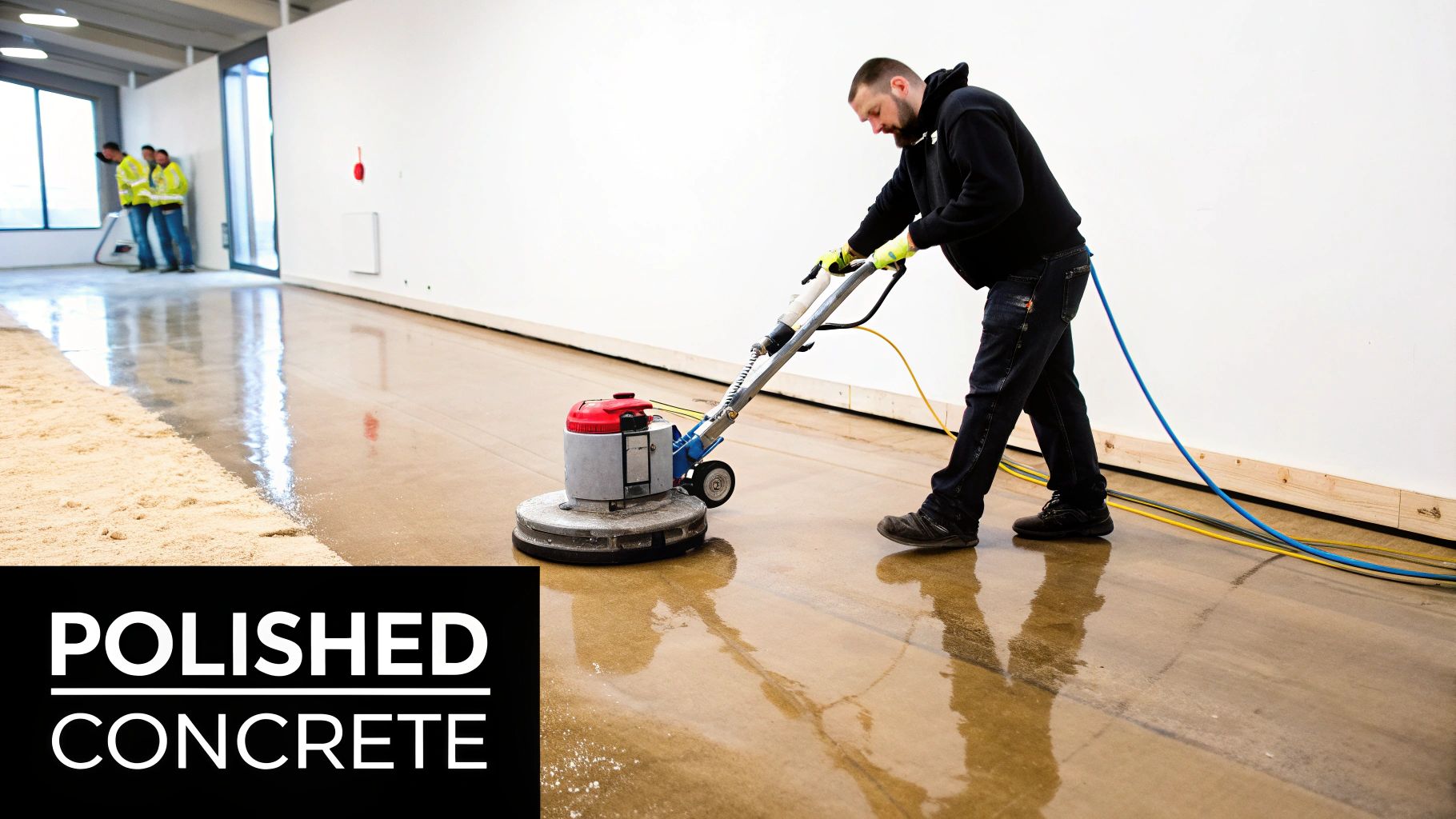
First off, polished concrete isn't just a coating or a layer of wax you put on top of a slab. We're talking about transforming the concrete slab itself into the finished floor. The process involves grinding the surface with heavy-duty machines fitted with progressively finer diamond abrasives—for example, starting with a coarse 30-grit diamond and working up to a super-fine 3000-grit for a mirror finish. This method hones and polishes the concrete, smoothing out imperfections and creating a dense, incredibly tough surface with a beautiful sheen—anything from a subtle satin to a mirror-like high-gloss.
But it’s more than just sanding. During the polishing process, a chemical densifier is applied. This liquid, typically a lithium-silicate solution, soaks into the concrete and sets off a chemical reaction that hardens and densifies the material from the inside out. What you're left with is a floor that's literally part of the building's structure, one that can easily last more than 20 years if you take care of it.
Key Characteristics at a Glance
Before we get into all the nitty-gritty details, it helps to see the big picture. Polished concrete has a unique personality, making it an amazing choice for some projects and a less-than-ideal one for others. You're always dealing with a few fundamental trade-offs:
- Longevity vs. Hardness: That incredible lifespan comes from its sheer strength. The flip side is that the surface has absolutely no give. For example, a dropped ceramic mug will almost certainly shatter, which might not happen on a softer surface like vinyl or wood. This can be tough on your feet and back if you're standing on it all day.
- Low Maintenance vs. Specialized Installation: While day-to-day cleaning is a breeze (just a dust mop and occasional damp mopping), getting that perfect finish is a job for pros with specialized equipment like planetary grinders and industrial vacuums. This is definitely not a weekend DIY project.
- Aesthetics vs. Auditory Comfort: The sleek, seamless look is a huge draw, but that hard surface can bounce sound all over the place. In big, open-plan rooms, like a loft apartment with high ceilings, it can create echoes unless you add things like rugs, drapes, or acoustic panels to absorb the noise.
To help you see these trade-offs clearly, here's a quick summary of the most important pros and cons you'll want to consider.
At a Glance: Polished Concrete Pros and Cons
This table gives you a quick snapshot to help you instantly compare the key advantages and disadvantages of choosing polished concrete flooring for your home or business.
| Key Advantages (The Pros) | Key Disadvantages (The Cons) |
|---|---|
| Exceptional Durability Withstands heavy traffic and resists scratches from pets or furniture. | Hard and Unforgiving Lacks cushioning, which can be tough on joints during long periods of standing. |
| Low Maintenance Requires only regular sweeping and occasional mopping with a pH-neutral cleaner. | Potentially Slippery Can be slick when wet without an anti-slip treatment, a concern in kitchens or bathrooms. |
| Modern Aesthetic Offers a clean, minimalist, and high-end appearance suitable for many decor styles. | Cold Underfoot Tends to feel cool, especially in colder climates during winter months. |
| Long-Term Cost-Effectiveness Lifespan can last for decades, reducing replacement costs compared to carpet or LVT. | Specialized Installation Requires professional contractors and equipment; not a DIY-friendly project. |
Seeing the good and the bad side-by-side makes it much easier to decide if the benefits, like that amazing durability, outweigh the potential downsides, such as the hardness underfoot.
The Big Wins: Why People Choose Polished Concrete
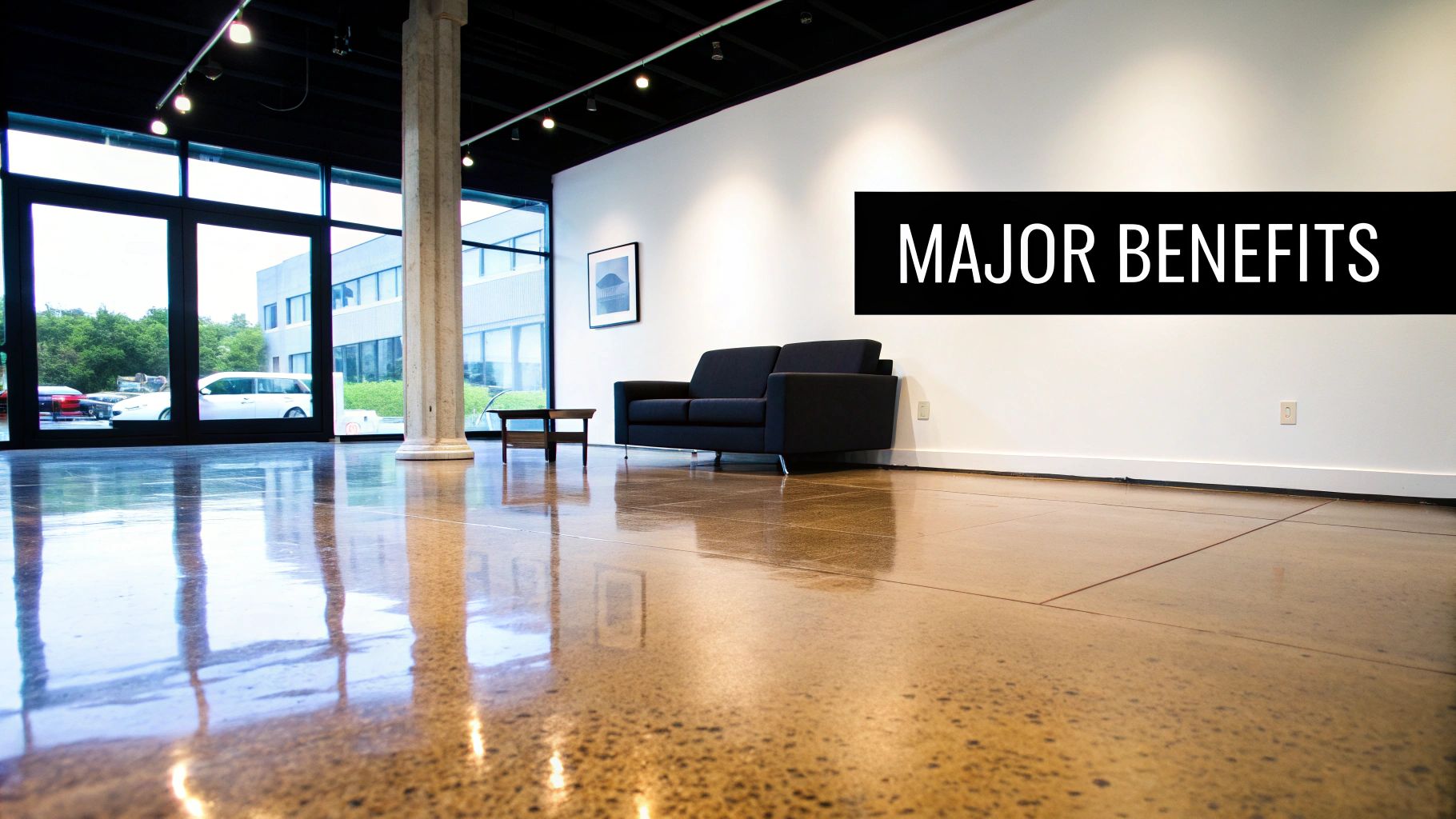
When you start looking into polished concrete, you quickly realize the benefits go way beyond just a pretty surface. They're practical, long-lasting, and often tip the scales for project managers and homeowners alike. It's a choice that delivers serious value in durability, cost, and design. Let’s get into what makes this flooring such a smart investment.
First and foremost, it's incredibly tough. We’re not talking about a coating or a thin layer of material; the floor is the actual concrete slab of the building, hardened and densified. It’s built to take a beating that would utterly destroy most other flooring types.
Think about a warehouse with heavy forklifts zooming around all day. Or a busy restaurant with constant foot traffic, spills, and dropped plates. A practical example is an auto mechanic shop, where tools are frequently dropped and cars are moved around; polished concrete handles that kind of abuse without chipping, scratching, or showing its age.
A Lifespan That Pays for Itself
This incredible resilience means you get a floor that lasts. A properly installed and cared-for polished concrete floor can easily last for 20 years or more. Compare that to carpet, which you might be lucky to get 5-10 years out of in a high-traffic area, or even hardwood that needs costly refinishing every decade or so.
That longevity is the real secret to its value. Over the life of the building, you save a ton. Industry data often shows it requires up to 30% less maintenance than options like vinyl composite tile (VCT) or carpet. For example, a commercial space with VCT requires regular stripping and waxing, a costly and time-consuming process that polished concrete completely avoids. When you aren't constantly budgeting for repairs, deep cleanings, and full replacements, the initial investment starts to look like a bargain.
By transforming the existing concrete slab into a finished surface, polished concrete eliminates the need for producing, shipping, and installing new flooring materials. This approach not only reduces project costs but also significantly lowers the overall environmental footprint.
It's also a surprisingly sustainable choice. Instead of manufacturing, shipping, and eventually throwing away another flooring material, you're just improving what's already there. This is a huge plus for anyone focused on green building practices or seeking LEED certification points.
More Than Just Industrial Gray
A common misconception is that polished concrete is just one look: cold, gray, and industrial. The reality couldn't be more different. One of its best features is how much you can customize it to fit almost any style, from sleek and modern to warm and earthy.
Here’s a glimpse of what’s possible:
- The Minimalist Loft: Imagine a clean, satin-finish gray floor. This provides a neutral backdrop, making colorful furniture, vibrant art, and architectural details like exposed brick the real stars of the space.
- The Luxury Showroom: For a high-end car dealership or boutique, a high-gloss, almost mirror-like finish reflects light beautifully, creating a dramatic and upscale vibe that makes products pop.
- The Cozy Cafe: By adding dyes to the concrete during the polishing process, you can achieve warm, rich tones of brown or terracotta. Suddenly, the floor feels as inviting as natural stone, perfect for a modern home or restaurant seeking an earthy, organic feel.
A Cleaner, Healthier Surface
Finally, keeping polished concrete looking good is incredibly simple. Its dense, non-porous surface is a game-changer for maintenance. Spills, dirt, and dust have a hard time sticking around, making it a fantastic choice for any space where hygiene matters. For example, in a veterinary clinic or a daycare, accidental spills can be wiped up without leaving stains or odors behind. If you're a business owner needing durable, easy-to-clean floors, you can see our specific solutions for commercial polished concrete.
Unlike carpet, which is a magnet for dust mites, dander, and allergens, polished concrete offers nowhere for them to hide. And unlike tile, there are no grout lines to scrub, which are notorious for trapping dirt and growing mold. A quick pass with a dust mop and an occasional damp mop with a simple pH-neutral cleaner is usually all it takes. That ease of care saves time and money while creating a healthier indoor environment.
Understanding the Drawbacks and Risks
As great as polished concrete floors are, they aren't the right fit for every single situation. To get a truly balanced picture, we have to talk honestly about the potential downsides. Knowing the risks and limitations upfront is the best way to make a decision you'll be happy with for years to come.
The first thing you notice is the hardness. It’s what makes the floor so tough, but it also means there’s absolutely no give. Standing for long periods, like when you’re cooking in the kitchen or working at a standing desk, can be tough on your back and feet.
In commercial spaces—think retail stores or workshops—this is even more critical. Employees who are on their feet all day, such as cashiers or assembly line workers, will almost certainly need anti-fatigue mats to stay comfortable and productive.
The Inevitable Risk of Cracks
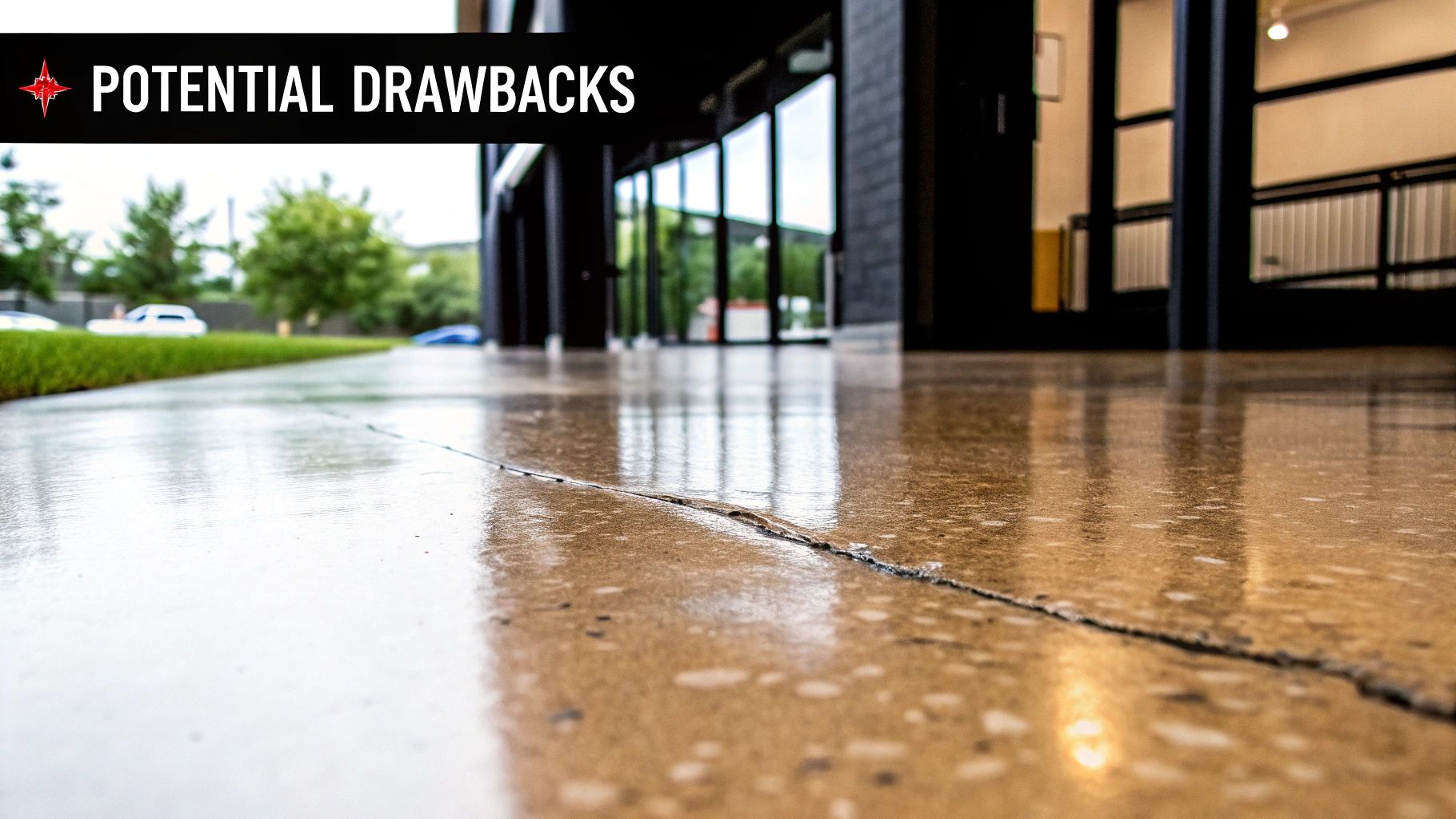
Concrete is strong, but it isn't flexible. That means cracks are always a possibility, and it's a major concern for a lot of property owners. These cracks can pop up for all sorts of reasons, from the building's foundation settling over time to subtle movements in the subfloor. Even big temperature swings, common in regions with distinct seasons, can cause the slab to expand and contract enough to form a crack.
A good installer will cut control joints into the floor to give it designated places to crack, but hairline fractures can still show up elsewhere. While they're usually just cosmetic, they can interrupt that perfect, seamless look. In fact, some industry data suggests that up to 15% of polished concrete floors in North America see some cracking within the first five years, especially in regions with unstable soil. You can dig deeper into this trend in the non-residential polished concrete market report.
It helps to think of minor hairline cracks less as a defect and more as part of the material's natural character. For many, these little imperfections actually enhance the floor's industrial, authentic vibe.
Day-to-Day Comfort and Safety
Beyond its hardness, a few other practical issues come into play. Polished concrete, much like tile or stone, can feel pretty cold underfoot. That can be a huge plus during a hot Atlanta summer, but it might be a chilly surprise on a winter morning. Radiant in-floor heating is the perfect solution, but it’s a significant extra cost you have to budget for.
Slipperiness is another common topic. When it's dry, a properly polished concrete floor is perfectly safe and meets national standards for slip resistance. But once it gets wet, it can become slick in a hurry. This is a huge deal in certain areas:
- Kitchens: A simple splash from the sink or a spilled glass of water can create an instant slip hazard.
- Entryways: Rain and snow tracked in on shoes can make lobbies and entrances treacherous without good-quality mats.
- Restaurants & Bars: Spilled drinks are a given, demanding constant vigilance and quick clean-ups from staff. For instance, a busy bar on a Saturday night requires staff to be on high alert for spills to prevent accidents.
Thankfully, you can get ahead of this. During the sealing process, your installer can use an anti-slip conditioner that adds a bit of microscopic texture to improve grip without making the floor look dull.
Acoustics and Moisture Concerns
Finally, let's talk about sound and water. That hard, reflective surface does nothing to absorb sound. In a big, open-plan space with high ceilings, this can create an echo chamber where every little noise gets amplified. For example, the clatter of silverware in a restaurant or the chatter in a minimalist office can become overwhelming. You’ll definitely need to plan for things like area rugs, thick curtains, or even acoustic wall panels to soften the sound and make the space feel more inviting.
Moisture can be a hidden troublemaker, too. If the original concrete slab was poured without a proper vapor barrier underneath, moisture from the ground can slowly work its way up. This can wreak havoc on the sealers and densifiers, sometimes causing the finish to bubble, peel, or discolor. Before any polishing project begins, a professional moisture test—such as a calcium chloride test—is an absolute must. It's not a step you want to skip.
A Detailed Cost Comparison
https://www.youtube.com/embed/VL5iqv21vx4
When you’re weighing the pros and cons of polished concrete, the conversation almost always lands on cost. It’s a huge factor, and to get the full picture, you have to look beyond the initial price tag and consider the floor’s value over its entire lifetime.
The upfront cost for a professionally polished concrete floor typically runs between $3 to $12 per square foot. That’s a big range, and it’s because no two projects are ever the same. The final price really depends on the unique details of your space.
Breaking Down the Initial Investment
So, what pushes a project toward the higher end of that scale? It’s not just about square footage. The single biggest variable is the condition of the concrete slab we’re starting with. A brand-new, smooth slab in an open-plan new build is a beautiful blank canvas that needs minimal prep and might cost closer to the $3-$5 range. An older slab in a home renovation that’s cracked, pitted, covered in old glue, or uneven? That requires a lot more grinding, patching, and TLC before we can even start the polishing process, pushing the cost towards the $8-$12 range.
Several other key factors come into play:
- Gloss Level: Are you picturing a subtle, low-sheen satin finish or a jaw-dropping, mirror-like high gloss? The more reflective the finish, the more grinding passes and finer grits are needed, which adds to the labor and cost. A 400-grit finish (satin) is much less labor-intensive than a 3000-grit finish (high-gloss).
- Customization: This is where you can get creative. Adding custom colors, stains, or scoring intricate patterns and logos into the floor will naturally increase the initial investment. A single-color dye is less expensive than a multi-colored, complex design.
- Accessibility: A big, open warehouse is a breeze to work in. A small residential basement with tight corners, multiple rooms, and lots of obstacles requires more detailed work and specialized, smaller equipment, which can increase labor time and cost.
Seeing is believing. To get a better feel for how different finishes and project complexities look in the real world, it helps to browse a gallery of completed polished concrete projects and see what’s possible.
The Long-Term Value Proposition
While the initial check you write is important, the real financial story of polished concrete is told over decades. When you look at the total cost of ownership, you see its true economic strength, especially when you stack it up against other common flooring materials.
Let's run the numbers for a hypothetical 1,000-square-foot space over a 20-year period to see how it all shakes out. This example helps illustrate the long-term savings.
| Flooring Type | Initial Installation (Avg) | 20-Year Maintenance & Repair | Replacement Costs (in 20 yrs) | Total 20-Year Cost |
|---|---|---|---|---|
| Polished Concrete | $7,000 ($7/sq ft) | $1,500 (resealing, minor repair) | $0 | $8,500 |
| Hardwood | $10,000 ($10/sq ft) | $3,500 (refinishing x2) | $0 | $13,500 |
| LVT | $6,000 ($6/sq ft) | $500 (minor repairs) | $6,000 (replace once) | $12,500 |
| Carpet | $4,000 ($4/sq ft) | $2,000 (deep cleaning) | $8,000 (replace twice) | $14,000 |
This long-term view changes everything. Carpet looks like the cheapest option on day one, but after you've paid to replace it a couple of times, it becomes one of the most expensive floors you can own.
This table really gets to the heart of polished concrete's financial advantage: you install it once. Its rock-solid durability means your ongoing costs are incredibly low—we’re talking about routine cleaning and maybe a simple reseal every decade or so. Other floors demand a lot more from your wallet over time, from refinishing hardwood to completely tearing out and replacing LVT and carpet. Over the long haul, that durability makes all the difference.
Where Does Polished Concrete Work Best?
Knowing the pros and cons of polished concrete is one thing, but the real secret is understanding where this unique flooring truly excels. It’s not a one-size-fits-all solution. The perfect spot often comes down to the classic debate between commercial and residential needs, where durability, comfort, and style all carry different weights.
The decision really boils down to balancing its crisp, modern aesthetic against the practicalities of daily life. For instance, that sleek look can completely transform a living room, but its unyielding surface might not be the best choice for a toddler's playroom where falls are common.
Ideal Residential Applications
In a home, polished concrete finds its sweet spot in areas where its toughness and visual flair can be the star of the show, without its downsides causing daily headaches. Think open-plan living areas, hallways, and finished basements.
In these spaces, the seamless, light-reflecting surface makes everything feel bigger and brighter, lending a touch of modern elegance. These are also high-traffic zones where people are usually on the move, not standing still for long periods, which sidesteps comfort issues. For example, a hallway gets a lot of foot traffic but people don't linger there. You can see just how well it works in different homes by exploring these residential polished concrete applications.
For rooms like kitchens and bedrooms, you have to be a bit more strategic.
- Kitchens: On one hand, spills wipe up in a second, which is a massive plus. On the other, that dropped wine glass is a guaranteed goner. Smart homeowners often place anti-fatigue mats in front of the sink and stove to soften the standing areas.
- Bedrooms: Let's be honest, a cold floor can be a rude awakening. The easy fix? Large, plush area rugs. They add warmth and a soft touch underfoot, giving you the best of both worlds—the clean look of concrete with the comfort you need. For example, a shag rug next to the bed ensures your first step in the morning is a cozy one.
For the ultimate in residential comfort, nothing beats radiant in-floor heating. It transforms the entire concrete slab into a giant, gentle heat source. This completely eliminates the cold factor and makes the floor feel downright luxurious, especially in bathrooms and living spaces.
Excelling in Commercial Environments
This is where polished concrete truly flexes its muscles. Its incredible resilience makes it an absolute workhorse for high-traffic, high-demand commercial spaces where most other flooring options would be worn out in a few years.
Its aesthetic versatility is a huge reason for its popularity in commercial design. In fact, industry reports show that commercial buildings account for over 60% of the global market. Why? Because it can be customized with different sheens, colors, and even logos to perfectly match a company's brand and design vision. You can learn more about this growing market for polished concrete.
Polished concrete’s performance is simply unmatched in a few key areas:
- Retail Stores and Showrooms: A high-gloss finish bounces light everywhere, making products look their best and creating a bright, welcoming vibe. More importantly, it can handle thousands of footsteps, shopping carts, and shifting displays without scratching or scuffing. Think of a big-box store like Costco or a sleek Apple Store.
- Warehouses and Industrial Facilities: Here, floors have to survive heavy forklifts, chemical spills, and constant abrasion. The densified surface of polished concrete resists stains and damage, making it a safe, long-lasting work surface.
- Restaurants and Cafes: Hygiene is paramount in food service, and a seamless, non-porous floor is a game-changer. Spills sit on the surface instead of soaking in, which prevents stains and stops bacteria from finding a place to hide. For example, a dropped tray of food can be cleaned up completely without leaving a sticky residue in grout lines.
- Public Venues and Institutions: For schools, airports, and galleries, the minimal maintenance and extreme longevity deliver an incredible return on investment. You're looking at a floor that can reduce operational costs for decades.
A Checklist for Making Your Final Decision
Alright, you've seen the good, the bad, and the practical when it comes to polished concrete. Now it's time to pull it all together and figure out if it's the right choice for your project. I've put together a straightforward checklist based on years of seeing where these floors succeed and where they fall short. Think of it as a final gut check.
This visual breakdown cuts to the chase, showing where polished concrete really excels in different settings.
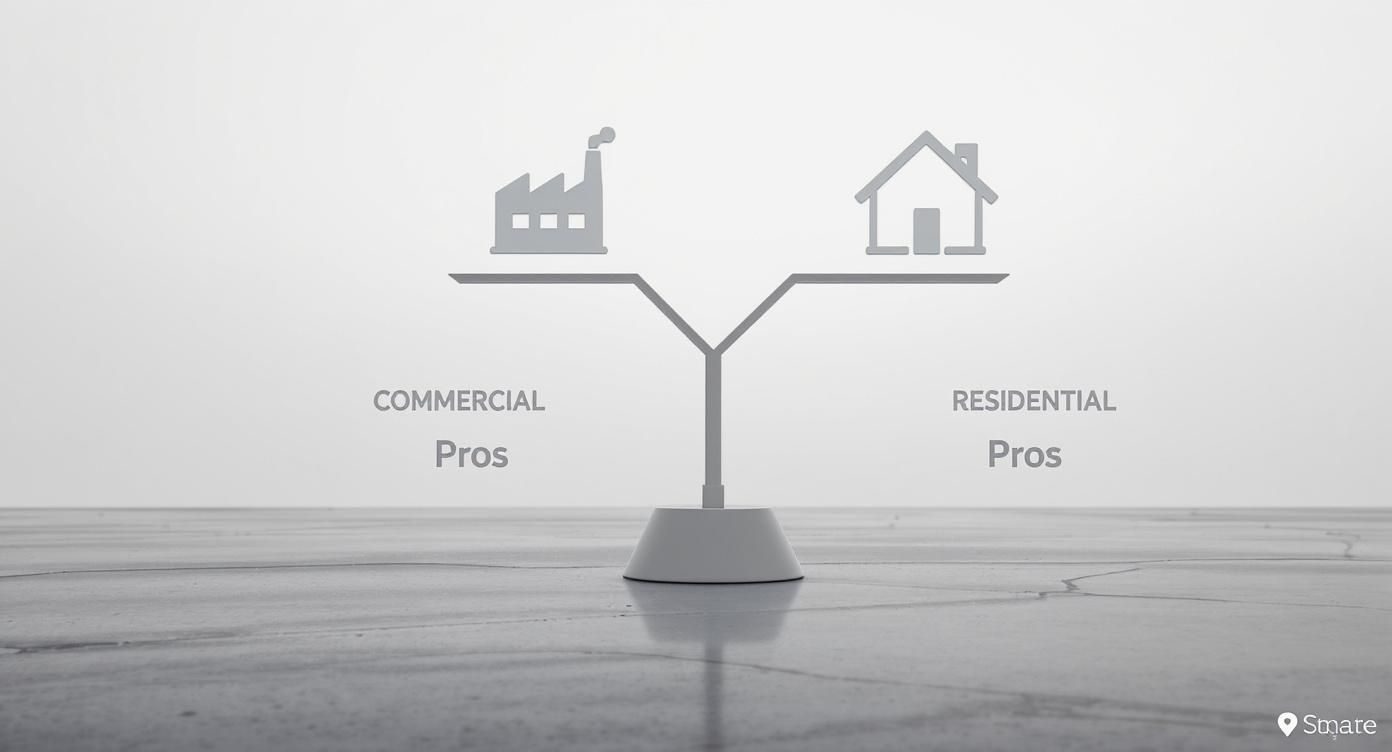
As you can see, durability is the universal win. But beyond that, the priorities diverge—commercial spaces love the low-maintenance savings, while homeowners are often drawn to the clean aesthetic and hypoallergenic benefits.
Assessing Your Space and Lifestyle
First things first, let's get real about the room itself and how you live or work in it. The day-to-day reality of the space will quickly tell you which benefits will actually matter and which drawbacks will become daily annoyances.
- What's the room's main job? A bustling retail shop like a grocery store needs a floor that can take a beating from shopping carts and spills, making durability the top priority. A family living room, on the other hand, requires a careful balance between that toughness and everyday comfort.
- Who's on their feet all day? The hardness of concrete is no joke. If you have employees standing for hours (e.g., baristas, salon stylists) or toddlers taking their first steps, you'll need a plan for softening things up with anti-fatigue mats or plenty of area rugs.
- How much traffic are we talking? Polished concrete is a workhorse in busy commercial lobbies and corridors. For a quiet home office, it might be more of a style choice than a practical necessity.
Budget and Long-Term Planning
Now, let's talk money—not just the initial price tag, but the total cost over the long haul. Polished concrete is an investment, and you need to look at it that way from the start.
The biggest mistake I see people make is only comparing the upfront installation quotes. The true value of polished concrete doesn't show up in the first year; it reveals itself over a 20-year lifespan where you're not paying for replacement and the maintenance costs are minimal.
Think through these financial points honestly:
- What's your upfront budget? The initial installation can definitely cost more than materials like LVT or carpet, particularly if your existing concrete slab is in rough shape and needs a lot of prep work. Make sure you have the capital set aside for a high-quality, professional job.
- How much do you want to spend on upkeep? This is where polished concrete really shines. It asks for very little—just regular cleaning and maybe a reseal every 5-10 years. That low maintenance bill is one of its most powerful advantages.
- Are you accounting for the extras? If you're in a colder region or just can't stand cold floors, you have to factor the cost of in-floor radiant heating into your budget from day one. It's not something you can easily add later. For example, installing radiant heating can add $5-$15 per square foot to the total project cost.
Climate and Environmental Factors
Finally, don't overlook your local climate. Here in Atlanta, for instance, the weather can be both a friend and a foe to polished concrete floors.
- How will the climate impact comfort? During our hot and sticky summers, a naturally cool concrete floor feels fantastic and can even help trim your A/C bill. But on a chilly winter morning, that same surface will feel pretty brisk underfoot without some form of heating.
- Is humidity a factor? Absolutely. High humidity can interfere with the curing and sealing process. It’s non-negotiable for a professional installer to run a moisture vapor transmission test to make sure you don't end up with a cloudy or peeling finish down the road. This is especially crucial for basement projects.
By working through these questions, you’re moving past a generic pros-and-cons list. You're applying the facts directly to your space, your wallet, and your life—which is the only way to make a decision you'll be happy with for years to come.
Got Questions? We've Got Answers
Even after weighing the pros and cons, you probably still have a few specific questions about polished concrete. That's completely normal. Here are some straightforward answers to the questions we hear most often from homeowners and business owners.
Can I Polish My Existing Concrete Slab?
That’s the million-dollar question, isn't it? The short answer is: probably, but it depends. Not all concrete is created equal. The best candidates for polishing are slabs that are in good shape—relatively level, without major cracks, and not soaked with oil or grease. A newly poured slab for a home extension is a perfect example.
An older slab with a bit of character, such as one in a 50-year-old basement, can absolutely be polished, but it's going to need more TLC. Think extensive grinding to level it out and patching to fill in cracks. This extra prep work will add to the timeline and the final bill. The only way to know for sure is to have an expert take a look. They can tell you what’s realistic for your specific floor.
What's Involved in Cleaning Polished Concrete?
This is where polished concrete really shines—its maintenance is incredibly simple. On a daily basis, all you need is a microfiber dust mop to grab any dust or grit. Once a week, a quick pass with a damp mop using a pH-neutral cleaner is enough to keep it looking great.
A word of caution: Steer clear of acidic or harsh chemicals. Cleaners with vinegar, bleach, or even citrus ingredients will eat away at the sealer, dulling the finish and leaving your floor vulnerable to stains. Stick to the simple stuff—a product specifically formulated for polished concrete is always your best bet.
Is Polished Concrete a Slip Hazard?
This is a big one, especially for families or commercial spaces. When it’s dry, a properly finished polished concrete floor is perfectly safe and meets national slip-resistance standards. It's no more slippery than tile or sealed hardwood. But let's be realistic—any smooth, hard surface gets slick when wet.
If you're planning to install it in an area like an entryway, kitchen, or bathroom, we can add a special anti-slip grit to the final sealer. It creates a subtle texture that gives you extra grip underfoot without changing the look of the floor. This is a common practice for commercial kitchens and public restrooms.
How Long Does the Polishing Process Take?
The timeline really depends on the size of the job and the condition of the concrete. For a typical residential project, say around 1,000 square feet, you can expect the crew to be there for about 3 to 5 days. That gives them enough time for all the steps: grinding, hardening the concrete, polishing it to the right sheen, and applying the final protective sealer.
Of course, a massive commercial warehouse of 50,000 square feet or a floor that needs a lot of repair work could easily take a week or more. The project size and initial condition of the slab are the two biggest factors.
Ready to see if the sleek, durable look of polished concrete is right for your space? The crew at Atlanta Concrete Solutions lives and breathes this stuff. We can turn that boring old slab into a floor you'll love for years. Contact us today for a free, no-obligation quote!