
That stubborn layer of grime, algae, and mildew on your driveway isn't just ugly—it's a signature of Atlanta's humid climate, and it's slowly eating away at your concrete. If you're ready to tackle this project yourself, you've come to the right place. We’ll walk you through how to transform your home’s exterior with the satisfying power of a pressure washer, using real-world examples to guide you.
Why Pressure Washing Your Concrete Is a Game-Changer for Curb Appeal
Let's be clear: pressure washing your concrete isn't just about making it look nice. It's one of the smartest maintenance moves you can make to protect your property and boost its value. Here in Atlanta, our unique mix of heat and humidity is basically a VIP invitation for algae, mold, and all sorts of other organic growth. That green or black film isn't just a stain; it's a problem in the making.
The payoff from a good, deep clean is instant. You’re not just getting rid of dirt—you’re eliminating slippery hazards. For example, that slick layer of algae on a shaded walkway or pool deck can become as treacherous as ice after a rainstorm, posing a real risk to family and visitors. Clearing it away makes your property safer, and honestly, nothing beats the immediate visual impact. A bright, clean driveway completely changes the first impression your home makes, which is critical if you're thinking of selling.
It's About Preservation, Not Just a Pretty Surface
Think of your driveway as the handshake of your home. Day in and day out, it takes a beating from tire marks, oil drips, mud, and those relentless organic stains, making the whole place look a little rundown. A proper pressure wash doesn't just skim the surface; it lifts those deep-set contaminants out of the concrete's pores before they can cause permanent damage and cracks. For instance, motor oil is acidic and can slowly break down the binders in concrete, leading to crumbling and spalling.
A clean, well-maintained exterior can increase a home's value by as much as 5% to 11%. Smart, regular maintenance like pressure washing is one of the most cost-effective ways to protect that investment. For a $400,000 home, that's a potential value boost of $20,000 to $44,000.
This is fundamentally about preservation. When you consistently remove corrosive substances like vehicle fluids and aggressive organic growth, you're actively extending the life of your concrete. A driveway that's regularly cleaned will stand up to weathering and resist cracking far better than one left to fend for itself.
For any homeowner serious about maintaining their property, taking a good look at the condition of your residential driveway concrete is the first step. At the end of the day, a clean exterior tells the world your home is well-cared-for, making it a savvy move for any Atlanta property owner.
Choosing Your Pressure Washer and Safety Gear
Picking the right equipment is probably the single most important decision you'll make when you decide to pressure wash your concrete. It’s the difference between a job well done and a weekend of frustration, or worse, permanently damaging your driveway. It all starts with understanding the two main types of machines on the market.
Electric pressure washers are great for smaller-scale tasks. For example, they're perfect for cleaning a small 10×10 foot concrete patio, brick front steps, or a short walkway. They’re generally lighter, much quieter, and easier to maintain. But if you’re staring down a long, two-car-wide grimy Atlanta driveway that hasn't been cleaned in years, a gas-powered unit is your best bet. Gas models simply deliver more raw power, which you’ll need to cut through seasons of built-up dirt and mildew on larger concrete surfaces.
Understanding PSI and GPM for Concrete
When you look at pressure washers, you'll see two key numbers: PSI (pounds per square inch) and GPM (gallons per minute). Think of PSI as the force of the water stream—the raw power that lifts stains. GPM is the volume of water, which helps rinse the dirt away quickly. For concrete, you need a healthy balance of both.
Not enough PSI, and you won’t be able to lift stubborn, set-in stains like rust marks from old patio furniture. Too much, and you risk etching or scarring the surface—a mistake you can't undo. This is precisely why machines in the 1,501-3,000 PSI range are so popular, making up about 46% of recent market sales. This power band is the sweet spot for pressure washing concrete effectively without being too aggressive, making it perfect for most homeowners. You can learn more about the most popular pressure washer power ranges to see how they compare.
A professional cleaning doesn't just make things look good; it has real, tangible benefits for your property.
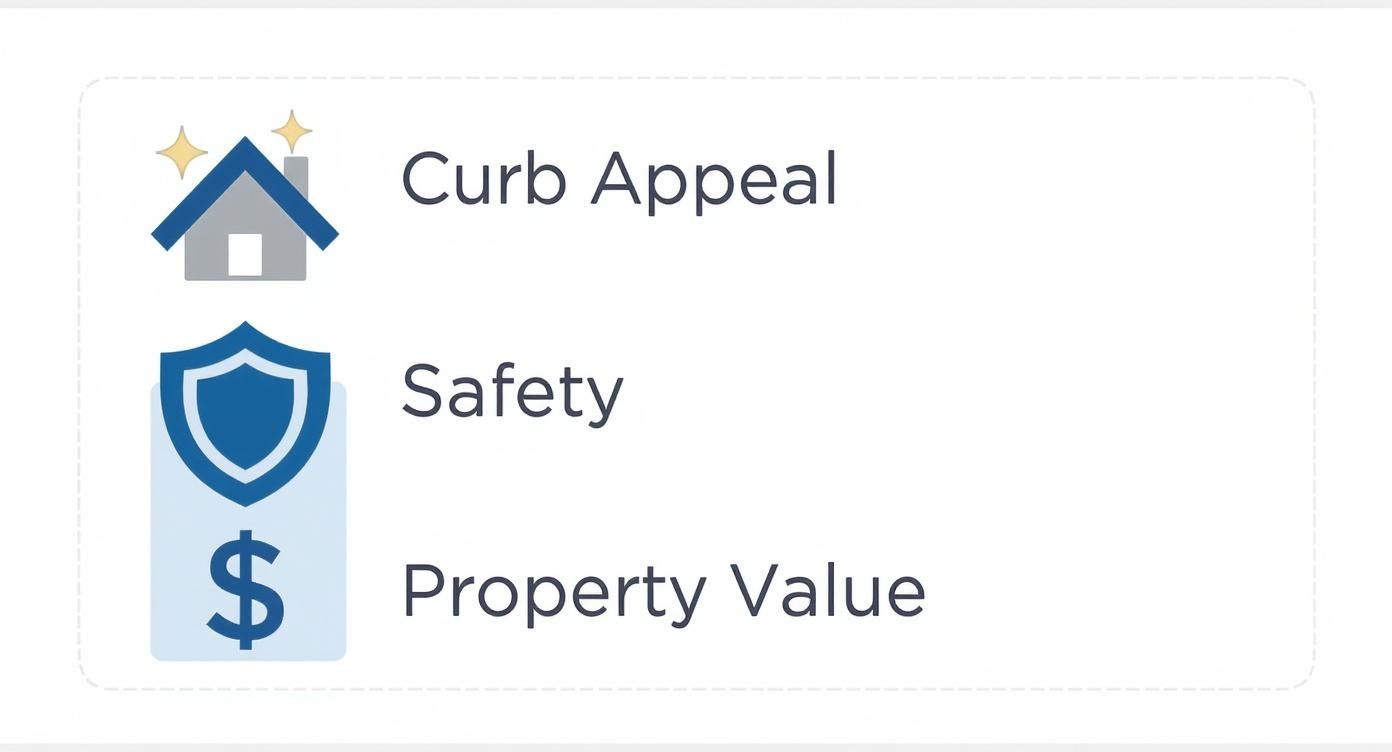
As you can see, a clean exterior seriously boosts curb appeal, improves safety by removing slippery grime, and protects your home's value.
Matching Your Nozzle to the Task
The nozzle you snap onto the end of your wand is just as critical as the pressure setting. They’re color-coded for a reason: each color represents a different spray angle. A wider angle spreads the force out, making it gentler. Using the wrong one is how you end up with those ugly, zebra-like "wand marks" etched into your concrete.
Pro Tip: Always, always start with a wider-angle nozzle, like the 40-degree white one. Find a hidden spot—maybe behind the AC unit or on the side of the garage—and test it there first. This lets you see how your specific concrete reacts before you commit to blasting the whole driveway. For example, older concrete might be softer and require a gentler touch.
Choosing the right nozzle from the start will save you a lot of headaches and potential damage. This quick guide breaks down which one to use and when.
Pressure Washer PSI and Nozzle Guide for Concrete Surfaces
| Nozzle Color/Angle | Recommended PSI Range | Best Use on Concrete | Caution |
|---|---|---|---|
| White (40°) | 1500-2500 | General rinsing, light cleaning, and applying detergents. | Very safe, but it won't be effective for deep stains like old paint splatters. |
| Green (25°) | 2500-3000 | Your all-around workhorse for most driveways and sidewalks. | Keep a consistent distance from the surface to avoid creating visible lines. |
| Yellow (15°) | 3000+ | Tackling tough, concentrated stains like oil or rust from a safe distance. | Use with extreme care. Getting too close can easily etch or damage the concrete. |
| Red (0°) | 3000+ | Avoid on concrete. This nozzle is a concentrated jet that will almost certainly cause damage. | It's really only for stripping paint from metal or cleaning caked mud off equipment. |
This table should help you stay out of trouble. Starting with the green 25° nozzle is usually the right move for general cleaning, but don't hesitate to switch to the white 40° for more delicate areas or for the final rinse.
Finally, don't even think about starting the engine without the right safety gear. The absolute must-haves are safety glasses to protect your eyes from high-pressure spray and flying debris, and sturdy, closed-toe boots. A blast of 3,000 PSI water to the foot is a trip to the emergency room, so protect yourself.
How to Prepare Concrete for a Deep Clean
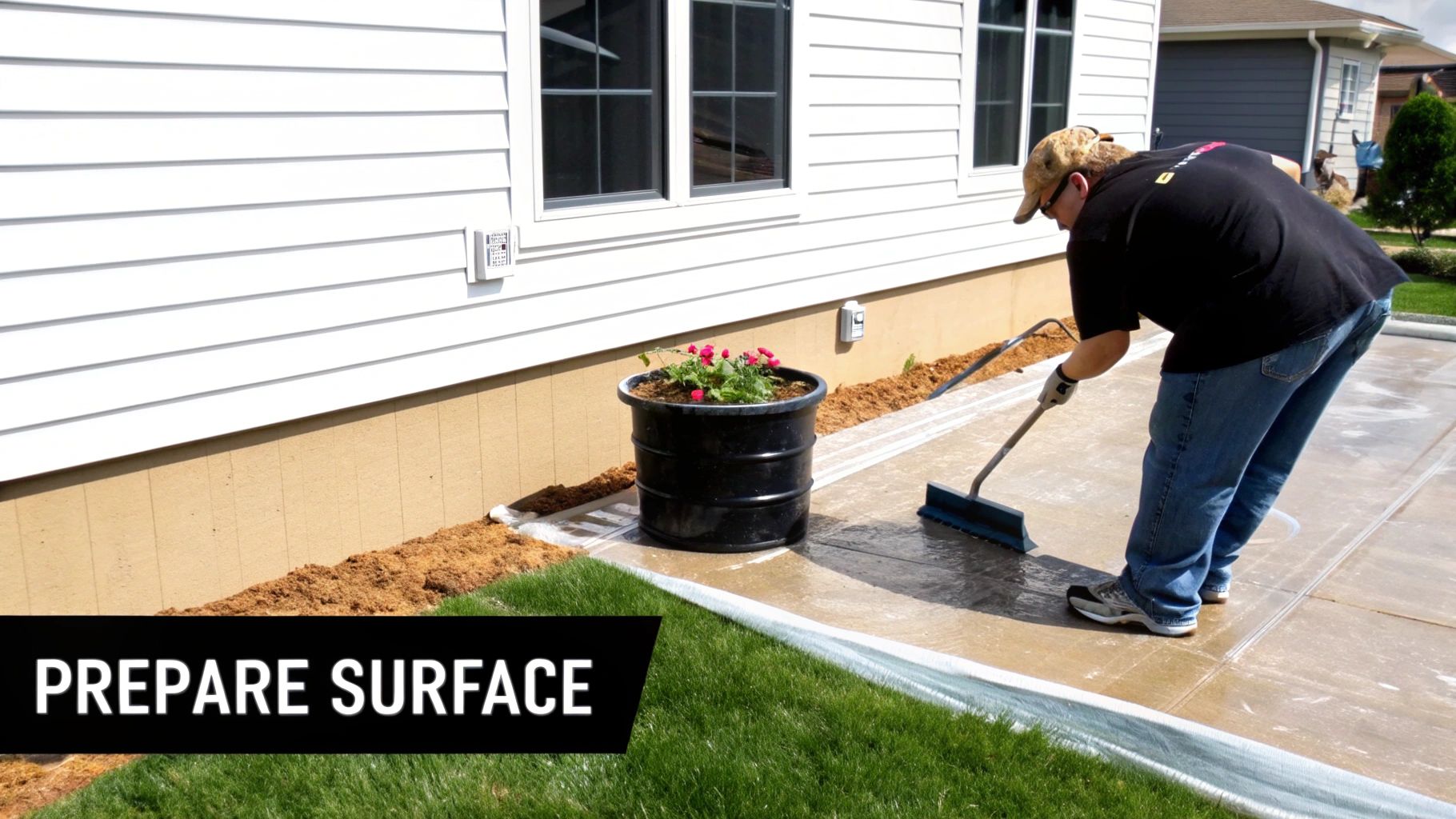
Any pro will tell you that a fantastic finish starts long before you pull the trigger on the pressure washer. Dedicating a little time to prep work is the secret to making the job smoother, safer, and a whole lot more effective. In fact, skipping these initial steps is the number one reason homeowners get frustrated with a streaky, uneven mess.
Your first move? Clear the deck. Get a good push broom and sweep away all the loose leaves, twigs, and built-up dirt. From there, you’ll want to move everything out of the blast zone. That means relocating cars, patio furniture, grills, and planters at least 15-20 feet away. High-pressure overspray can travel farther than you think and can easily shatter a glass tabletop or strip the paint off a nearby fence picket.
Protecting Vulnerable Areas
Once the concrete is clear, take a good look at everything bordering it. A pressure washer is powerful but not smart—it can’t tell the difference between a grimy driveway and your front door, vinyl siding, or prized rose bushes. It’s up to you to protect these vulnerable spots.
A few rolls of plastic sheeting and some quality painter's tape are your best friends here. A little effort now can save you a ton of regret and repair costs later.
- Doors and Windows: Cover them completely with plastic. This protects wood finishes and stops water from forcing its way past old seals into your home.
- Siding: Whether you have vinyl, wood, or stucco, a direct blast can strip paint or cause permanent damage. For example, hitting vinyl siding too closely can crack it. Shield the bottom few feet with plastic sheeting.
- Outdoor Outlets: Water and electricity are a seriously dangerous mix. Cover any outdoor outlets with waterproof tape or a purpose-built plastic cover. Make sure it's secure.
- Landscaping: Gently drape tarps over nearby flower beds and shrubs. This protects them not just from the high-pressure water but also from any cleaning solutions you might be using.
Taking these precautions is non-negotiable. It ensures the only thing getting a deep clean is the concrete itself. This is especially critical for older Atlanta homes where surfaces might be more fragile. If you spot any existing cracks or spalling, it's a smart move to look into professional residential concrete and masonry repair before you hit it with intense pressure.
Pre-Treating Stubborn Stains
Last but not least, give the toughest spots a head start. Different stains need different solutions, and pre-treating gives your cleaner time to work its magic, breaking down the grime so the pressure washer can easily lift it away.
Think of it like soaking a burnt pan in the sink before you try to scrub it. Pre-treating does most of the heavy lifting for you, guaranteeing a better result with way less effort.
For instance, that dark, greasy oil stain where your car is always parked isn't going anywhere without a specialized degreaser. Apply it generously, let it soak for 15-20 minutes, and then you're ready to wash. For those stubborn patches of green mildew in a shady corner of the patio, an oxygenated bleach or a dedicated mildew cleaner is what you need. Rust stains from a leaky gutter downspout, on the other hand, require an oxalic acid-based cleaner.
Matching the right solution to the right problem is the real pro-tip for getting a flawless, uniform finish. And homeowners are definitely catching on; the U.S. pressure washer market recently shot past USD 580 million and is still growing. You can see more on this trend and what's driving it over at Grand View Research.
Mastering the Right Pressure Washing Technique
Okay, your concrete is prepped and the machine is ready to go. Now for the part that really matters: your technique. This is where the magic happens, turning that high-pressure stream into a precision cleaning tool. The difference between a beautifully clean driveway and a streaky, damaged mess really boils down to patience and a consistent, methodical approach.
Before you go all-in on your front walkway, find a small, inconspicuous spot to do a test run. A little patch behind the air conditioner or at the very back of the patio works great. This quick test lets you see exactly how your pressure and nozzle choice will behave on your specific concrete, without risking any highly visible mistakes.
Work in Small, Manageable Sections
The absolute key to getting a uniform, professional-looking finish is to break the job down. Don't just point the wand and blast away randomly. Instead, mentally grid off your driveway or patio into manageable 4×4 foot sections.
Focusing on one small square at a time is the secret. It ensures you get total coverage and, just as importantly, prevents the dirty water from drying in splotches, which is what causes most streaking issues.
Once you have your first section in mind, fire up the pressure washer. You're looking for a smooth, controlled, sweeping motion—almost like you're spray painting a car. Start at one end of your 4×4 grid and sweep the wand from side to side.
Make sure you slightly overlap each pass by about 30-40%. This overlap is non-negotiable if you want to avoid those ugly "wand marks" or "zebra stripes" that are a dead giveaway of a DIY rush job.
Keeping a consistent distance from the concrete is just as crucial as your sweeping motion. You’ll want to hold the nozzle tip about 8 to 12 inches from the surface. Get any closer, and you risk concentrating the pressure too much, which can easily etch or even scar the concrete permanently. For example, getting just 2 inches from the surface can double the effective pressure, turning a safe 3000 PSI into a damaging force.
This methodical process guarantees every square inch gets the same cleaning power, leaving you with a finish that looks like a pro did it.
Tackling Tricky Surfaces and Angles
Of course, not all concrete is a perfect, flat rectangle. Most Atlanta driveways have a slope, and you might have to deal with vertical surfaces like retaining walls or concrete steps. You'll need to adjust your technique for these spots.
- Sloped Driveways: This one is simple: always start at the highest point and work your way down. Gravity becomes your best friend here, pulling all the dirty water and grime away from the areas you just cleaned. Start at the bottom, and you'll be fighting a losing battle, constantly pushing dirty runoff back over your work.
- Vertical Surfaces: The same top-down rule applies to retaining walls or foundations. Start at the top and work in horizontal sweeps, moving down the wall. This keeps dirty water from dripping down and ruining the sections you've already perfected.
No matter the surface, try to keep your sweeping motion parallel to it, maintaining that consistent 8- to 12-inch distance. It’s easy to start angling the wand on vertical surfaces, but that can cause uneven cleaning. Just stay steady and deliberate.
By mastering this systematic approach to pressure washing concrete, you’ll sidestep the common pitfalls and get a result that seriously boosts your home’s curb appeal. Take your time, focus on one section at a time, and trust the process.
Caring for Your Concrete After the Wash (And Mistakes to Avoid)
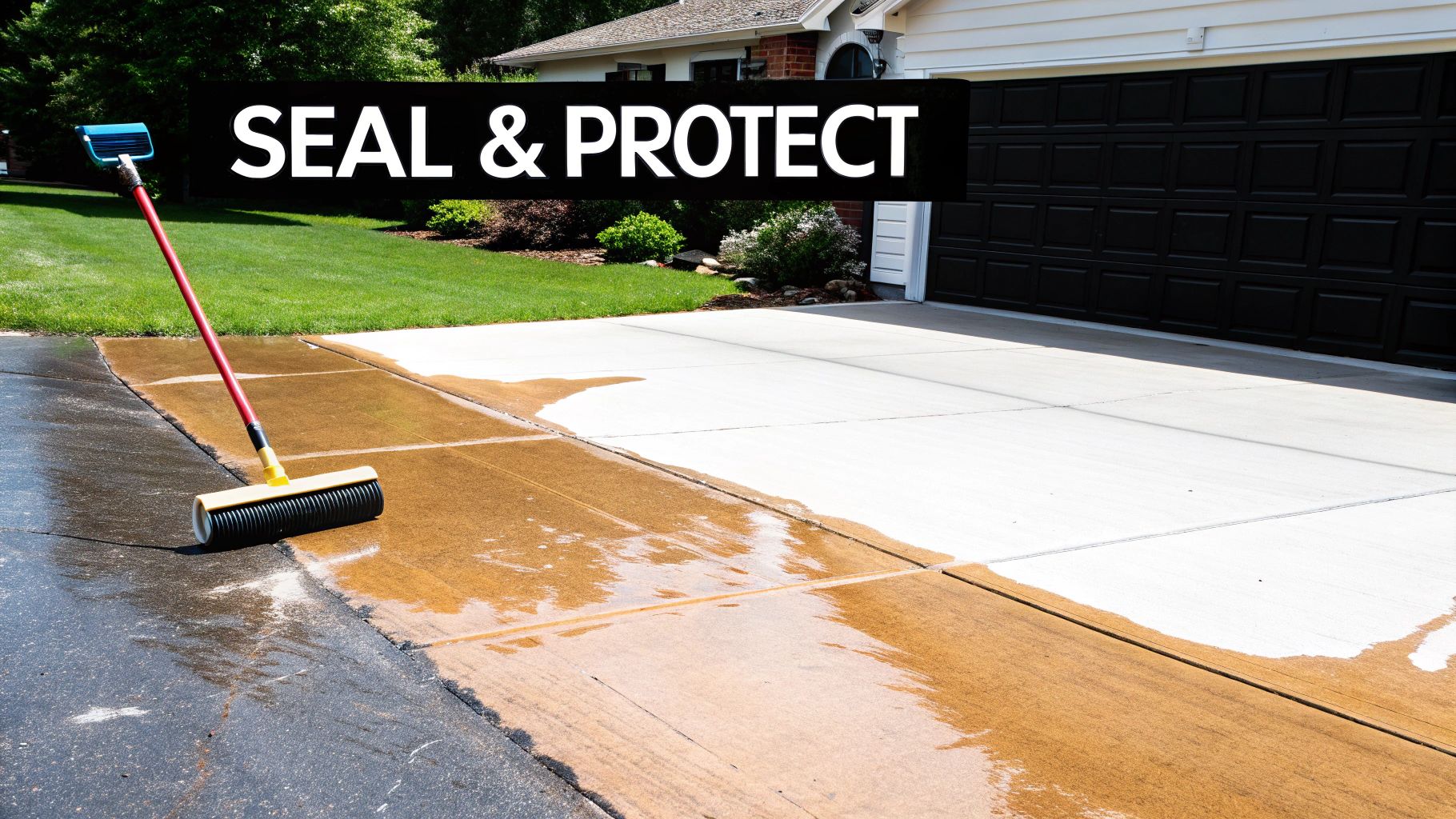
Turning off the pressure washer doesn't mean the job is finished. Honestly, the next couple of steps are what really make the results last and give you that professional-grade finish.
First things first, you need to do a final rinse. All that dirt, grime, and cleaning solution you just blasted loose is still sitting there. Grab a wide nozzle (the white 40-degree is perfect for this) and give the entire area a good, low-pressure rinse to wash all that debris away. If you skip this, you’ll get ugly streaks and a hazy film once the water evaporates.
Sealing: The Step That Protects Your Hard Work
After the final rinse, let the concrete dry completely. I mean bone-dry. In Atlanta's humidity, this can take a while, so give it at least 24 to 48 hours. You can test for dryness by taping a small square of plastic wrap to the concrete; if moisture collects underneath, it's not ready. Once you're sure it's dry, it’s time to seal it.
Think of sealer as a clear coat for your concrete. It gets into all the tiny pores and creates an invisible shield. This is a huge deal for a few reasons:
- Keeps Stains Out: It prevents oil, mud, and spilled drinks from soaking in, making them a breeze to clean up later.
- Fights Water Damage: By blocking moisture, it helps stop the cracking and flaking (known as spalling) that can happen when water freezes and thaws in the concrete.
- Stops Mold and Algae: Sealing those pores gives mold, mildew, and algae nowhere to grow, so your surfaces stay cleaner for much, much longer.
Applying a sealer isn't just for looks—it's one of the most important things you can do to protect your concrete from weathering and damage. It genuinely adds years to its life. For example, a properly sealed driveway might last 25-30 years, while an unsealed one may show significant wear in half that time.
Sidestepping Common Pressure Washing Goofs
I've seen it all over the years, and a few common mistakes can turn a great project into a frustrating one. Knowing what to watch for can save you a lot of headaches.
The number one mistake is using way too much pressure. It's so tempting to get close with a high-power nozzle, but this can permanently etch ugly lines, or "wand marks," into the concrete. Always start with a wider nozzle and keep a consistent 8-12 inches away from the surface. You can always get a little closer if you need to, but you can't undo damage.
Another classic error is not pre-treating tough stains. Just blasting an old oil spot or a stubborn patch of algae usually won't cut it. You need to let a proper cleaner do the hard work first. Apply a good degreaser or mildew remover, let it soak for 15-20 minutes, and then use the pressure washer to rinse it all away. This targeted approach is the secret to getting a truly even, clean look when pressure washing concrete.
When It's Time to Call in the Pros
Going the DIY route with pressure washing can be really satisfying, but it's not always the right call. Sometimes, handing the job over to a professional is not just easier, but also smarter and safer, especially here in Atlanta. Knowing when to make that call can save you a world of frustration, a lot of money, and the disappointment of a subpar result.
Think about tackling a massive, steeply sloped driveway on your own. It’s a huge job. Professionals come equipped with commercial-grade machines that get the work done quickly and evenly. For instance, they often use surface cleaners—large, circular attachments that clean a 20-inch wide path at once—to ensure a perfectly even finish and avoid the physical burnout and dreaded "zebra stripes" that often show up after a long day with a rental unit.
Tackling the Tough Stuff
Some cleaning jobs are just plain tricky. We’re talking about more than just surface-level dirt. If your concrete is historic and delicate, or you're staring down deep-set oil stains and stubborn rust marks, you really need an expert.
A pro knows exactly how to diagnose the problem. They won't just blast it with high pressure.
A professional service isn't just about a bigger machine; it's about diagnostic expertise. They know how to treat a hydraulic fluid stain differently than a patch of algae, ensuring a complete and safe removal without damaging the concrete itself.
This is where their specialized equipment really shines. The market for high-powered washers is now valued at over USD 4 billion, driven by pros who rely on industrial-grade units. We're talking about heavy-duty, gearbox-driven machines in the 4,000-5,000 PSI range—far more powerful than anything you can rent at a home improvement store. You can discover more insights about high-pressure washer market growth to see the kind of technology the experts are using.
Is It Worth the Cost? Absolutely.
Before you start adding up rental fees and supply costs, take a moment to weigh the real value. You might be surprised at how quickly hiring a pro makes financial sense.
Here’s when it’s a no-brainer:
- Your Time is Money: Honestly, what's your weekend worth? A professional crew can knock out in a few hours what might take you two full days of hard labor.
- Guaranteed Professional Finish: When you hire a reputable company, you're paying for a beautiful, uniform result. There's no risk of accidentally etching your concrete or damaging your landscaping.
- The Hidden Costs of DIY: Renting a decent washer for a weekend can cost $100-$150. Add in the right detergents ($30-$50) and safety gear, and you could be looking at a $200+ investment. Oftentimes, the total cost gets surprisingly close to what a professional would charge anyway.
For Atlanta homeowners looking at a tough cleaning job, getting a professional quote is a smart first step. Our team at Atlanta Concrete Solutions is equipped to handle these challenges, delivering a deep clean that lasts. You can check out our professional pressure washing services to see how we can restore your concrete with no stress on your end.
Got Questions About Washing Concrete? We've Got Answers
We get asked about pressure washing concrete all the time. Here are a few of the most common questions that pop up for homeowners in the Atlanta area.
How Often Should I Be Pressure Washing My Driveway?
For most homes around here, giving your concrete a good wash once a year is the sweet spot. That’s usually enough to handle the typical grime, mold, and mildew that builds up. For example, an annual spring cleaning can remove all the winter salt and grime, preparing your driveway for the summer.
Now, if your driveway is under a lot of trees or tends to stay damp, you might notice that green algae and other stains come back faster. In that case, you may want to bump it up to every 6 to 8 months to keep it looking fresh and clean.
Is It Okay to Use Bleach on My Concrete?
This is a big one. While a bit of bleach will definitely kill mold and mildew, it's pretty harsh stuff. It can be tough on the concrete surface itself and can absolutely wreck your lawn and garden beds if you're not careful.
Our recommendation? Stick with a cleaning solution specifically designed for pressure washing concrete. These are formulated to do the job without causing damage. If you find yourself in a pinch and have to use bleach, dilute it way down—think 1 part bleach to 10 parts water. And be sure to soak any nearby plants and grass with plain water before and after you apply the bleach solution to protect them. For example, saturate the soil around your prize azaleas before you start, and rinse them thoroughly again after you finish cleaning.
Ready to skip the hassle and guarantee a perfect finish? The expert team at Atlanta Concrete Solutions has the commercial-grade equipment and expertise to restore your property’s concrete safely and efficiently. Visit us online to get your free quote today!