
If you want to get an oil stain out of your concrete, you need a plan that can pull the oil up and out of its pores. The trick is to first soak up whatever is pooled on the surface with something absorbent—think cat litter or baking soda. After that, you hit the remaining stain with a strong degreaser to really break it down. For example, if you spill a quart of motor oil, you might need a 10-pound bag of cat litter to fully absorb the puddle before you can even think about treating the stain left behind.
Trust me, acting quickly is everything. A fresh spill is a thousand times easier to clean than an old stain that’s had weeks to settle in.
Why Oil Stains Are So Stubborn on Concrete
Seeing a dark, spreading oil stain on your driveway or garage floor is just plain frustrating. It’s not just a surface mess; the problem literally goes deeper. Understanding why these stains are so difficult to get rid of is the first step in winning the battle.
It all comes down to how porous concrete is. Picture it as a giant, hard sponge. Concrete is riddled with tiny, connected pores that immediately start wicking any liquid downward, pulling it deep below the surface. That’s why a tiny drip from a leaky oil pan can morph into a massive, shadowy stain that seems impossible to just wash away.
What Happens When Oil Hits Concrete
Once that oil seeps into the concrete, it starts getting comfortable, and a few things happen that make your job harder over time:
- Oxidation: When oil is exposed to air and sunlight, it starts to oxidize. This chemical reaction thickens the oil, making it gummier and much harder to dissolve. A fresh, golden-brown oil stain might become a nearly black, tar-like spot after a few months in the sun.
- Viscosity: The type of oil matters. Thinner fluids like power steering fluid will soak in faster and travel deeper. Thicker motor oil might sit on top for a little longer, but once it gets in, it creates a very dense, concentrated stain. For instance, a 5W-30 motor oil will penetrate slower than a thinner automatic transmission fluid.
- Dirt Magnet: The oil trapped in the concrete’s pores acts like glue for dust, dirt, and grime. This creates a tough, deep-seated mess that you can't just scrub off with a brush. Over time, this mixture of oil and dirt can form a hard, almost asphalt-like crust.
This visual breaks down the basic game plan for tackling these tough stains.
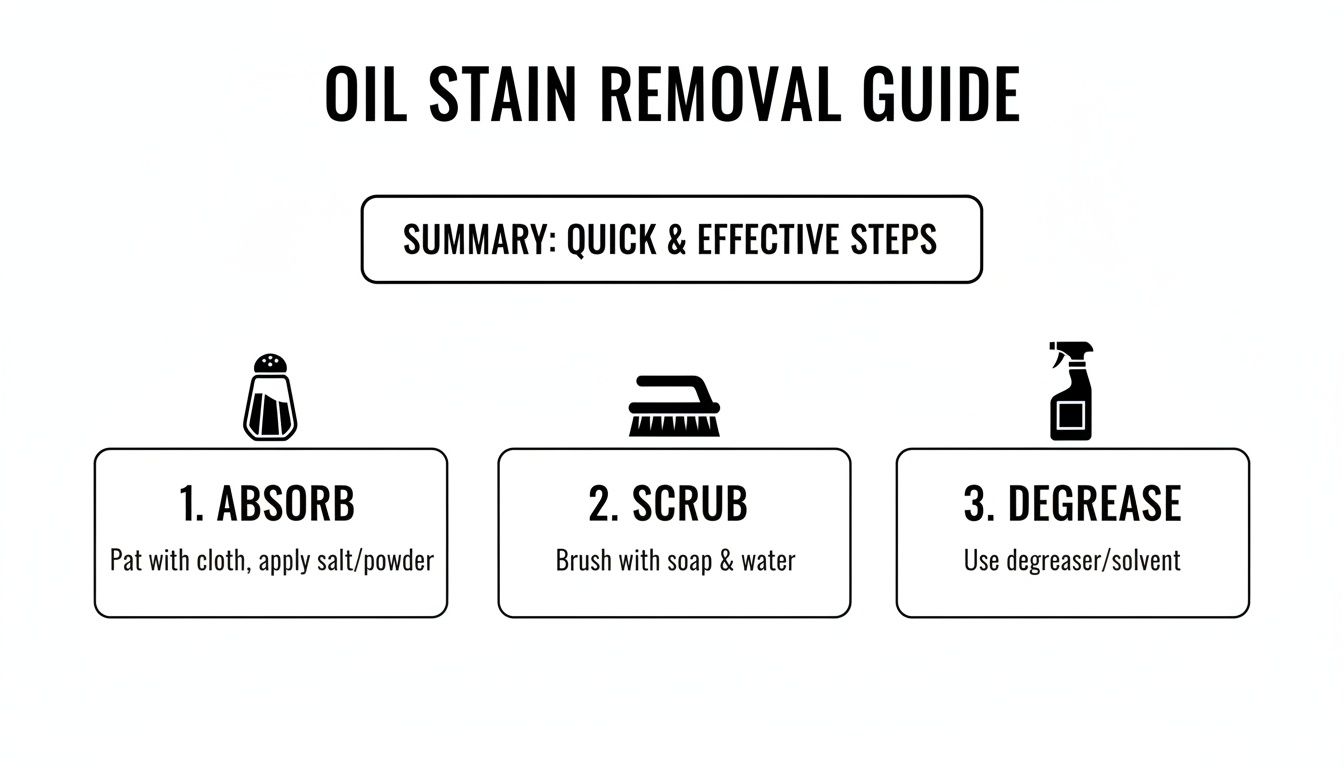
As you can see, every effective method follows three basic principles: soak up the excess, scrub the area, and use a degreaser to lift out what's left.
To give you a better idea of which approach might work best for your situation, here's a quick rundown of the most common DIY methods.
Quick Comparison of DIY Oil Stain Removal Methods
| Method | Effectiveness on Fresh Stains | Effectiveness on Old Stains | Average Cost | Best For |
|---|---|---|---|---|
| Cat Litter / Baking Soda | High | Low | $5 – $15 | Soaking up fresh, puddled oil immediately after a spill. Example: A bottle of motor oil tips over in your garage. |
| Dish Soap & Stiff Brush | Moderate | Low | $5 – $10 | Very light, fresh stains from thin oils. Example: A few drops of power steering fluid that dripped overnight. |
| Concrete Degreaser | High | Moderate to High | $15 – $30 | Most common motor oil stains, both new and slightly aged. Example: The stain left after fixing a leaky gasket. |
| Poultice (DIY Paste) | Moderate to High | High | $10 – $20 | Deep, stubborn, set-in stains that other methods can't lift. Example: A dark spot that's been on the driveway for months. |
Ultimately, the right method depends entirely on how old and deep the stain is. What works for a spill that happened five minutes ago won't touch a stain that's been baking in the sun for five months.
Key Takeaway: You’re not just cleaning a surface; you're trying to reverse a process. The goal is to draw that trapped oil back out of the concrete. This is exactly why a quick rinse with soap and water almost never works on anything but the tiniest, freshest drips. Keep that in mind, and you'll choose a method that actually solves the problem.
Getting Your Gear Ready for Oil Stain Removal
Before you even think about tackling that ugly oil stain, you need to get your tools in order. Trust me, showing up unprepared is a recipe for frustration. You'll end up with a half-cleaned mess and a stain that's laughing at you. Getting your supplies together first is half the battle.
Having everything within arm's reach means no mid-project runs to the hardware store, which totally kills your momentum. More importantly, it means you can get the job done right and, most importantly, safely. Let's walk through exactly what you'll need.
Safety First—No Excuses
Look, we're dealing with chemicals here, even if some of them are household items. Oil and degreasers can be nasty on your skin and in your eyes, so don't even think about skipping this part.
- Chemical-Resistant Gloves: Your average dishwashing gloves aren't going to cut it against a serious degreaser. Grab a pair of heavy-duty nitrile or neoprene gloves to keep your hands protected. For example, the thick, reusable gloves sold in the painting or automotive aisle are ideal.
- Safety Glasses: Splashes are inevitable once you start scrubbing. A simple pair of safety goggles is non-negotiable. The last thing you want is degreaser in your eye. Even basic clear glasses from a hardware store for under $5 are sufficient.
For Fresh Spills: Absorb, Don't Scrub
If you catch a spill when it’s still a fresh puddle, your first instinct shouldn't be to scrub. It's to soak it up. Having an absorbent on hand can stop the mess from setting deep into the concrete’s pores.
For instance, if you spot a fresh power steering fluid leak, throwing a heavy layer of cat litter on it can soak up 90% of the liquid before it even has a chance to stain.
- Clay Cat Litter: The old-school, non-clumping kind is a classic for a reason. It's cheap, incredibly absorbent, and easy to find. A 20-pound bag costs around $10 and can handle multiple large spills.
- Sawdust: If you do any woodworking, you've got a free, highly effective absorbent right there. Pine sawdust, for example, is particularly good at soaking up oil.
- Baking Soda or Cornstarch: Perfect for smaller drips. These kitchen staples are surprisingly good at pulling fresh oil out of the surface. For example, a few tablespoons of baking soda can completely absorb a silver-dollar-sized drip.
Here's a pro-tip I've sworn by for years: Once you've applied the absorbent, use the sole of an old boot to grind it into the spill. This simple trick breaks the oil's surface tension and forces the material to soak up way more of the mess.
The Cleaning Arsenal: Brushes and Solutions
After you've mopped up the excess, it's time to go after what's left. The right cleaner paired with the right brush is what will ultimately lift that stain for good.
| Tool/Agent | Best For… | Why It's the Right Choice |
|---|---|---|
| Stiff Nylon Brush | All-purpose scrubbing | The bristles are aggressive enough to work into the concrete's texture but won't scratch the surface like a wire brush will. A long-handled deck brush is a great example. |
| Commercial Degreaser | Stubborn, set-in stains | These products are chemically engineered to break down the hydrocarbon bonds in motor oil, making it possible to lift them out. Popular brands include Zep, Oil Eater, and Krud Kutter. |
| Liquid Dish Soap | Small, very recent drips | The surfactants in good ol' dish soap are great for cutting through surface-level grease before it has time to penetrate. A brand like Dawn is famously effective on grease. |
I can't stress this enough: always use a stiff-bristled nylon brush, not a wire one. A wire brush feels like it would be more effective, but it will absolutely shred the surface of your concrete, leaving behind permanent scratches that are often uglier than the oil stain was. Remember, the goal is to remove oil stain concrete, not trade one problem for another.
Now that you've got your toolkit assembled, you're ready to get to work.
Proven DIY Methods for Getting Rid of Concrete Oil Stains
Alright, with your supplies gathered, it's time to get your hands dirty. We're going to walk through a few proven ways to lift those ugly oil stains from your concrete. The key is matching the method to the mess—a fresh spill needs a different approach than a stain that’s been baking in the sun for months.
We’ll start simple and work our way up to the more powerful stuff. Some of these methods work by absorbing the oil, others dissolve it, and some trigger a chemical reaction. Knowing the "why" behind each technique will help you pick the right tool for the job.
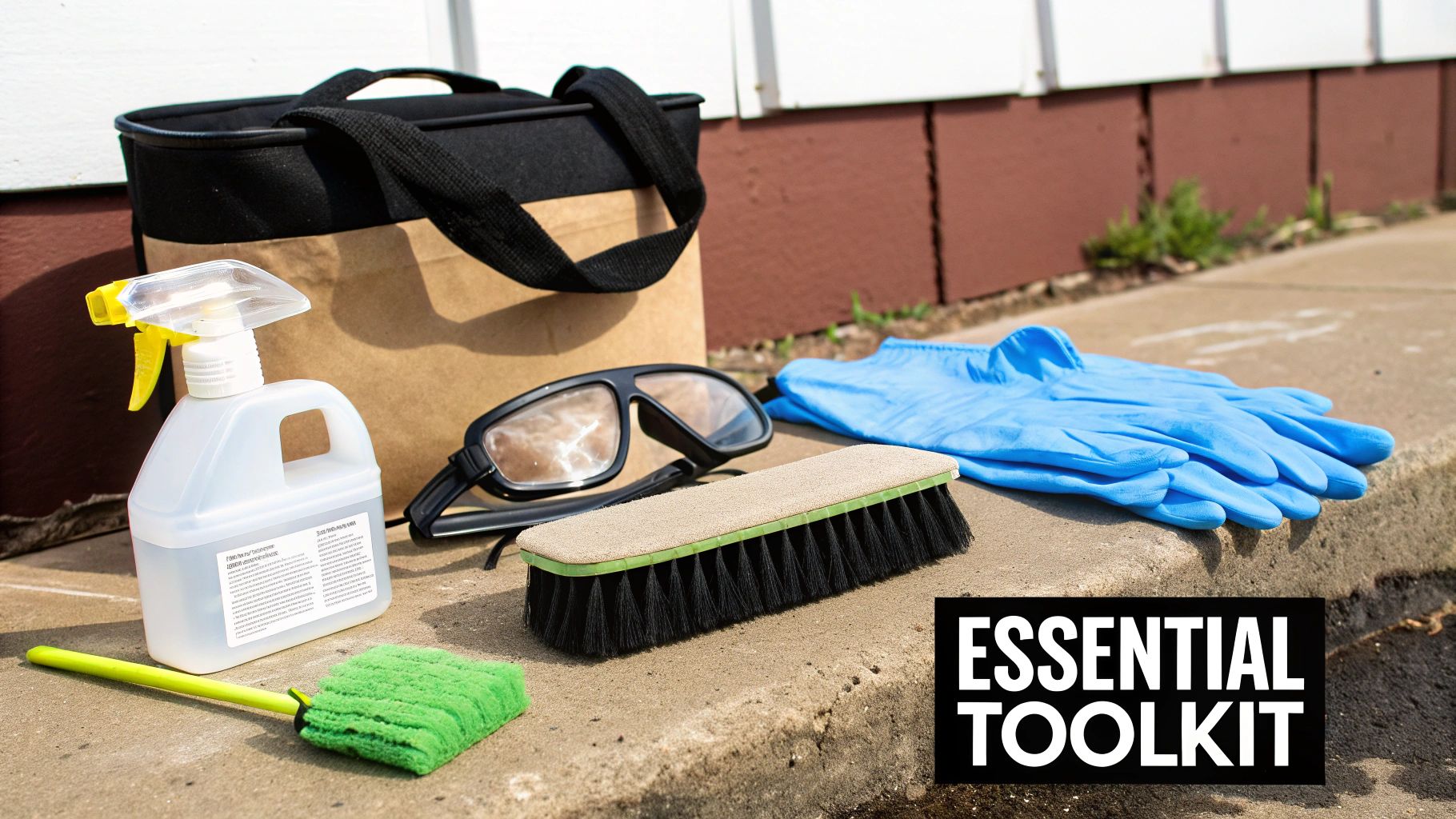
The Classic Poultice Method
This old-school technique is your best bet for fresh spills and can do a surprisingly good job on lighter, older stains too. "Poultice" is just a fancy term for a thick paste you make by mixing an absorbent powder with a solvent. The whole idea is to create a mixture that literally pulls the oil out of the concrete's pores as it dries.
Think of it like a mud mask for your driveway. As the paste hardens, it acts like countless tiny straws, wicking the oil up and out of the concrete.
Here's a perfect scenario: You just finished an oil change and, darn it, there’s a fresh, palm-sized puddle on the garage floor. This is the ideal time to whip up a poultice.
Here's how you do it:
- Soak Up the Excess: Before anything else, dump a generous pile of clay kitty litter or even sawdust right on the fresh spill. Use your shoe to grind it in a bit—this helps it absorb as much as possible. Then, sweep it all up.
- Mix Your Paste: In a bucket or disposable container, mix your absorbent (baking soda or more kitty litter works great) with a solvent. For a gentle approach, start with water. For more muscle, use a liquid degreaser or acetone. You want a thick paste, something like the consistency of peanut butter. For example, mix one cup of baking soda with a quarter cup of acetone.
- Apply and Cover: Slather the paste over the entire stain, going about an inch past the edges. Cover it with plastic wrap and tape it down. This keeps the solvent from just evaporating, forcing it to work its way down into the concrete. Let it sit for a good 24 to 48 hours.
- Scrape and Clean: Once the poultice is bone dry and hard, use a plastic putty knife to scrape it off and sweep away the residue. Give the spot a final rinse with a little dish soap and water.
A Quick Tip From the Field: Don't get discouraged if a faint shadow of the stain remains after your first try. For older, deeper stains, you might need to repeat this process two or three times to pull out all the oil. It’s a game of patience.
The Hot Water & Dish Soap Scrub
For a very fresh, minor drip, you might be able to skip the poultice altogether. A good, strong liquid dish soap is a fantastic degreaser—it’s literally designed to break apart oil and grease. When you combine that with hot water and some solid elbow grease, the results can be impressive.
This trick is perfect for those small, fresh spots, like a few drops of transmission fluid that hit the pavement while you were checking your levels. It’s not going to do much for a massive, soaked-in stain that’s been there for a week, though.
Let’s say a friend's car left a few fresh drips on your new driveway. The stain is brand new and hasn't been baked in by the sun. This is your move.
- First, blot up any pooled oil with a paper towel. Blot, don't wipe! Wiping just smears it and makes the stain bigger.
- Next, squeeze a generous amount of concentrated dish soap directly onto the stain. For a 3-inch spot, use about a tablespoon of soap.
- Carefully pour a small amount of very hot water (boiling is best, but be safe) over the soap. This really helps activate it.
- Now, grab your stiff-bristled brush and scrub vigorously in a circular motion for a few minutes. You want to work up a good, oily, soapy foam.
- Finally, rinse the whole area with clean, hot water.
You're not alone in this fight. The market for concrete cleaning products is booming—the global concrete oil stain remover market hit $800 million in 2023 and is expected to reach $1.3 billion by 2032. In North America alone, 35% of that demand comes from homeowners trying to clean up their driveways and garages.
If you're dealing with other tough automotive messes, learning the techniques for safely removing road tar from a car can offer some great insights into what kinds of solvents work best.
Bringing in the Big Guns: A Commercial Degreaser
When home remedies just aren't cutting it, it's time to step up to a commercial-grade concrete degreaser. These products are specifically engineered to break down the stubborn hydrocarbon molecules in motor oil and other automotive fluids. They soak deep into the concrete's pores to dissolve the oil’s grip, making it much easier to wash away.
This is your go-to solution for that dark, ugly stain that’s become a permanent fixture on your driveway. A quality degreaser gives you the best shot at removing it, whether it's a small but deep spot or a large spill. A clean driveway is a huge part of your home’s curb appeal, something we discuss more in our guide to residential driveway concrete.
How to Use a Degreaser Safely and Effectively:
| Step | What to Do |
|---|---|
| Prep the Area | Sweep the spot completely clean of any dirt or leaves. And don't forget your safety gear—put on your glasses and gloves. |
| Apply the Product | Pour the degreaser directly onto the dry stain. Make sure you use enough to fully saturate it, then use a brush to work it in. For a one-foot-square stain, you might use 8-12 ounces of degreaser. |
| Let It Work | Let the product sit and do its thing. Check the label for the recommended "dwell time," which can be anywhere from 20 minutes to a few hours. Don't let it dry out. If it starts to dry, mist it lightly with water. |
| Scrub It Out | Once the time is up, grab your stiff brush and scrub the area hard. You're physically breaking the dissolved oil loose from the surface. |
| Rinse Thoroughly | Use a strong jet of water from a hose to rinse everything away. For the best results, a pressure washer on a medium setting works wonders here. |
Always, always read the manufacturer's instructions on the bottle. Some degreasers need to be diluted, while others are ready to go. Following the directions is the difference between a clean spot and a wasted afternoon.
Tackling Stubborn Stains and Preventing Future Messes
So you’ve tried the poultice, you’ve scrubbed with degreaser, and yet… there’s still a faint, ghostly outline of that oil stain. It's a frustratingly common roadblock. These lingering marks are usually the ghosts of older, deeper stains where oil has had months, or even years, to really settle in and become one with the concrete.
But don't throw in the towel just yet. Getting rid of these stubborn spots just means you need to get a little more serious. We’ll dig into why some stains are so tough and bring out a more powerful tool for the job. After that, we’ll switch gears to what’s arguably the most important strategy: prevention.
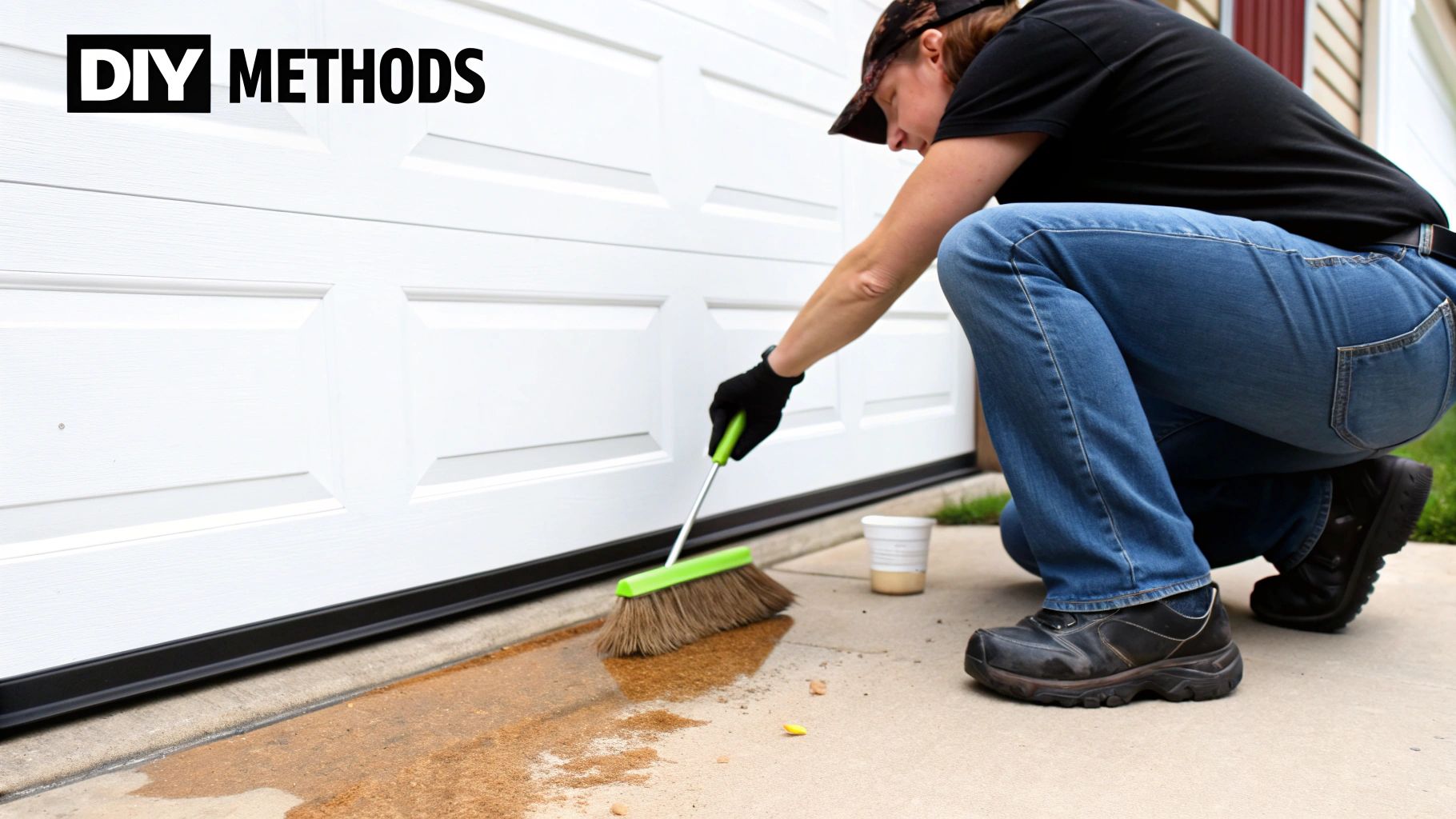
Why Some Stains Just Won't Budge
Ever find yourself staring at one particular stain, wondering why it's putting up such a fight? It’s not your imagination. A few key factors make some stains far more stubborn than others.
- What Kind of Oil Is It? Not all oil is the same. Synthetic motor oil, for example, is packed with additives designed to cling to engine parts, and they do the same thing to your concrete. Transmission fluid is another culprit; it's thinner and can seep in deeper, faster.
- The Age of Your Concrete: Is your driveway brand new or has it been around for a few decades? Older, weathered concrete is more porous, almost like a sponge. It will soak up spills much more quickly, leading to stains that are a real headache to remove.
- How Long Has It Been Sitting There? This is the big one. An oil spot that’s been baking in the sun for a year has gone through countless heating and cooling cycles. The oil oxidizes, turning into a thick, gummy resin that chemically bonds itself deep inside the concrete’s pores.
Bringing in the Big Guns: Trisodium Phosphate (TSP)
When you're up against a stain that has laughed off every other method, it might be time for trisodium phosphate (TSP). This is a powerful, alkaline cleaning powder that excels at breaking down the old, greasy, polymerized gunk that other cleaners can’t touch.
Be warned, though—TSP is serious business and demands respect. It can cause nasty skin and eye irritation, so pulling on your chemical-resistant gloves and safety glasses is non-negotiable.
How to Use TSP Safely and Effectively:
- Grab a bucket and mix one cup of TSP into one gallon of hot water. Keep stirring until every last granule has dissolved.
- Carefully pour the solution right onto the stain. You want to completely saturate it.
- Now, let it work. Give the solution at least 20-30 minutes to soak in and start breaking down those bonded oil molecules.
- With your stiff-bristled nylon brush, give the area a vigorous scrubbing. You should start to see the oily mess lifting out.
- Rinse the area completely with a strong spray from your garden hose. A pressure washer on a low setting works great here, too.
A Quick Word on Safety: TSP is not friendly to your lawn or garden, so pay close attention to the runoff. If you can, use some sandbags or an absorbent boom to contain the rinse water. It’s also a good idea to check your local regulations, as some areas have restrictions on phosphate cleaners.
The Best Fix? Stop It Before It Starts
Knowing how to clean an oil stain is a great skill, but not having to do it in the first place is even better. A little proactive prevention will save you a ton of time, money, and elbow grease down the road.
This is especially true for homeowners in places like Atlanta, where concrete driveways are the norm. Vehicle leaks are incredibly common, affecting roughly 1 in 3 households each year. Those ugly stains aren't just an eyesore; untreated oil can cause a 15-25% drop in property value because it signals neglect.
A few simple habits can make all the difference:
- Use a Drip Pan: If you know you have a car with a slow leak, slide a drip pan or even just a flattened cardboard box under it. Problem solved. For example, a simple 24" x 36" metal drip pan can be purchased for under $20.
- Do Regular Leak Checks: Once a month, just take a peek under your cars. Spotting a fresh drip early is the key to a simple cleanup.
- Wipe Up Small Spills Immediately: Don't let a tiny drop become a permanent resident. A little dish soap or a sprinkle of baking soda can knock it out before it sets.
Seal Your Concrete for Ultimate Protection
If you want the most robust, long-term defense against oil stains, nothing beats applying a concrete floor sealer. A quality sealer works by penetrating the surface and filling the microscopic pores in the concrete, creating an invisible, non-porous shield.
This barrier is a game-changer. It physically stops oil and other liquids from soaking in, keeping them puddled on the surface. The next time you have a spill, cleanup is as simple as wiping it up with a rag. For example, a spill on a sealed driveway can be wiped clean with a paper towel, leaving no trace, whereas the same spill on unsealed concrete would stain instantly.
For homeowners looking for a bulletproof solution, our team at Atlanta Concrete Solutions often combines a deep cleaning with a professional-grade sealer as part of our residential concrete and masonry repair services. A properly sealed driveway not only resists stains but is also protected from water damage and cracking, adding years to its life.
When to Call in a Professional Concrete Contractor in Atlanta
Look, DIY methods are fantastic for a lot of fresh spills and minor spots. But there comes a point where elbow grease and a bottle of degreaser just won't cut it. Knowing when to throw in the towel and call a pro is the difference between a clean driveway and a permanently damaged one. Sometimes, you need industrial-strength solutions and an expert touch that you just can't get from the hardware store.
It's not about admitting defeat; it's about recognizing the limits of DIY. A professional doesn't just show up and start blasting away. They'll actually assess the concrete, figure out what kind of oil you're dealing with, and use specialized equipment to get the job done right—without causing more harm than good. This is especially true if you have a high-end or delicate concrete surface.
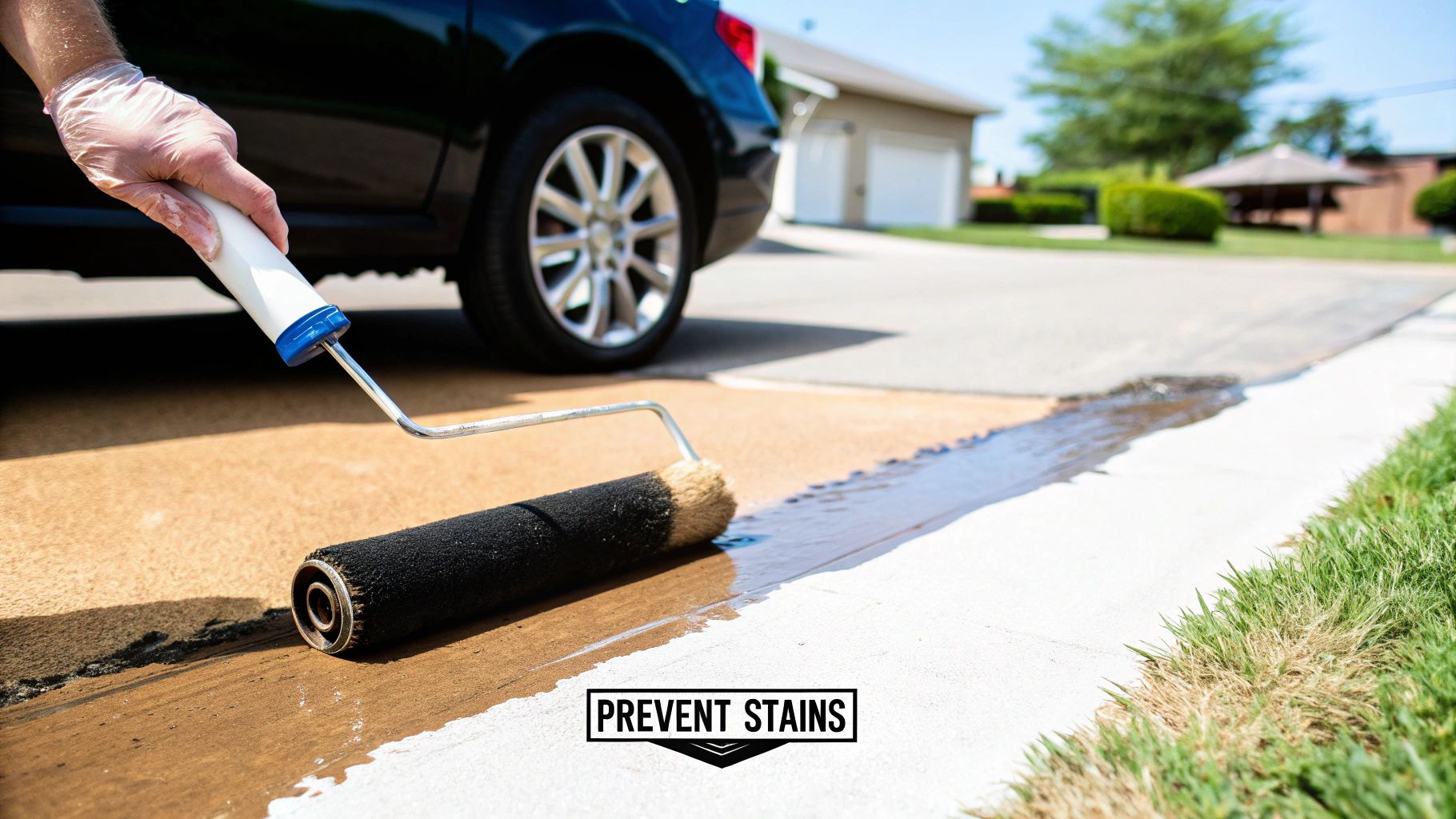
Signs That It's Time for a Professional
Some situations are dead giveaways that you're out of your league. If you're nodding along to any of these, it’s probably time to pick up the phone.
- The Stain is Ancient: An oil stain that's been sunbathing on your driveway for years has chemically bonded with the concrete. It’s not just a surface issue anymore; it's become part of the material, making it nearly impossible to lift with standard cleaners.
- The Spill is Massive: We're not talking about a few drips. If you've had a major hydraulic fluid leak or dumped a whole oil pan, that's too much for a simple poultice to absorb. The oil has penetrated deep and spread wide.
- You Have Decorative Concrete: Is your patio or driveway stamped, stained, or colored? Don't risk it. Using the wrong chemicals can permanently bleach or etch your beautiful finish. A pro knows how to remove oil stain concrete without ruining the aesthetics.
- Multiple DIY Attempts Have Failed: If you've thrown everything but the kitchen sink at that stain and it's still laughing at you, stop. You could be making things worse by mixing chemicals or grinding the oil even deeper into the pores.
Let’s be real, oil stains are a constant battle here in the Atlanta metro area. The demand is so high that the global market for concrete oil stain removers hit around $121 million in 2025. For a business owner with a parking lot in Duluth, this isn't just a number. Traditional pressure washing fails on deep stains up to 60% of the time, which can lead to expensive resurfacing projects—the kind of work Atlanta Concrete Solutions is brought in to handle correctly from the start. You can dive deeper into these trends at Data Insights Market.
The Professional Equipment Advantage
The single biggest difference between you and a pro? The gear. A contractor like us has access to equipment that makes rented tools look like toys.
A professional-grade hot water pressure washer is the real secret weapon. We're talking water heated to over 200°F. This doesn't just push the oil around; it literally melts and emulsifies the thick, gunky mess, flushing it out of the concrete’s pores for good.
On top of that, we use a whole arsenal of commercial-grade chemical treatments you can't buy off the shelf. These cleaners are designed to break down specific oils—from modern synthetic motor oil to heavy hydraulic fluid—without eating away at the concrete itself. We know exactly what to use and how to use it safely.
Beyond Cleaning: When Is Replacement Necessary?
Sometimes, the problem is more than skin deep. If oil has been sitting for a very, very long time, it can cause the concrete to soften, flake, and crumble. This is called spalling, and no amount of cleaning is going to fix that kind of structural damage. For example, if you can easily chip away at the stained concrete with a screwdriver, the integrity is likely compromised.
That’s when you need an honest assessment from a full-service contractor. We can tell you if a simple resurfacing will solve the problem or if a full-on replacement is the only safe, long-term solution. By exploring all the professional concrete services available, you can get a clear understanding of your options, from a deep clean to a brand-new slab.
Got Questions About Concrete Oil Stains? We’ve Got Answers.
As a concrete professional in the Atlanta area, I get a lot of the same questions from homeowners trying to tackle oil stains. It's a common problem, so let's clear up some of the confusion and get you on the right track.
Can I Just Use Bleach to Clean an Oil Stain?
I hear this one all the time, and the short answer is no. While bleach is a fantastic disinfectant, it’s completely the wrong tool for an oil stain. It simply doesn’t have the chemical properties to break down petroleum.
What bleach will do is discolor your concrete, leaving you with a splotchy, uneven patch that often looks worse than the dark oil spot you started with. For example, using bleach on a gray driveway can leave a permanent, chalky white spot. To actually remove oil stain concrete, you need something that can dissolve or lift the oil itself, like a proper degreaser or a poultice.
How Fast Do I Need to Act on a Fresh Oil Spill?
Immediately, if you can. Think of concrete as a hard sponge—it's full of tiny pores, and that oil starts soaking in the second it hits the ground.
If you catch a spill within a few hours, you stand a great chance of getting it all out with minimal fuss. Wait a day, and you're going to have to put in more elbow grease. If a stain has been sitting for weeks or even months, that oil has worked its way deep into the concrete and bonded with it, making removal a real challenge.
Key Insight: Concrete is incredibly porous. The longer oil sits, the deeper it goes. Acting fast with an absorbent material like cat litter can stop 90% of a potential stain from ever forming.
Is a Pressure Washer Enough to Get Rid of an Oil Stain?
A pressure washer is a great tool, but it's not a magic wand for oil stains. Blasting a stain with high-pressure water alone often just drives the oil deeper into the concrete's pores. It might look a little better at first, but you're actually making the problem harder to solve down the road.
The right way to use it is as the final step. First, you need to pre-treat the stain with a good quality concrete degreaser. Let that product do the heavy lifting by breaking down the oil, give it a good scrub, and then use the pressure washer to rinse everything away. That one-two punch is far more effective.
I Heard WD-40 Works on Oil Stains. Is That True?
It can, but it’s not a cure-all. WD-40 is a solvent, so it can be pretty handy for breaking down small, relatively fresh oil spots. Don't expect it to work miracles on a large, ancient stain that's been baking in the Georgia sun for a year.
If you want to give it a shot, soak the stain with WD-40 and let it sit for about 20-30 minutes. You'll see it start to dissolve the grease. Then, scrub it with a stiff-bristled brush and cover the area with cat litter or baking soda to soak up the loosened grime before cleaning the spot with soap and water. This method is best for a stain the size of a dinner plate or smaller.
If you've tried everything and that stubborn stain still won't budge, or if you're looking for a professional to restore your driveway's curb appeal, Atlanta Concrete Solutions is ready to help. Our crew has the pro-grade equipment and know-how to tackle even the most difficult stains. Visit atlantaconcretesolutions.com to get your free quote today.