
When it comes to getting rust off concrete, a little detective work upfront can save you a ton of scrubbing later. The best method really boils down to what caused the stain and how bad it is. A light, surface-level mark from a forgotten pair of pliers might come up with a simple paste of lemon juice and baking soda. But for those deeper, more stubborn stains, like the ones left by leaking battery acid or corroding rebar, you'll likely need to bring in the big guns—specialized commercial cleaners with oxalic or phosphoric acid.
The absolute key is to figure out where the rust came from before you start mixing up solutions.
Figuring Out What's Causing the Rust on Your Concrete
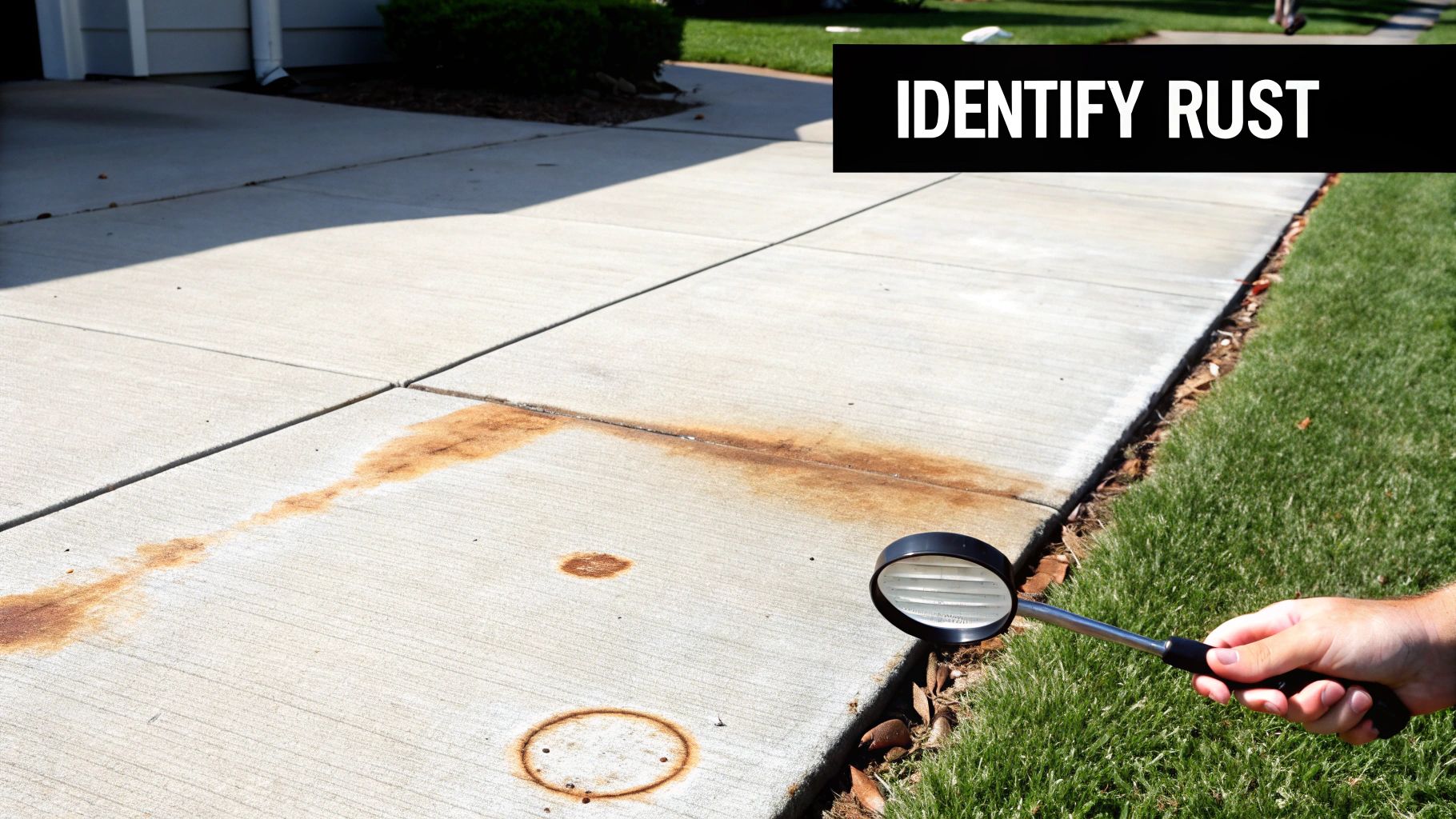
Before you grab a brush, take a moment to play detective. Not all rust stains are the same, and understanding the root cause is your first real step toward getting your concrete looking new again. For instance, that bright orange circle left by a forgotten metal watering can is a totally different beast than the dark, streaky lines that signal corroding rebar deep inside the slab. Each one needs a different game plan.
Think of it this way: a surface stain is just a spill. An internal stain, on the other hand, is a symptom of a much bigger headache. Trying to tackle a deep rebar bleed with a gentle household remedy is like trying to fix a burst pipe with a band-aid. You're just wasting your time and energy.
The Usual Suspects Behind Concrete Rust Stains
Most of the time, rust stains fall into one of three buckets. Learning to spot the differences will point you directly to the right solution.
- Surface Stains: These are by far the most common and, thankfully, the easiest to fix. They pop up when a metal object gets left on the concrete and then gets wet. Common examples we see all the time are rust rings from planters, marks from old garden tools left out in the rain, or stains from the legs of patio furniture. The stain is usually sharp, well-defined, and sits right on the surface.
- Deep Stains: This happens when something rich in iron soaks into the concrete’s pores. The classic example? Fertilizer pellets. Many lawn fertilizers contain iron, and if they get scattered across your driveway, the next rain will leave a smattering of tiny, speckled rust spots. Another culprit is water runoff from a rusty downspout or metal fence, which often creates a long, faded-looking streak down a walkway.
- Internal Stains: These are the most serious. The rust is coming from inside the concrete slab itself, usually from the steel rebar used for reinforcement. When moisture gets in and the rebar starts to corrode, you’ll see long, thin lines of dark orange or brown that look like they're bleeding out from the concrete, often along a crack. This is a red flag for a potential structural issue.
This infographic can help you visualize the process of tracing the stain back to its source.
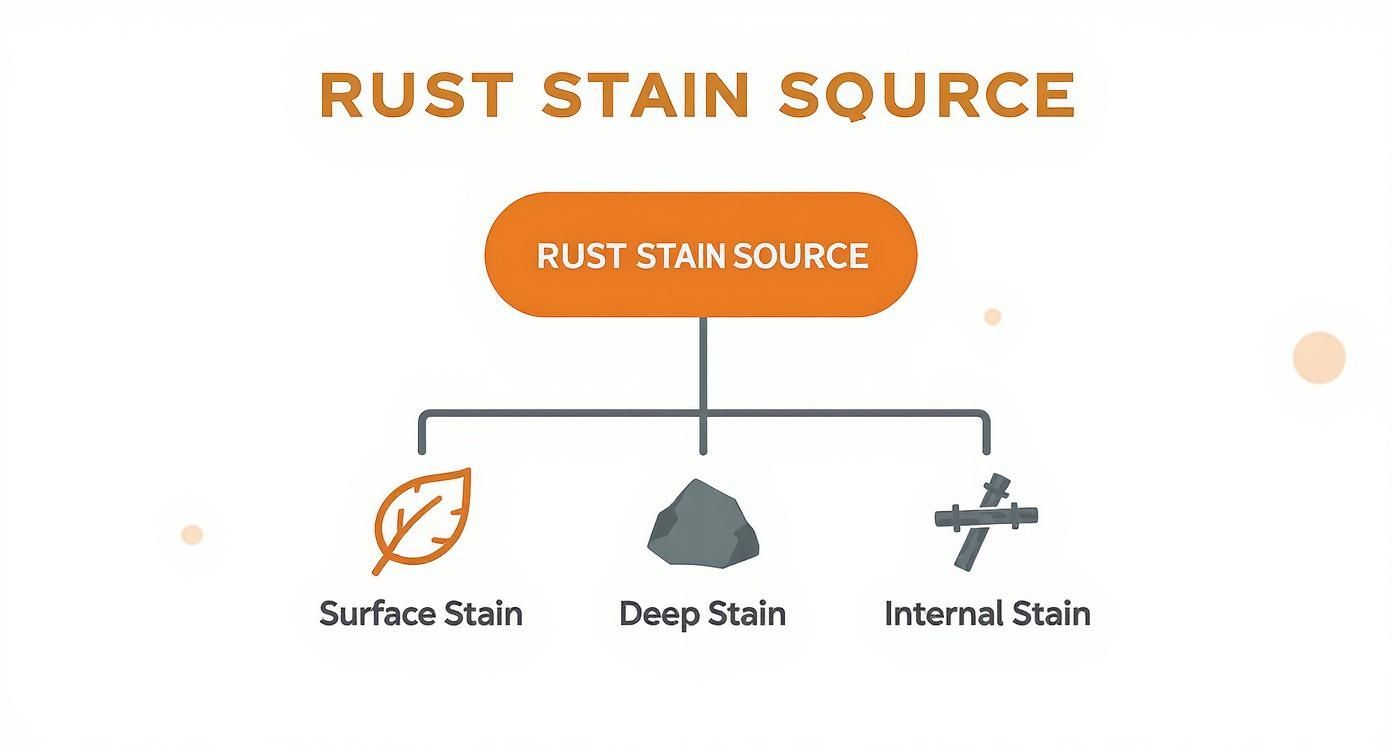
The main takeaway is that the stain's shape and pattern are your biggest clues. They’ll tell you if you're dealing with a simple cosmetic fix or a deeper structural issue. For example, a perfect circle points to a can or planter, while tiny speckles suggest fertilizer.
Why Getting the Diagnosis Right is So Important
Pinpointing the source isn't just about picking the right cleaner—it's about protecting your property. This is especially true here in Atlanta, where the humidity can really accelerate corrosion. It’s no surprise that the global rust remover market was valued at USD 553.59 million and is expected to keep growing. You can read a full report on rust remover market trends to see how this demand is tied to infrastructure maintenance.
Fixing rust on your residential driveway concrete is a small-scale version of what happens on major projects. A surface stain from a stray nail is a simple fix. But an internal stain from rebar could be an early warning sign of a serious structural problem that needs a professional’s touch to stop it from getting worse.
Natural Solutions for Lighter Rust Stains
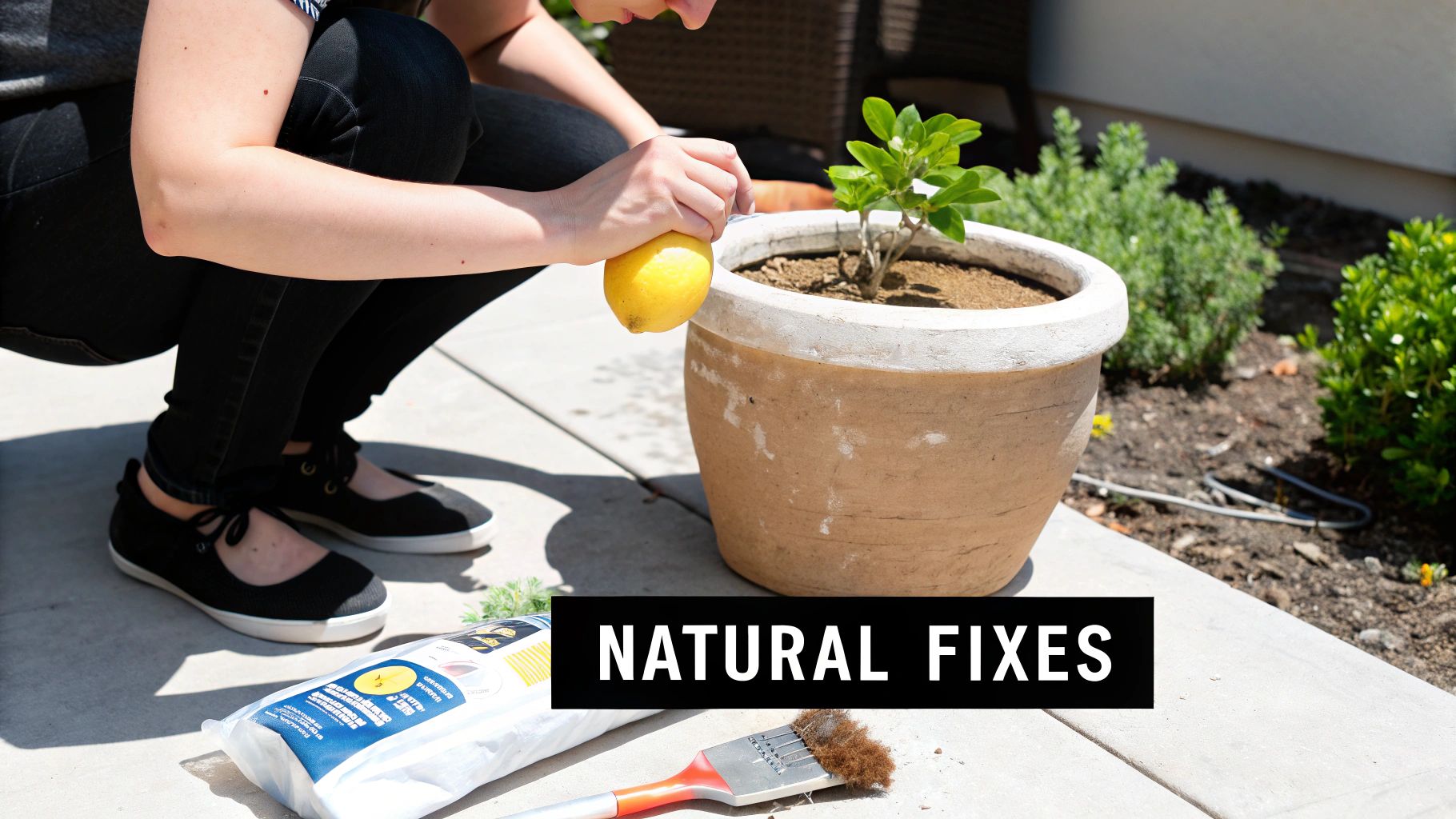
Before you head to the hardware store for heavy-duty chemicals, take a look in your kitchen. You’d be surprised how often a simple, natural solution can knock out minor rust stains on concrete. We're talking about those faint orange rings left by a metal planter or the little spots that appear after you've left a tool out in the rain.
These methods rely on mild, everyday acids to do the heavy lifting. The citric acid in lemon juice or the acetic acid in white vinegar gets to work dissolving the iron oxide (the rust itself), breaking it down so you can scrub it away. It’s a cheap, safe, and surprisingly effective first move against fresh or light rust marks.
Using Lemon Juice or White Vinegar
For fresh rust stains, lemon juice and white vinegar are your go-to options. Their natural acidity is just enough to attack the rust without being harsh enough to harm your concrete. This is the perfect approach for a new stain you've just discovered on your patio or driveway.
Let's say you moved a metal patio chair and found a small, bright orange spot underneath. This is the ideal scenario for a natural remedy. Just pour undiluted white vinegar or lemon juice directly onto the stain, making sure it's completely soaked. Let it sit and work its magic for 15-20 minutes.
Once the liquid has had time to penetrate the concrete's pores, grab a stiff-bristled nylon brush and give the area a good, vigorous scrub. You should start to see the rust lifting right away. Finish by rinsing the spot thoroughly with clean water. If a faint discoloration is still visible, don't worry—a second application is usually all it takes to get it gone for good.
Pro Tip: If a stain is being particularly stubborn on a flat surface, sprinkle some coarse salt over the lemon juice before you start scrubbing. The salt acts as a gentle abrasive, giving you extra scrubbing power to lift those dissolved rust particles out of the concrete. For example, on a rust spot from a discarded screw, this combination can be very effective.
Creating a Baking Soda Paste for Better Cling
One of the biggest problems with using liquids like vinegar is that they can run off or evaporate before they've had a chance to work, especially on a sloped driveway or under the hot Atlanta sun. A simple way to solve this is by making a thick paste with baking soda.
Just mix baking soda with a little bit of water until you get a consistency like toothpaste. For example, start with half a cup of baking soda and add water tablespoon by tablespoon until it's a thick, spreadable paste. Slather this paste over the rust stain, covering it completely. Let it sit for at least 30 minutes before scrubbing it with your brush and rinsing it clean. This method keeps the cleaning agent right where you need it for maximum effect.
This trick works great for those annoying little rust specks left behind by some fertilizers. The paste clings to each tiny spot, letting you treat a scattered area without your cleaner running everywhere.
Comparing DIY Rust Removal Methods
To help you choose the right approach, here's a quick look at how these common household remedies stack up against each other.
| Method | Best For | Application Time | Effectiveness | Cost |
|---|---|---|---|---|
| Lemon Juice/Vinegar | Fresh, light surface stains | 15-20 minutes | Moderate | Very Low |
| Lemon Juice & Salt | Light stains needing abrasion | 15-20 minutes | Moderate-High | Very Low |
| Baking Soda Paste | Sloped surfaces or spot treatment | 30+ minutes | Moderate | Very Low |
As you can see, they all have their place. It’s about matching the method to the specific stain you’re dealing with. For a light stain from a bicycle kickstand, vinegar alone is a great first try.
Practical Application Tips
A few simple tricks can make these natural methods even more effective.
- Trap the Moisture: After applying lemon juice or vinegar, cover the spot with a piece of plastic wrap. This stops it from evaporating and keeps the acid actively working on the rust for longer.
- Turn Up the Heat: When you're mixing a baking soda paste or rinsing the concrete, using warm water can help accelerate the chemical reaction and dissolve the rust a bit faster.
- Be Patient: Natural solutions don't work instantly like harsh chemicals. If the stain doesn’t disappear on the first try, don't get discouraged. It’s common for it to take a couple of applications.
Keep in mind that these household remedies do have their limits; they aren’t going to touch deep-set, old rust stains. For more delicate surfaces, like a polished floor in a garage or basement, starting with the gentlest method is always the smartest move. If you want to learn more about why protecting these surfaces is so important, check out our guide on residential polished concrete.
If you’ve tried a natural method a couple of times and the rust won't budge, that’s your cue to step up to a stronger, commercial-grade rust remover.
Tackling Tough Rust Stains with Commercial Cleaners
When home remedies like lemon juice and vinegar just aren't making a dent, it's time to bring out the big guns. Commercial-grade rust removers are specifically formulated for those stubborn, deep-set stains that seem to have become one with the concrete.
But a quick trip to the hardware store can leave you staring at a wall of options. Don’t get overwhelmed. Most of these products fall into two main categories: acid-based cleaners and chelating agents. Knowing the difference is the key to picking the right tool for the job.
Acid-Based vs. Chelating Cleaners: What's the Right Choice?
Your traditional heavy-hitters are the acid-based cleaners. Products made with oxalic acid or phosphoric acid get to work on a chemical level, dissolving the iron oxide (the rust itself) so it can be washed away. They’re fast, powerful, and fantastic for those ugly, embedded stains on a standard garage floor or sidewalk. A good example is a product like "Goof Off Rust Stain Remover" which often contains oxalic acid.
Then you have chelating agents, which are a bit more modern and often gentler. Instead of dissolving the rust, they use a clever chemical process to "grab" the iron particles and lift them out of the concrete's pores. This makes them a much safer bet for more delicate surfaces, like that stamped or colored patio you don’t want to accidentally etch or discolor. An example would be products labeled as "pH-neutral rust removers."
Here’s how I think about it on the job:
- Deep, ugly stain on a plain gray driveway? I’m reaching for a phosphoric acid-based cleaner for its raw strength.
- Rust spots on a decorative, colored concrete patio? I'll start with a gentler oxalic acid product or even a pH-neutral chelating agent to protect the finish.
- Scattered rust spots from fertilizer pellets? A chelating gel is perfect here. It clings to the individual spots instead of running all over the place.
These products are serious business. The global market for rust removal chemicals is expected to reach USD 13,350 million by 2033, largely driven by industrial needs in manufacturing and automotive sectors to keep concrete floors safe and in good condition. If you're curious, you can learn more about the growing rust removal market and its impact.
How to Safely Use Commercial Rust Removers
Once you've chosen your product, safety is everything. These are potent chemicals, and you absolutely can't skip the personal protective equipment (PPE).
Safety First: Before you even twist the cap, put on your acid-resistant gloves, safety goggles, and old clothes that cover your arms and legs. For instance, thick nitrile or neoprene gloves are a must. Chemical splashes can and do happen, and you don’t want this stuff anywhere near your skin or eyes.
Now, before you go all-in on the stain, find a small, out-of-the-way spot to do a test patch. This is a non-negotiable step. It ensures the cleaner won't discolor or damage your concrete. Let it sit for the recommended time, rinse it off, and see how it looks.
If the test spot looks good, go ahead and apply the cleaner as directed on the label. This usually means pouring or spraying it directly onto the dry rust stain. Grab a stiff, nylon-bristled brush and gently scrub the solution into the concrete—you want to work it into all those tiny pores. Let it sit for the recommended time, typically 10 to 30 minutes, but keep an eye on it to make sure it doesn't dry out.
The Final, Crucial Steps: Neutralizing and Rinsing
Once the cleaner has worked its magic, you're not done yet. Getting the chemical off the concrete is just as important as putting it on.
If you're working near grass or garden beds, give the plants and soil a good soaking with your hose before you start rinsing the concrete. This simple prep step helps dilute any chemical runoff and can save your landscaping.
For many acid-based products, you’ll also need to neutralize the area. Just sprinkle some baking soda or a commercial neutralizer over the treated spot. You’ll probably see some fizzing, which is a good sign—it means the acid is being neutralized.
Finally, give the entire area a very thorough rinse. A garden hose with a good nozzle works, but a pressure washer on a low-to-medium setting is even better for flushing out all the dissolved rust and residual cleaner. For a really deep, stubborn stain, you might need a second round, but most of the time, one proper application will bring your concrete back to life.
Putting Some Muscle Into It: Mechanical Removal Techniques
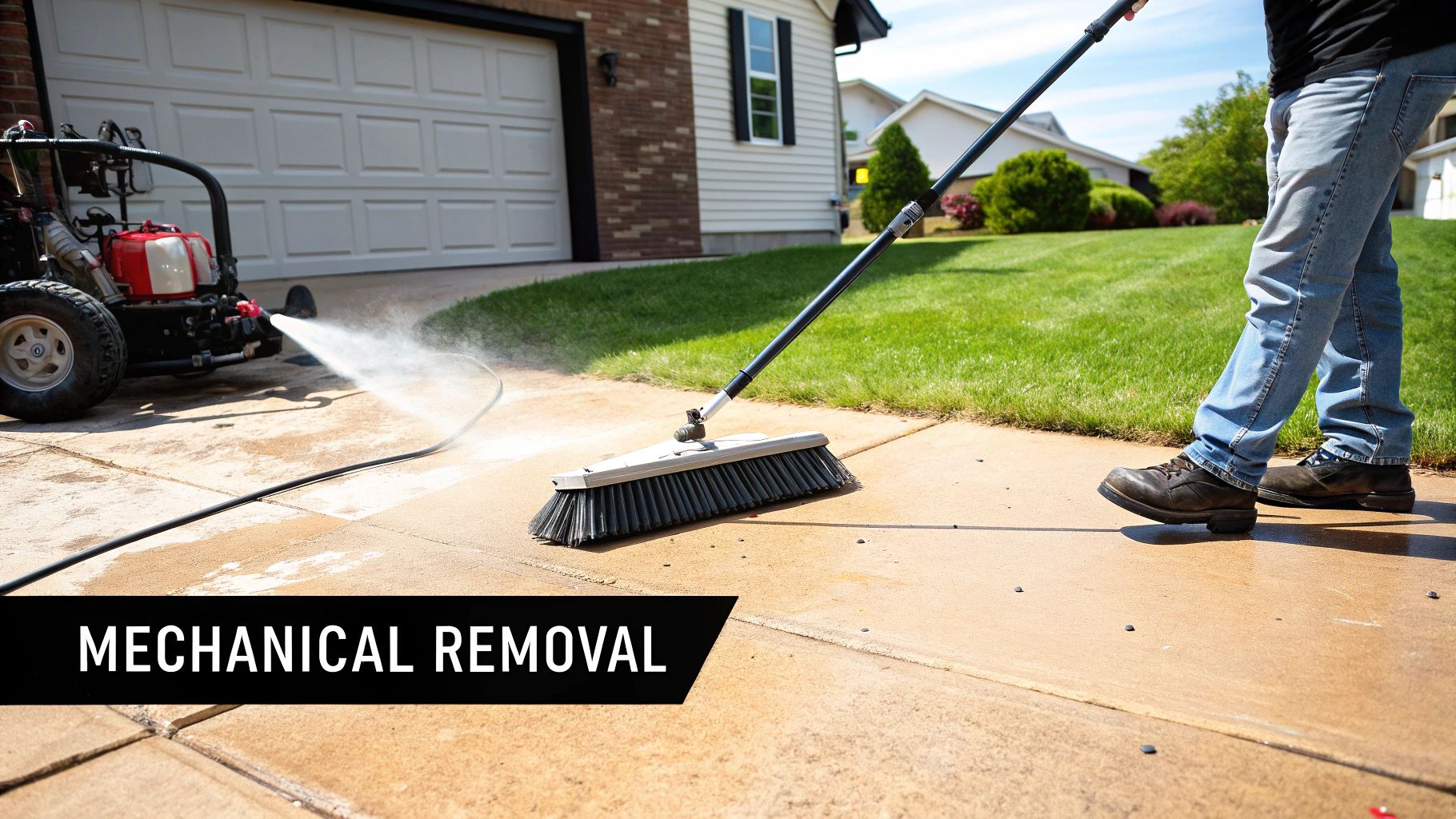
After you’ve let a chemical or natural cleaner do its work, you'll still need some good old-fashioned elbow grease to get the job done. Think of mechanical removal as the essential follow-through; the cleaners dissolve the rust, but you need to physically lift those particles out of the concrete's pores.
This is where you physically agitate and blast away the loosened rust. The trick is to do it without scuffing, etching, or otherwise damaging the concrete itself. It’s the final push that gets your surface back to looking its best.
You Can't Beat a Stiff-Bristled Brush
Never underestimate the power of a simple, vigorous scrub. When you apply a cleaner, it breaks the rust down, but all those tiny particles just sit there in the concrete's nooks and crannies. A stiff, nylon-bristled brush is your go-to tool for getting them out.
Let's say you just let a vinegar-and-salt paste sit for 20 minutes. The real magic happens when you start scrubbing. Using firm, circular motions forces the cleaner deeper into the pores while dislodging the rust. A wire brush might seem like a good idea, but you should avoid it. Its metal bristles can break off, get stuck in the concrete, and create brand-new rust stains. Talk about counterproductive.
Stepping Up Your Game with a Pressure Washer
For a faster, more thorough rinse, a pressure washer is your best friend. It’s far more effective at flushing out loosened rust and leftover chemicals than any garden hose. But be careful—the wrong technique can easily scar your concrete, leaving permanent marks.
Success with a pressure washer really boils down to two things: pressure and the right nozzle.
- Pressure (PSI): For typical residential driveways and patios, a pressure setting between 1,500 and 2,000 PSI is the sweet spot. Anything more powerful, and you risk blasting away the surface layer of the concrete, especially if it's older.
- Nozzle Choice: Stick with a 25-degree (green) or 40-degree (white) nozzle tip. These create a wide fan of water that cleans well without concentrating too much force in one spot. Absolutely never use the 0-degree (red) pinpoint nozzle; it will carve lines into your concrete like a knife.
Keep the wand moving in a consistent, sweeping motion, about 12 inches from the surface. This gives you an even clean and helps you avoid those ugly "zebra stripes."
Light Grinding: The Last Resort for the Toughest Stains
Every once in a while, you'll run into a rust stain that’s so old and deep it has become one with the concrete. When all other methods fail, light grinding is the final, most aggressive option. This means using a concrete grinder with a fine-grit diamond pad to literally remove the very top layer of the concrete.
This is not a decision to be taken lightly, as it permanently changes the texture of the surface. It’s really only for situations where the ugly stain is worse than a slight change in the concrete's finish. For example, it might be a worthwhile trade-off for a deep, decades-old stain in a workshop, but it's probably too much for a decorative stamped patio.
This is a job that's almost always better left to the pros. One wrong move with a grinder can create dips and divots that are impossible to hide.
The Best Strategy of All: Prevention
Honestly, the easiest way to deal with rust on your concrete is to stop it from ever happening. Once you’ve got your surface looking clean, it’s time to switch to a proactive mindset.
- Seal It Up: A high-quality silane or siloxane-based concrete sealer is your best defense. It penetrates the pores and creates a barrier that repels water—the essential ingredient for rust. A freshly sealed driveway will cause water to bead up on the surface instead of soaking in.
- Use Protective Barriers: Simple rubber or plastic mats under metal plant stands, barbecue grills, and patio furniture legs can make a huge difference. For example, small plastic "feet" for your patio chairs cost very little but prevent hundreds of dollars in potential damage.
- Control Water Runoff: Make sure your gutters and downspouts are clear and directing water away from your concrete. If you have a sprinkler system, check that the heads aren't constantly soaking a nearby metal fence or railing.
A little prevention now will save you from a whole lot of scrubbing later. For a truly durable, long-term solution, looking into professional concrete and masonry contractor services for applying commercial-grade sealants is a fantastic investment.
Knowing When to Call in the Pros
I'm a big fan of the DIY spirit, and for a lot of small rust spots, it's absolutely the way to go. But I've also seen well-intentioned efforts to remove rust from concrete turn into costly mistakes. Sometimes, a stubborn stain is more than just a surface issue, and knowing when to hand the job over to an expert is key to protecting your concrete.
The real dividing line between a DIY project and a professional job is often about the scale of the problem and the source of the rust. That little orange ring left by a forgotten metal bucket? You can probably handle that. But a massive, deep-set stain that's been weeping across your driveway for years? That’s a whole different ballgame.
Red Flags That Mean It's Time for an Expert
Certain rust stains are basically shouting for professional help. Trying to tackle them without the right gear and know-how can lead to permanent damage like etching, or worse, you could be ignoring a serious structural problem.
Keep an eye out for these tell-tale signs:
- Huge Stain Coverage: If you're looking at a rust patch that covers an entire parking spot or a big chunk of your warehouse floor, a bottle of cleaner and a scrub brush just aren't going to cut it. Professionals use surface cleaners that attach to pressure washers to treat large areas uniformly.
- Deep, Bleeding Stains: Seeing long, dark rust lines that seem to be coming from inside the concrete? This is a classic symptom of corroding rebar, which is a structural issue, not just a cosmetic one. Merely cleaning the surface won't stop the internal damage.
- Mysterious Origins: If you have no idea where the rust is coming from, you're just guessing at the treatment. A professional can often identify the source—for instance, high iron content in your irrigation water—and recommend a long-term solution.
When rust shows up along cracks in your garage floor or foundation, pay close attention. It’s a strong signal that water is getting deep into the slab and compromising the steel reinforcement. At that point, you’ve moved beyond a simple cleaning job.
The Atlanta Concrete Solutions Advantage
This is exactly where a team like ours at Atlanta Concrete Solutions comes in. While the cleaners you find at the hardware store have their uses, they're no match for the professional-grade equipment and specialized chemical treatments we use. We bring a level of power and know-how that you just can't get off the shelf.
It’s no surprise that commercial and infrastructure maintenance accounts for the largest share of rust remover use globally, at 36.3% of the market. Professionals in that sector need powerful, reliable solutions for public bridges, buildings, and roads. You can explore more details on why professional-grade rust removal is critical in the construction industry.
As an Atlanta homeowner, you have access to that very same professional standard. Maybe you’re a property manager trying to get a commercial space ready for a new tenant, but the floor is a mess from old, rusting machinery. Or perhaps you have a beautiful stamped concrete patio, and you’re worried a generic acid cleaner will destroy the delicate color.
In situations like these, we don’t just clean—we restore. Our team uses carefully chosen, pH-balanced cleaners and industrial pressure washers to lift even the most stubborn stains without harming the concrete itself. This ensures a clean, uniform look that DIY methods rarely achieve, especially on delicate surfaces or large-scale jobs. When you need results you can count on, without the risk, calling a pro is the smartest move.
Got Questions? We've Got Answers
Even the best-laid plans can hit a snag. When you're in the middle of a project, questions always come up. To help you finish strong, we've compiled the most common questions we hear from homeowners trying to get rust off their concrete. Think of this as your go-to cheat sheet for sidestepping common mistakes.
Can I Just Use Bleach to Get Rid of Rust Stains?
This is easily the question we get asked most often, and the answer is a hard no. Please, do not use chlorine bleach on a rust stain. It’s one of the biggest mistakes you can make and will almost certainly make the problem much, much worse.
What happens is a bit of bad chemistry. Bleach reacts with the iron oxide (rust) and chemically sets the stain deeper into the concrete. Instead of lifting that orange eyesore, it often turns it into a permanent, dark brown or black mark that even the pros struggle to remove. It essentially locks it in for good.
Stick with the right tool for the job. For light, fresh stains, something mildly acidic like white vinegar or lemon juice is a great starting point. For anything more serious, you need a dedicated rust remover containing oxalic or phosphoric acid—these are formulated to dissolve rust without that nasty locking-in reaction.
How Long Is This Actually Going to Take?
There's no single answer here, as the time it takes to remove a rust stain depends entirely on how old, deep, and stubborn it is. But we can give you a pretty good idea based on what you’re up against.
- Fresh, Minor Stains: Did a metal watering can leave a ring on the patio last week? You could be done in under an hour. A little lemon juice, a 15-minute soak, and a good scrub with a stiff brush is often all it takes.
- Set-In, Moderate Stains: Those annoying orange speckles from fertilizer that have been on the driveway all season? Plan on spending a couple of hours. This job will likely require a commercial cleaner that needs to sit for 30-60 minutes before you scrub and rinse.
- Old, Deeply Ingrained Stains: That ugly, dark stain that’s been part of the landscape for years might become a weekend project. You’ll need a powerful cleaner, maybe a poultice, and it could require multiple applications over a day or two to finally draw all the discoloration out of the concrete's pores.
The biggest takeaway? Be patient. Rushing the process and not giving the cleaner enough time to work is the number one reason DIY rust removal fails.
Will These Rust Removers Kill My Grass?
Absolutely. Most rust removers, from household vinegar to powerful commercial products, can damage or kill your lawn and nearby plants. Both the acidic formulas and even some pH-neutral ones can easily burn grass blades and throw your soil’s chemistry out of whack. Don't skip the prep work on this.
Protecting your landscaping is simple if you take a few precautions:
- Water Everything Down First: Before you apply any cleaner, give the surrounding grass, garden beds, and plants a thorough soaking with your hose. Wet soil and plants will dilute any runoff, minimizing the damage.
- Cover Up Sensitive Areas: If you're working near delicate flowers or a vegetable garden, cover them with plastic sheeting as an extra layer of defense.
- Rinse, Then Rinse Again: After you've finished scrubbing and rinsing the concrete, give all the surrounding plants and grass one last good dousing with clean water to flush away any lingering chemicals.
A few minutes of prevention can save you the headache and cost of reseeding your lawn.
Is a Pressure Washer Strong Enough to Remove Rust by Itself?
While a pressure washer is a fantastic tool for this job, it's rarely a magic bullet on its own. The problem is that rust isn't just a surface-level issue; it penetrates deep into the concrete's porous structure. High-pressure water just can't get in there to pull out all the embedded iron oxide particles.
For the best results, think of it as a one-two punch.
First, apply a chemical cleaner to do the heavy lifting. The acid or chelating agent gets into the pores and dissolves the rust, breaking its bond with the concrete.
Then, you bring in the pressure washer to powerfully blast away the loosened rust particles and give the surface a deep clean. This combination is dramatically more effective than either method alone. If you just hit it with the pressure washer, you’ll probably lighten the stain but leave the deeper, shadowy discoloration behind.
For those deep-set, widespread, or structurally concerning rust stains that feel like more than a DIY project, don't risk damaging your concrete. The expert team at Atlanta Concrete Solutions has the professional-grade equipment and specialized knowledge to restore your surfaces safely and completely. Reach out to us today for a free, no-obligation quote!