
When you see a cracked or uneven sidewalk, the first thing that probably pops into your head is, "How much is this going to cost me?" It's a fair question, and getting a handle on the potential investment is the first step to making your property safe and boosting its curb appeal again.
In Atlanta, the average sidewalk repair cost generally lands somewhere between $5 and $15 per square foot. For a typical project, homeowners might see a total bill ranging from $726 to $2,485. But the final price really hinges on how bad the damage is and which repair method makes the most sense for your situation. For example, a small 50-square-foot section that has sunk an inch might cost around $500 to lift, while replacing that same section could easily exceed $1,000.
What Is The Real Cost Of Sidewalk Repair In Atlanta?
The truth is, there's no flat fee for fixing a sidewalk. The cost is a spectrum, and where your project falls depends entirely on the severity of the problem.
Think of it like a car repair. A simple tune-up is one thing; a full engine rebuild is something else entirely. In the same way, patching a few small cracks is a minor job, but lifting a whole sunken slab or pouring a brand-new section is a much bigger undertaking with a different price tag. For instance, a homeowner in Decatur might pay $300 to have a few spiderweb cracks sealed, while a homeowner in Sandy Springs could face a $3,000 bill to replace three large, heaved slabs caused by invasive tree roots.
Common Repair Methods And Their Costs
The technique used to fix your sidewalk is the single biggest factor driving the final bill. Each method is designed for a specific type of damage, from cosmetic surface issues to serious structural problems below the surface.
Let's break down the most common approaches and what you can expect them to cost.
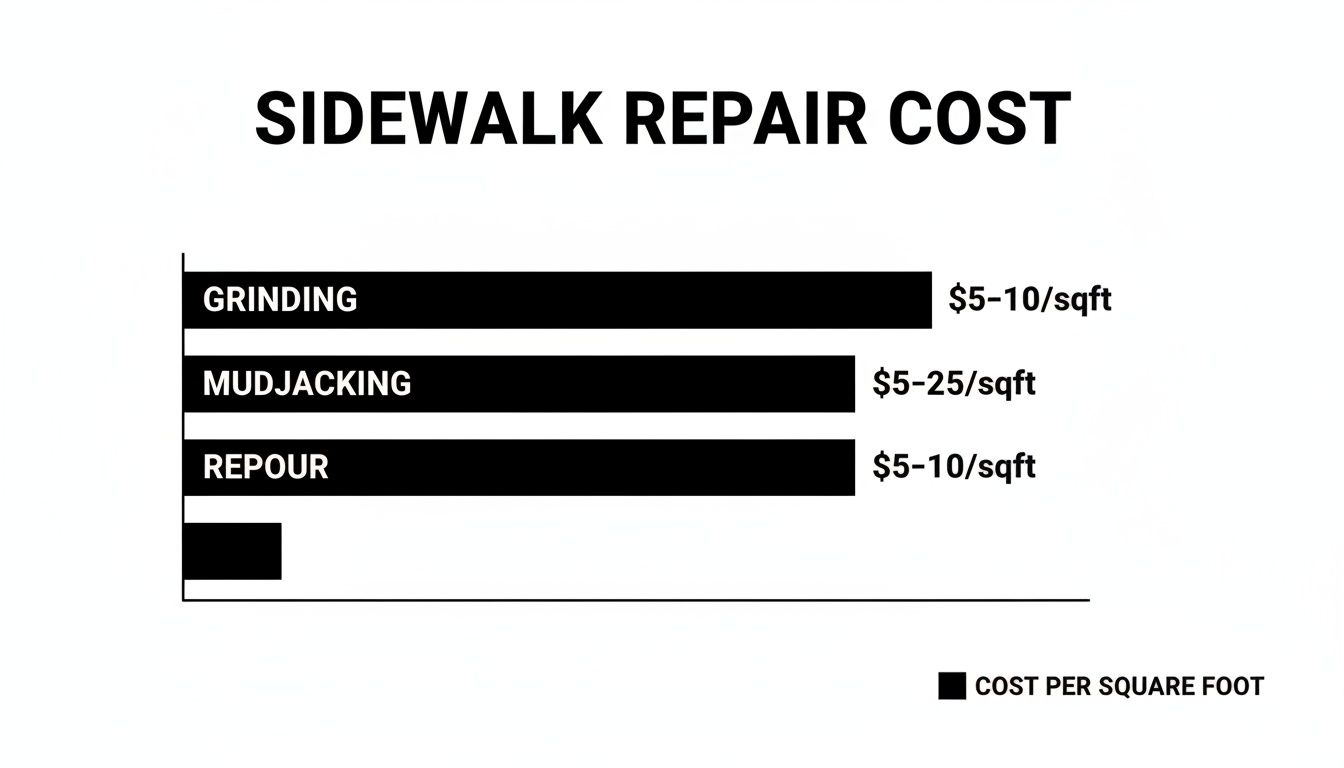
As the chart shows, costs can vary quite a bit. Mudjacking, for instance, has a wider range because the complexity of the job can change from one project to the next. Injecting slurry into a small void is a quick job, but lifting a large, heavy slab that has sunk several inches requires more material, time, and precision.
These numbers line up with what we see nationally.
- Simple repairs like grinding down a raised edge or patching cracks usually run from $5–$10 per square foot. A common example is grinding a 1-inch trip hazard along a single control joint, which might take an hour and cost a few hundred dollars.
- More intensive work, like mudjacking (or slabjacking) to lift and level sunken concrete, can cost anywhere from $5–$25 per square foot. An example would be leveling a 10-foot section of sidewalk that has sunk due to a downspout washing away the soil underneath.
- A full repour often falls in the $5–$10 per square foot range, but it's applied to the entire replacement area. This includes the cost of demolition, debris removal, and site preparation.
To put that into perspective, replacing a standard 200-square-foot sidewalk could cost between $1,600 and $2,400.
To help you see these options side-by-side, here’s a quick summary of what you might expect to pay in the Atlanta area.
Atlanta Sidewalk Repair Costs At A Glance
| Repair Method | Average Cost per Square Foot | Common Use Case |
|---|---|---|
| Concrete Grinding | $5 – $8 | Shaving down small trip hazards (less than 2 inches). Example: A tree root has slightly lifted one edge of a slab. |
| Crack Sealing/Patching | $6 – $10 | Filling in surface cracks to prevent water damage. Example: Sealing hairline cracks that appear after a harsh winter. |
| Mudjacking/Slabjacking | $5 – $25 | Lifting sunken slabs back to their original level. Example: A corner slab has sunk due to poor soil compaction. |
| Full Repour/Replacement | $5 – $10 | Removing and replacing severely damaged or crumbling sections. Example: A slab has crumbled due to "alligator cracking." |
This table gives you a ballpark idea, but remember that every property is unique. The best way to get a firm number is to have a professional take a look.
Key Takeaway: There's no one-size-fits-all price for sidewalk repair. The cost is a direct reflection of the solution needed to fix the problem correctly and permanently. Understanding the different residential sidewalk concrete solutions is the best way to make an informed decision. The only way to get a precise, no-surprise estimate is to have a local expert assess your property's specific needs.
Key Factors That Drive Your Final Repair Bill
Ever wondered why one sidewalk repair quote comes in at a few hundred dollars while another seems to skyrocket into the thousands? It’s a lot like any home project—the final price tag isn't just about the size of the room. It’s about the materials, how complex the job is, and the level of skill needed to get it done right. The same exact logic applies to your sidewalk repair cost.
Several things work together to determine your final estimate. Some are obvious, like the size of the damaged area. Others are less visible, like problems lurking beneath the concrete. Let's pull back the curtain and look at exactly what a professional contractor considers when putting together your quote.
The Severity Of The Damage
The biggest single factor driving the cost is the type and extent of the damage. A simple surface-level problem is a world away from a deep, structural issue. Think of it as the difference between spackling a small nail hole in your drywall versus having to rebuild the entire wall frame.
For instance, a few thin hairline cracks might just need a bit of sealant to keep water out—a fast, inexpensive fix. But a whole slab of concrete that has sunk several inches because the soil underneath washed away? That's a completely different ballgame. That kind of job requires specialized equipment and a lot more labor to lift and stabilize the slab.
Here are a few common scenarios and how their severity plays out in the final cost:
- Minor Trip Hazards: If one slab edge is just slightly higher than the next (less than two inches), we can often just grind it down. This is one of the most affordable repairs you can get. For example, grinding down a 1.5-inch lip across a 4-foot wide sidewalk might only cost a few hundred dollars.
- Widespread Cracking: When you see a web of deep cracks, often called "alligator cracking," it’s a big red flag that the foundation under the concrete has failed. This almost always points toward a full replacement. A single 5×5 foot slab with this issue would need to be completely torn out and repoured.
- Sunken Slabs: This tells us the real problem is with the soil underneath. We can often lift the slab using a technique called mudjacking, which is more involved than a surface patch but still cheaper than tearing everything out. A common example is a slab near a downspout that has sunk 3 inches due to water erosion.
The Chosen Repair Method
The repair method flows directly from the type of damage, and it has a huge impact on the price. Each technique uses different tools, materials, and levels of expertise, which all get factored into the cost. As we mentioned, concrete grinding is a great budget-friendly fix for small trip hazards, but it's completely useless for a sunken slab.
Slabjacking (or mudjacking) is a solid mid-range solution. It saves a perfectly good slab of concrete by injecting a special slurry underneath to lift it back into place, avoiding the cost and mess of demolition. The most expensive route, naturally, is a complete tear-out and replacement. That involves demolition, hauling away old concrete, preparing the ground, and pouring brand-new concrete. For instance, replacing a single 4×4 slab might cost $400, while mudjacking it could be closer to $250.
Key Insight: The cheapest fix isn't always the best long-term solution. A true professional will recommend the method that addresses the root cause of the problem, not just the symptom. This saves you from having to call us again for the same issue a year later.
Labor Rates And Accessibility
Good concrete work is a craft, plain and simple. It takes experience to do it well, and labor costs in the Atlanta area reflect that expertise. It's a major part of any repair bill.
A straightforward job on a flat, open sidewalk will always have lower labor costs than a tricky repair on a steep slope or in a tight backyard. If we can't get our equipment—like concrete saws or mini-excavators—to the worksite easily, the job becomes more manual and time-consuming, which bumps up the cost. For example, repairing a front sidewalk with easy street access is cheaper than repairing a path in a fenced-in backyard that requires manually wheelbarrowing all materials and debris.
Permits And Compliance Requirements
Finally, we have to talk about local rules and regulations, which can add to the project total. In many parts of the Atlanta metro area, you need a permit for sidewalk repairs to make sure the work is up to code and safe for public use. A good contractor handles all the permitting for you, but the city's fees will be part of the final cost. For example, a permit in the City of Atlanta for right-of-way work can add over $100 to the project total before work even begins.
On top of that, any public-facing sidewalk must comply with the Americans with Disabilities Act (ADA). These federal guidelines are very specific about slope, width, and surface evenness to ensure everyone can use the sidewalk safely. A repair that doesn't meet these standards can lead to fines or liability issues down the road, making it critical to hire a contractor who knows these rules inside and out.
Should You Repair Or Replace Your Sidewalk?
It's the classic homeowner crossroads: do you go for a quick fix or a complete do-over? The lower upfront sidewalk repair cost is always tempting, but it's a mistake to just look at the initial bill. The real answer lies in what’s causing the damage in the first place, not just what you see on the surface.
I always tell my clients to think of it like a car tire. Got a small nail in the tread? A simple, cheap patch will get you back on the road. But if the sidewall is cracked and the tread is bald, that patch is just a temporary fix that's ignoring a major safety hazard.
It’s the same with your sidewalk. A tiny crack or one slightly lifted edge can often be handled with a straightforward repair. But if you’re dealing with major issues caused by tree roots or the ground shifting underneath, a patch is just a band-aid on a bigger problem.
Analyzing The Damage To Make A Smart Choice
The first thing you need to do is put on your detective hat and really look at the concrete. The type and severity of the damage will tell you everything you need to know about whether a repair will last or if replacement is the only smart move.
Here are a couple of clear-cut scenarios to help you decide:
- Repair Is a Great Option When: You're looking at minor, surface-level stuff. Think small hairline cracks, a bit of discoloration, or a single slab edge that’s lifted less than an inch. These are usually cosmetic issues or small trip hazards that don't require tearing everything out. A good example is using a flexible sealant on cracks that are less than a quarter-inch wide to prevent water intrusion.
- Replacement Is Often Necessary When: The damage is structural and all over the place. We're talking deep, interconnected "alligator" cracks, slabs that have crumbled into pieces, or significant sinking and heaving. Those are tell-tale signs that the foundation underneath has failed. For example, if a large oak tree has pushed up and shattered multiple sidewalk panels, replacement is the only viable path forward.
Modern tools and innovative infrastructure inspection methods can also give us a much clearer picture of what's going on, which helps pin down the scope of work and, ultimately, the final cost.
Considering The Long-Term Lifecycle Cost
While a simple repair costs less today, you have to think about the "lifecycle cost"—what it will cost you over the entire life of the sidewalk. Paying for small repairs every few years can easily end up costing you more than doing one proper replacement from the start.
For instance, if you're constantly patching cracks caused by aggressive tree roots, you're fighting a losing battle. The roots will just keep pushing, the patches will fail, and you'll be calling a contractor again. In that situation, replacing the section and dealing with the root problem is by far the more financially sound decision. An example would be spending $400 every three years to patch a heaving section versus a one-time cost of $1,500 to replace it and install a root barrier.
A life-cycle cost analysis reveals that traditional concrete sidewalks can demand significantly higher maintenance over time compared to alternatives. Over a 50-year span, a standard concrete sidewalk could accumulate $23,500 in maintenance costs, including slab replacements, slab jacking, and edge grinding, making its long-term cost 14% higher than some other materials despite a lower initial price.
This data really drives the point home: a one-time investment in a durable, well-installed replacement can save you from a never-ending cycle of repairs. When you’re weighing your options, don't just look at the immediate quote—think about the potential costs down the road.
At the end of the day, choosing between repair and replacement is about balancing short-term savings with long-term value and safety. By taking a hard look at the damage and considering the lifecycle cost, you can make a choice that protects your budget and your property for years to come. For a closer look at specific solutions, check out our guide on residential concrete and masonry repair.
Navigating Atlanta's Sidewalk Rules and Permit Requirements
Let's be honest, dealing with local regulations can feel like the most complicated part of any home project. When it comes to your sidewalk, though, understanding the rules isn't just a good idea—it’s crucial for avoiding fines and keeping your property safe. The good news? You don’t have to untangle this red tape alone.
Across the greater Atlanta area, from Marietta to Johns Creek, the responsibility for sidewalk maintenance almost always falls on the homeowner whose property it runs alongside. That means it's on you to keep it in safe shape, free of dangerous cracks, trip hazards, and other issues. For example, if a city inspector identifies a trip hazard over 1/2 inch on the sidewalk in front of your house, you could receive a formal notice requiring you to fix it within a specific timeframe, such as 30 days.
Understanding Permit Requirements
One of the first questions we always get is, "Do I really need a permit for a simple sidewalk repair?" The answer really depends on how big the job is.
If you're just sealing a few hairline cracks, you're likely in the clear. However, for anything more significant, a permit is almost certainly required.
You'll probably need to pull a permit if your project involves:
- Replacing entire concrete slabs or large sections of the walkway. For instance, removing and repouring three 5×5 foot panels.
- Changing the grade or slope of the sidewalk. An example would be re-sloping a walkway to direct water away from a foundation.
- Any work that requires digging or impacts the public right-of-way. This includes virtually any work on a sidewalk that runs parallel to the street.
Every city, whether it's Alpharetta or Duluth, has its own specific rules, but the goal is the same: a permit ensures the work gets inspected and meets local building codes. It’s a process designed to protect you and the public by making sure the job is done right.
A professional contractor does more than just pour concrete. A huge part of our job is handling the entire permitting process for you, making sure every detail is fully compliant with local rules from start to finish.
The Importance of ADA Compliance
On top of local permits, all public sidewalks have to follow the Americans with Disabilities Act (ADA). These aren't just suggestions; they are strict federal requirements that ensure sidewalks are safe and accessible for everyone, especially those with mobility challenges.
Getting this wrong can have serious consequences. A repair that isn't compliant could force you to tear out the new concrete, face hefty fines, or even be held liable if someone gets hurt. This is where leaning on an experienced contractor really pays off.
An ADA-compliant sidewalk has very specific requirements for things like:
- Slope: The cross slope can't be more than 2%, which prevents wheelchairs from tipping. For a standard 4-foot wide sidewalk, this means the height difference from one side to the other can be no more than about one inch.
- Width: The sidewalk needs a minimum clear width of 36 inches. This ensures a wheelchair can pass through without obstruction.
- Surface: The finish must be firm, stable, and slip-resistant. For example, a "broom finish" is a common technique used to create a safe, non-slip texture.
The focus on safe, accessible infrastructure is only growing. The global market for concrete restoration, which includes sidewalk repair, was valued at $15.0 billion in 2021 and is expected to reach $20.4 billion by 2026. This trend shows just how important it is to maintain public spaces correctly. You can read more about this growth in the concrete restoration market analysis on MarketsandMarkets.com.
Navigating these rules is a necessary part of the sidewalk repair cost, but it's what guarantees your project is safe, legal, and built to last.
The Risks Of DIY Vs The Value Of A Professional
It’s tempting to look at a cracked sidewalk and think, "I can fix that myself." On the surface, it seems like a great way to cut down on the overall sidewalk repair cost. But concrete work is a bit of a deceptive art—what looks like a simple mix-and-pour job is actually a science. One wrong move, and you could end up with a patch that fails in a few months, forcing you to spend even more money to fix the fix.
Before you start pricing out bags of concrete at the local hardware store, let’s talk honestly about the risks of a DIY approach versus the real value of bringing in a pro. This isn't just about saving a little time; it's about getting a safe, durable repair that gives you lasting peace of mind.
Common DIY Sidewalk Repair Pitfalls
The DIY path is often paved with hidden costs and unexpected headaches. A simple weekend project can quickly morph into a frustrating ordeal if you aren't ready for what's involved.
For starters, many people are shocked by the sheer physical effort. Breaking up and hauling away old, heavy chunks of concrete is back-breaking work without professional-grade equipment. But the physical strain is nothing compared to the technical mistakes that can ruin a repair from day one.
Some of the most common DIY blunders include:
- Bad Concrete Mix: This is a classic. Too much or too little water in the concrete mix is a recipe for disaster. It creates a weak, brittle slab that's destined to crumble and crack under the slightest pressure. An example is adding extra water to make the mix easier to spread, which drastically lowers its final strength.
- Poor Ground Prep: The number one killer of sidewalks is a bad foundation. If you don't properly compact the soil and lay down a solid gravel base, your new slab is almost guaranteed to sink, shift, or crack within a year or two.
- Skipping Reinforcement: Forgetting to lay down rebar or wire mesh is a fatal flaw. This steel skeleton is what gives concrete its strength to fight back against ground shifting and Atlanta’s freeze-thaw cycles.
Key Insight: A botched DIY repair is more than just a waste of a weekend and some cash. A bad fix can create brand new trip hazards. If someone gets hurt on your property because of it, you could be on the hook legally. Those initial savings disappear fast when you’re facing a complete do-over or a lawsuit.
The Clear Value Of A Professional Contractor
When you hire a professional, you're not just paying for a pair of hands—you're investing in years of experience, specialized tools, and a quality guarantee. An experienced concrete crew brings a level of know-how and equipment that the average homeowner simply doesn't have. This is how you get the job done right the first time.
The advantages of going with a pro are crystal clear:
- Guaranteed Workmanship: A reputable contractor stands behind their work. If something goes wrong with the materials or installation, they’ll come back and make it right. For example, many pros offer a one-year warranty against cracking or settling.
- Specialized Equipment: Professionals roll up with commercial-grade tools for everything—from demolition and compaction to getting that perfect, smooth finish. The result is a far stronger and better-looking sidewalk.
- Code Compliance: A pro knows the local rulebook. They'll make sure your repair meets all of Atlanta's city codes and ADA requirements for things like slope and width, protecting you from potential fines and liability.
To help you weigh your options, here’s a straightforward comparison:
DIY Vs Professional Sidewalk Repair: A Head-To-Head Comparison
Deciding whether to tackle a repair yourself or call in the experts can be tough. This table breaks down the key differences to help you make an informed choice based on what matters most to you.
| Factor | DIY Repair | Professional Service |
|---|---|---|
| Upfront Cost | Lower initial material cost. | Higher upfront cost covering labor, materials, and overhead. |
| Quality & Durability | Variable. Highly dependent on your skill and knowledge. | High. Guaranteed workmanship and use of commercial-grade materials. |
| Time & Effort | High. Requires significant personal time, research, and hard labor. | Minimal. The contractor handles everything from start to finish. |
| Tools & Equipment | Requires buying or renting specialized tools you may not own. | All necessary professional-grade equipment is included. |
| Code & Permit Compliance | Your responsibility. High risk of overlooking local requirements. | Guaranteed. The contractor ensures all work meets local and ADA codes. |
| Safety & Liability | You assume all risks for personal injury and future liability. | The contractor is insured, protecting you from liability during the job. |
While a DIY approach might seem cheaper at first glance, the long-term value and security of a professional job often outweigh the initial savings, especially for anything beyond a tiny crack.
Thinking about those risks, homeowners should also understand the potential legal consequences of slip and fall injuries on your property that can arise from poorly maintained walkways. A professionally repaired sidewalk isn't just an aesthetic upgrade; it's your best defense against liability. At the end of the day, while the professional invoice is higher, the lasting value, safety, and durability it buys make it the smartest choice for most sidewalk problems.
How To Get A Reliable Quote For Your Sidewalk Repair
You’ve done the hard part—you've sized up the damage, decided between repairing and replacing, and you know you want a pro to handle it. Now comes the moment of truth: getting a solid quote you can actually trust. This shouldn't be a complicated or mysterious process. A good contractor will give you a clear, straightforward breakdown of the work and the total sidewalk repair cost, with no nasty surprises down the road.
The key to a smooth and accurate quote is being prepared. When you know what information to have ready, you help the contractor understand the problem from the get-go. Your goal is to find a team that really listens, takes the time to inspect the issue properly, and lays out a detailed plan to fix it for good.
Preparing For Your Consultation
Before you even make the call, a few minutes of prep work can make a huge difference. Getting your details in order helps a contractor provide a much more accurate initial estimate and makes the on-site visit incredibly efficient.
Here’s a quick checklist of what to gather:
- Photos of the Damage: Snap a few pictures from different angles. Get close-ups of the cracks or uneven slabs, but also take wider shots to show the whole area and what's around it (like trees or downspouts).
- Rough Measurements: Grab a tape measure and get the approximate length and width of the sidewalk section that needs attention. This gives us an immediate sense of the project's scale. For example, knowing it's a 20-foot long by 4-foot wide section is extremely helpful.
- A Brief Description: Think about how you’d explain the problem. Something like, "There's a 5×5 foot slab by the big oak tree that's been pushed up about two inches on one side, creating a pretty bad trip hazard."
This simple homework transforms a vague phone call into a truly productive conversation. It’s the first step toward getting a quote you can count on.
Getting an accurate quote is more than just a price—it's about finding a partner who understands your needs and can provide a lasting solution. The initial consultation is your best opportunity to gauge a contractor's expertise and professionalism.
What To Expect During An On-Site Evaluation
Let's be clear: a legitimate quote is never given sight unseen. Any experienced concrete professional will insist on coming to your property for a thorough inspection. It's the only real way to figure out what’s causing the problem and what the right fix is.
Here’s what our expert will do during the visit:
- Assess the Damage: We'll get hands-on, examining the cracks, measuring how much slabs have sunk or lifted, and hunting for the root cause—whether it’s soil erosion, water issues, or pesky tree roots. For example, we might use a level to determine the exact slope and identify drainage problems from a nearby yard.
- Discuss Solutions: Based on what we find, we’ll walk you through the options. We'll explain if grinding, mudjacking, or a full replacement makes the most sense and why we're recommending a particular long-term solution.
- Take Precise Measurements: We'll get the exact dimensions needed to calculate materials and labor down to the dollar. No guesswork.
- Answer Your Questions: Now's your time. Ask us about the project timeline, the specific materials we use, and the warranty we offer on our work.
After the visit, you’ll receive a detailed, written quote. It will clearly outline the entire scope of work, a full breakdown of material and labor costs, and a clear project schedule.
Ready to move forward with a safe, beautiful sidewalk? You can easily schedule a free, no-obligation estimate with Atlanta Concrete Solutions by visiting our contact page. Our team is here to give you a clear, comprehensive quote designed specifically for your property.
Frequently Asked Questions About Sidewalk Repair
Even with all the details on costs and methods, you've probably still got a few questions buzzing around. That's perfectly normal. To help you feel completely confident, we've put together some straight-to-the-point answers for the questions we hear most often from Atlanta homeowners.
How Long Does A Typical Sidewalk Repair Take?
The real answer depends entirely on the size of the problem. A simple fix, like sealing a few hairline cracks or grinding down a slightly raised edge, is often an in-and-out job we can knock out in just a few hours.
For bigger issues, you'll need to plan for a bit more time. A project like mudjacking to lift a sunken slab could take up a good half or even a full day. If you're looking at a complete replacement of a sidewalk section, it's best to set aside 1-2 days. That timeline gives us enough room to break out the old concrete, prep the ground correctly, pour the new slab, and give it the right finish. For instance, Day 1 might be for demolition and site prep, and Day 2 for pouring and finishing the concrete.
Will My Homeowners Insurance Cover The Sidewalk Repair Cost?
This is a big one, and the answer almost always comes down to why the sidewalk is damaged. Homeowners insurance is really there for sudden, unexpected events. For instance, if a surprise storm topples a healthy tree and it crushes a section of your walkway, your policy will likely step in to help with the cost.
However, insurance policies almost universally do not cover damage that happens slowly over time. That includes the most common sidewalk culprits:
- Cracks that appear from years of use and exposure.
- Slabs sinking because the soil underneath has gradually settled.
- Heaving and cracking caused by tree roots slowly pushing their way up from below.
Since most sidewalk issues fall into that "gradual damage" bucket, they're typically seen as part of regular home maintenance. Your best bet is always to pull out your policy or give your agent a quick call to be certain before you line up any work.
Important Note: An uneven sidewalk isn't just an eyesore; it's a major liability. While your insurance might not pay for the repair itself, fixing that trip hazard is the smartest thing you can do to avoid a costly slip-and-fall claim down the road.
Can You Match The Color Of My Existing Concrete?
We hear this one all the time, and we believe in being upfront: we can get it very, very close, but a 100% invisible match is nearly impossible. It’s a lot like trying to match a single new tile in a 15-year-old floor—the new piece just hasn't lived the same life.
Freshly poured concrete has a different, often lighter, tone than concrete that's been curing and weathering in the Atlanta sun and rain for years. For example, a new pour might appear bright white or light gray, while your existing 10-year-old sidewalk has a darker, earthier tone from years of exposure to dirt and moisture.
That said, a skilled crew knows the tricks of the trade to make the new section blend in. We carefully choose sand and gravel that look similar to what’s already there and can even introduce colorants to the mix. Our goal is always to make the repair look clean and intentional, not like a jarring, obvious patch.
Ready to get a clear and reliable quote for your sidewalk repair? The team at Atlanta Concrete Solutions has the expertise to diagnose the problem, recommend the right solution, and deliver a safe, durable, and attractive result. Contact us today for your free, no-obligation estimate.