
When it comes to the numbers, stamped concrete almost always wins the upfront cost battle against pavers. It's generally the more budget-friendly option to get the project done. But that's just the beginning of the story. The real cost shows up over time when you start factoring in maintenance, the potential for repairs, and how long each surface will truly last.
Answering The Core Cost Question: Stamped Concrete vs Pavers
For any Atlanta homeowner or property manager, picking the right hardscape material is a classic balancing act between your immediate budget and long-term value. While the initial price is a huge driver, you have to look at what's behind those numbers—and what you'll be paying for down the road—to make a smart investment. Both stamped concrete and pavers can give you a beautiful, long-lasting surface, but they take very different financial routes to get there.
To get a good baseline, it helps to understand the general pros and cons of concrete for various outdoor applications. This context really highlights where stamped concrete shines. Year after year, the cost difference between these two materials stays pretty consistent, with stamped concrete holding a 30-50% advantage on the initial installation.
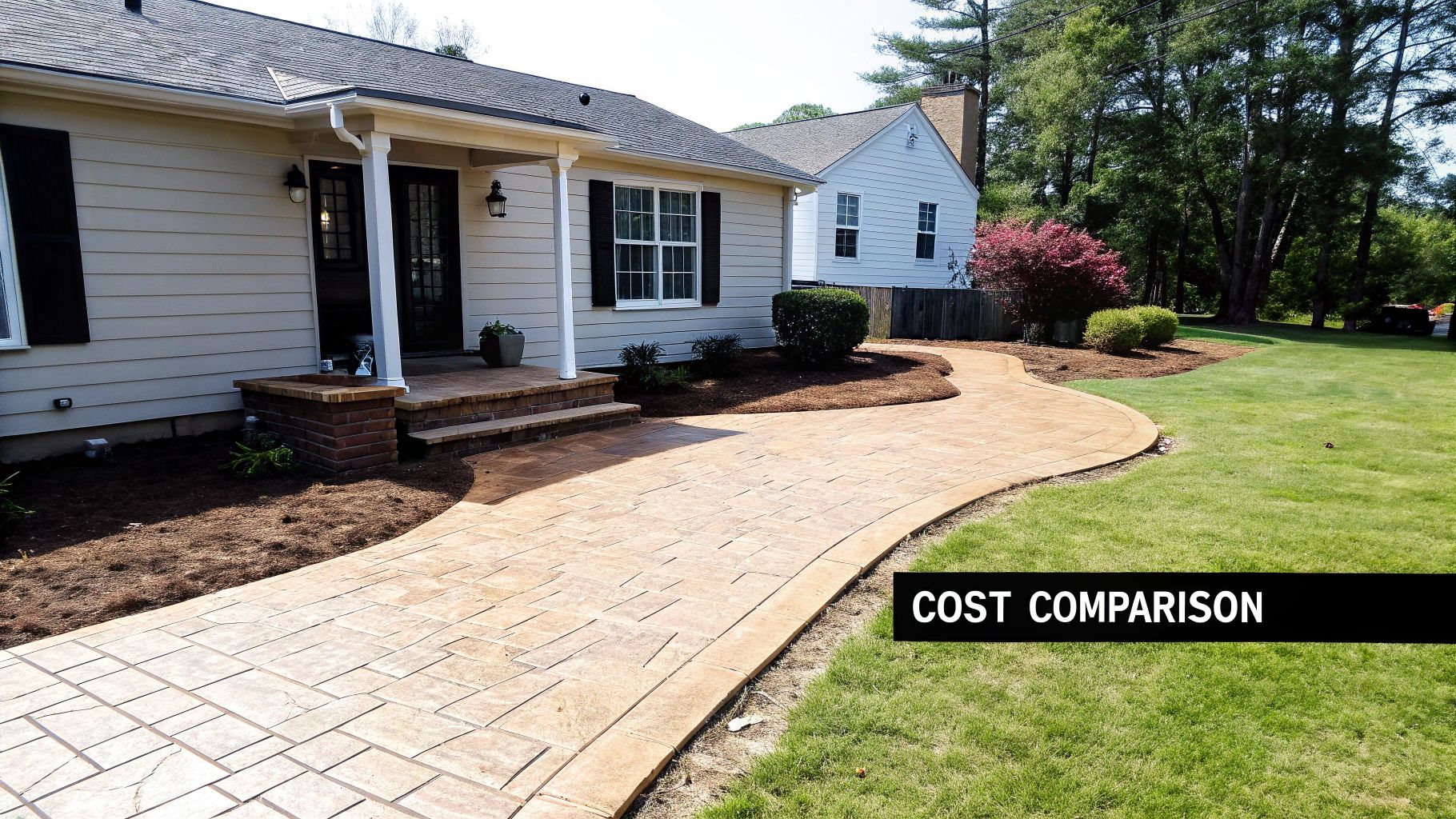
Right now in the Atlanta market, a typical stamped concrete installation will run you somewhere between $12 and $22 per square foot. Pavers, on the other hand, start around $15 per square foot for a basic concrete paver and can climb all the way to $50 or more for premium materials like natural bluestone or travertine. This isn't just a guess; it's a trend we see consistently across projects. For example, a standard 400-square-foot stamped concrete patio might be quoted at $6,400 (at $16/sq ft), while the same patio using mid-range pavers could easily be $9,600 (at $24/sq ft).
Quick Cost Snapshot: Stamped Concrete vs Pavers in Atlanta
Before we get into the nitty-gritty, this quick table gives you an at-a-glance look at the main financial differences. Think of it as the high-level summary of where your money goes, both now and later.
| Key Cost Factor | Stamped Concrete | Interlocking Pavers |
|---|---|---|
| Initial Installation | Generally lower upfront cost, e.g., $12-$22/sq ft | Higher initial investment, e.g., $15-$50+/sq ft |
| Labor Intensity | Less labor-intensive install (pour and stamp) | More labor-intensive process (individual placement) |
| Long-Term Upkeep | Requires resealing every 2-3 years at ~$1.50/sq ft | Needs joint sand refills and weed control |
| Repair Costs | High cost; difficult to color-match large cracks | Low cost; easy to replace single units for ~$5-$10 each |
This initial comparison really sets the stage for a deeper dive into what influences the final price tag for your specific project right here in Atlanta. Now, let's break down what truly drives these costs.
Deconstructing The Upfront Installation Quote
When you get a quote for a new patio or driveway, that price per square foot is just the starting point. The real story is always in the details—the specific choices that nudge your initial investment up or down. Getting a handle on these variables is the key to managing your budget and making sure you get exactly what you're paying for.
For a stamped concrete project, the biggest single factor driving the price is the complexity of the design you choose. A simple, single-color broom finish is budget-friendly, but the cost naturally climbs with every layer of detail you add.
- Pattern Intricacy: A basic pattern like Ashlar Slate is far less labor-intensive than a complex, multi-stamp design like a Random Stone or a detailed Cobblestone look. For instance, a simple slate texture might be at the lower end of the cost spectrum, while an intricate wood plank stamp that requires precise alignment could add $2-$4 per square foot to the labor cost.
- Color Layers: A single integral color mixed into the concrete is standard. But if you want a more natural, multi-toned look, we add secondary colors (called release agents or color hardeners). This creates incredible depth but requires more time and artistry from the crew, which is reflected in the labor cost. Adding a second or third color can increase the price by 10-15%.
- Surface Preparation: Here in Atlanta, we often deal with clay soil. That means we frequently need to build a more robust sub-base with 4-6 inches of compacted gravel to prevent cracking down the road, which can add $1-$2 per square foot to the initial quote compared to a project on more stable soil.
The Paver Price Puzzle
Switching gears to pavers, the material itself becomes the biggest piece of the cost puzzle. There's a huge price gap between a standard concrete paver and a premium natural stone, and that choice alone will have a massive impact on your budget.
For example, a 500-square-foot patio in Marietta might cost $8,500 using high-quality concrete pavers from a brand like Belgard. The exact same project using premium travertine or flagstone pavers could easily exceed $17,000, and that difference is almost entirely due to the cost of the materials, which can jump from $4 per square foot to over $15 per square foot.
Beyond the type of paver, the installation pattern heavily influences your labor costs. A simple running bond pattern is straightforward and quick for a skilled crew to lay. However, if you opt for a more intricate pattern like herringbone or a circular design kit, it demands significantly more cuts and precision, which can add 20-30% to the installation time and the final bill.
This is precisely why a custom quote for our concrete and masonry services is so crucial. A winding driveway in Alpharetta with a custom paver border has a completely different cost structure than a rectangular stamped concrete pool deck. For a helpful comparison of how different project elements affect a final price, this detailed bathroom renovation cost breakdown guide shows a similar dynamic between labor, materials, and design choices.
Ultimately, that upfront quote is a direct reflection of your design dreams and the specific needs of your Atlanta property.
What's The Real Cost of Ownership Over a Lifetime?
That initial installation quote is a big number, but it's just the down payment on the total financial story of your new hardscape. To really understand the stamped concrete vs. pavers cost, you have to look past that first bill. Think about the expenses that will pop up over the next decade or two. A lower price today can easily be wiped out by higher maintenance and repair bills down the road.
This is a good time to remember that certain foundational costs, like site prep and solid design work, are non-negotiable for a successful, long-lasting project, no matter which material you choose.
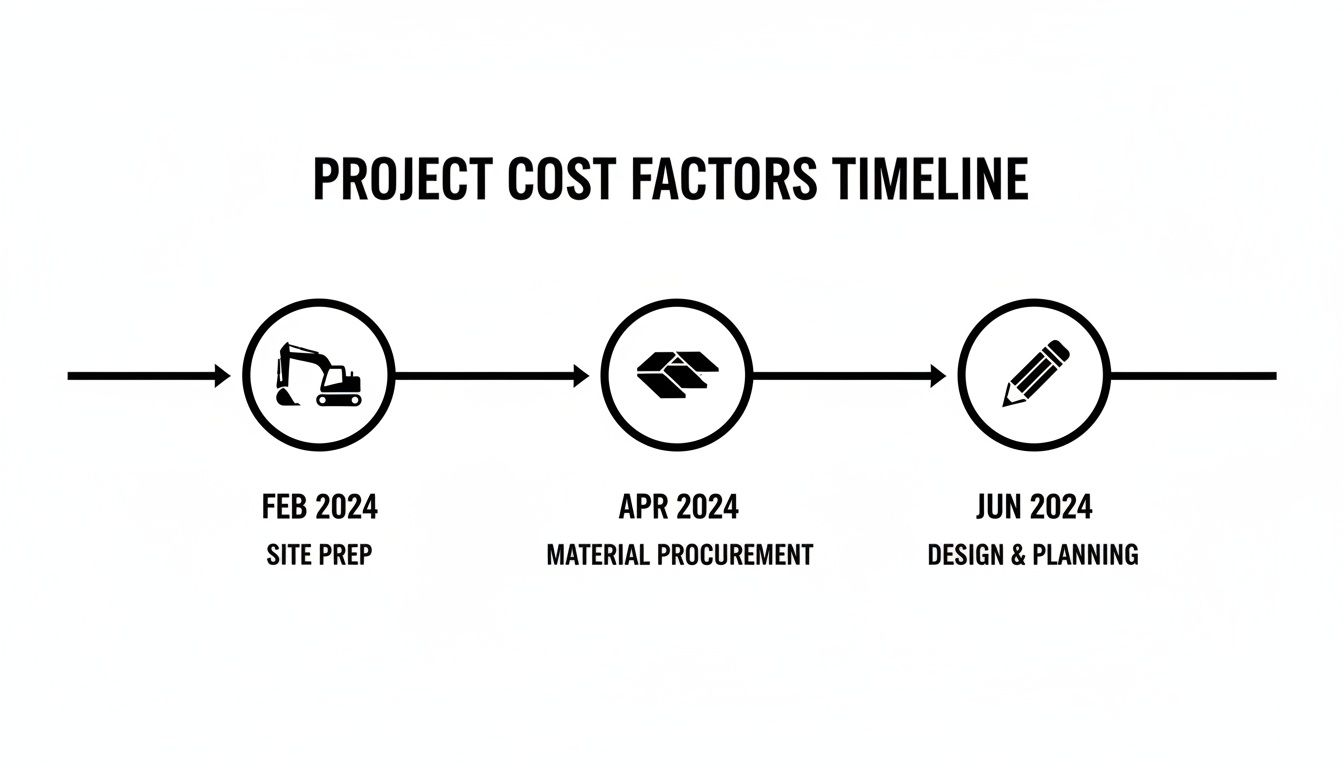
With that foundation in mind, let's break down what to expect from each material after the installation crew leaves.
The Long-Term Costs of Stamped Concrete
The main financial commitment with stamped concrete is resealing, and it's not optional. To protect the surface from Atlanta's brutal humidity, hot sun, and the occasional freeze-thaw cycle, you need to reapply a quality sealant every 2-3 years. If you skip it, you're asking for faded color, a chalky surface, and a much higher chance of cracks.
Professionally resealing your stamped concrete will typically run you between $1.00 and $2.00 per square foot. For an average 500-square-foot patio, that’s a recurring expense of $500 to $1,000 every few years. Tally that up over 15 years, and you've added $2,500 to $6,000 to your total investment.
The biggest financial risk with stamped concrete is a major crack. You can't just pop one out and replace it like a paver. Repairing a large crack in a concrete slab is a complex, expensive job, and it's almost impossible to get a perfect color match. A professional repair for a significant structural crack can cost $800 to $1,500 or more, and you're often left with a permanent, visible scar.
This potential for a high-cost, low-satisfaction repair is a critical point to consider when you're tempted by that lower initial price tag.
The Lifetime Expenses of Pavers
Pavers play a different long-term game. The upkeep is mostly about managing the joints between the stones. Over the years, the sand in those joints can wash out, which can invite weeds or allow the pavers to shift slightly.
Here’s a look at what paver maintenance actually involves:
- Weed and Moss Control: A good sweeping and maybe a sprinkle of weed inhibitor now and then is usually all it takes. This is especially true for those shady, damp spots common in Atlanta yards. A bag of weed inhibitor might cost $20 per year.
- Topping Off Joint Sand: Every 5-10 years or so, you might need to sweep some new sand into the joints, particularly if the original installer didn't use polymeric sand. A 50lb bag of polymeric sand costs around $30-$40 and covers a large area, making this a very low-cost DIY job.
- Simple Spot Repairs: If a single paver cracks, gets a nasty oil stain, or sinks a bit, you just lift it out and replace it. The cost is minimal—literally just a few new pavers and a bit of labor. A professional might charge $100-$300 to fix a small sunken area, which is a fraction of a concrete repair bill.
Because pavers create a flexible, interlocking system, they handle the shifting of Atlanta's clay soil far better than a rigid slab of concrete. This flexibility drastically cuts down the risk of widespread cracking, making long-term repair costs both minimal and predictable.
So, while pavers ask for a bigger investment upfront, their low-maintenance nature and simple repair process often make them the more economical and stress-free choice over the long haul.
Design and Aesthetics: The Look and Feel of Your Space
When you're looking past the initial "stamped concrete vs pavers cost" question, the visual impact becomes the next major decision point. How do you want your driveway, patio, or pool deck to look and feel? This choice will shape your home's character for years to come, and each material brings a completely different personality to the table. It's really a choice between a unified, seamless surface and a classic, textured mosaic.
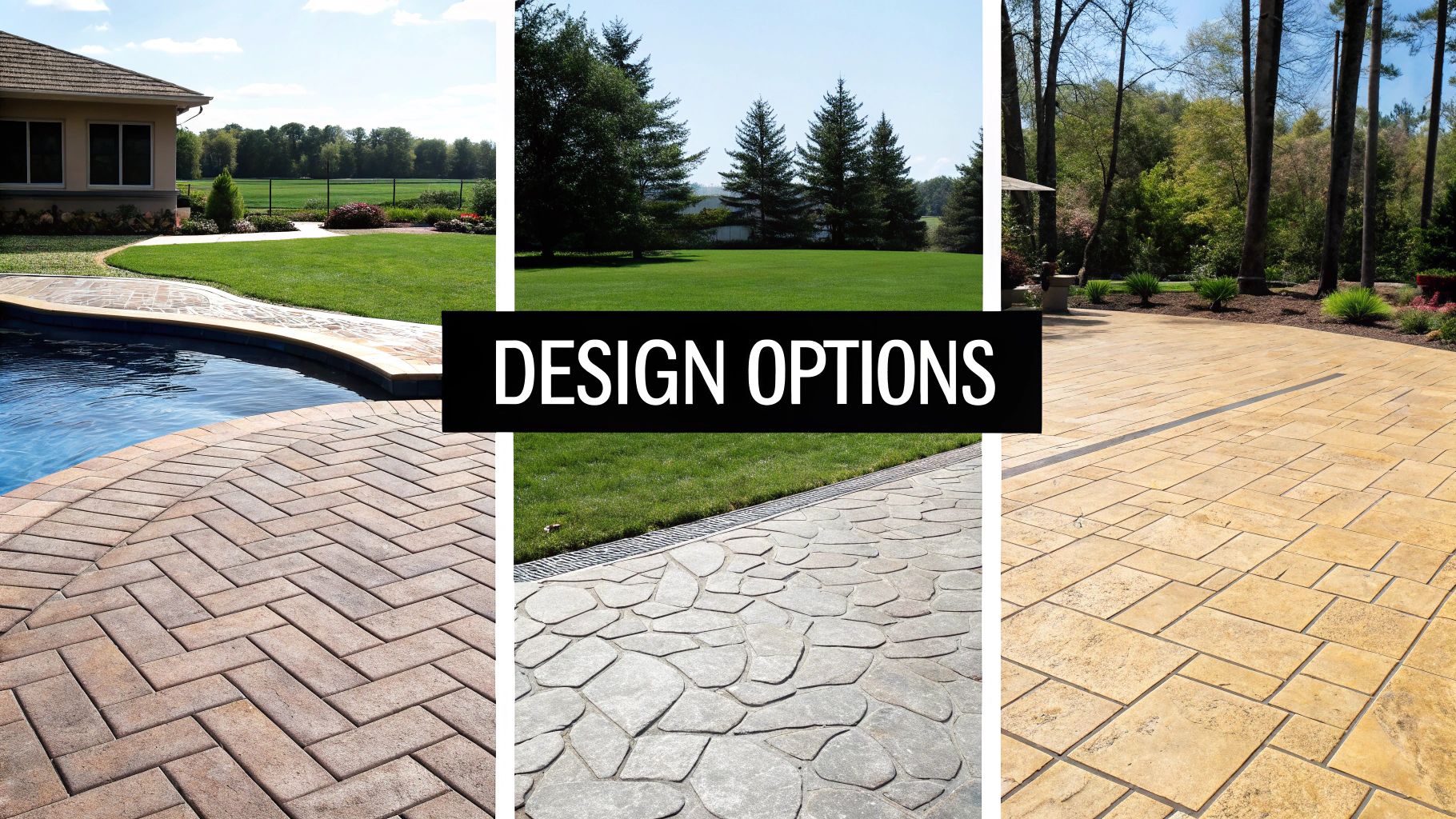
If you're after a cohesive, monolithic look, stamped concrete is hard to beat. Think of it as a master of disguise—it can convincingly replicate the appearance of pricier materials like natural slate, flagstone, or even weathered wood planks, but spread across a large, unbroken canvas. This makes it an incredible option for modern home designs or for achieving that grand, resort-like feel for an expansive patio or pool surround.
The Custom Canvas of Stamped Concrete
The real magic of stamped concrete is just how much you can customize it. The process itself invites unique combinations of patterns and colors, allowing us to perfectly match the design to your home's architecture and your personal taste.
- Pattern Possibilities: We can impress an Ashlar slate pattern for a sleek, contemporary pool deck in Buckhead or a classic cobblestone look for a driveway that feels more traditional. Popular patterns include London Cobble, Random Stone, and Seamless Slate textures.
- Deep, Realistic Color: We achieve incredible depth by mixing color directly into the concrete (integral color) and then adding secondary color hardeners on the surface (release agents). This technique mimics the natural, subtle color variations you'd find in real stone, such as the reddish-brown hues of terra cotta or the cool grays of slate.
- Flowing, Organic Shapes: For gracefully curving walkways or free-form patios, stamped concrete offers a continuous surface without the dozens of cuts and joints required with pavers, making it ideal for non-linear, modern designs.
The biggest advantage of stamped concrete is its ability to create a high-end, bespoke look over large, continuous surfaces. This design freedom is a huge part of why so many Atlanta homeowners come to us to explore our residential stamped concrete options.
The Timeless Charm of Pavers
On the other side of the coin, pavers deliver a classic, sophisticated feel that is all about texture and pattern. The individual stones, along with the sand-filled joints between them, create a rich visual tapestry that a solid slab just can't match. This segmented design is also perfect for laying out intricate patterns, borders, and accents.
Pavers tend to evoke a sense of permanence and history, making them a fantastic match for Atlanta's wide range of architectural styles—from historic homes in Virginia-Highland to elegant estates in Roswell. The design potential is practically limitless:
- Beautiful Color Blends: Pavers come in an enormous variety of factory-blended colors, making it easy to create gorgeous, multi-toned surfaces right out of the pallet. Popular blends include "Chesapeake" which mixes grays and charcoals, or "River Street" which combines tans and browns for an earthy feel.
- Classic Patterns: You have the freedom to lay them in timeless patterns like herringbone, basketweave, or a running bond, each adding its own distinct character. A herringbone pattern, for instance, is excellent for driveways as it distributes weight more effectively.
- Material Authenticity: From the warmth of traditional brick and concrete pavers to the premium feel of natural stone like travertine, the material itself is a core part of the design. You can feel the unique texture and see the natural veining in a travertine paver, an experience that stamped concrete imitates but cannot perfectly replicate.
Ultimately, the right choice boils down to the specific aesthetic you're aiming for. Stamped concrete gives you seamless, customizable mimicry, while pavers offer authentic texture, classic patterns, and the undeniable charm of individual stones.
Making The Right Choice For Your Atlanta Project
Choosing between stamped concrete and pavers isn't about which one is "better" in a vacuum. It’s about which material is right for your property, your lifestyle, and the unique challenges of our Atlanta environment. The perfect solution for a modern pool deck in Decatur might be the wrong call for a historic driveway in Marietta.
Let’s walk through a few common scenarios we see every day. Thinking about your project in these real-world terms is the best way to land on a decision you'll be happy with for years to come.
Scenario 1: The Sprawling Pool Deck in Sandy Springs
For a large, 1,200 square-foot free-flowing pool deck, stamped concrete is almost always the better fit. When we pour a single, continuous slab, we create a seamless, unified surface that feels modern and expansive. You don’t have thousands of joints and grout lines that can look busy and, more importantly, can be uncomfortable on bare feet or become home to poolside moss.
We can also texture the surface for excellent slip resistance—a safety feature known as having a low coefficient of friction, which is a must-have around any pool. From a pure budget standpoint, installing stamped concrete over a large area costs significantly less. For example, this project could cost around $19,200 with stamped concrete, versus over $30,000 for high-end pavers.
Scenario 2: The Historic Driveway in Roswell
When you're dealing with a classic home that needs to maintain its timeless character, interlocking pavers are the hands-down winner. They just have an authentic, old-world feel that stamped concrete, for all its versatility, can’t quite match. Their individual nature isn't just for looks, either—it's a massive functional benefit for a driveway.
The genius of a paver system is how it flexes. It can handle the 5,000 lbs of a family SUV and the inevitable shifting of Atlanta's clay soil without cracking. If you get an oil stain from a small leak or a tree root causes a section to heave, we can simply lift out the affected pavers, fix the base, and put them right back. A crack in a concrete driveway, on the other hand, is a much bigger—and more permanent—headache.
Scenario 3: The Commercial Restaurant Patio in Decatur
In a high-traffic commercial setting like a restaurant patio, durability and long-term maintenance costs are everything. This is where pavers truly shine as the smarter business decision. Think about the constant scraping of chairs, spilled drinks, and relentless foot traffic from hundreds of patrons a day.
The ability to pop out a single stained or cracked paver and replace it in minutes is invaluable. It means no downtime for the business and no major repair bills. While the initial investment for pavers is higher, the dramatically lower lifetime cost and predictable maintenance make them the right call for any business owner. Replacing a few pavers might cost $200, while repairing a cracked concrete patio could disrupt business for a day and cost over $1,000.
To get a better feel for how these materials perform in the wild, take a look at a gallery of our completed local concrete and paver projects. Seeing them in real Atlanta-area homes and businesses can make all the difference.
Project Decision Guide: Stamped Concrete vs. Pavers
Still weighing your options? This table breaks it down based on what matters most for common projects around Atlanta. Use it to match your top priority—whether it’s budget, style, or long-term ease of care—with the right material.
| Atlanta Project Type | Top Choice for Budget | Top Choice for Classic Style | Top Choice for Easy Repairs | Final Recommendation |
|---|---|---|---|---|
| Backyard Patio | Stamped Concrete | Pavers | Pavers | Pavers for most homes due to repairability and timeless appeal. |
| Large Pool Deck | Stamped Concrete | Stamped Concrete | Stamped Concrete | Stamped Concrete for its seamless, safe, and cost-effective surface. |
| Curvy Walkway | Stamped Concrete | Pavers | Pavers | Pavers offer more design flexibility for intricate, classic patterns. |
| Traditional Driveway | Stamped Concrete | Pavers | Pavers | Pavers for their superior strength and simple spot repairs. |
| High-Traffic Commercial Space | Stamped Concrete | Pavers | Pavers | Pavers are the smart long-term investment for durability. |
Ultimately, both materials can create beautiful, functional outdoor spaces. The key is understanding the trade-offs in cost, maintenance, and aesthetics to make an informed choice that aligns perfectly with your goals for your property.
A Few Final Questions We Hear from Atlanta Homeowners
As you weigh the cost of stamped concrete versus pavers, a few common questions always come up. We've been installing hardscapes across the Atlanta area for years, so let's clear up some of the key details to help you make the right call for your home.
Which One Gives Me More Bang for My Buck in Resale Value?
Honestly, both are fantastic investments for boosting your home's curb appeal and value. High-end pavers, especially natural stone, often get the nod from buyers as a premium, long-lasting feature, which can sometimes translate to a slightly higher return. A well-installed paver patio can recoup 60-70% of its cost at resale.
That said, a beautifully designed stamped concrete patio that flows with your home's style adds a very similar punch to your property value—often with a lower upfront cost. The real secret to getting your money back? Flawless installation and simple, consistent maintenance. A pristine patio or walkway is a major selling point, no matter what it's made of.
How Does Atlanta's Clay Soil Factor into the Job?
Ah, the infamous Georgia red clay. It's a huge consideration and absolutely affects the installation process and cost for both options. Clay soil expands when it’s wet and shrinks when it’s dry, and that movement can destroy a poorly installed hardscape.
- For Pavers: This means we have to dig deeper and build up a thicker, more heavily compacted gravel base, typically 6-8 inches for a driveway. It’s a non-negotiable step that adds to the labor and material cost, but it’s the only way to keep your pavers from sinking and shifting over time.
- For Stamped Concrete: Proper ground prep is just as crucial, but we also rely on strategically placed control joints. We cut these lines into the concrete every 8-10 feet to give it a predetermined place to crack neatly as the ground underneath inevitably moves. We also reinforce the slab with steel rebar or wire mesh to add tensile strength.
Any legitimate quote you get in the Atlanta area must detail the extensive base preparation needed to handle our soil. Skimping here is asking for trouble down the road.
Does One Get Hotter Than the Other in the Georgia Sun?
Yes, but it has much more to do with the color you choose than the material itself. Any dark surface, whether it's a deep charcoal paver or a dark brown stamped concrete, is going to absorb that intense Georgia sun and get blistering hot. A dark surface can reach temperatures upwards of 140°F on a sunny day.
Expert Tip: If you're planning a pool deck, patio, or any area where people will be walking barefoot, color is everything. Stick with lighter shades like tans, light grays, or off-whites, which have a high Solar Reflectance Index (SRI). Both pavers and stamped concrete come in these lighter colors, and they'll stay significantly cooler on your feet, often 20-30 degrees cooler than their dark counterparts.
While some might argue the tiny gaps between pavers help a bit with airflow, color choice is overwhelmingly the deciding factor for a comfortable surface in the summer.
Ready to see what these options would look like for your home? The team at Atlanta Concrete Solutions lives and works right here in Atlanta, so we know how to design a beautiful outdoor space that lasts. Contact us today for your free, no-pressure estimate.