
A patio is more than just an outdoor space; it's an extension of your home, a place for relaxation, entertainment, and creating memories. The foundation of any great patio is the surface itself, and while concrete is known for its durability, its aesthetic potential is often overlooked. The finish you choose can dramatically transform a simple slab into a sophisticated, stylish, and functional masterpiece.
From the textured grip of a classic broom finish to the artistic flair of stamped patterns, the right surface elevates your entire property. However, navigating the various types of concrete finishes for patios can be overwhelming. Making the wrong choice can lead to a surface that is too slippery, requires constant maintenance, or clashes with your home's architecture. This is especially true for Atlanta-area properties, where high humidity, intense sun, and seasonal rains demand specific material considerations for longevity and safety.
This comprehensive guide eliminates the guesswork. We will break down eight distinct concrete finishes, detailing everything from visual appeal and slip-resistance to typical cost and long-term maintenance. You'll get practical, actionable insights tailored for our local climate, ensuring you select a patio finish that not only looks incredible but also performs flawlessly for years to come.
1. Broom Finish
A broom finish is perhaps the most classic and widely recognized of all the types of concrete finishes for patios. Its enduring popularity stems from a simple, effective technique: a specialized concrete broom is pulled across the surface of freshly poured, semi-cured concrete. This action creates a series of fine, parallel ridges that offer a subtle texture. For example, a light pass creates a very fine texture, while a stiffer bristle broom can produce deeper, more aggressive ridges for maximum traction.
The primary benefit of this finish is its excellent slip resistance, making it an ideal choice for surfaces that will be exposed to rain or are located near water sources. It provides a safe, dependable surface without a high-end price tag, striking an excellent balance between function and cost-effectiveness.
Best Use Scenarios & Key Features
This finish is the go-to standard for areas where safety and durability are prioritized over intricate decorative flair.
- Pool Decks: The texture provides secure footing for wet feet, significantly reducing the risk of slips and falls.
- Walkways & Ramps: In the humid Atlanta climate, walkways can become slick with moisture or algae. A broom finish ensures they remain safe for year-round foot traffic.
- Driveways: Its durable nature withstands vehicular traffic while providing necessary traction. For more information on this application, you can explore details about driveway concrete finishes.
Implementation & Maintenance Tips
Achieving a uniform broom finish requires precise timing and technique. The broom should be applied when the concrete has set enough that it won't be displaced, but is still pliable enough to texture.
Pro-Tip: For a clean, professional look, ensure the broom strokes are made in a single, consistent direction across the entire patio slab. Overlapping or changing direction can create a messy, uneven appearance.
Maintenance is straightforward. Regular cleaning with a pressure washer on a low setting will keep the grooves free of dirt and debris. Applying a quality penetrating sealer every 2-3 years will protect the surface from stains, freeze-thaw cycles, and color fading, prolonging the life and look of your patio.
2. Polished Concrete
Polished concrete transforms a standard patio into a sophisticated, high-end surface with a smooth, reflective sheen. This elegant finish is achieved by mechanically grinding the concrete with progressively finer diamond abrasives, much like sanding wood. The process removes the top layer of cement paste to reveal the aggregate beneath, which is then honed to a sleek, mirror-like finish. The level of sheen can be controlled, ranging from a low-gloss satin finish (around 400-grit) to a high-gloss, mirror-like reflection (up to 3000-grit).
The primary appeal of this finish is its modern, luxurious aesthetic that seamlessly connects indoor and outdoor living spaces. It is highly durable, easy to clean, and, when properly sealed, resistant to stains and abrasions. While it may seem slippery, the grinding process actually increases the surface's coefficient of friction, and a non-slip additive can be included in the final sealer for enhanced safety.
Best Use Scenarios & Key Features
This finish is ideal for contemporary designs where a clean, upscale look is paramount. It excels in both residential and commercial settings that require a blend of style and resilience.
- Covered Patios & Outdoor Rooms: Its smooth surface is perfect for outdoor kitchens and living areas, providing a seamless transition from the home's interior.
- Luxury Residential Patios: In high-end homes, especially in modern urban settings, polished concrete delivers a sleek, minimalist foundation for outdoor furniture and decor.
- Commercial Courtyards & Terraces: Upscale restaurants, hotels, and office buildings use this finish to create inviting and durable outdoor spaces for guests and employees. For example, a cafe with polished concrete floors inside can extend the same finish to its outdoor seating area for a cohesive brand identity.
Implementation & Maintenance Tips
Achieving a true polished finish requires specialized equipment and expertise. The process starts with coarse-grit diamond tooling and progresses through several stages, often up to a 3000-grit level, to achieve a high-gloss look.
Pro-Tip: For added visual depth, consider adding a dye or acid stain to the concrete before the final polishing and sealing stages. This allows you to achieve rich, translucent colors that won't fade or peel over time.
Maintenance is surprisingly simple. Regular sweeping and occasional mopping with a pH-neutral cleaner are all that's needed. To maintain its luster and protective qualities, the patio should be professionally cleaned and the sealer reapplied every 2-3 years, especially in high-traffic areas exposed to the Atlanta elements.
3. Stamped Concrete
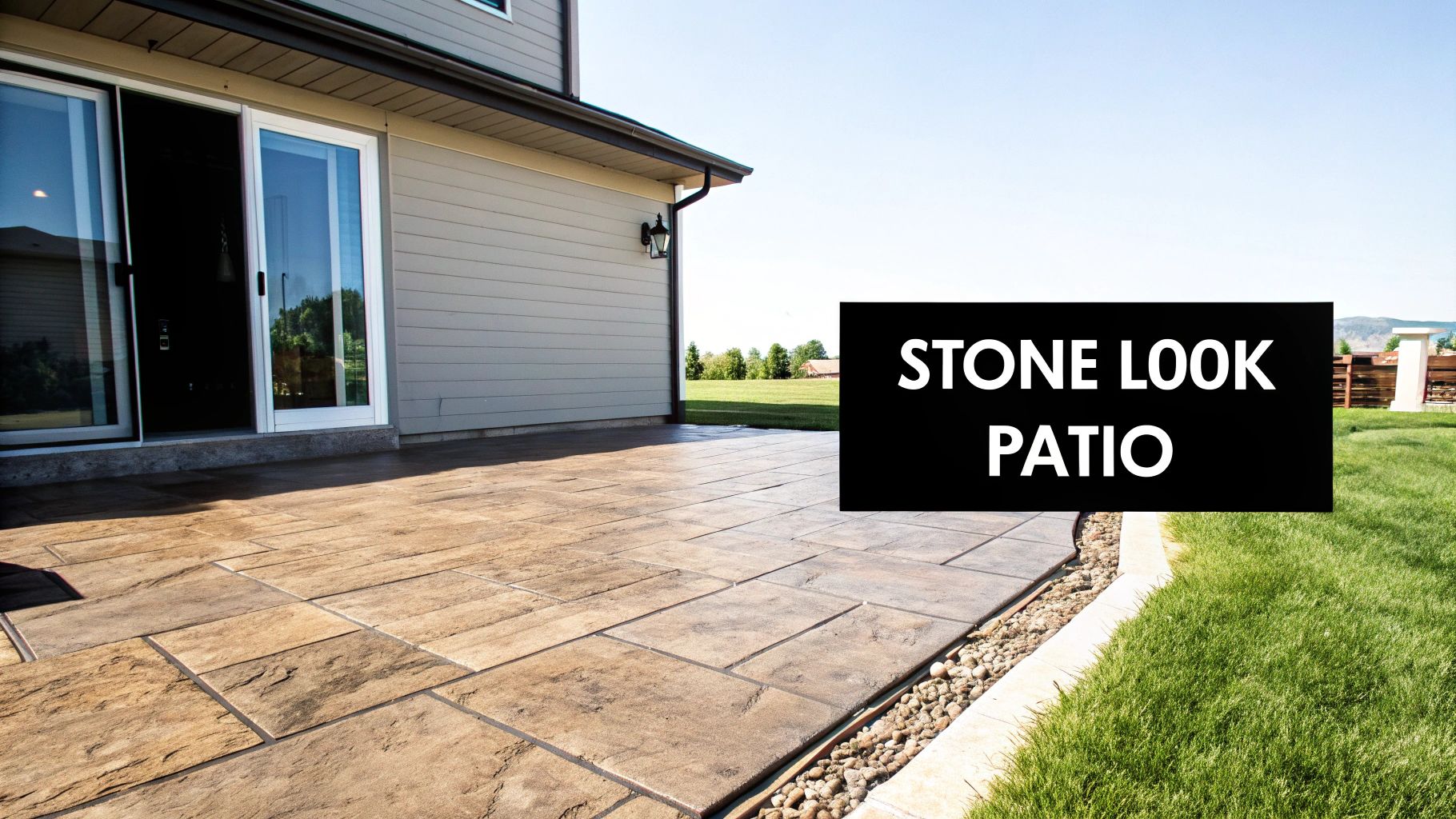
Stamped concrete is a highly decorative finish that elevates a simple patio into a sophisticated, high-end outdoor feature. This technique uses specialized molds or "stamps" pressed into freshly poured concrete to replicate the look and texture of more expensive materials like natural stone, brick, slate, or even wood planks. The result is a stunningly realistic surface that offers incredible design versatility.
The primary appeal of stamped concrete is its ability to deliver a luxurious aesthetic at a fraction of the cost of the materials it mimics. It is one of the most customizable types of concrete finishes for patios, allowing homeowners to create a truly unique space that perfectly complements their home's architectural style and landscape design.
Best Use Scenarios & Key Features
This finish is ideal for projects where aesthetics are a top priority and the goal is to create a visually impactful outdoor living area.
- High-End Residential Patios: Creates the look of a custom stone or paver patio, perfect for entertaining and increasing curb appeal.
- Pool Decks: Ashlar slate or flagstone patterns can transform a standard pool area into a resort-style oasis. Adding a slip-resistant additive is crucial in these applications.
- Commercial Courtyards & Walkways: Offers a durable, low-maintenance alternative to individual pavers or bricks, providing a cohesive and upscale appearance.
- Mediterranean or Old-World Themes: Perfectly captures the essence of cobblestone or terra cotta tile for specific architectural styles. For example, a "London Cobble" stamp pattern paired with a warm, reddish-brown color creates a convincing European courtyard feel.
Implementation & Maintenance Tips
Achieving a convincing stamped finish requires significant skill, proper timing, and attention to detail. The process involves coloring the concrete, applying a release agent, and then methodically pressing the stamps into the surface before it fully cures.
Pro-Tip: For the most realistic and dynamic appearance, use a combination of integral color for the base slab and a darker, powdered release agent. The release agent adds a secondary accent color that settles into the low points of the texture, creating authentic-looking depth.
Maintenance involves routine sweeping and washing to keep the texture clean. A high-quality sealer must be applied after installation and then re-applied every 2-3 years. This protects the color from UV fading and prevents moisture intrusion, which is especially important for withstanding Atlanta's humid summers and occasional winter freezes.
4. Stained Concrete
Stained concrete is a popular decorative finish that transforms plain gray patios into unique, colorful surfaces with rich, translucent tones. Unlike paint, which sits on top of the concrete, chemical stains penetrate the surface and react with the minerals present, creating variegated, marble-like effects that are permanent and won't chip or peel away. This method is one of the more artistic types of concrete finishes for patios, offering depth and character.
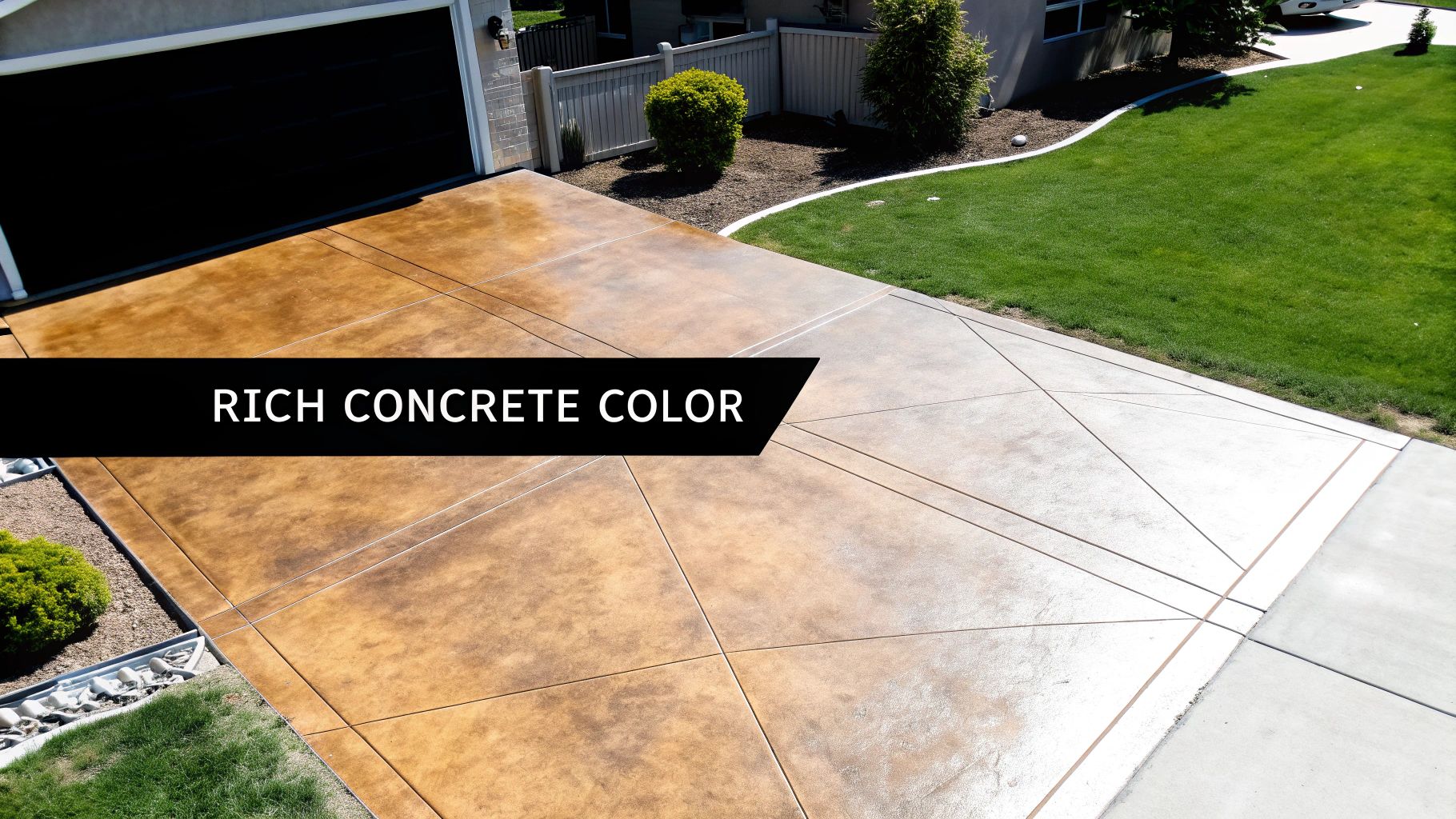
The primary benefit of a stained finish is its ability to mimic the high-end look of natural stone, such as marble or travertine, at a fraction of the cost. It provides a durable, customizable surface that can be tailored to complement any architectural style, from rustic earth tones to sleek, modern grays and blacks.
Best Use Scenarios & Key Features
This finish is ideal for homeowners who want to elevate their patio's aesthetic with vibrant color and unique character, turning it into a true design feature.
- Southwest-Inspired Patios: The earthy reds, browns, and tans created by acid stains perfectly capture the warm, rustic feel of Southwestern design.
- Modern Outdoor Living Areas: A subtle gray or charcoal water-based stain can provide a clean, minimalist backdrop for contemporary patio furniture and landscaping.
- Commercial Spaces: Restaurants and retail shops use stained concrete to create inviting, durable, and low-maintenance decorative surfaces for their outdoor seating areas. For example, a coffee shop might use a rich, coffee-bean brown stain to enhance its brand theme.
Implementation & Maintenance Tips
Achieving a beautiful, consistent stain requires meticulous surface preparation. The concrete must be thoroughly cleaned, free of any previous coatings or contaminants, and fully cured before the stain is applied.
Pro-Tip: Always test your chosen stain color on a small, inconspicuous area of the patio first. The final color and its variation depend heavily on the specific composition and porosity of your concrete slab.
Maintenance for a stained concrete patio involves regular sweeping and occasional mopping with a pH-neutral cleaner. To protect the vibrant color from UV fading and prevent stains, it is crucial to apply a high-quality exterior-grade sealer after staining and reapply it every 2-3 years, especially in the sunny Atlanta climate.
5. Exposed Aggregate
An exposed aggregate finish offers a unique and highly textural surface by revealing the natural stones, pebbles, and gravel embedded within the concrete. This sophisticated look is achieved by carefully washing away the top layer of cement paste before the concrete fully cures, exposing the decorative aggregate mix just beneath the surface. The result is a durable, multi-toned, and visually striking patio with a distinctly natural aesthetic.
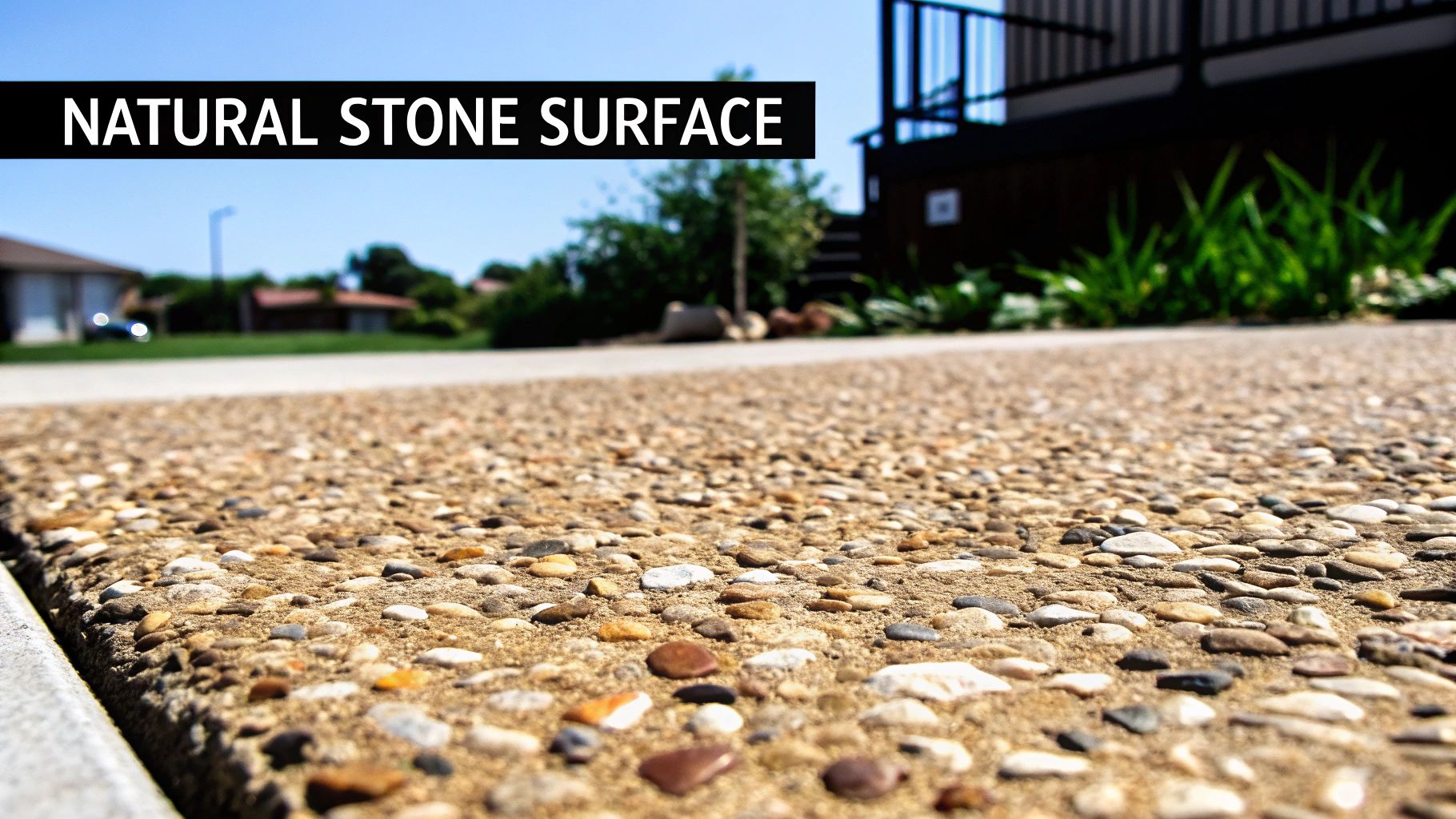
The primary appeal of this finish lies in its stunning visual texture and inherent slip resistance, making it both beautiful and functional. The variety of available aggregates, from smooth river rocks to colorful crushed glass, allows for immense design flexibility, elevating the look of any outdoor living space.
Best Use Scenarios & Key Features
Exposed aggregate is ideal for projects aiming for a high-end, natural stone appearance without the associated cost and installation complexity of individual pavers or flagstone.
- Luxury Patios: The use of premium aggregates like polished river rock or even recycled colored glass can create an upscale, resort-like ambiance.
- Pool Decks: Its naturally rugged texture provides excellent, safe footing around wet areas, making it a stylish and practical choice.
- Driveway Accents & Borders: Combining exposed aggregate with other finishes, like broom-finished concrete, creates beautiful visual contrast and defines different functional zones. It's a popular choice for creating a grand entrance.
- Modern Architectural Homes: The use of monochromatic or angular aggregates complements minimalist and contemporary design schemes perfectly. For instance, a mix of black basalt and white quartz can create a striking, high-contrast surface.
Implementation & Maintenance Tips
Achieving a flawless exposed aggregate finish is a craft that depends heavily on timing and technique. The surface must be washed at the precise moment in the curing process to reveal the aggregate without dislodging it.
Pro-Tip: The choice of aggregate is critical. Select high-quality, durable stones that complement your home’s exterior and landscape design. Discuss the size, color, and shape options with your contractor to achieve the desired look.
Maintenance involves regular rinsing to keep the textured surface free of dirt and organic matter. Applying a high-quality penetrating sealer every few years is crucial; it not only protects the concrete from moisture and stains but also enhances the natural colors of the stone, making them appear richer and more vibrant.
6. Brushed or Troweled Finish
A brushed or troweled finish offers a refined, semi-smooth surface that strikes an elegant balance between the rustic texture of a broom finish and the sleekness of polished concrete. This versatile finish is achieved by hand-troweling the freshly poured concrete to a uniform smoothness, followed by a light pass with a specialized fine-bristle brush. The result is a subtle, non-directional texture that feels sophisticated underfoot.
The primary appeal of this finish is its clean, contemporary look that complements modern architectural styles. It provides a more refined aesthetic than a standard broom finish while still offering a degree of slip resistance, making it a functional yet visually appealing choice for a variety of outdoor living spaces.
Best Use Scenarios & Key Features
This finish is ideal for patios where a modern, minimalist aesthetic is desired without sacrificing basic functionality and safety.
- Contemporary Patios: Its clean lines and subtle texture are a perfect match for minimalist and modern home designs.
- Transitional Spaces: It creates a seamless visual flow between indoor and outdoor living areas, such as covered lanais or verandas.
- Commercial Courtyards: The finish provides a durable, low-glare surface that looks professional and is comfortable for foot traffic in settings like cafes or office parks. For more on the versatility of poured concrete, explore our guide to residential poured concrete applications.
Implementation & Maintenance Tips
Achieving the perfect brushed or troweled finish is all about timing and a light touch. The concrete must be troweled smooth and then brushed just as the surface water has evaporated but before it becomes too hard to texture.
Pro-Tip: For a subtle yet effective non-slip surface, use a soft-bristle brush and apply very light, even pressure. This creates a fine texture that enhances safety without appearing coarse or aggressive.
Maintenance for this type of concrete finish is simple. Regular sweeping and occasional washing will keep it looking pristine. Applying an acrylic-based sealer not only protects the surface from stains and the harsh Atlanta sun but can also slightly enhance the color and texture, giving the patio a richer, more finished look. Reapply the sealer every 2-3 years to maintain protection.
7. Colored Concrete
Colored concrete moves beyond the standard gray, transforming a functional patio into a vibrant design element that complements your home's aesthetic. This versatile finish is achieved by introducing color directly into the concrete mix (integral color) or by applying it to the surface after it has cured (stains or dyes). The result is a durable, customized look that can range from subtle earth tones to bold, expressive hues.
This method offers immense design flexibility, allowing homeowners to match their patio to brick, siding, or landscaping features. Unlike paint, which can chip or peel, integral color is permanent and fade-resistant, ensuring the beauty of your patio lasts. It's an excellent way to add character and value, making it one of the most popular types of concrete finishes for patios today.
Best Use Scenarios & Key Features
Colored concrete is ideal for creating a cohesive and intentional outdoor living space where color plays a key role in the overall design.
- Custom Home Patios: Perfect for matching the patio color to existing architectural elements like roof tiles, stone veneers, or exterior paint.
- Modern Designs: Use bold, solid colors or create geometric patterns with contrasting shades for a contemporary, minimalist aesthetic. For example, a charcoal-colored patio creates a dramatic backdrop for bright green foliage and modern metal furniture.
- Commercial Spaces: Reinforce branding by using company colors for outdoor seating areas, entryways, or walkways.
- Natural Landscapes: Warm terracotta, sandstone, or earthy brown tones can help a patio blend seamlessly into a desert or rustic garden setting. For more ideas on how color can enhance your space, you can get inspiration from a portfolio of residential decorative concrete.
Implementation & Maintenance Tips
Achieving the perfect color requires careful planning and execution. The final shade can be affected by the cement, aggregates, and water content, so consistency is crucial.
Pro-Tip: Always request physical samples and view them on-site at different times of the day. The color can look dramatically different in direct sunlight versus shade, and what you see online or in a brochure may not be an exact match.
To maintain the vibrancy of your colored concrete, apply a high-quality UV-protective sealer after installation and reapply every 2-3 years. This is especially important in the sunny Atlanta climate to prevent fading over time. Regular cleaning with a pH-neutral cleaner will keep the surface looking its best without damaging the color.
8. Salt Finish (Salt Wash)
A salt finish, also known as a salt wash, is a distinctive technique used to create a weathered, subtly pitted surface on a concrete patio. The process involves pressing coarse rock salt crystals into the surface of freshly poured concrete. After the slab has partially cured, the salt is washed away, leaving behind a beautifully textured pattern of small, shallow indentations.
This method is highly valued for creating a unique, rustic aesthetic that feels both organic and refined. Beyond its visual appeal, the resulting texture offers excellent slip resistance, making it one of the more practical decorative types of concrete finishes for patios. It provides a unique look that stands out from more common finishes.
Best Use Scenarios & Key Features
This finish is ideal for outdoor spaces aiming for a rustic, Mediterranean, or Southwestern theme where a touch of texture enhances the overall design.
- Ranch and Farm-Style Patios: The subtly weathered look complements the natural materials and relaxed atmosphere of rustic home designs.
- Pool Surrounds: It offers a more decorative alternative to a standard broom finish while still providing crucial, reliable slip resistance for wet areas.
- Courtyards and Entertainment Areas: The unique, dimpled surface adds character and visual interest to outdoor living spaces, especially when paired with earthy stain colors. For example, a light tan integral color with a salt finish evokes the look of natural travertine stone.
Implementation & Maintenance Tips
Achieving the desired salt finish texture is all about timing and material selection. The size of the rock salt crystals directly impacts the depth and prominence of the pits, so choose a size that matches your aesthetic goals. The salt must be applied and pressed in while the concrete is still soft enough to accept the imprint.
Pro-Tip: For optimal results, ensure all salt residue is thoroughly washed away after the concrete sets. Any remaining salt can affect the sealer's performance and the long-term integrity of the surface.
Maintenance is relatively simple. The textured surface should be cleaned periodically with a garden hose or a pressure washer on a low setting to prevent dirt from accumulating in the indentations. Applying a high-quality sealer every few years is crucial to protect the concrete from moisture, stains, and the challenging Atlanta freeze-thaw cycles.
8-Way Comparison of Patio Concrete Finishes
| Finish | 🔄 Implementation complexity | ⚡ Resource & cost | 📊 Expected outcomes | 💡 Ideal use cases | ⭐ Key advantages |
|---|---|---|---|---|---|
| Broom Finish | Low — manual brooming during final set; simple timing | Minimal tools & labor; very low cost | Linear texture, high slip resistance, hides minor blemishes | Driveways, pool surrounds, public walkways, budget patios | Affordable, safe traction, easy repair & low maintenance |
| Polished Concrete | High — multi-step grinding & progressive grits; professional work | High equipment & labor cost ($8–15+/ft²) | Smooth, glossy reflective surface; extremely durable; may be slippery when wet | High-end residential patios, luxury resorts, contemporary courtyards | Sophisticated look, long-lasting, low upkeep, brightens space |
| Stamped Concrete | Moderate–High — stamping at initial set; skilled crew & timing | Moderate–High (molds, dyes, sealing) ($8–18/ft²) | Realistic stone/brick textures; highly decorative; durable but may crack | Decorative residential patios, pool decks, commercial courtyards | Highly customizable visuals, cost-effective stone alternative |
| Stained Concrete | Moderate — surface prep and chemical or water-based stains; controlled application | Mid-range materials & labor ($3–8/ft²); sealer required | Rich variegated or uniform color; enhances warmth and character; sealing needed | Southwest or wine-country patios, existing slab upgrades, stained+polished finishes | Unique non-repeating effects, can be applied to existing concrete, relatively affordable |
| Exposed Aggregate | Moderate–High — wash-off or surface removal at precise curing stage; specialist skill | Moderate–High (aggregate cost & labor) ($6–15/ft²) | Visible stones/pebbles, textured 3D surface, excellent slip resistance, very durable | Pool decks, luxury patios, commercial courtyards, wet areas | Natural stone appearance, highly slip-resistant, customizable aggregates |
| Brushed or Troweled Finish | Low–Moderate — standard finishing tools; quick timing | Low cost ($2–5/ft²); minimal specialized equipment | Smooth to lightly textured surface, clean look, moderate slip resistance | Contemporary patios, transitional indoor/outdoor areas, quick installs | Cost-effective, versatile, easy to clean and maintain |
| Colored Concrete | Low–Moderate — pigment integration or surface coloring; planning for consistency | Variable — integral pigments costlier; surface dyes cheaper; sealing needed | Consistent or surface color options; enhances design coordination; possible heat gain on dark tones | Brand-coordinated commercial spaces, color-blocked residential patios, design-driven projects | Wide color palette, works with other finishes, permanent when integral |
| Salt Finish (Salt Wash) | Low — broadcast salt and wash during curing; simple method | Low cost; minimal materials (rock salt) and labor | Dimpled, pitted rustic texture; excellent slip resistance; can be rough for bare feet | Rustic ranch patios, casual entertainment areas, southwestern themes | Budget-friendly, unique rustic aesthetic, very slip-resistant |
Making the Right Choice for Your Atlanta Patio
Choosing from the diverse array of types of concrete finishes for patios is far more than a simple aesthetic decision; it's an investment in your home's functionality, curb appeal, and long-term value. As we've explored, each finish presents a unique combination of visual style, tactile experience, durability, and maintenance requirements. Your final selection is a personal equation, balancing your design aspirations with your budget and the practical demands of your lifestyle.
Synthesizing Your Options: Key Takeaways
To navigate this decision effectively, it's helpful to revisit the core strengths of each finish. Think of your choice as a spectrum, from utilitarian function to high-end design.
- For Practicality and Safety: If your primary needs are slip resistance, durability, and budget-friendliness, the classic broom finish and the subtly textured brushed or troweled finish are unbeatable champions. They provide a safe, reliable surface that performs exceptionally well around pools and high-traffic areas, especially in Atlanta's wet climate.
- For High-Impact Design: When your goal is to make a statement, stamped concrete is the clear frontrunner. Its ability to mimic expensive materials like slate, flagstone, or wood planking offers unparalleled design versatility. Similarly, stained concrete can transform a plain slab into a rich, variegated canvas of color, adding depth and character that integrates seamlessly with your landscape.
- For Subtle Elegance and Texture: If you appreciate a more refined and natural look, exposed aggregate provides a beautiful, pebble-like texture with excellent slip resistance. The salt finish offers a more delicate, pitted texture that feels great underfoot, creating a sophisticated, coastal-inspired vibe perfect for a relaxing retreat.
- For Modern Aesthetics and Color: For a sleek, contemporary outdoor living space, polished concrete delivers a smooth, high-sheen surface reminiscent of indoor flooring. To ensure color that lasts, colored concrete (integral color) provides a permanent, through-and-through hue that won't chip or fade over time, offering a consistent and foundational design element.
Your Action Plan for a Perfect Patio
Making the right choice involves a strategic approach. Before contacting a contractor, take these crucial steps:
- Define Your Use Case: Will your patio host large gatherings, serve as a play area for kids, or be a quiet personal oasis? High-traffic areas may benefit from the durability of stamped or exposed aggregate, while a low-traffic lounge area could be perfect for a salt finish or stained concrete.
- Assess Your Environment: Consider the amount of sun, shade, and tree cover. A patio under a large oak tree might be prone to staining from leaves and acorns, making a darker or multi-toned finish like stained concrete a more forgiving option.
- Set a Realistic Budget: Your budget will guide your selection. While a broom finish is highly economical, investing in a decorative finish like stamped or polished concrete can significantly increase your property's resale value, offering a strong return on investment.
Ultimately, the key to a successful project lies in the execution. A flawless installation is what transforms a good material choice into a great patio. This is especially true in the Atlanta region, where a professional must account for humid summers, occasional freezes, and specific soil conditions to prevent cracking and ensure longevity. Your patio is the heart of your outdoor living space, and selecting the right finish ensures it will be a source of pride and enjoyment for decades.
Navigating the various types of concrete finishes for patios is much easier with an expert guide. At Atlanta Concrete Solutions, we specialize in transforming visions into reality, helping homeowners select and install the perfect decorative concrete for their unique needs and the specific demands of the Georgia climate. To discuss your project and get a free, no-obligation estimate, contact our team at Atlanta Concrete Solutions today.