
Ever looked at your cracked, stained driveway or patio and thought your only option was a full-blown, expensive tear-out? Think again. There's a much smarter way to bring that tired concrete back to life.
It's called concrete resurfacing, and it's one of the best-kept secrets in home improvement.
A Practical Guide to Concrete Resurfacing
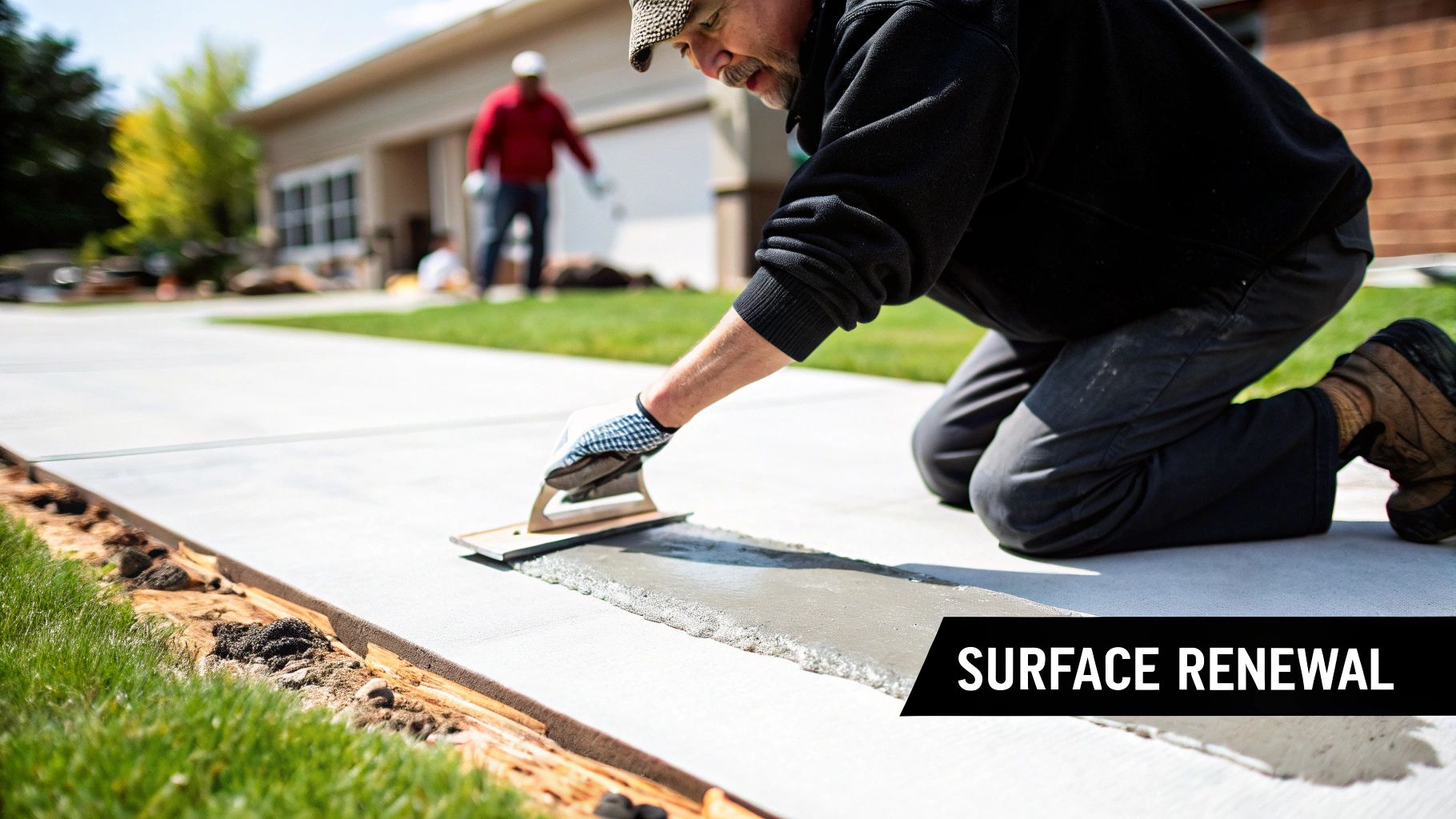
So, what is it exactly? Imagine giving your concrete a brand-new, durable "skin." Instead of demolition, a professional applies a thin layer of a high-strength, cement-based overlay directly onto your existing slab. For example, a common overlay is a polymer-modified cement that is mixed on-site and applied at a thickness of about 1/8 to 1/4 inch. This new surface chemically fuses with the old concrete, creating a seamless, incredibly tough finish that erases years of wear and tear.
The beauty of this approach is that it works as long as the underlying concrete is still structurally sound. You get a fresh look without the headache and high cost of a complete replacement.
To put it in perspective, let's break down the core details of what concrete resurfacing involves.
Concrete Resurfacing At A Glance
| Aspect | Description |
|---|---|
| What It Is | Applying a thin, cement-based overlay to existing concrete. A typical example is a polymer-modified overlay spread with a trowel or squeegee. |
| Purpose | To repair cosmetic damage like hairline cracks and stains, and update the appearance of the surface with new colors or textures. |
| Key Benefit | Avoids the cost and mess of tearing out and replacing the entire slab. For instance, you save on demolition labor and landfill disposal fees. |
| Ideal For | Driveways, patios, pool decks, walkways, and interior floors like garages and basements. |
| Requirement | The underlying concrete slab must be structurally sound, with no major heaving, deep cracks, or widespread crumbling. |
This table gives you the quick rundown, but the real magic is in the problems it solves for homeowners and property managers every day.
What Problems Does Resurfacing Solve?
This technique is a targeted solution for all those cosmetic issues that make your concrete look old and neglected. It's the perfect fix when you're dealing with:
- Surface Cracks: Those annoying hairline fractures and spiderweb cracks? A resurfacing overlay covers them completely. For instance, a network of fine cracks on a patio can be completely hidden under a new, uniform surface.
- Stains and Discoloration: Say goodbye to old oil stains, rust marks from patio furniture, or blotchy, sun-faded areas. You get a clean, uniform color.
- Spalling and Pitting: It smooths over those rough patches where the top layer has started to flake or chip away, making the surface safe and attractive again. A common example is the salt damage seen on driveways after winter.
- Outdated Finishes: Want a more modern look? Resurfacing lets you update your concrete with fresh colors, textures, and even stamped patterns that mimic slate or brick.
This isn't just a niche repair; it's a massive industry. The global concrete restoration market was valued at a staggering USD 17.33 billion in 2023 and continues to grow. That growth is driven by smart property owners who recognize how effective this method is. You can dig into more market data on GrandViewResearch.com.
Concrete resurfacing is the art of renewing what you already have. It’s not just a patch; it’s a complete aesthetic and functional upgrade that extends the life of your existing concrete slab, saving time, money, and hassle.
Ultimately, it all comes down to a simple idea: restoration over replacement. By giving your old slab a new face, you can achieve the look of brand-new concrete for a fraction of the cost and with way less disruption to your life.
Resurfacing vs. Tearing It All Out: What's the Right Call?
When your concrete starts to look tired, cracked, and worn out, it’s easy to think the only answer is to rip it all up and start over. But that’s not always the case. In fact, for many homeowners, concrete resurfacing is a smarter, more cost-effective alternative that saves a ton of time and headache. The real question is, what's the condition of the concrete you already have?
Let's be honest, the first thing most of us think about is the cost. A full concrete replacement is a massive job. You're not just paying for new concrete; you're paying for the demolition crew, the heavy equipment to haul away the old stuff, prepping the ground all over again, and then pouring the new slab. It all adds up, and it adds up fast.
Resurfacing, on the other hand, works with what you’ve already got. Your existing slab becomes the foundation for a brand-new surface. By skipping the demolition and disposal—the most expensive and labor-intensive parts of the job—you can expect to save anywhere from 50% to 70% compared to a full replacement.
A Real-World Cost Comparison
Let’s put some real numbers to it. Think about a typical two-car driveway, around 600 square feet. Here in the Atlanta area, tearing that out and replacing it could set you back anywhere from $7,200 to $12,000, maybe even more. That price tag includes breaking up the old concrete, hauling it away, and the complete installation of a new driveway.
Now, what if we resurfaced that same driveway? You'd be looking at a cost somewhere between $2,400 and $5,400. That’s a huge difference. Suddenly, you've got thousands of dollars freed up for other projects around the house, and you still get a driveway that looks brand new. The savings are simple: less labor, fewer materials, and a much faster process.
If your concrete slab is still solid but just looks bad, resurfacing gives you the same beautiful result as new concrete for a fraction of the price. When the foundation is good, it’s simply the smarter financial move.
Before we dive into the nitty-gritty of when to choose one over the other, it's worth taking a moment to compare them side-by-side. This can help clear up which path makes the most sense for your specific situation.
Comparing Resurfacing and Full Replacement
| Factor | Concrete Resurfacing | Full Concrete Replacement |
|---|---|---|
| Cost | 50-70% less expensive. Example: $4-$9 per sq. ft. vs. $12-$20 per sq. ft. | Significantly higher due to demolition, disposal, and labor |
| Timeline | Typically 1-3 days. For a patio, work might be done over a weekend. | Often takes a week or more, including demolition and cure time. |
| Disruption | Minimal disruption to your property; quieter and less dusty. | Major disruption; a full construction zone with heavy equipment. |
| Ideal For | Cosmetic issues: surface cracks, stains, minor spalling. | Structural issues: deep cracks, severe settling, crumbling. |
| Eco-Impact | Low; reuses existing slab, less waste. Reduces landfill burden. | High; old concrete goes to landfill, new materials produced. |
| Appearance | Like-new finish with many decorative options (stamping, staining). | Brand new slab; options available but at a higher cost. |
Looking at this, it's clear that if your concrete's "bones" are good, resurfacing is a powerful option. The choice isn't just about saving money, though—there are other practical benefits to consider.
More Than Just a Budget Decision
The perks of resurfacing go well beyond your bank account. Think about the disruption. A full replacement turns your home into a construction site for a week, maybe longer. With resurfacing, we’re often in and out in just a few days.
It’s also the greener choice. Every time we resurface a driveway or patio, we're keeping tons of old concrete out of the landfill. For example, a 600 sq. ft. driveway replacement generates over 5 tons of concrete waste. You're not just improving your home; you're reducing waste and cutting down on the carbon emissions that come from making and shipping new concrete.
When Replacement Is the Only Safe Option
Now for the reality check. Resurfacing is a fantastic solution for cosmetic problems, but it’s not magic. It can’t fix a foundation that's fundamentally failing. If you try to slap a new layer over a slab with deep structural issues, you're just throwing money away on a fix that won't last. Replacement becomes the only responsible choice when you see these red flags:
- Deep Structural Cracks: We're not talking about hairline cracks. If you see cracks wide enough to fit a credit card into that seem to go all the way through the slab, the base underneath is failing. A classic example is a crack that runs from one edge of the driveway to the other and has one side higher than the other.
- Severe Settling or Heaving: Are parts of your driveway or sidewalk sinking or pushing upward, creating dangerous trip hazards? That’s a sign of unstable ground beneath, and no overlay can fix that. For instance, if a tree root has pushed a section of sidewalk up by several inches, that section must be replaced.
- Widespread Crumbling (Spalling): If the surface is flaking, pitting, and crumbling apart everywhere, the concrete itself has lost its strength. It’s no longer a solid base to build upon. An example would be if you can easily scrape away the top layer with a shovel.
When you're dealing with these kinds of problems, the only way to get a safe, long-lasting result is to tear it out and address the root of the problem with a full replacement.
Common Resurfacing Materials and Finishes
When you decide to resurface your concrete, you're opening the door to a whole world of design possibilities that go way beyond plain old gray. The material you pick is crucial—it dictates not just the look but also the durability and function of your new surface. Think of it like choosing the right paint for a room; some are built to handle high traffic, while others are all about achieving that perfect color and texture.
The go-to choice for most projects is a polymer-modified overlay. This isn't your standard cement mix. It's a special blend infused with polymers (think of them as a high-tech glue) that create an incredibly strong bond with the existing concrete. This blend also adds a bit of flexibility, which makes the new surface far more resistant to cracks from hot summers and cold winters—perfect for busy areas like driveways.
Overlays for Strength and Style
Beyond the standard option, there are several specialized materials designed for specific jobs. Each one offers a unique mix of performance and visual flair, giving you the freedom to tailor the project to your exact needs.
- Cement-Based Overlays: This is the workhorse of the resurfacing world. It's a reliable and budget-friendly way to smooth over minor flaws and give your concrete a clean, fresh start. A common example is a simple broom finish applied to a walkway to restore its look and texture.
- Epoxy Coatings: If you need a bulletproof floor for your garage, basement, or workshop, epoxy is the answer. It creates a seamless, hard-as-nails shield that resists chemicals, oil, and stains. Plus, you can add decorative color flakes to get a cool, granite-like look.
- Microtoppings: These are super-thin overlays applied with a trowel, almost like frosting a cake. They’re used for purely cosmetic updates on interior floors or even countertops where you want a smooth, colored finish but don't have to worry about heavy wear and tear. For example, creating a seamless, modern concrete look in a basement living area.
The real secret is matching the material to the mission. A pool deck needs a finish that’s non-slip and won’t scorch your feet. A garage floor needs to stand up to dropped tools and car fluids. The right choice ensures your new surface doesn't just look great—it performs great, too.
The market for these products is always evolving, with new formulas that offer better toughness and more striking looks. The industry is constantly innovating, bringing homeowners more advanced and reliable options than ever before. You can dive deeper into the growth of the concrete resurfacer market on DataBridgeMarketResearch.com to see where things are headed.
Popular Decorative Finishes
Once the base overlay is down, the real fun begins. The finish is where you can truly get creative and give your home's curb appeal a major boost. These techniques can convincingly replicate the look of materials that cost a fortune.
Stamped Concrete Overlays
This is easily one of the most popular ways to add some serious style. While the new overlay is still soft, we press large, patterned stamps into the surface. The result? A surface that looks just like natural slate, flagstone, classic brick, or even rustic wood planks, but without the hefty price tag and installation headaches. A common example is creating an "Ashlar Slate" pattern on a patio to give it an elegant, high-end stone look. You can explore all the possibilities in our guide to residential decorative concrete.
Stained Concrete
For a more subtle and sophisticated vibe, staining is a fantastic option. Unlike paint that just sits on top, acid or water-based stains actually soak into the concrete. This creates deep, rich, and often beautifully mottled colors that won't ever chip, flake, or peel off. For instance, an acid stain can produce a rich, leather-like brown that is unique to every floor.
Spray-Down Texture (Knock-Down Finish)
This is the gold standard for pool decks, patios, and walkways. We start by spraying a thin layer of a cement-based coating and then use a trowel to gently "knock down" the peaks. This creates a comfortable, textured surface that’s not slippery when wet and stays much cooler on bare feet—a must-have for those hot Atlanta summer days.
The Concrete Resurfacing Process Step by Step
To really wrap your head around what is concrete resurfacing, it helps to walk through the actual process. It’s far more than a quick coat of paint. Think of it as a detailed restoration project where every single step is critical for a durable, beautiful finish. Get the details wrong, and the whole thing can fail.
The infographic below gives a great high-level overview of the main stages you can expect.
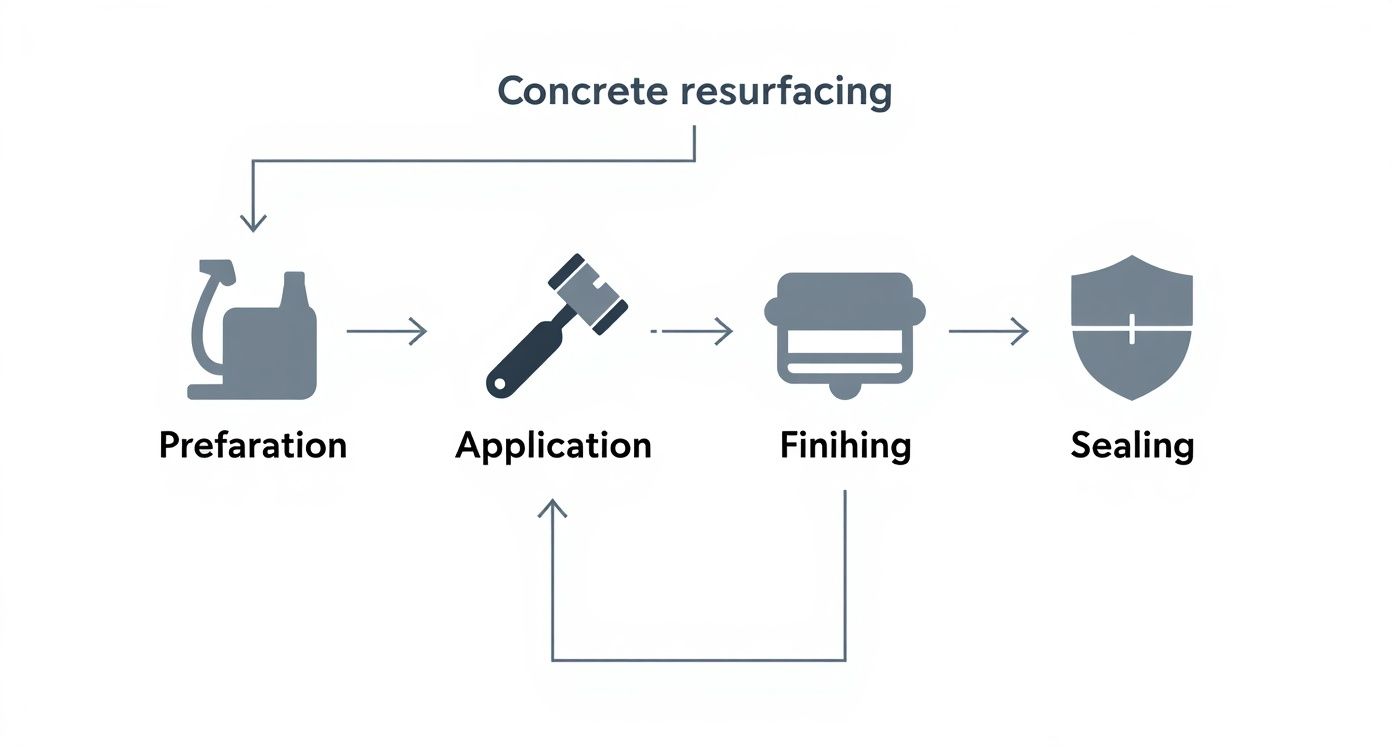
As you can see, a successful job is all about a balanced approach: meticulous prep work, expert application, and rock-solid protection.
The Foundation of Success: Preparation
Any pro will tell you that the prep work is where the magic happens—it accounts for over 70% of a project's success. It all starts with a powerful pressure washing to blast away every bit of dirt, oil, grime, and any other gunk. For example, using a pressure washer with at least 3,000 PSI is standard for ensuring the surface is perfectly clean. You need a completely clean slate for the new layer to grab onto.
Next, we grind down any high spots, old paint, or rough patches to get the surface as smooth as possible. This is also when we tackle existing damage. Small cracks are chased out with an angle grinder to widen them slightly, then filled with a special flexible epoxy or repair mortar, stopping them from telegraphing through the new surface. Professionals who handle residential concrete and masonry repair know that cutting corners here is a recipe for disaster.
Application and Finishing
Once the slab is clean, smooth, and repaired, it's time for a primer or bonding agent. This is the "super glue" that creates a chemical lock between the old concrete and the new overlay. Skipping this step is a huge mistake; it's absolutely essential for preventing peeling and delamination down the road.
After the primer, we mix up the resurfacing material—a high-tech, polymer-modified cement overlay—and spread it evenly across the entire surface. Using tools like trowels and squeegees, we lay it down to a consistent thickness, usually somewhere between 1/8 and 1/4 inch.
The real artistry comes out during the finishing. This is our chance to add character and style, whether that means stamping a realistic stone pattern, hand-staining it with rich colors, or creating a subtle, non-slip texture for safety.
Curing and Sealing for Longevity
With the new surface in place, we have to let it cure. This is a crucial chemical process where the overlay hardens and reaches its maximum strength. It's a waiting game, and the time it takes can change depending on the weather, but patience is key. For example, on a hot, sunny day, the surface may need to be lightly misted with water to ensure it doesn't cure too quickly and crack.
Finally, we apply a premium-grade sealer. This clear topcoat is the unsung hero, acting as a shield against moisture, UV damage, stains, and everyday wear and tear. A good sealer is what keeps your newly resurfaced concrete looking fantastic for years. A common choice is a high-quality acrylic sealer, which provides excellent protection and enhances the color.
Where Concrete Resurfacing Works Best
So, you get the "what" and the "how," but where does concrete resurfacing really make a difference? This isn't just a band-aid fix for ugly concrete; it's a powerful way to completely transform the look, safety, and feel of the most-used spaces around your home.
Let's walk through some of the most common places we see resurfacing work its magic.
Upgrading High-Traffic Driveways
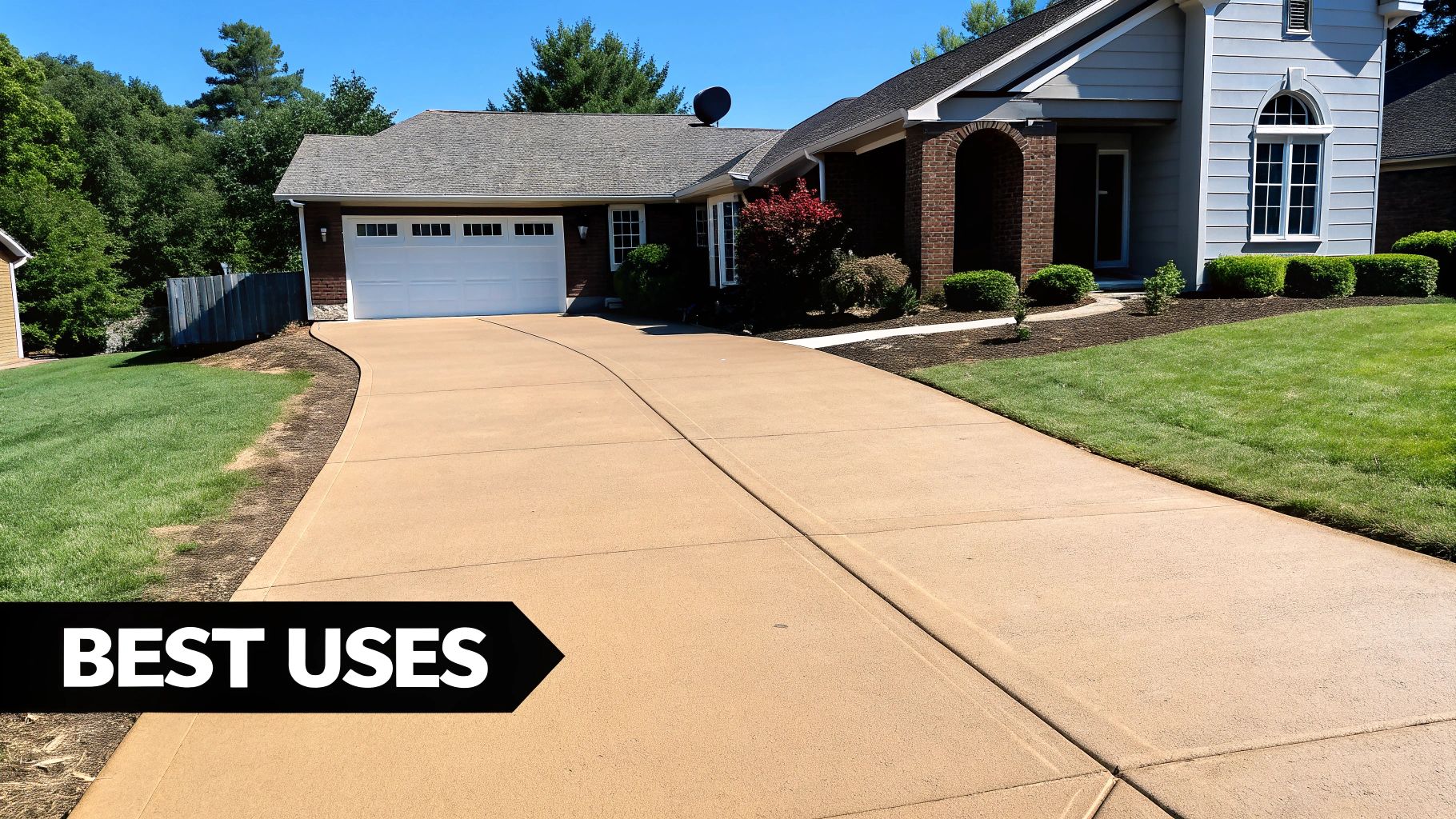
Your driveway is the welcome mat to your home, but it takes a serious beating. Between the weight of cars, harsh Atlanta weather, and the occasional oil leak, it’s no wonder they end up stained, cracked, and spalled. This kind of cosmetic damage can really drag down your home’s curb appeal.
Resurfacing is the perfect comeback story for a tired driveway. A fresh overlay essentially erases years of wear and tear, giving you a clean slate that looks brand new. For example, a polymer-modified overlay can withstand the daily stress of vehicle traffic and resist damage from road salts. You can even get creative with stamped patterns or rich stains to add a custom touch. A sharp, revitalized driveway isn't just about looks—it’s an investment in your property's value. Dive deeper into your options with our guide to residential driveway concrete solutions.
Creating Safe and Stylish Outdoor Living Areas
Patios and pool decks should be places for fun and relaxation, not sources of worry. Unfortunately, cracked, uneven, or slick surfaces can quickly become dangerous hazards. This is where resurfacing pulls double duty, delivering both beauty and safety.
- Patios: Why settle for a boring gray slab? A stamped overlay can give your patio the high-end look of flagstone or classic brick without the hefty price tag, turning it into a true outdoor living room.
- Pool Decks: Safety is everything around a pool. A spray-down or "knock-down" texture is a game-changer. It creates a comfortable, non-slip surface that stays cooler on bare feet, even on the hottest summer days.
- Walkways: Smooth out those annoying cracks and uneven spots that have become trip hazards. Resurfacing gives you a safe, clean, and inviting path to your front door. For instance, a simple broom finish can restore an old, cracked walkway to look brand new and safe.
Reinventing Interior Concrete Floors
Don't forget about the concrete inside your home! Resurfacing is a fantastic way to upgrade interior floors, offering a sleek, durable, and surprisingly modern finish.
Think beyond the driveway. From a hardworking garage to a finished basement, resurfacing turns a purely functional surface into a stylish, intentional part of your home's design. It’s a smart alternative to traditional flooring like tile or carpet.
Garage Floors
An epoxy coating is the ultimate garage floor upgrade. This tough, seamless shield is built to resist everything you can throw at it—oil stains, chemical spills, and the dreaded hot-tire pickup. It's incredibly easy to clean and you can customize it with color flakes for that polished, showroom look.
Basement Floors
Ready to reclaim your basement? A decorative overlay can seal the concrete against moisture while adding warmth and style. For example, a stained microtopping can create a warm, inviting floor that looks like marbled stone, transforming a damp, forgotten space into the perfect home gym, playroom, or media room. The growing popularity of these solutions is clear; the global market for concrete resurfacers was valued at over USD 4.39 billion in 2024 and is on a steady rise, fueled by homeowners investing in property improvements. You can dig into the numbers and market trends on ResearchNester.com.
How to Maintain Your Resurfaced Concrete
You've made the investment to give your concrete a fresh, new look. The good news? Protecting it is pretty straightforward. A little routine care goes a long way in keeping your driveway, patio, or pool deck looking fantastic for years to come.
Think of it like waxing your car. You wouldn't let a brand-new paint job get dull and damaged, and the same principle applies here. Consistent, simple upkeep is the secret to getting the most out of your resurfaced concrete.
A Simple Cleaning Routine
Keeping the surface clean is your first line of defense. Regularly sweeping away leaves, dirt, and other debris prevents them from sitting there, trapping moisture, and causing ugly stains.
A few times a year, give it a good wash. All you usually need is a garden hose, a push broom, and some mild, non-abrasive cleaner (like a pH-neutral detergent) to lift any built-up grime. This simple step keeps your concrete looking vibrant.
The Most Important Maintenance Steps
Being proactive is the name of the game. If you focus on cleaning up spills right away and keeping the sealer fresh, you’ll easily preserve the beauty and durability of your new surface.
- Clean Up Spills Immediately: Spills are going to happen, but they don't have to become permanent stains. Act fast on things like oil, grease, fertilizer, or anything that could leave a rust mark. For an oil leak on a driveway, for example, apply an absorbent material like cat litter immediately, then clean the spot with a degreaser. Wiping them up quickly stops them from soaking past the sealer and into the concrete itself.
- Be Smart About Winter Care: If you're in an area with freezing temperatures, avoid harsh de-icers like rock salt. These chemicals can eat away at the sealer and damage the overlay. Stick with sand for traction or look for a de-icing product specifically labeled as "safe for concrete," such as those containing calcium magnesium acetate.
- Reseal It on a Schedule: Your sealer is the invisible shield protecting the surface. To keep that shield strong against moisture, UV rays, and stains, you'll need to have it professionally resealed every 2-4 years. The exact timing depends on how much foot traffic it gets and how much direct sun it bakes in. For example, a south-facing patio will likely need resealing more often than a shaded walkway.
Resealing your concrete is the single best thing you can do for it. It's a minor expense every few years that acts as a powerful barrier, dramatically extending the life and look of your investment.
With just a little attention, your resurfaced concrete will stay as durable and attractive as the day it was installed.
Your Top Questions About Resurfacing Answered
When people start looking into what is concrete resurfacing, a few key questions always come up. We hear them all the time, so let's get you some straight answers.
How Long Does Resurfacing Last?
You can expect a professionally resurfaced area to hold up beautifully for 8 to 15 years. A lot of that comes down to the quality of the overlay mixture we use, how much foot (or car) traffic it sees, and our lovely Georgia weather.
Of course, a little upkeep goes a long way. Keeping it clean and having it resealed every few years is the best way to hit that 15-year mark and beyond. For example, a well-maintained resurfaced patio that is resealed every three years could easily last over a decade.
Can Any Concrete Surface Be Resurfaced?
This is a big one: no, not all concrete is a good candidate. Think of resurfacing as a heavy-duty, beautiful new skin for your concrete—but the bones underneath have to be good and solid.
If your slab has massive, deep cracks, is heaving up, or crumbles when you poke at it, resurfacing is just a temporary fix. In those cases, the underlying problem needs to be addressed, which usually means replacement is the only safe, long-term solution.
An overlay needs a stable base to properly bond to, otherwise, it’ll just crack right along with the old concrete. For instance, if your driveway has settled and created a one-inch lip at the garage entrance, resurfacing won't fix that structural problem.
How Soon Can I Use My New Surface?
Patience is key here, but you won't be waiting too long. You can usually walk on your new patio or walkway after about 24 to 48 hours.
For driveways, you need to give it more time to cure and harden. We always recommend waiting at least 7 to 10 days before you start parking your cars on it. This gives the new surface the strength it needs to handle the weight without any issues. Parking a heavy SUV on it after only three days, for example, could leave permanent tire impressions.
Ready to transform your cracked or outdated concrete? The experts at Atlanta Concrete Solutions have the experience to deliver a beautiful, durable finish that revitalizes your home's curb appeal. Get your free, no-obligation quote today at https://atlantaconcretesolutions.com.