
Ever seen a concrete surface that looks like a beautiful mosaic of tiny, smooth river stones? That’s exposed aggregate concrete. It’s a decorative finish where we intentionally wash away the top layer of cement paste to reveal the natural stones, pebbles, and sand mixed within.
Instead of a plain, flat gray slab, you get a textured, multi-toned surface with a unique, earthy look and excellent slip resistance. For example, a driveway might feature a mix of local granite and quartz, giving it a salt-and-pepper look that’s far more visually interesting than standard gray concrete.
What Is Exposed Aggregate Concrete
Picture a beautiful, rocky riverbed—solid, textured, and natural under your feet. That’s the feeling and look that exposed aggregate concrete brings to your home. Rather than the smooth, uniform face of standard concrete, this finish celebrates the raw materials inside the mix.
Think of it like an artist revealing a sculpture from a block of stone. The beauty was there all along; it just needed to be uncovered. For instance, a simple mix using local tan and brown river stones can transform a plain patio into an organic, rustic feature that blends seamlessly with a garden.
This technique isn't new. It became incredibly popular in the mid-20th century because it’s both gorgeous and tough as nails. It’s a classic choice that blends rugged functionality with effortless style, which is why it has never really gone out of fashion.
The Core Concept Explained
So, how does it work? The process is surprisingly straightforward. We pour the concrete as usual, but before it completely hardens, we wash away the very top layer of cement paste. This simple step reveals the edges of the aggregate—the small stones, recycled glass, or pebbles—creating a finish that’s as functional as it is beautiful.
- Natural Aesthetics: The colors and textures of the revealed stones give it an organic feel that works perfectly with landscaping and almost any outdoor design. For example, using smooth, rounded river pebbles creates a comfortable, spa-like feel for a pool deck.
- Superior Durability: With the hard stones at the surface, you get an incredibly tough finish that handles heavy foot traffic and vehicles without breaking a sweat. A driveway made with crushed granite aggregate, for instance, can easily withstand the weight of an SUV.
- Enhanced Safety: Its naturally textured, uneven surface provides fantastic grip, which is a game-changer for reducing slips and falls, especially on rainy Atlanta days. This is a clear advantage for sloped walkways or public steps.
This visual breaks down the simple but effective process, from the initial pour to the final, stunning reveal.
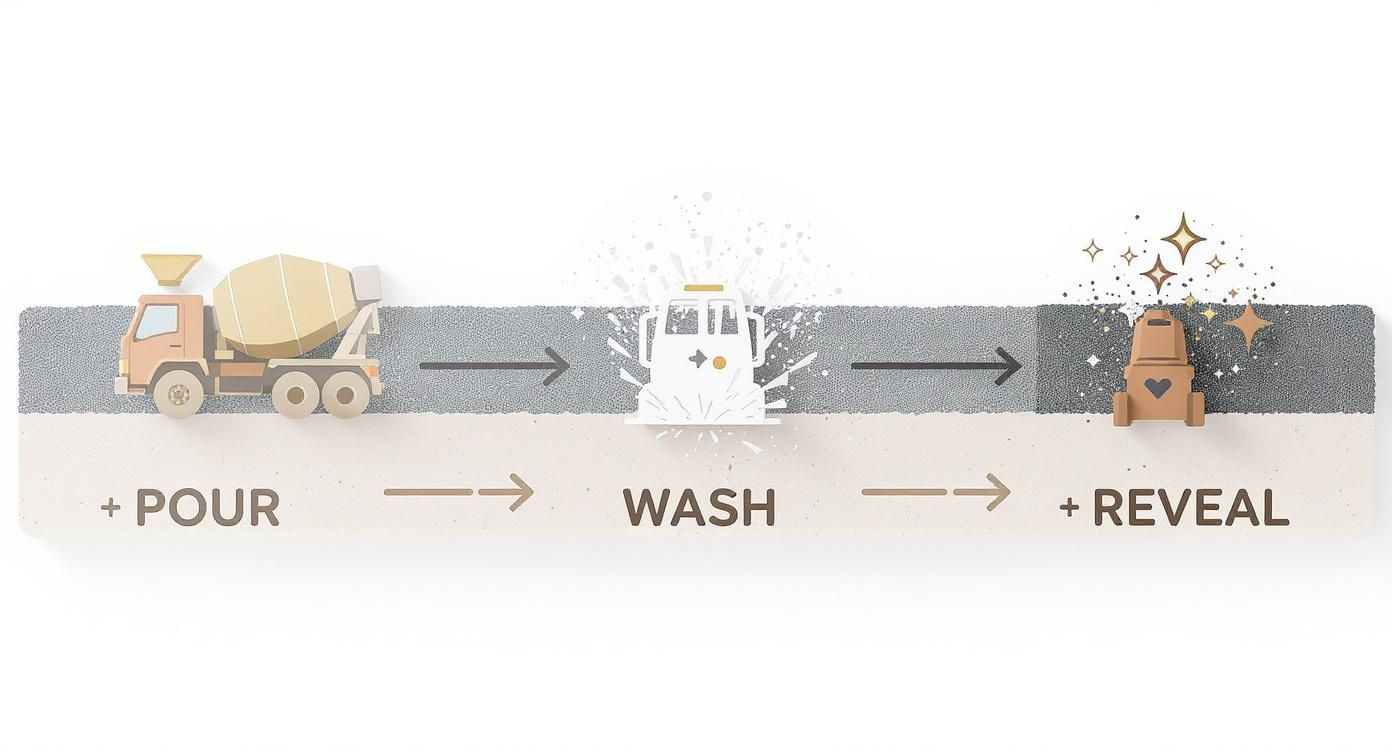
As you can see, the real magic happens when that top layer is washed away, exposing the hidden beauty within the concrete mix itself.
To help you get a clearer picture, here's a quick summary of what makes this material so special.
Exposed Aggregate Concrete at a Glance
| Feature | Description | Primary Benefit |
|---|---|---|
| Texture | A pebbly, uneven surface created by revealing the inner stones. | Superior slip resistance, making it ideal for wet areas like pool decks. |
| Aesthetics | Natural, multi-toned appearance from the mix of stones, sand, and pebbles. | A unique, high-end look that complements outdoor landscapes. |
| Durability | The hard, exposed stones create an incredibly tough and wear-resistant surface. | Long-lasting performance that stands up to heavy traffic and weather. |
| Maintenance | Requires periodic cleaning and resealing every few years to maintain its look. | Low long-term upkeep compared to other decorative options. |
This combination of beauty, safety, and strength is why it’s a go-to for so many homeowners.
For anyone thinking about this for their own property, we have a complete guide covering all kinds of residential decorative concrete to help you explore your options. It's a fantastic choice for those who want a surface that works hard and looks great doing it.
How Exposed Aggregate Concrete Is Made
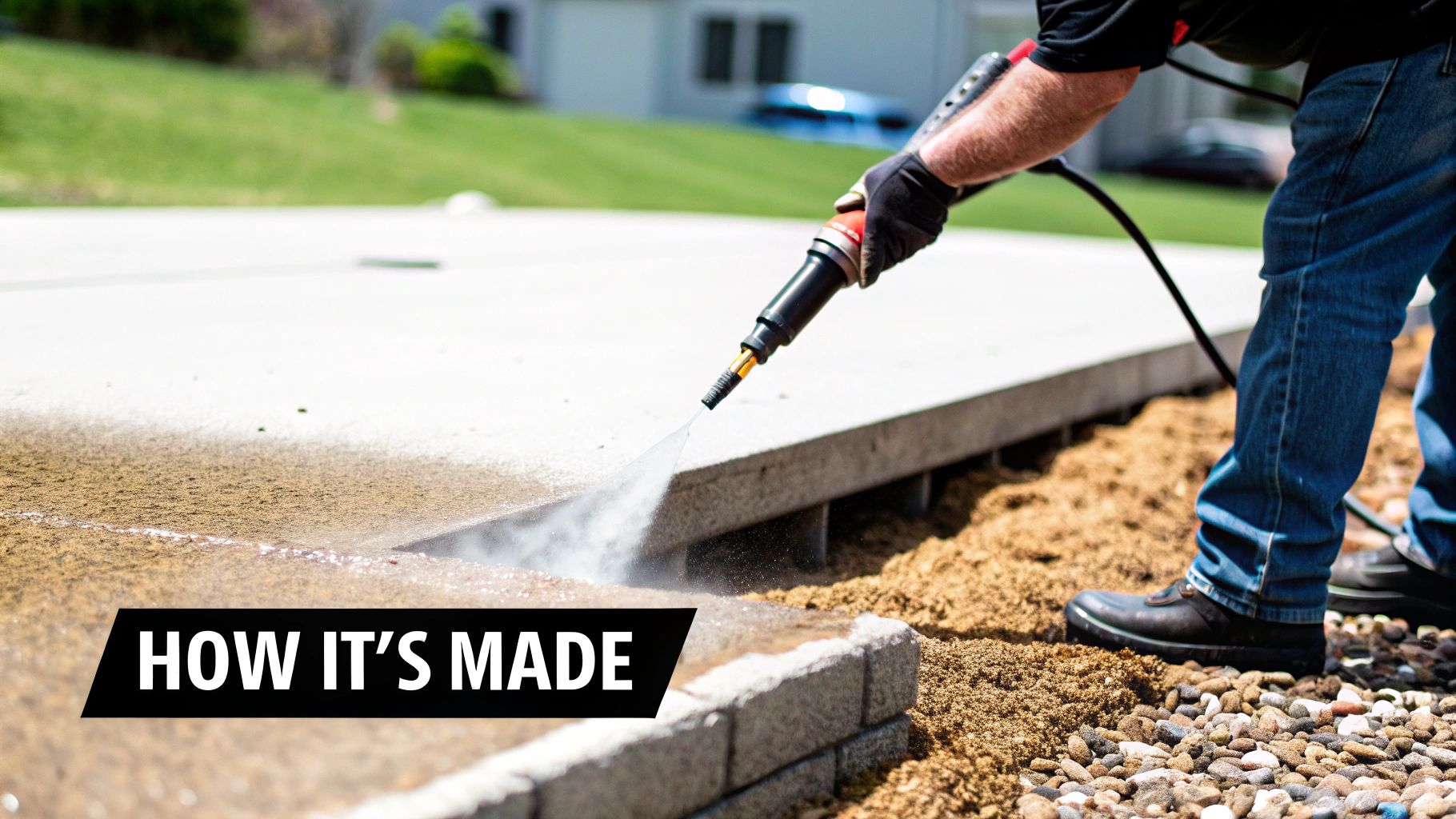
Creating an exposed aggregate finish is part art, part science. It’s a craft that hinges on careful planning and, more importantly, perfect timing. This isn't your standard pour-and-smooth concrete job; it involves a multi-step process to get that signature textured look. Believe it or not, the most important work happens long before the concrete truck ever shows up.
The final appearance is locked in by the materials chosen right at the beginning. An experienced contractor will sit down with you to select the perfect mix of stones, colorful pebbles, or even recycled glass. This is the aggregate. That choice, along with the base concrete color, is what dictates the entire look and feel of the finished surface. For example, selecting a dark gray integral color for the concrete mix will make light-colored aggregates like white quartz "pop" dramatically.
The Pouring and Exposing Process
Once the design is finalized, it's time for the installation to begin. The process starts out looking pretty familiar—the custom concrete mix is poured into the prepped area and leveled out. The crew works to get a perfectly flat, smooth base, which sets the stage for the magic that comes next.
Here’s where the real artistry comes into play. Immediately after the concrete is smoothed, a chemical called a surface retarder is sprayed evenly over the top. This is the key to the whole operation. It slows down the curing of just the very top layer of cement paste (typically the top 1/8 inch) while the concrete underneath hardens at a normal pace. Getting the timing right here is absolutely make-or-break.
After letting the slab set for a bit (usually within 24 hours), the big reveal happens. The crew comes back with a pressure washer to blast away that thin, non-hardened layer of cement paste treated with the retarder. As the paste washes away, it unveils the beautiful, textured aggregate that was hiding just beneath the surface.
The Curing and Sealing Phase
With the stones and pebbles now exposed, the slab needs to cure completely. This is the part of the process where the concrete gains its full strength and durability, and it can take several weeks. Proper curing is what ensures your new driveway or patio can stand up to heavy traffic and Atlanta’s weather for years to come.
The final touch is sealing. A high-quality sealant is rolled or sprayed over the entire surface, and it does two very important things. First, it acts as a shield, protecting the concrete from stains, moisture, and weather damage. Second, it really makes the colors of the aggregate pop, giving the stones a rich, glossy look.
This unique construction method relies on aggregates making up a significant portion of the mix—often 50% to 75% of the total volume—to achieve that dense, textured appearance. The entire finish depends on the precise application of a surface retarder and a controlled wash to reveal the stones. For a deeper dive into the technical specs, you can find detailed research on aggregate concrete composition.
It's this blend of careful material selection, precise timing, and skilled execution that turns a simple concrete pour into a durable piece of functional art.
Exploring Your Design and Aggregate Options
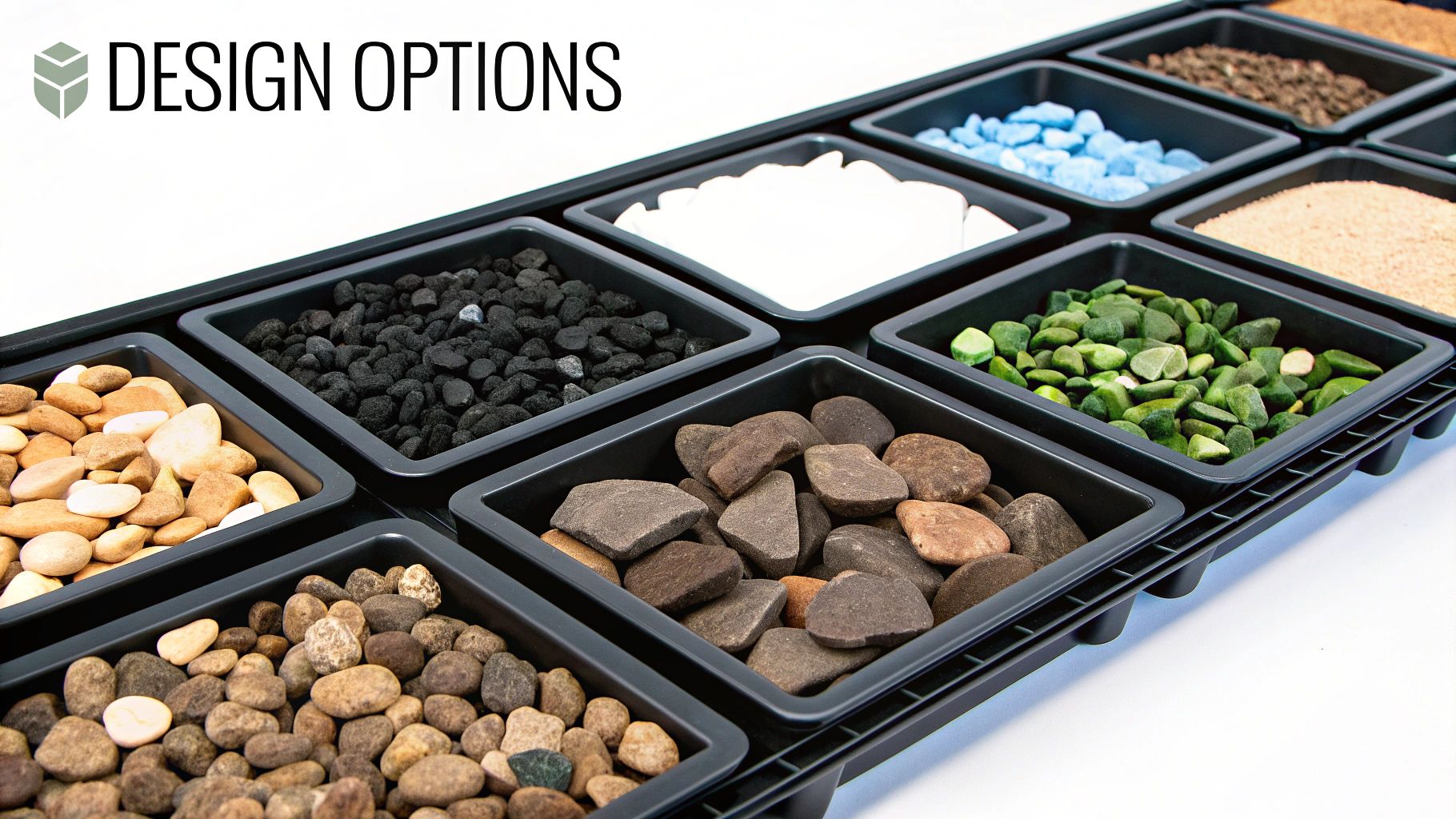
This is where the real fun begins. Once you get the "how," you can dive into the "what"—designing a surface that's completely your own. The final look of your exposed aggregate concrete isn't an accident; it's a direct reflection of the creative choices you make. The colors, shapes, and sizes of the stones you pick will define the entire character of your project.
Think of it as your chance to perfectly match your home’s architecture or complement your landscaping. The aggregates are your paint palette. You can create a subtle, earthy surface that feels like it’s always been there, or you can design a bold, modern statement piece that’s impossible to ignore.
Choosing Your Aggregate Type
The material you select for your aggregate is the single most important decision you'll make in the design process. Each type of stone brings its own unique color, texture, and personality to the mix, influencing everything from the visual appeal to the feel underfoot.
Let's look at some of the most common choices:
- River Rocks: Smooth, rounded, and easy on bare feet, these stones come in a warm range of earthy tones like tan, beige, and gray. They’re a fantastic choice for pool decks and patios where comfort is key.
- Granite: If you're going for a sharp, contemporary look, crushed granite is your answer. Its angular shapes and dramatic colors—like deep charcoals and blacks—create a modern, high-contrast surface perfect for a minimalist driveway.
- Quartzite: Known for its incredible durability and a subtle sparkle, quartzite offers a brighter palette of whites, soft pinks, and light grays. It adds a touch of elegance to any space, like a formal entryway.
- Recycled Glass: For a truly one-of-a-kind look with a pop of vibrant color, recycled glass is unbeatable. Available in brilliant blues, greens, and ambers, it catches the sunlight and creates a stunning, jewel-like effect, often used in decorative borders or custom patios.
The size of the aggregate matters, too. Smaller stones, around 3/8 inch, give you a finer, more uniform texture. Go bigger, with stones up to 1 inch or more, and you’ll get a bolder, more rustic appearance.
The real artistry is in the combination. You can mix different types, sizes, and colors of aggregates to create a completely custom blend. A mix of dark granite and light quartzite, for example, can produce a striking "salt and pepper" effect that’s both timeless and modern.
Comparing Common Aggregate Types
To help you visualize the possibilities, here’s a quick breakdown of how different materials stack up against each other. Each one offers a distinct blend of aesthetics and functionality.
| Aggregate Type | Common Colors | Typical Texture | Best For |
|---|---|---|---|
| River Rock | Browns, tans, grays, beiges | Smooth, rounded | Pool decks, patios, walkways |
| Crushed Granite | Charcoal, black, gray, salt & pepper | Angular, sharp | Modern driveways, contemporary patios |
| Quartzite | White, light gray, soft pinks | Crystalline, subtly sparkly | Elegant patios, decorative entryways |
| Recycled Glass | Blue, green, amber, clear | Smooth, jewel-like | Accent areas, custom patios, artistic features |
Choosing the right stone is all about balancing the look you want with how you plan to use the surface.
Advanced Design Techniques
Want to take your design even further? You can introduce other elements to customize the look.
A powerful technique is adding integral color directly to the concrete mix. Instead of the standard gray concrete, imagine a rich charcoal, a warm tan, or an earthy terracotta base. This dramatically changes the entire aesthetic, creating a backdrop that either complements or contrasts with your chosen stones. For example, a tan-colored concrete base with brown river rocks creates a warm, monolithic look perfect for a desert landscape design.
Another fantastic strategy is to frame your surface with different materials. Picture an exposed aggregate driveway bordered with classic dark brick or sleek, colored concrete pavers. This creates a clean, polished frame that elevates the entire design. You can see great examples of how these elements work together in our portfolio of completed concrete projects.
The Good, The Bad, and The Gritty
Like any material choice for your home, exposed aggregate concrete has its own set of pros and cons. Getting a handle on these trade-offs is the best way to decide if it’s the right surface for you.
You’ll find it’s a fantastic blend of beauty and brawn, but it's smart to weigh the good against the not-so-good. The benefits usually center around safety and longevity, while the potential drawbacks are more about comfort and the importance of a top-notch installation.
The Clear Advantages of Exposed Aggregate
What makes this finish so popular? It comes down to a few key features that make it a champion for almost any outdoor project, especially where you need something tough and safe. That textured surface isn't just for show.
- Incredibly Durable: With all those hard stones locked in at the surface, you get an exceptionally rugged and wear-resistant finish. It’s built to handle everything from heavy car traffic to Atlanta’s freeze-thaw cycles without breaking a sweat.
- Superior Slip Resistance: This might be its biggest selling point. That bumpy, pebbled texture gives you fantastic grip underfoot, making slips and falls far less likely, even when it's wet. It’s an ideal—and much safer—choice for pool decks, sloped driveways, and garden paths.
- One-of-a-Kind Style: Let's face it, exposed aggregate just looks fantastic. It has a natural, earthy elegance that plain gray concrete can’t touch. The sheer variety of stones, colors, and sizes means you can create a custom look that really elevates your home's curb appeal.
Potential Drawbacks to Consider
It's a fantastic material, but it's not perfect for every single situation. Before you commit, it’s worth thinking about a couple of things.
The very same texture that gives you all that great grip can also be a minor downside. If you're picturing an area for constant barefoot traffic, like right around the pool, the rough surface can be less comfortable to walk on than smoother options like stamped or brushed concrete. For example, young children running on the surface may find it abrasive on their feet.
Also, the final quality is almost entirely in the hands of the installer. A perfect installation and proper sealing are crucial. If the washing process is rushed or the sealant isn't applied correctly, you might see a few pebbles pop out over the years (a phenomenon called "spalling"), which will mean calling someone for minor touch-ups.
While exposed aggregate might cost a bit more upfront than simple brushed concrete, its incredible lifespan and minimal upkeep often make it the smarter financial choice in the long run. The secret is hiring a pro who knows what they're doing to sidestep any future headaches.
Getting Practical: Costs, Upkeep, and Lifespan
When you're thinking about a big upgrade like a new driveway or patio, the practical questions are always front and center. What's it going to cost? How much work is it to maintain? And how long will it actually last? Let's break down the real-world numbers for exposed aggregate concrete so you can see why it's such a smart investment.
The great thing about this material is that its rugged good looks are matched by a surprisingly simple care routine. It's not one of those fussy, high-maintenance surfaces that demands your constant attention. Durability is baked right in, and that translates directly into long-term value.
What Does Exposed Aggregate Concrete Cost?
For a professional installation, you can expect the cost of exposed aggregate concrete to run anywhere from $8 to $18 per square foot. That's a bit of a range, and where your project lands will depend on a few key variables.
- Your Choice of Aggregate: Using common, local river stones will keep you on the more affordable end of the scale (e.g., $8-$12/sq. ft.). If you start opting for premium materials like bits of colored recycled glass or exotic quartzite, the price will naturally climb (e.g., $15-$18+/sq. ft.).
- The Complexity of the Job: A simple, flat patio is a pretty straightforward job. But if you're working with steep slopes, intricate patterns, or a lot of curves, the extra labor involved will increase the cost.
- Adding Integral Color: Coloring the concrete mix itself is an extra step that adds a bit to the material cost, but it can completely transform the final look and is often worth it.
Keeping It Looking Great: Maintenance and Long-Term Care
Here’s the good news: maintaining an exposed aggregate surface is refreshingly low-effort. The whole routine is about preserving its appearance and structure over the long haul, and it couldn't be simpler.
Most of the time, a good sweep or a quick rinse with a garden hose is all you'll need. If you get some stubborn dirt, a pressure washer on a low setting will do the trick. The single most important task is resealing the surface every 2 to 4 years. This clear, protective coat is what shields it from moisture, prevents stains, and really makes the color of the stones pop.
How Long Will It Last? Lifespan and Return on Investment
A properly installed and maintained exposed aggregate surface is built for the long haul. With its tough, grippy surface and solid concrete base, you can realistically expect it to last for 30 years or more. That easily outshines other common options like asphalt or pavers, which often need replacing much sooner.
This impressive combination of longevity, beauty, and durability is exactly why its popularity is soaring. The global market for exposed aggregate concrete was valued at around USD 14.3 billion in 2023 and is projected to keep growing. You can dive deeper into the growth of the exposed aggregate concrete market to see the data for yourself. This isn't just a fleeting trend; it’s a reflection of the material's recognized value as a high-performance, long-term solution for both homes and businesses.
Where to Use Exposed Aggregate Concrete
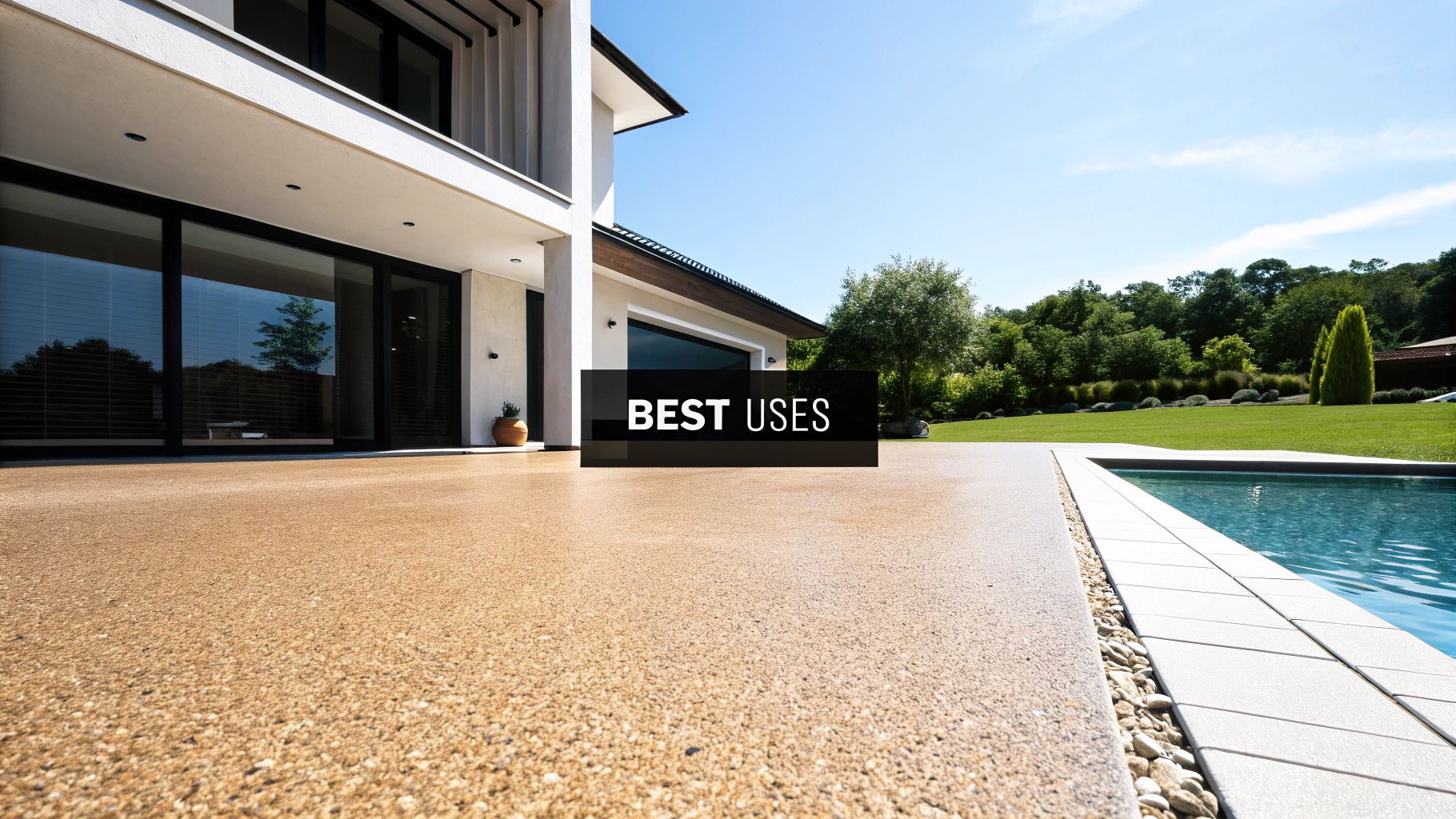
One of the best things about exposed aggregate is just how versatile it is. You'll find this tough, stylish finish on all kinds of projects, from residential homes to large commercial spaces. It has a unique way of blending rugged performance with a more natural, organic beauty.
This is the go-to material for areas where you need aesthetics, durability, and safety to all work together. It stands up to heavy use, shrugs off the weather, and provides a naturally non-slip surface, making it a smart solution for almost any outdoor job you can think of.
Popular Residential Applications
Around the home is where exposed aggregate really shines. It’s a fantastic way to boost curb appeal and add serious functionality to your outdoor living areas.
- Driveways: This is probably the most classic use. The surface is incredibly strong, built to handle cars and trucks day in and day out without cracking under pressure. That textured finish also gives you great traction, which is a real bonus on steep driveways or during Atlanta's infamous rainy seasons.
- Patios and Entertainment Areas: Out back, the earthy, stone-like appearance is a perfect match for landscaping and garden designs. It creates a durable, elegant foundation for patio furniture, grills, and years of family get-togethers.
- Pool Decks and Walkways: Safety is everything around a pool, and this is where exposed aggregate is a clear winner. Its pebbled surface offers superior slip resistance when wet, making it a much safer choice than slick, smooth finishes that can lead to nasty falls.
Your driveway is one of the first things people see. For homeowners weighing their options, taking a look at different residential driveway concrete finishes can spark some great ideas and help you find the perfect match for your home's style.
Ideal Commercial and Public Uses
The same qualities that make exposed aggregate a great choice for homeowners make it a wise investment for commercial properties. It’s a sophisticated, low-maintenance surface that’s built to withstand the rigors of public use.
You’ll often see it used in public plazas, courtyards, and building entryways. In these high-traffic zones, its incredible durability means it will look sharp for years with very little upkeep. For example, a city park might use it for walkways to ensure safety and longevity under constant foot traffic.
Plus, its upscale appearance helps create a professional and welcoming vibe for businesses, retail centers, and community hubs. This combination of strength and style makes it a reliable choice for any project that needs to look good and last a long, long time.
Got Questions? We’ve Got Answers.
You've seen what exposed aggregate can do, but you probably still have a few practical questions. It's one thing to see pictures, but another to imagine it as your own driveway or patio. Let's tackle some of the most common things people ask before they decide.
Think of this as the final check-in to make sure you're completely comfortable with how this unique surface works in the real world.
Is It Slippery When It Rains?
Actually, it's just the opposite. This is one of the biggest functional benefits of an exposed aggregate finish. The textured, uneven surface of the little stones provides fantastic grip underfoot.
Compared to a perfectly smooth or even a standard broom-finished slab, exposed aggregate offers a level of slip resistance that's hard to beat. That makes it a genuinely safer choice for pool decks, walkways, and especially sloped driveways that see a lot of Atlanta rain.
How Often Does It Need to Be Resealed?
To keep it looking sharp and protected from the elements, plan on resealing the surface every 2 to 4 years.
What pushes you toward the 2-year mark versus the 4-year one? Heavy traffic and direct, all-day sun are the biggest factors. For example, a driveway that gets heavy use and bakes in the sun all afternoon will likely need sealing closer to the 2-year mark. A shaded patio, on the other hand, might easily go 4 years.
Can you pour exposed aggregate over my old concrete slab? Sometimes, yes, but only if the existing slab is in great shape—no major cracks, crumbling, or heaving. A professional has to make that call. Honestly, for a perfect, long-lasting finish, starting fresh with a new slab is almost always the better bet.
Is It More Expensive Than Stamped Concrete?
They're often in the same ballpark, but the final price tag depends entirely on the specifics of your design.
- Exposed Aggregate: The cost here is driven by the type of aggregate you select. Common river rock will be more affordable than, say, polished quartz or colored glass.
- Stamped Concrete: With stamped concrete, the cost is tied to the complexity of the pattern and the multi-layered coloring process required to make it look realistic. For instance, a simple "cobblestone" stamp is less costly than a detailed "ashlar slate" pattern with multiple colors.
Your best move is to get quotes for both. You'll likely find that the prices are very competitive, and you can choose the look you love most without a major budget swing.
Ready to see how a beautiful, durable, and slip-resistant surface can elevate your property? The team at Atlanta Concrete Solutions has the expertise to bring your vision to life with a flawless exposed aggregate installation. Get your free, no-obligation quote today!