
There is no single best commercial concrete sealer. The right choice depends on whether the slab is interior or exterior, the traffic load, and whether slip resistance or chemical resistance matters more.
A facility manager usually meets this decision after something has already gone wrong. Forklifts raise dust in a warehouse, delivery vehicles track deicers across a loading dock, or a polished retail floor becomes unexpectedly slick after routine cleaning. The attractive finish on the product label matters, but wet-traffic safety, substrate condition, and failure mode matter more.
The market is mature and growing steadily, not exploding. Recent estimates place the global concrete sealer market at $1.27 billion in 2024 and $1.33 billion in 2025, while another forecast values it at $2.03 billion in 2024 and projects $2.95 billion by 2030. A longer-range estimate projects growth from $2.52 billion in 2026 to $4.27 billion by 2035. These forecasts connect demand to construction, infrastructure maintenance, and protection from moisture, chemicals, and wear, as detailed in the global concrete sealer market report.
The practical conclusion is simple. Choose a penetrating silane or siloxane when the slab is exterior and wet traction, chloride protection, or breathability controls the risk. Choose a film-forming acrylic, epoxy, or polyurethane when you need stain blocking, a controlled appearance, or a chemically resistant cleanable surface.
| Project condition | My recommendation | Why |
|---|---|---|
| Exterior parking deck or sidewalk | Silane or siloxane | Repels water and chlorides without leaving a film |
| Interior retail or decorative walkway | Acrylic | Fast turnaround and controlled sheen at a lower cost |
| Warehouse or automotive service floor | Epoxy | Strong stain and chemical resistance |
| High-abrasion commercial floor | Polyurethane | Better abrasion performance and more flexible topcoat behavior |
| Wet loading dock or pool deck | Penetrating sealer, or a textured film system | Reduces the risk associated with a smooth wet film |
What a Commercial Concrete Sealer Actually Does
At 6 a.m., a facility manager enters a 40,000-square-foot warehouse and sees forklift traffic throwing concrete dust into the air. Outside, the loading-dock apron is spalling after months of water and deicer exposure. The right sealer must address traffic, cleaning, impact, moisture, and wet-traffic safety. Darkening the slab is incidental.
A commercial concrete sealer is either a penetrating treatment or a surface coating built for demanding service. It can limit water or contaminant entry, bind the surface, improve cleanability, or form a wear-resistant finish. Select it according to the dominant failure risk: abrasion, chemicals, chlorides, freeze-thaw exposure, moisture vapor, or wet foot traffic.
Performance matters more than shine
Commercial specifications commonly assess abrasion, adhesion, permeability, VOC content, chemical resistance, and traction. Product literature cites standards including ASTM C309, ASTM C1315, ASTM C672, and NCHRP 244 for commercial-grade penetrating systems. One benchmark reports 60 mg of abrasion resistance under ASTM D4060 and compliance with FDA 21 CFR 175.300 when fully cured, according to the commercial penetrating sealer technical literature.
Each test covers a different risk. ASTM C309 and C1315 address curing and sealing performance. ASTM C672 evaluates scaling resistance under freeze-thaw and deicing exposure. ASTM D4060 measures abrasion loss, with lower loss indicating less material removed in the stated test. These results do not establish whether a wet showroom floor provides safe traction.
Practical rule: Specify the sealer against the failure you need to prevent. A water-repellent treatment is not automatically suitable for forklift traffic, and a hard glossy coating can create an unacceptable wet-walking surface.
Commercial demand spans parking structures, office perimeters, retail forecourts, and hospitality properties. That range reinforces the need to match chemistry to exposure rather than select by finish alone. Penetrating systems suit slabs where water and chlorides are the main concern. Film-forming systems fit surfaces that need stain control, cleaning support, or a designed appearance.
Inspect the slab, identify traffic patterns, and document cleaning chemicals before approving a product. For projects combining functional protection with a designed finish, review commercial decorative concrete options. Facility teams can also browse concrete maintenance advice to align sealer selection with ongoing cleaning and upkeep.
The First Decision Every Buyer Has to Make
A facility manager choosing a commercial concrete sealer should start with one question: will a surface film improve safety and service, or will a penetrating treatment better protect the slab without changing its traction?
A film-forming sealer, including acrylic, epoxy, or polyurethane, creates a layer above the concrete. That layer can deliver a controlled gloss, satin, or matte finish and can carry texture additives for wet-traffic areas. It also creates a maintenance surface. Scratches, peeling, blistering, yellowing, and slickness in wet conditions become coating failures that require inspection and repair.
A penetrating silane, siloxane, or siliconate enters the concrete's capillary structure and reacts below the surface. It repels water and chlorides while preserving much of the slab's existing texture. It will not hide stains, create showroom gloss, or block oils like epoxy. In return, it avoids the peeling risk of a surface film and usually preserves the traction profile facility teams already know.
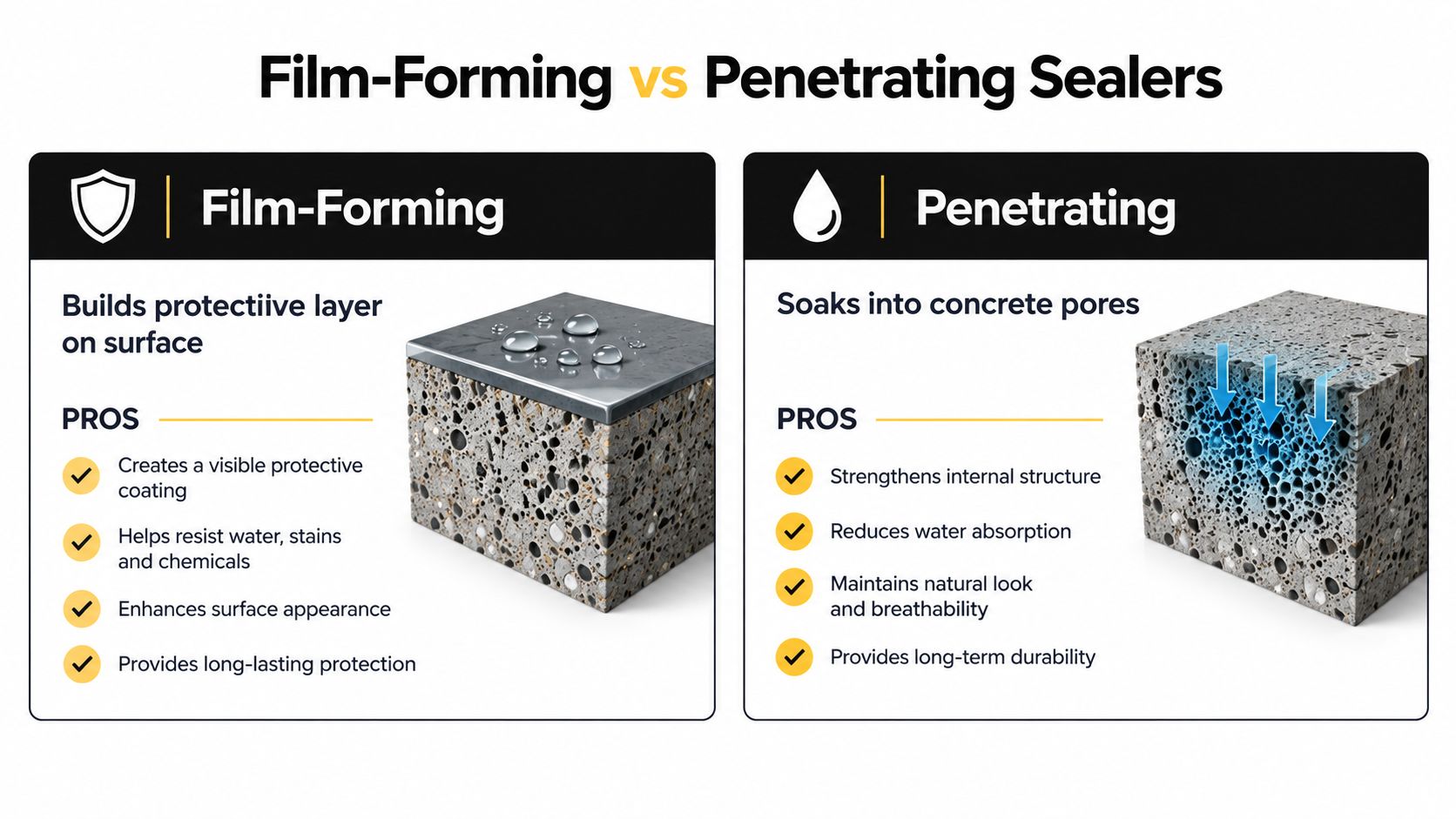
Select the mechanism before the finish
Choose a film-former where the floor needs a designed appearance or a barrier against oils, food residue, stains, and demanding cleaning. Specify a penetrating product where permeability and wet traction carry more weight than appearance, particularly on exterior slabs exposed to rain, deicers, and freeze-thaw conditions.
The repair plan should influence the decision. A damaged film generally needs cleaning, abrasion, spot repair, or removal before recoating. A penetrating treatment has no visible layer to peel, but it cannot conceal surface damage or restore worn concrete. Either system requires sound concrete, effective drainage, and a maintenance plan that matches traffic and contamination.
For commercial specifications, assess slip resistance, permeability, and life expectancy alongside VOC content, solids, oil and grease resistance, coverage, and wet slip behavior. The ASCC sealer selection and application guide directs specifiers to ASTM D2047 and related traction standards for floor applications.
Ask what must remain safe and intact when the slab is wet, dirty, and busy. The answer should determine the sealer category before finish, color, or brand enters the discussion.
Acrylic, Epoxy, Polyurethane, and Silane or Siloxane Explained
Each chemistry has a legitimate commercial role. The mistake is treating one product family as a universal answer.
Acrylic
Acrylic is the practical budget film. Water-based versions suit occupied interiors because they generally offer lower odor and easier cleanup. Solvent-based acrylics often produce stronger color enhancement and a familiar wet-look finish, making them useful on decorative exterior concrete and stamped walkways.
The trade-off is limited resistance to severe abrasion and aggressive chemicals. In commercial service, acrylic commonly needs recoating every 1 to 3 years, depending on traffic and exposure. It belongs in low- to moderate-traffic retail showrooms, decorative corridors, stamped concrete, and areas where fast drying and easy refresh work outweigh maximum durability.
Acrylic is a poor choice for a loading dock that sees oil, tire abrasion, and standing water. It can also become slippery when wet if the finish is smooth and high gloss.
Epoxy
Epoxy is a two-part film-forming system that creates a hard, dense surface. It handles oils, fuels, stains, and many commercial cleaning demands better than acrylic, which is why it fits warehouse aisles, food-processing bays, and automotive service areas.
Epoxy's weaknesses are just as important. It can be brittle under impact, and standard epoxy can chalk or yellow under ultraviolet exposure. Keep it indoors or protect it with a compatible UV-stable topcoat. A mechanically prepared slab and controlled moisture conditions are essential because a hard coating doesn't forgive a weak bond or vapor pressure beneath it.
Polyurethane
Polyurethane is the stronger film-former for abrasion-heavy environments. Two-part systems provide a combination of hardness and flexibility, while aliphatic versions offer better UV stability than ordinary epoxy. Polyurethane is more expensive and more demanding to mix and apply, but it makes sense where replacing a worn finish disrupts operations.
Use polyurethane as a direct system where specified, or as a topcoat over cured epoxy when the project needs epoxy's chemical barrier and polyurethane's abrasion and UV performance. Hospitals, laboratories, aircraft hangars, and high-traffic commercial floors are logical applications.
Silane and siloxane
Silane and siloxane are penetrating water- and chloride-repellent chemistries. They don't build a visible film, change the gloss, or hide staining. That makes them the right tool for parking decks, bridge substructures, exterior sidewalks, and other slabs where moisture migration and freeze-thaw damage drive the maintenance problem.
A Wisconsin DOT evaluation found that penetrating silane and siloxane sealers outperformed several alternatives for chloride and freeze-thaw protection. One penetrating sealer recorded a performance ratio of 0.42, compared with 1.49 for the poorest-performing sealant, and the best-performing penetrating products remained effective after freeze-thaw exposure, as reported in the Wisconsin DOT concrete sealer evaluation.
| Sealer Type | Chemistry | Film or Penetrating | Typical Commercial Life | Best Application |
|---|---|---|---|---|
| Acrylic | Water- or solvent-based acrylic | Film-forming | 1 to 3 years in commercial service | Decorative retail floors and stamped walkways |
| Epoxy | Two-part epoxy resin | Film-forming | Recoat depends on traffic and exposure | Indoor warehouses, food bays, and service floors |
| Polyurethane | Two-part polyurethane | Film-forming | Longer recoat cycle than acrylic | High-abrasion floors and protective topcoats |
| Silane or siloxane | Reactive penetrating chemistry | Penetrating | Tied to traffic and exposure rather than a fixed clock | Parking decks, sidewalks, and chloride-exposed concrete |
Performance Trade-Offs Side by Side
A bid specification should force the trade-offs into the open. Film-forming products generally provide better stain blocking and a more washable surface. Penetrating products generally preserve texture, maintain breathability, and provide a safer starting point for exterior wet traction.
Do not accept a generic “high durability” claim. Ask what was tested, under which standard, and whether the result reflects the actual floor. A Taber abrasion result, for example, is useful only when you know the test conditions and the stated material loss. A wet-traction result matters only when the test method and surface condition match the facility's risk.
What the comparison tells you
Acrylic wins on budget, appearance, and fast refresh work. Epoxy wins on chemical and stain resistance indoors. Polyurethane earns its premium where abrasion, flexibility, and UV stability justify more demanding installation. Silane and siloxane win when the concrete must breathe and the main threat is water or chloride ingress.
The most important gap is wet slip. A smooth film can become slick when water, oil, snow, or cleaning residue sits on top. A penetrating sealer doesn't create that extra film layer, so it usually offers a more slip-friendly baseline, although the original concrete profile and contamination still control actual traction.
| Sealer Type | Durability (Years) | Slip Resistance (Wet) | Chemical Resistance | UV Stability | Cost per Sq Ft (Installed) |
|---|---|---|---|---|---|
| Acrylic | 1 to 3 in commercial service | Fair without texture, better with additive | Limited to moderate | Moderate, solvent versions can degrade | Not stated in verified data |
| Epoxy | Project-dependent | Can be poor when smooth and wet | Excellent indoors | Limited unless protected | Not stated in verified data |
| Polyurethane | Longer recoat cycle than acrylic | Good with a textured system | High | High for aliphatic versions | Not stated in verified data |
| Silane or siloxane | Exposure-dependent | Strong baseline because no film is left | Water and chloride protection, not a stain-blocking film | Exposure-dependent | Not stated in verified data |
The same selection guide emphasizes VOC content, solids level, oil and grease resistance, permeability, coverage, and wet slip resistance, not appearance alone. It also identifies ASTM-linked traction evaluation as part of floor selection, which is why the product data sheet belongs in the bid file, not just the maintenance closet.
Don't put epoxy on an exposed parking deck because it looks tough. Don't put siloxane in a food-processing bay where operators need a stain-blocking, scrub-resistant surface. Match the chemistry to the contaminant and the way people move across the slab.
Best Uses for Each Sealer Type in Commercial Settings
The best product is the one that fails least often in the assigned environment. That means mapping chemistry to exposure instead of selecting a brand from a general “best sealer” list.
Acrylic belongs in low-traffic retail showrooms, decorative corridors, and stamped exterior walkways where color, sheen, fast turnaround, and budget control matter. It fails when forklifts, petroleum products, standing water, or harsh cleaning quickly wear the surface. A textured additive can improve traction, but it doesn't turn acrylic into an industrial coating.
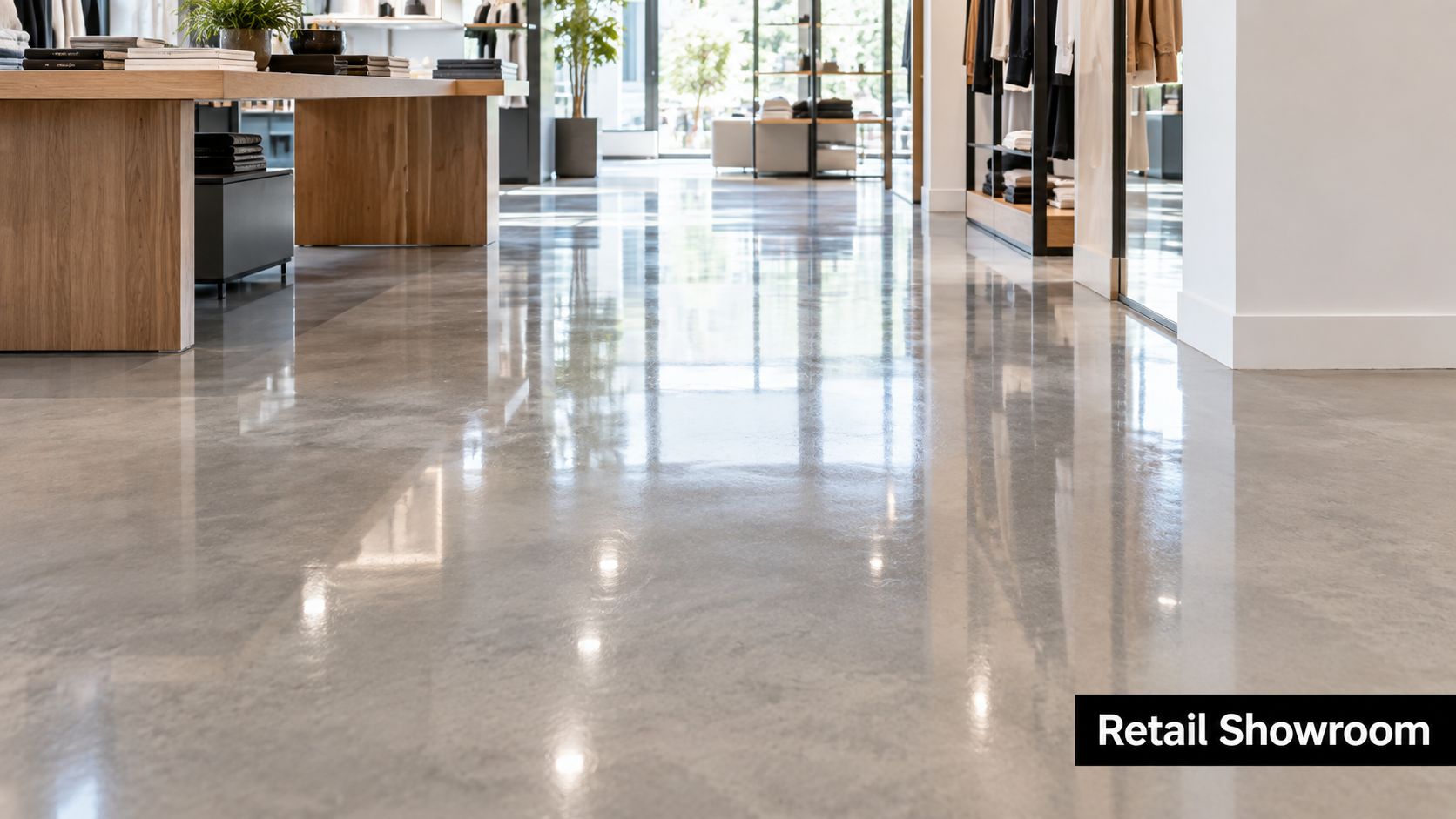
Epoxy is the workhorse for indoor warehouse aisles, food-processing bays, commercial kitchens, and automotive service floors. It creates a dense surface that helps crews remove oils, fuels, food residue, and stains. Its failure points are impact brittleness, moisture beneath the coating, and ultraviolet exposure. On an exterior slab, standard epoxy needs a carefully selected protective system rather than blind confidence in its hardness.
Polyurethane earns its place in hospitals, laboratories, aircraft hangars, service bays, and other high-abrasion facilities. It handles repeated wear better than acrylic and can provide stronger UV stability when an aliphatic formulation is specified. The installation team must control mixing, film thickness, timing, and substrate preparation. A poor polyurethane installation is an expensive failure, not a forgiving one.
Silane or siloxane belongs on parking decks, bridge substructures, exterior sidewalks, public walkways, and freeze-thaw-exposed concrete. These products protect against water and chlorides without covering the surface with a film. They won't produce gloss or stop every oil stain, so they don't belong where the specification requires a decorative barrier or aggressive stain resistance.
For a designed interior surface, compare the maintenance implications of commercial polished concrete with a coated system. Polishing and sealing solve different problems, and the correct choice depends on whether the facility values exposed texture, a film finish, or minimal surface build.
Why Slip Resistance Should Change Your Shortlist
A wet loading dock, a rain-soaked entrance, or a lobby cleaned before opening can turn a decorative sealer decision into a safety problem. Facility managers should rank wet traction before gloss wherever water, oil, snow, condensation, or frequent mopping reaches the walking surface.
Wet slip resistance belongs in the specification, not in the final product review. Test results matter only when the specification also identifies the concrete profile, contamination condition, expected footwear, and whether testing occurs on a wet surface. Use the ASCC selection guidance to frame those decisions alongside the project's applicable traction requirements.
Texture changes the outcome
A smooth, high-gloss film can reduce the traction provided by the concrete beneath it. Aggregate broadcast, a suitable surface profile, or a compatible slip-resistant additive can restore texture, provided the installer distributes it consistently. Too little texture leaves the floor slick. Too much texture traps soil, complicates cleaning, and can disrupt carts, wheels, or mobility devices.
Penetrating silane and siloxane keep the existing concrete profile exposed, giving many exterior slabs a better starting point for wet traction than a smooth film. They do not correct poor drainage, contamination, or polished concrete used in an unsuitable location. Their advantage is simple: they do not place a continuous glossy layer between footwear and the slab.
Safety first: A wet loading dock needs a traction specification, not a shine specification.
VOC compliance also belongs on the shortlist. Commercial product literature identifies low-VOC formulations at under 100 g/L or under 250 g/L for regulated markets, while the applicable limit depends on product category and jurisdiction. Check the current technical data sheet against project requirements. “Low odor” does not establish compliance.
A glossy sealer can suit a controlled, dry showroom. It should not be the default for pool decks, entrances, loading docks, or exposed walkways. Choose low-gloss or penetrating protection for those areas, add texture when the risk requires it, and verify wet traction after the sealer cures and the surface has been cleaned.
The visual test below shows why an attractive dry finish can perform differently in wet conditions.
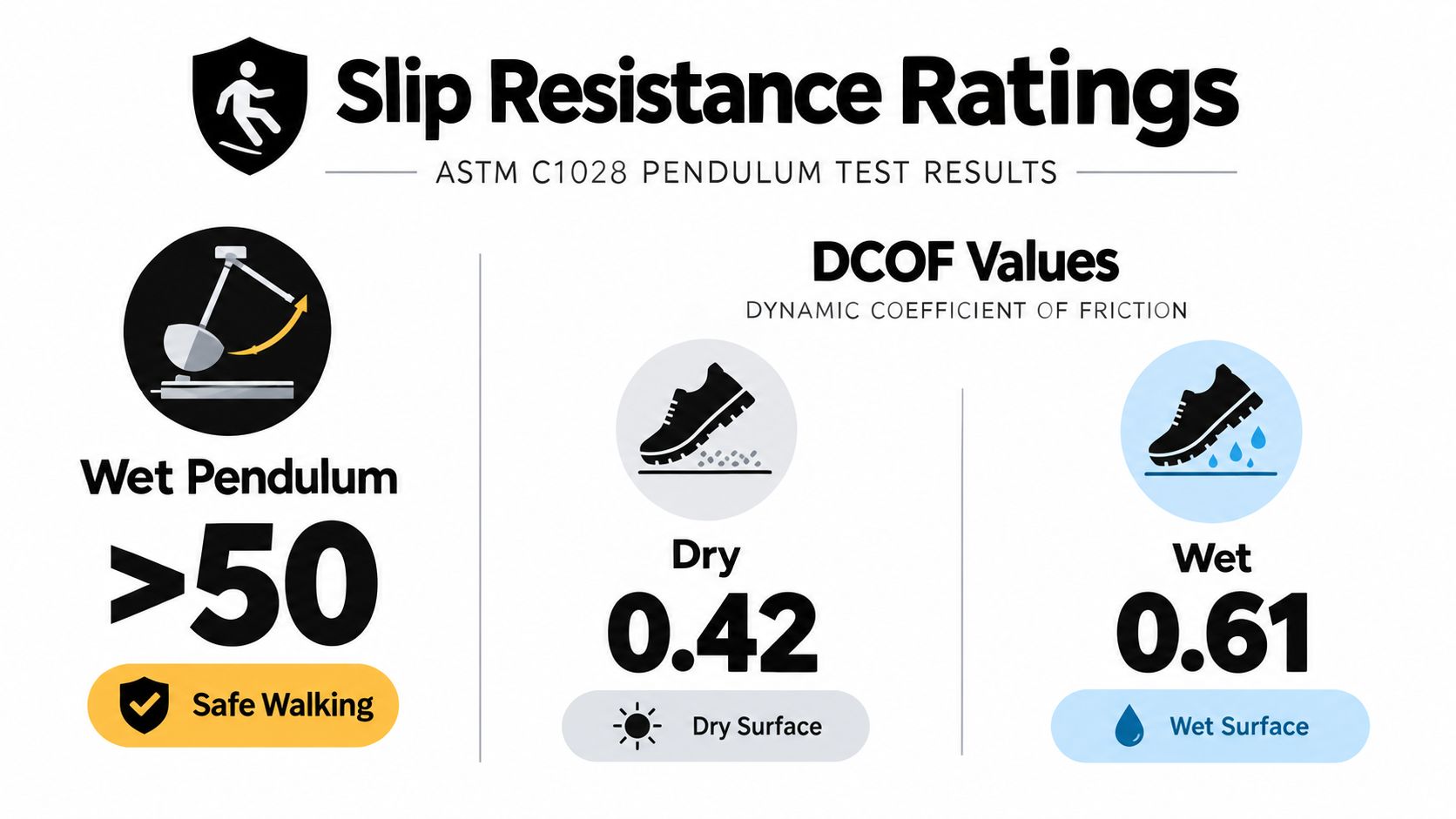
A short technical demonstration can help maintenance teams see how finish, texture, and contamination affect walking safety.
How to Pick the Right Sealer for Your Project
Use four questions before requesting a price: interior or exterior, pedestrian or vehicle traffic, dry or wet exposure, and decorative or utilitarian appearance. The answers usually narrow the field faster than a brand comparison.
| Setting | Primary Concern | Recommended Sealer |
|---|---|---|
| Interior retail showroom | Appearance and fast return to service | Acrylic, with texture where wet cleaning creates risk |
| Indoor warehouse aisle | Forklift abrasion and cleanability | Epoxy, with a compatible textured finish |
| Automotive service floor | Oil, fuel, impact, and wear | Epoxy with polyurethane protection where specified |
| Hospital or laboratory | Abrasion, chemicals, and controlled odor | Water-based polyurethane system |
| Parking deck | Chlorides, moisture, and freeze-thaw exposure | Silane or siloxane |
| Exterior sidewalk or public walkway | Wet traction and breathability | Penetrating silane or siloxane |
| Pool deck or wet entrance | Slip resistance and moisture | Penetrating sealer or textured film system |
| Decorative stamped walkway | Color enhancement and refreshability | Acrylic with a slip-resistant additive |
Contractor-ready application checklist
Prepare mechanically when the slab demands it. Shot blasting or diamond grinding is the right route for polished concrete, existing coatings, contamination, or a specification requiring an aggressive profile. Acid etching can suit compatible uncoated decorative concrete, but the residue must be neutralized and removed.
Test moisture before choosing a film. Use a calcium chloride moisture test where the coating manufacturer requires quantified vapor information. If moisture risk is unresolved, don't trap it beneath epoxy or polyurethane. Select a breathable penetrating system or correct the moisture condition first.
Confirm absorption and cleanliness. Water should absorb into a bare, prepared slab. Beading can indicate existing sealer, contamination, or insufficient profile. Remove the cause before applying another product.
Apply controlled coats. Follow the product's stated coverage rather than trying to make one heavy coat do the work of two. Film systems commonly use a first coat for bond and a second for continuity, while penetrating systems may need additional material on porous concrete.
Schedule access carefully. Keep pedestrians, vehicles, forklifts, and cleaning crews off the surface until the manufacturer's cure requirement is met. Cure depends on chemistry, temperature, humidity, ventilation, and substrate condition.
Set the maintenance interval in writing. Use a 12- to 36-month recoat schedule only where the selected chemistry and exposure justify it. Inspect sooner in high-traffic or chemical areas, and recoat a film only after confirming compatibility and surface preparation.
For cracks, spalls, failed coatings, or damaged joints, coordinate sealing with commercial concrete and masonry repair. Sealer won't restore missing concrete or solve movement, drainage, or structural defects.
Atlanta Concrete Solutions provides concrete sealing and protective coating work for commercial slabs, including applications intended to protect against moisture, stains, and wear. Visit Atlanta Concrete Solutions to discuss the slab condition, traffic pattern, and chemistry that fits your facility, then request a project-specific plan before choosing a product.