
While national averages hover around $1,149, Atlanta homeowners should realistically budget $800 to $3,500 for standard masonry repairs in 2026, with complex structural or high-access chimney work frequently exceeding $5,000 because of local labor rates and material matching requirements. That's why a small crack on your brick wall can produce a quote that feels completely out of proportion to the visible damage.
You may have found crumbling mortar near a window, a stair-step crack along the front elevation, or loose brick around a chimney. From the driveway, it looks like a quick patch. In Atlanta, the key question is whether water has moved behind the brick, whether the supporting structure has shifted, and whether the crew can safely reach the damaged area without specialized equipment.
Understanding Masonry Repair Costs in Atlanta
A national average is a poor budgeting tool for Atlanta masonry work. One 2026 cost guide places typical U.S. masonry repair spending at about $1,149, with most homeowners paying $591 to $2,088 and a broader range of $150 to $3,000 or more. The same guide explains that the final price depends on the damaged area, the difference between cosmetic and structural work, and specialty requirements such as tuckpointing, chimney repair, and foundation stabilization. See the masonry repair cost guide for the national baseline.
For an Atlanta homeowner, a practical starting budget is $800 to $3,500 for ordinary residential masonry repair. That range fits many ground-level repointing jobs, limited brick replacement, porch repairs, and small wall sections. It doesn't cover every situation. A high chimney, difficult roof access, historic brick match, unstable wall, or repair connected to water intrusion can push the invoice beyond $5,000, sometimes substantially higher.
Atlanta conditions change the scope
Atlanta's humid weather keeps masonry exposed to persistent moisture. Heavy rain, shaded walls, clogged gutters, poor grading, and failed flashing can all send water into mortar joints and behind brick veneer. Once moisture reaches concealed areas, the contractor may need to remove more material than the visible crack suggests.
Local access matters just as much. A ground-level retaining wall can often be reached with ordinary tools, while a second-story chimney may require scaffolding, staging, or lift equipment. Labor availability also affects scheduling and hourly pricing. A 2026 industry pricing reference places standard residential masonry labor around $40 to $100 per hour, with specialized or high-cost metro work reaching $120 to $150 per hour. Those rates help explain why a short visit can still result in a meaningful invoice.
Cosmetic work versus structural work
Cosmetic work usually involves removing deteriorated mortar, cleaning the joint, and repointing it with a compatible mix. Structural work may involve demolition, brick replacement, lintel or flashing correction, wall rebuilding, foundation-related repairs, or water-management work.
Before you compare contractors, decide whether the work connects to the broader hardscape or foundation system. Atlanta homeowners dealing with masonry around driveways, patios, slabs, or retaining walls can review Atlanta concrete services and masonry-related hardscape work as part of the overall project assessment.
The Core Drivers of Your Masonry Invoice
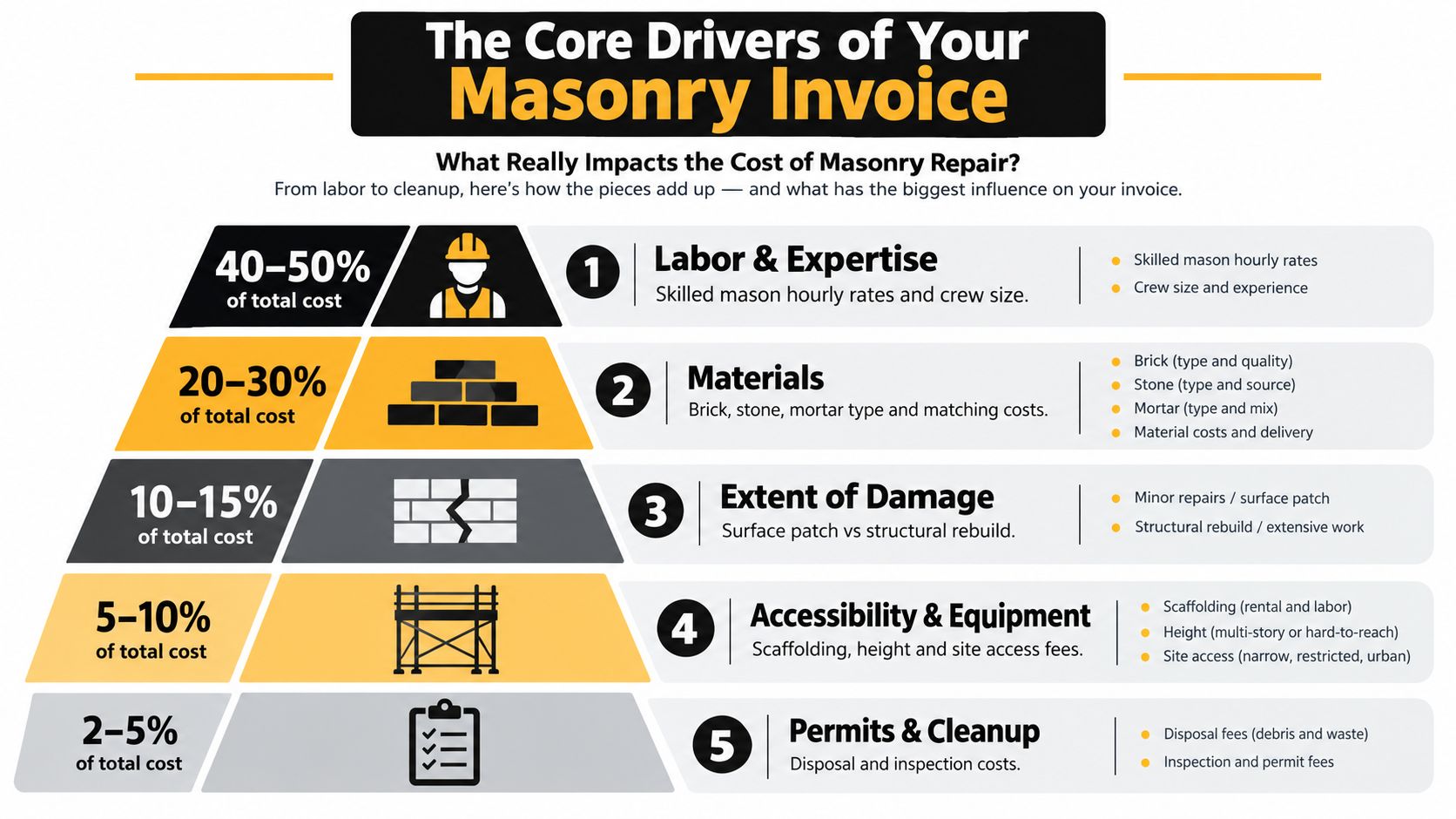
A small crack in an Atlanta wall can produce a large estimate when access, hidden moisture, or unstable masonry expands the scope. Brick quantity is only one cost factor. Labor, material compatibility, damage depth, equipment, permitting, and cleanup determine what you pay.
Labor and expertise
Labor usually has the greatest effect on the invoice. Standard residential masonry work commonly falls between $40 and $100 per hour, while specialized crews in expensive metro conditions can reach $120 to $150 per hour. These figures appear in 2026 masonry labor and repair pricing references.
A qualified mason does more than pack mortar into a crack. The crew must identify the correct mortar hardness, remove failed material without damaging sound brick, preserve the existing joint profile, and blend the repair into weathered masonry. Older Atlanta homes may require softer mortar. A hard replacement mix can transfer stress into historic brick and cause another failure.
Materials and matching
Standard red clay brick is easier to source than discontinued, handmade, oversized, or weathered brick. A proper match requires more than similar color. The mason may compare dimensions, face texture, firing marks, joint width, and mortar tone. A visibly different replacement brick can make the repair stand out even when the installation is sound.
Mortar matching needs the same care. Fresh gray mortar beside aged tan or buff joints makes a small repair obvious. Ask whether the quote includes test samples or custom tinting. Do not assume the crew will use a compatible stock blend.
Damage extent
A surface patch and a rebuild require different scopes. Repointing replaces failed mortar joints. Brick replacement removes damaged units. Rebuilding takes apart unstable courses and reconstructs the wall. Your quote should identify the recommended method and explain why the visible crack requires that level of work.
Access and equipment
Access can change the economics quickly. Difficult access, scaffolding, lifts, staging, and setup add labor before the crew repairs a single brick. A high wall, chimney, or ornate façade can therefore cost far more than its damaged area suggests, as explained in the brick masonry repair cost guide for access and labor factors.
Practical rule: If the work is above a porch roof, beside a steep slope, or near overhead obstacles, expect equipment and setup to matter as much as material quantity.
Permits and cleanup
Structural rebuilding may require permitting or inspection, depending on the jurisdiction and scope. Demolition also creates broken brick, mortar dust, packaging, and damaged material for removal. Confirm that disposal, final cleanup, and inspections are included before comparing contractor totals. A low quote that excludes those items is not a lower-cost repair.
Typical Price Ranges by Project Type
The most useful estimate is tied to a defined repair, not a generic “masonry job.” The figures below are Atlanta budgeting ranges for 2026, not guaranteed bids. Ground-level access, ordinary residential materials, and a straightforward scope sit near the lower end. Height, matching difficulty, concealed damage, and structural work move the price upward.
| Project Type | Low Estimate | High Estimate | Primary Cost Factor |
|---|---|---|---|
| Limited brick repointing | $800 | $1,500 | Mortar depth and joint length |
| Larger wall repointing | $1,500 | $3,500 | Labor, access, and mortar matching |
| Chimney crown or flashing repair | $1,000 | $3,500 | Roof access, water entry, and height |
| Partial chimney masonry repair | $2,500 | $5,000+ | Scaffolding, brick matching, and concealed damage |
| Front porch step rebuilding | $1,000 | $3,500 | Demolition, footing condition, and finish matching |
| Foundation-related masonry patching | $2,000 | $5,000+ | Movement, stabilization, and reconstruction |
These project ranges reflect the broader 2026 market picture. Typical brick and masonry repair is often cited at $500 to $2,500, or approximately $10 to $30 per square foot, with minimum service fees commonly around $250 to $400. Larger restoration projects can move from several thousand dollars into the $8,000 to $20,000 range when reconstruction and extensive labor are involved. The residential concrete and masonry repair service page is useful when a quote includes brick replacement, tuckpointing, patching, or related concrete work.
How to use the table
A quote near the top of a range isn't automatically inflated. For example, a chimney repair that includes roof protection, difficult staging, failed flashing, and custom brick matching has a different cost profile from a ground-level wall with accessible joints.
Likewise, a low quote isn't automatically a bargain. It may omit demolition, mortar testing, cleanup, equipment, or the investigation needed to determine why the damage occurred. Compare the scope line by line before comparing totals.
When estimates move beyond the table
Full wall reconstruction, foundation stabilization, extensive chimney rebuilding, and coordinated concrete work can exceed $20,000 for larger projects. At that point, insist on drawings or detailed repair descriptions, a written payment schedule, permit responsibility, and a clear policy for concealed conditions.
Why Small Cracks Trigger Large Estimates
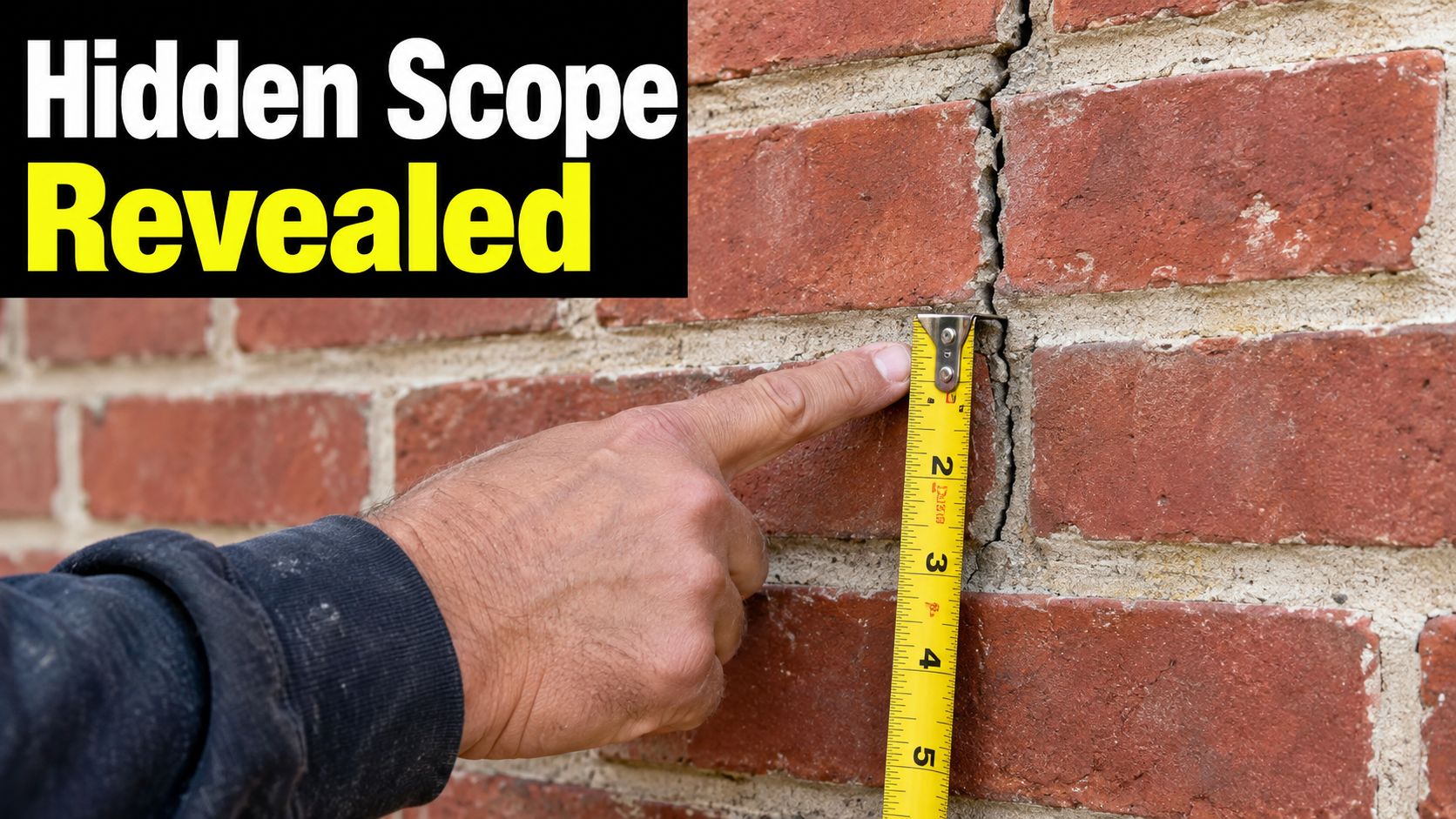
A two-foot crack doesn't tell you how deep the problem goes. It tells you where the stress became visible.
A contractor may quote a simple repointing job when the crack is shallow, stable, and limited to weathered mortar. The same visible crack can require a larger repair when it follows a lintel, appears beside a window, widens through several courses, or sits below a failed chimney cap. Water can travel behind brick veneer, saturate backing materials, corrode metal components, and weaken adjacent mortar.
What the contractor is checking
A competent assessment looks at more than crack length. The mason checks whether the joint is recessed or crumbling, whether bricks are cracked or displaced, whether the pattern suggests movement, and whether water is entering at nearby caps, sills, flashing, or transitions.
The crew may also inspect the wall's relationship to adjacent concrete, windows, doors, rooflines, and foundations. A stair-step pattern can indicate differential movement, while isolated mortar erosion may be ordinary weathering. The repair sequence changes completely depending on that diagnosis.
A surface repair is only a bargain when the surface is the actual problem.
Why pricing behaves nonlinearly
Masonry pricing increases sharply when the crew must add setup, demolition, reinforcement, or investigation. Material quantity may remain modest, but labor hours expand. Scaffolding, roof protection, restricted staging areas, and careful removal can dominate the cost.
A minimum service fee also matters. Industry references commonly place minimum charges around $250 to $400, so a visit lasting only a few hours may still cost several hundred dollars before materials, travel, and overhead. That's why a small patch doesn't always price like a small amount of mortar.
This video can help homeowners understand the difference between visible masonry symptoms and the work required to correct them:
Don't authorize a cosmetic patch just because the crack looks small. Ask the contractor to identify the suspected cause, show the repair boundaries, explain what will be removed, and state what happens if concealed damage appears after demolition.
Integrating Concrete and Masonry Hardscapes
Brick and concrete often share the same failure points. A brick column may sit on a concrete footing. A driveway apron may meet a masonry pillar. A retaining wall may depend on a concrete base and drainage system. If one component moves or sheds water toward the other, repairing only the visible masonry can leave the original problem in place.
Driveway transitions and aprons
A concrete driveway apron creates a high-traffic transition near the garage, sidewalk, or street. Where it meets brick columns or masonry edging, settlement and water runoff can concentrate stress at the joint. A contractor should examine separation, slope, drainage, and the condition of the supporting base before recommending a surface patch.
Concrete driveway specifications also affect adjacent masonry. A residential driveway is commonly built with a minimum 4-inch slab for passenger vehicles, while 5 to 6 inches is recommended where RVs, dump trucks, or frequent truck parking are expected. Reinforcement options include #4 rebar at 18 inches on center or 6×6 W1.4xW1.4 welded wire mesh in the upper third of the slab, as described in this concrete driveway construction comparison.
Retaining walls and footings
A retaining wall isn't just a stack of decorative blocks or bricks. It must resist soil pressure and shed water. Poor drainage behind the wall can create lateral pressure, staining, mortar failure, and rotation. If the footing has shifted, repointing alone won't restore stability.
Look for weep holes, surface drains, downspout discharge, and soil that slopes toward rather than away from the structure. Concrete footings and masonry faces should be evaluated as one assembly.
Planning the full exterior repair
Concrete may also enter the budget when a porch, stoop, walkway, or driveway edge has to be removed to reach a footing. Decorative finishes can be rebuilt after the structural work is complete. For projects that combine masonry repair with colored, stamped, or finished concrete, review decorative concrete and hardscape options before approving the final scope.
Concrete also has a different service and use profile from asphalt. Current comparisons commonly place concrete driveway life around 30 to 50 years, compared with roughly 15 to 25 years for asphalt. Concrete installation is commonly listed around $6 to $12 per square foot, while stamped or colored concrete is often $12 to $24 per square foot. See the concrete and asphalt driveway comparison for those figures.
How to Evaluate and Compare Contractor Quotes
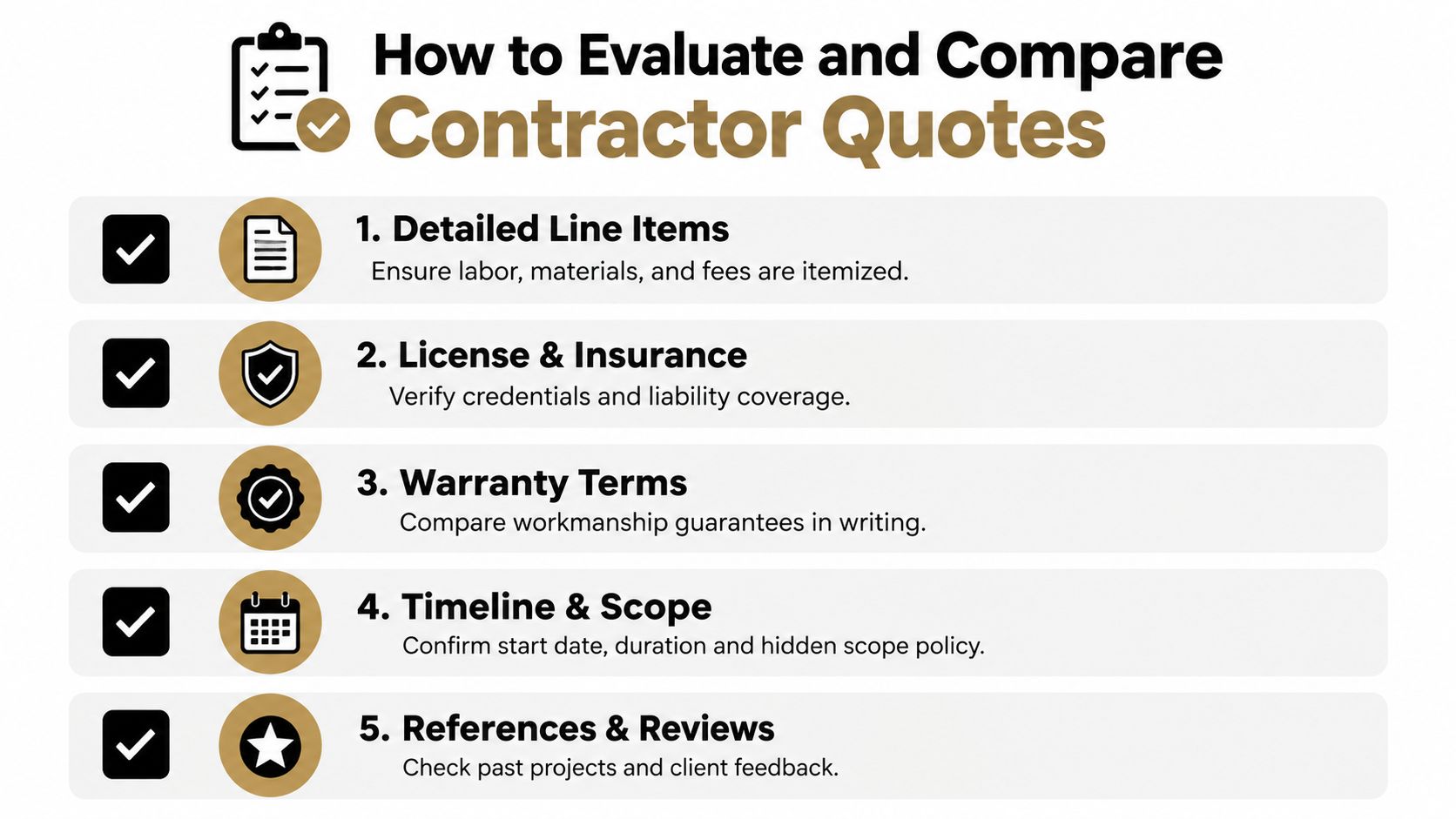
A low bid can become an expensive repair when it leaves access, concealed damage, or cleanup undefined. In Atlanta, compare the work plan first and the total price second. The quote should show what the contractor inspected, what the crew will repair, and which conditions could change the cost.
Start with the written scope
The estimate should identify the exact wall, chimney, porch, or foundation area. It should state whether the crew will grind or chisel out mortar, replace individual bricks, rebuild courses, correct flashing, seal joints, or address drainage.
Request separate line items for labor, materials, equipment, disposal, permits, and cleanup. A single lump sum makes it impossible to tell whether another contractor offers a lower price or has left out necessary work.
Check the material plan
Ask how the contractor will match brick size, texture, color, and mortar. Request a sample area when appearance matters. The contractor should explain whether existing brick can be salvaged and what happens if an exact commercial match is unavailable.
Confirm the mortar type, joint profile, curing expectations, and tooling method. A repair can be structurally sound yet visibly poor when the mortar color or joint profile conflicts with the existing wall.
Examine access and change orders
The quote must state whether scaffolding, a lift, roof protection, or special staging is included. Difficult access can add up to 40% to labor, as noted earlier in the masonry access pricing reference. Ask the contractor to explain how height, tight side yards, landscaping, and roof access affect your property. The change-order process should also identify who approves added work and how that work is priced.
Use this checklist before signing:
- Detailed line items: Confirm labor, materials, equipment, disposal, and administrative fees.
- License and insurance: Request current insurance documentation and verify the business identity.
- Warranty terms: Get workmanship coverage, exclusions, and repair obligations in writing.
- Timeline and scope: Confirm preparation, work duration, curing, cleanup, and concealed-condition procedures.
- References and reviews: Review comparable chimney, porch, retaining-wall, or historic-brick projects.
The lowest bid is risky when it leaves the diagnosis, access plan, or cleanup undefined.
Ask who obtains permits, who protects landscaping, how payment milestones work, and whether the contractor uses employees or subcontractors. For structural work, require the quote to name the party responsible for inspections and final sign-off. Get every allowance, exclusion, and approved change in writing before the crew starts.
Financing Options and Long-Term Maintenance
Large masonry repairs are easier to manage when you separate diagnosis from payment. Homeowners commonly consider a home equity line, a fixed home equity loan, or a contractor-sponsored payment plan. Compare interest, fees, collateral, payoff terms, and the total repayment amount. For broader construction financing context, review the best terms from Business Loan Warrior before choosing a borrowing route.
Don't finance an undefined scope. Get the inspection, written repair method, access plan, and allowance for concealed conditions first. A clear contract makes it easier to compare financing offers because you know what amount you're funding.
Protecting the repair
Atlanta homeowners should inspect masonry at least as part of a regular annual property review, especially after periods of heavy rain. Check mortar joints, chimney caps, flashing, window sills, retaining-wall drainage, efflorescence, and gaps where concrete meets brick. Keep gutters and downspouts working so roof water doesn't repeatedly saturate the wall.
Sealants can help in the right location, but they shouldn't trap moisture or conceal active movement. Repoint failed joints with a compatible mortar, correct drainage before rebuilding, and address small defects before they spread into surrounding brick.
Atlanta Concrete Solutions offers residential and commercial concrete and masonry repair, including brick replacement, tuckpointing, custom patching, high-pressure grouting, and masonry color blending, with free quotes and on-site reviews available for scope assessment. Visit Atlanta Concrete Solutions to request an evaluation and get a written plan for your Atlanta property.