
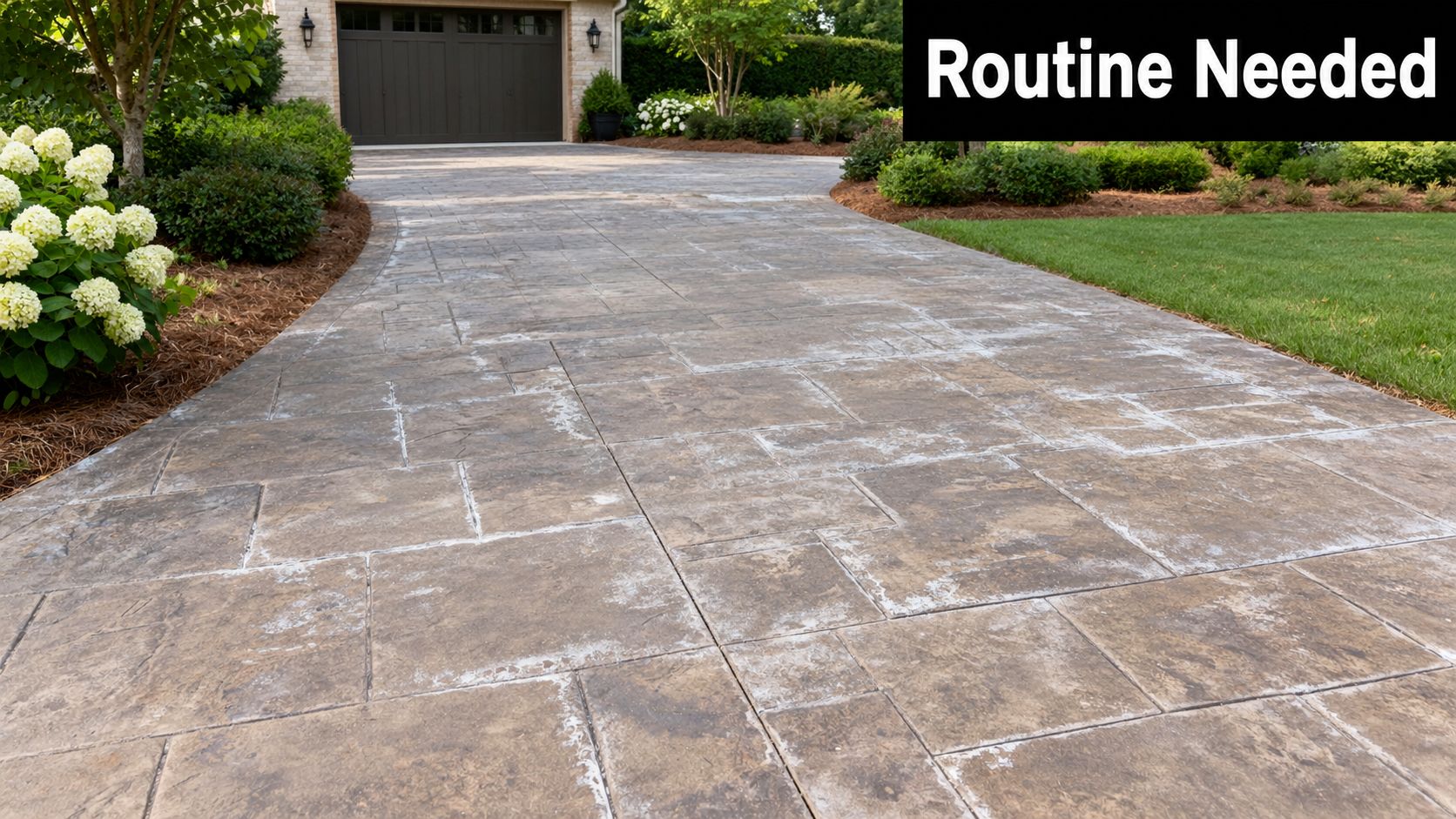
You're standing at the end of a Buckhead driveway that looked excellent when it was installed. Five years later, the color has softened after repeated Atlanta summers, and a pale haze sits along the stamped lines. That doesn't automatically mean the concrete has failed. More often, the protective sealer has worn unevenly, allowing pollen, runoff, tire marks, and moisture to make the surface look older than it is.
Stamped concrete maintenance works best as a small recurring habit, not a dramatic restoration project. Atlanta's pollen season, intense summer UV, red clay runoff, and occasional freezing nights each attack a different part of the finish. Clean the surface before contaminants bake into the sealer, treat stains before they spread, and reseal when the protective layer stops repelling water. That approach preserves the color and reduces the chance that routine upkeep turns into stripping, recoloring, or replacement.
Why Stamped Concrete in Atlanta Needs a Real Routine
A stamped driveway can look sound while its protective finish is already wearing thin. In Atlanta, pollen can cling to the textured profile, summer UV can fade a dark sealer, and red clay runoff can settle along borders and low spots. Those conditions make routine care part of protecting color retention, surface protection, and service life, not just improving appearance. The sealer is a sacrificial coating, so it normally wears before the concrete beneath it takes the full effect of weather and traffic. Concrete Network's stamped concrete maintenance guidance identifies resealing as a core preservation task.
Spring pollen becomes sticky when moisture mixes with it, allowing residue to bond to the sealer film. South-facing patios and dark sealers take heavier UV exposure through Atlanta's hot summers, which can thin the finish and leave the color looking washed out. After a storm, red clay from a neighboring lawn can collect in joints, texture grooves, and other low areas.
An occasional freezing night creates another weak point. Water trapped in grooves or small openings can freeze and expand where the sealer no longer keeps moisture out. One cold night rarely destroys a driveway, but repeated exposure can enlarge areas that earlier cleaning and resealing would have protected.
Practical rule: Maintain the sealer as the working surface. The concrete benefits when that protective skin stays clean, bonded, and continuous.
Keep the routine manageable. Sweep or rinse regularly, wash more deliberately during pollen season, and check once a year whether water still beads on the surface. Industry guidance commonly places resealing in a two-to-three-year range, but exposure matters more than a calendar alone. Heavy traffic, strong sun, storm runoff, and the original sealer system can shorten or extend that interval.
The Three Jobs That Protect Your Stamped Surface
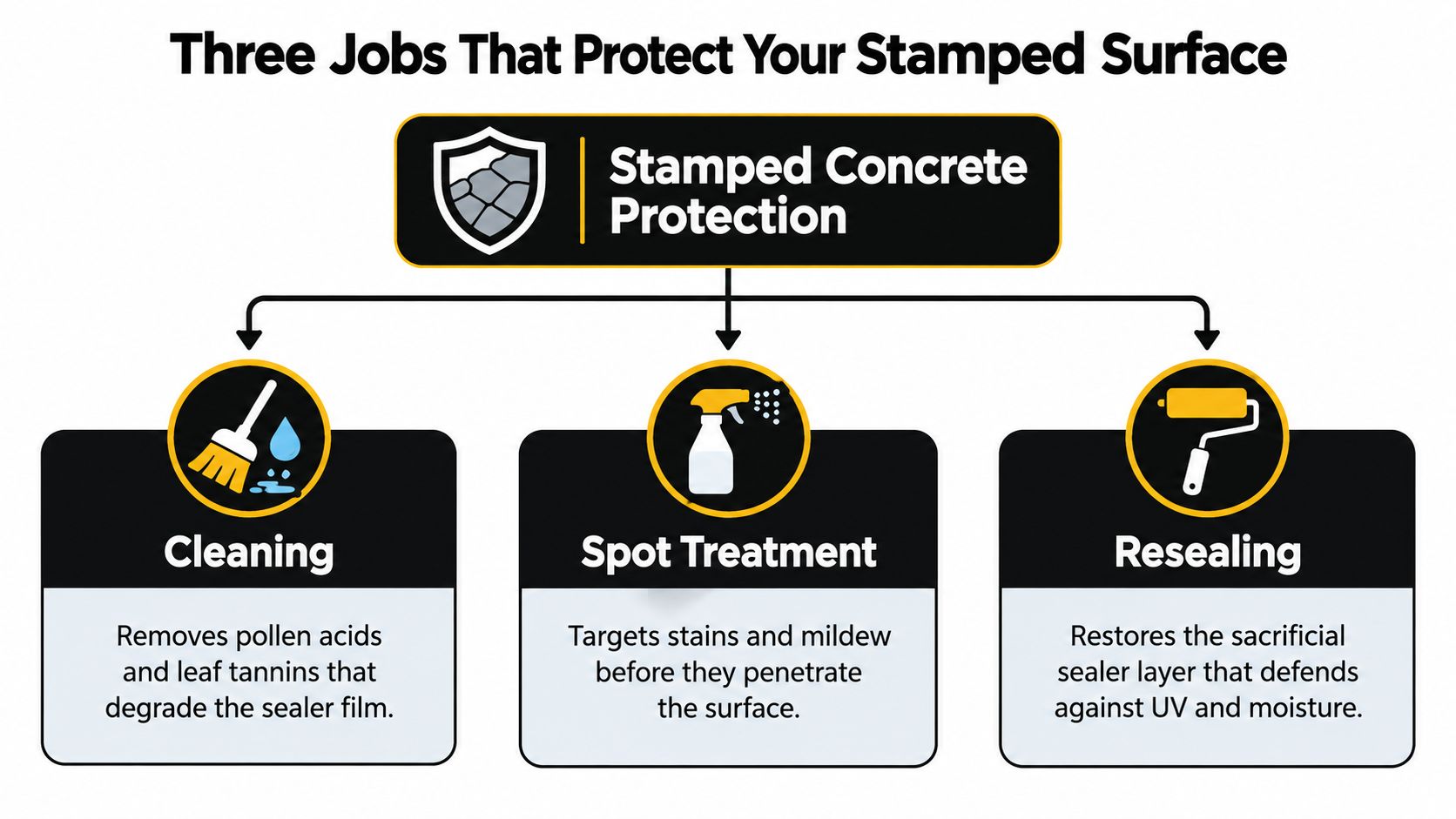
Effective maintenance has three separate jobs, and each one protects a different part of the finish.
Cleaning protects the sealer film. Dust, pollen residue, leaf tannins, and oily deposits can cloud the gloss or leave a sticky film on top. A surface beneath a Magnolia or Crepe Myrtle needs more frequent attention because organic debris stays damp and decomposes in the pattern. Cleaning removes contaminants before they have time to dull the finish.
Spot treatment protects the color coat. Red clay splatter, rust from patio furniture feet, mildew in shaded corners, and black tire marks near the driveway apron don't all respond to the same cleaner. Treat the affected area rather than attacking the entire slab with a harsh chemical. For homeowners comparing safe approaches for masonry and hard surfaces, this stone and tile cleaner guide for homeowners offers useful context on matching cleaning methods to the surface.
Resealing restores the protective skin. The sealer helps limit UV exposure, reduces water absorption, and holds the color hardener at the surface. It doesn't make stamped concrete maintenance-free. It gives you a sacrificial layer that can be renewed before the decorative finish suffers deeper wear.
Sequence matters. Clean first, spot-treat second, and reseal last. If you roll sealer over pollen, oil, clay, or a previous loose coating, you trap problems beneath the new finish and create uneven adhesion. The slab must also be completely dry. Stamped concrete care guidance from Highlands warns against applying sealer to a wet or damp surface because moisture can compromise adhesion and finish quality.
For cracks, spalls, damaged joints, or repairs that extend beyond normal cleaning and sealing, homeowners can review residential concrete and masonry repair options before deciding whether a surface treatment is enough.
Cleaning Stamped Concrete the Right Way
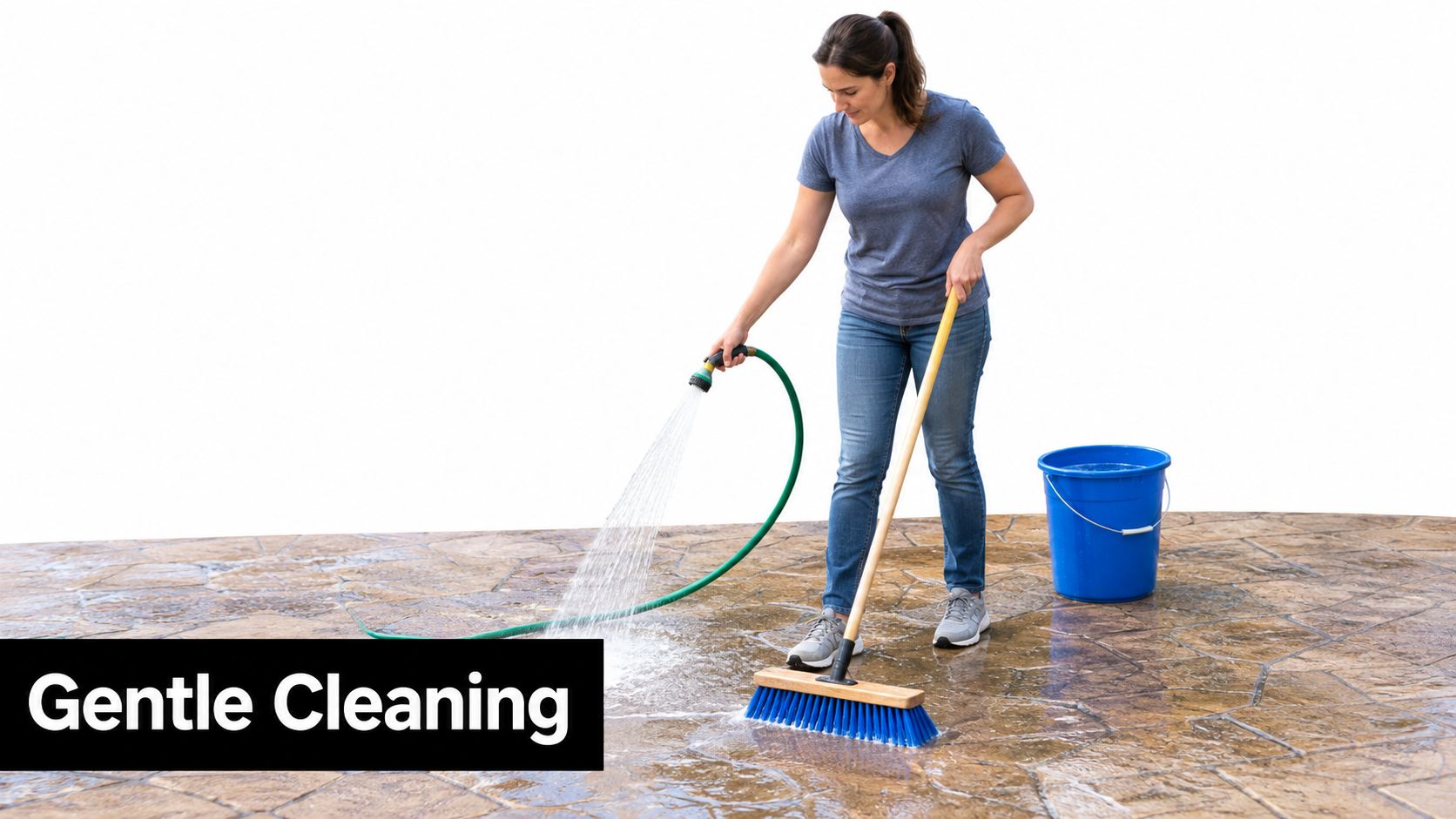
A monthly wash doesn't need a rental machine. Most Atlanta patios and driveways can be cleaned with a garden hose, bucket, soft nylon push broom, and mild pH-neutral dish detergent.
A simple wash sequence
Sweep while the surface is dry. Use a leaf blower or broom to remove pollen mats, leaves, grit, and loose clay. If you wet the debris first, you turn it into slurry and push it deeper into the stamp profile.
Pre-rinse from the house outward. Start near the highest point and direct water toward the intended drainage path. This moves debris away from walls, doors, and landscaping instead of redistributing it across the slab.
Mix a mild solution. Use about two ounces of detergent per gallon of warm water, a proportion included in the practical cleaning workflow for this guide. Work in manageable areas and keep the broom moving.
Follow the stamp pattern. Use overlapping passes with soft nylon bristles. Working with the pattern reduces the chance that bristles catch raised joint edges or chip a weakened sealer film.
Rinse until runoff sheets clear. Soap residue can leave a dull film, especially on dark stamped concrete. Keep rinsing until the water leaving the surface looks clean and no suds remain in the grooves.
Atlanta homeowners should clean monthly during pollen season and about every six weeks during the rest of the year. A covered patio may need less frequent washing, while a driveway beneath trees or beside red clay landscaping may need attention sooner.
Avoid aggressive shortcuts. Pressure washers above 2,500 psi, zero-degree nozzles, abrasive pads, routine muriatic acid, and bleach on unsealed spots can strip or weaken the sealer, flatten texture, or create a patch that won't match the surrounding finish. A close-range high-pressure stream can also shorten sealer life and damage the decorative profile, a concern noted in stamped concrete maintenance guidance from Metropolitan Materials.
For a visual example of the cleaning motion and equipment, use this reference:
Don't reseal a dirty slab. Sealer magnifies uneven preparation, so the cleanest-looking result starts with patient washing, spot treatment, and complete drying.
Resealing Stamped Concrete on an As-Needed Schedule
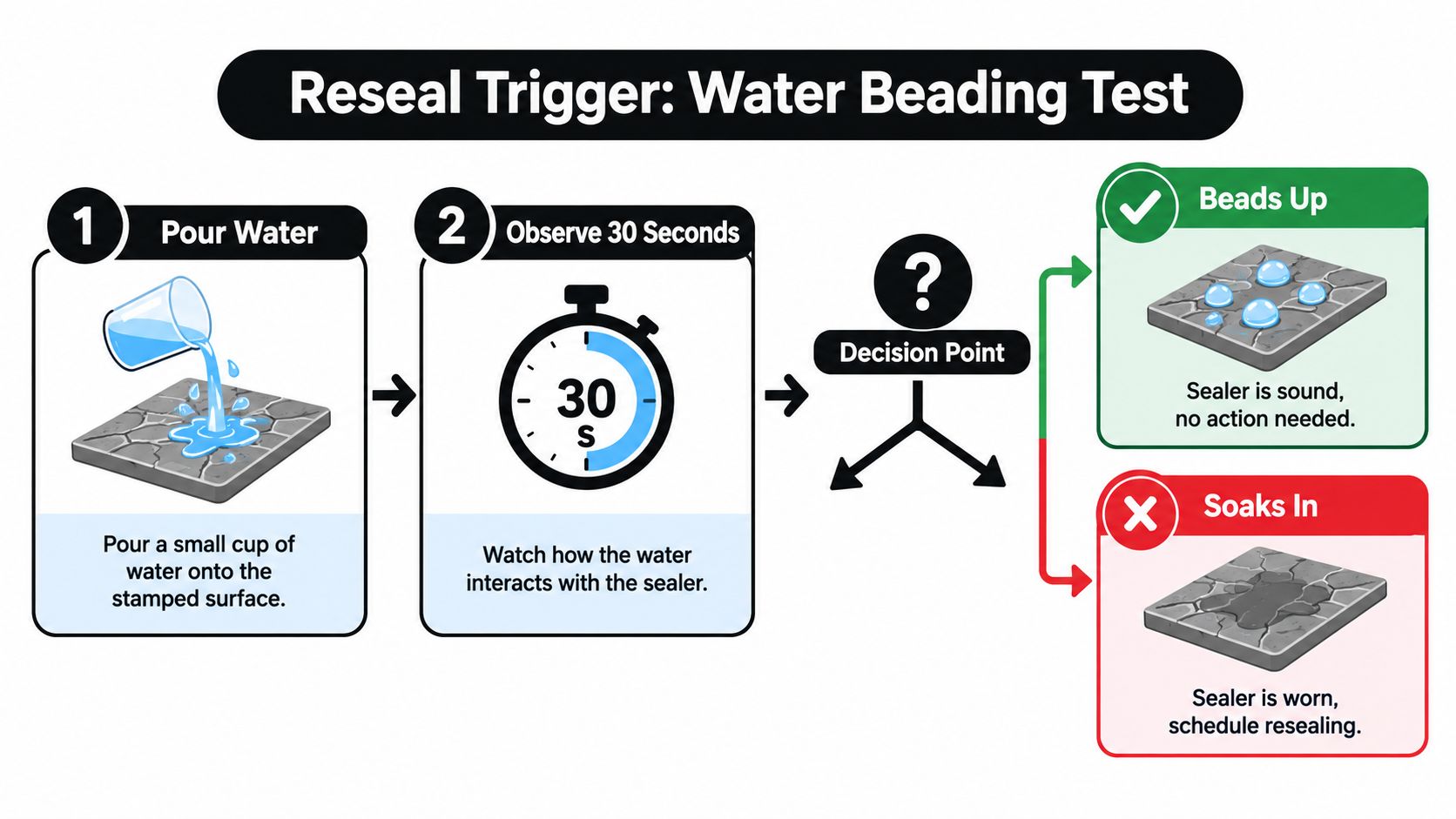
A calendar reminder helps, but it shouldn't make the decision by itself. The most useful field check is water repellency. Pour a small cup of water onto an inconspicuous area and observe it for 30 seconds. If the water stays in tight beads, the sealer is still providing protection. If it soaks in, darkens the concrete, or leaves a faint ring, the protective layer may be wearing out. Concrete Decor's guidance on resealing emphasizes performance, including water beading, rather than an automatic fixed interval.
Atlanta driveways with full sun commonly need attention around the two-to-three-year mark when using a solvent-based acrylic system, while shaded patios may go longer. Those are practical benchmarks, not guarantees. Heavy traffic, winter salts, standing water, dark colors, and strong south-facing exposure can shorten the interval, while a protected low-traffic patio may remain sound longer.
A careful resealing workflow
- Prepare the slab. Dry-blow debris, wash the surface, and degrease oil spots. Remove residue rather than hiding it beneath a new coat.
- Inspect the old sealer. Flaking, whitening, peeling, or soft patches may require stripping or professional preparation before another coat.
- Protect adjacent areas. Mask walls, steps, siding, plants, and landscaping. Sealer overspray and roller splatter can create a second repair job.
- Apply thin coats. Use the product's stated application method. A 1/4-inch nap roller can work for controlled sections, especially in shade, but thick application often creates puddling, blushing, or a slippery finish.
- Respect cure time. Keep foot traffic off until the coating has set, and follow the product label before returning vehicles or furniture.
Newly sealed surfaces need protection while the coating develops strength. One contractor FAQ recommends waiting seven days before driving on a newly sealed stamped surface, with 28 days for heavy trucks. Foothills' stamped concrete FAQ provides those specific waiting periods. For an installation, repair, or decorative finish assessment, residential decorative concrete services can help determine whether resealing is appropriate or whether the existing surface needs restoration first.
Never seal damp concrete. Also avoid rolling a heavy coat over failed sealer. The new material may bond to the weak layer instead of the concrete, leaving you with peeling and an uneven sheen.
Seasonal Care for Atlanta Weather
Atlanta's weather doesn't create one universal maintenance schedule. It creates a series of short exposure events, and each season needs a different response.
Spring pollen is the first major test. Oak and pine pollen settle into textured grooves, absorb moisture, and become harder to remove after they dry. Sweep or blow the surface before rinsing, then check shaded areas and winter-exposed joints for loose material, white haze, or new hairline openings.
Summer sunlight is hardest on dark sealers and south-facing patios. Heat also makes parked tires more likely to leave marks where vehicles sit on the driveway apron. Rinse in shade when possible, and don't apply sealer onto a slab that's hot from direct afternoon sun.
Fall brings leaves, acorns, and red clay runoff. Summer storms can move clay into expansion joints and low texture grooves, where it holds moisture and stains the borders. Sweep leaves promptly and rinse joints rather than letting organic material remain packed into them.
Winter deserves attention even though Atlanta's freezes are occasional. Chloride-based rock salt and ammonium nitrate deicers can damage concrete and shorten sealer life. Gentler snow tools, including plastic shovels, are preferable to metal edges, and calcium magnesium acetate is the recommended alternative in the maintenance guidance supplied for this article.
| Season | Primary Risk | Preventive Action | What to Avoid |
|---|---|---|---|
| Spring | Pollen bonding to the sealer | Blow off dry pollen, then wash gently | Letting wet pollen dry in grooves |
| Summer | UV wear and warm tire marks | Rinse shaded areas and inspect dark finishes | Sealing during peak surface heat |
| Fall | Clay, leaves, and tannins in joints | Sweep leaves and rinse low areas regularly | Leaving organic debris packed into texture |
| Winter | Freeze exposure and deicer damage | Clear snow with plastic tools and use calcium magnesium acetate | Rock salt, ammonium nitrate, and metal shovels |
Mild winters don't eliminate risk. They make neglected joints easier to overlook until moisture and a freezing night expose the weak areas.
The same basic weather principle applies to other exterior finishes. Homeowners working on an entire property can also review this guide on how to protect exterior paint from weather, then apply the same habit of matching protection to exposure rather than relying only on a calendar.
DIY Maintenance Versus Hiring a Pro
DIY cleaning is usually sensible. Resealing requires a closer look at the surface, product, and existing coating, especially after Atlanta's pollen season, intense summer UV, red clay runoff, and an occasional freezing night.
A small patio under 400 square feet can be a reasonable weekend project when the sealer is water-based acrylic, the slab is sound, and you can control cleaning and curing conditions. In our experience on Atlanta jobs, DIY materials typically run $80 to $200 for a small patio. Plan on a half-day for the work, followed by curing time. Rushed preparation creates more failures than slow application.
Hiring a professional is often the better choice for a large surface, a solvent-based product, or decorative color that needs restoration. Solvent-based systems may require respirators and careful ventilation. A contractor should also handle flaking sealer, failed previous coats, heavy oil contamination, color-restorative products, or cracks wider than hairline.
In our Atlanta work, professional resealing typically runs $1.25 to $2.50 per square foot, including surface preparation. The price covers more than the coating. A qualified crew can assess the surface profile, select compatible materials, control overspray, and provide an adhesion warranty. Commercial sprayers may shorten the application window, but scheduling and site access become part of the trade-off.
Use this self-check before booking:
- Surface size: Can you clean, mask, and coat the entire area without leaving wet edges?
- Sealer type: Do you know whether the existing system is water-based, solvent-based, acrylic, or penetrating?
- Surface condition: Is the old coating bonded, or is it flaking and cloudy?
- Repair needs: Are cracks, spalls, stains, or drainage problems more serious than a coating issue?
- Cure control: Can you keep people, pets, furniture, and vehicles off the surface for the required time?
Dark sealers exposed to Atlanta's summer sun can lose their finish faster, while clay and pollen make incomplete preparation visible. If the answers raise doubts, compare a professional assessment with the DIY material cost. Atlanta Concrete Solutions provides concrete repair, decorative work, resurfacing, and related services through its concrete services team, which can evaluate whether resealing is enough or a larger repair is warranted.
Your Stamped Concrete Maintenance Checklist
The easiest routine is the one you can repeat without turning every task into a project. Save this checklist on your phone and adjust it to the actual exposure of your driveway or patio.
Weekly
- Sweep the surface: Remove leaves, pollen, grit, and clay before foot traffic grinds them into the pattern.
- Rinse visible buildup: Use a garden hose after storms or heavy pollen fall, directing runoff away from walls and doors.
- Check drainage paths: Look for standing water in grooves, joints, and low spots.
Monthly
- Wash during pollen season: Use warm water, mild detergent, and a soft nylon broom.
- Inspect shaded areas: Look beneath trees, beside walls, and around planters for mildew or organic staining.
- Review the driveway apron: Look for black tire marks and oil drips where vehicles stop and turn.
Quarterly
- Spot-treat stains: Address red clay, rust, oil, and leaf marks before they spread.
- Clear joints and borders: Fall runoff and decomposed leaves often collect where the pattern changes.
- Look for sealer changes: Note whitening, dull patches, peeling, or inconsistent sheen.
Annually
- Run the water-beading test: Beading indicates that the protective layer is still working. Soaking or darkening suggests that resealing may be due.
- Check after winter: Look for loose edges, microcracks, and damage associated with moisture or deicers.
- Review sun exposure: Dark, south-facing surfaces may need earlier attention than shaded areas.
Every two to three years, or when performance declines
- Plan resealing: Use the two-to-three-year benchmark as a planning window, then confirm with surface condition and water repellency.
- Prepare properly: Clean, spot-treat, dry completely, and inspect the old coating before applying anything new.
- Escalate damaged surfaces: Peeling sealer, significant cracks, spalls, or persistent moisture problems need more than another coat.
Good stamped concrete maintenance preserves richer color, cleaner pattern definition, and stronger curb appeal. It also gives you a chance to find drainage or cracking problems while repair options are still practical, rather than waiting until the decorative finish needs full restoration.
Atlanta Concrete Solutions can assess stamped driveways and patios, handle decorative concrete repair or resurfacing, and recommend whether cleaning, resealing, or replacement fits the surface condition. Visit Atlanta Concrete Solutions to request a quote and discuss your Atlanta property with a local concrete team.